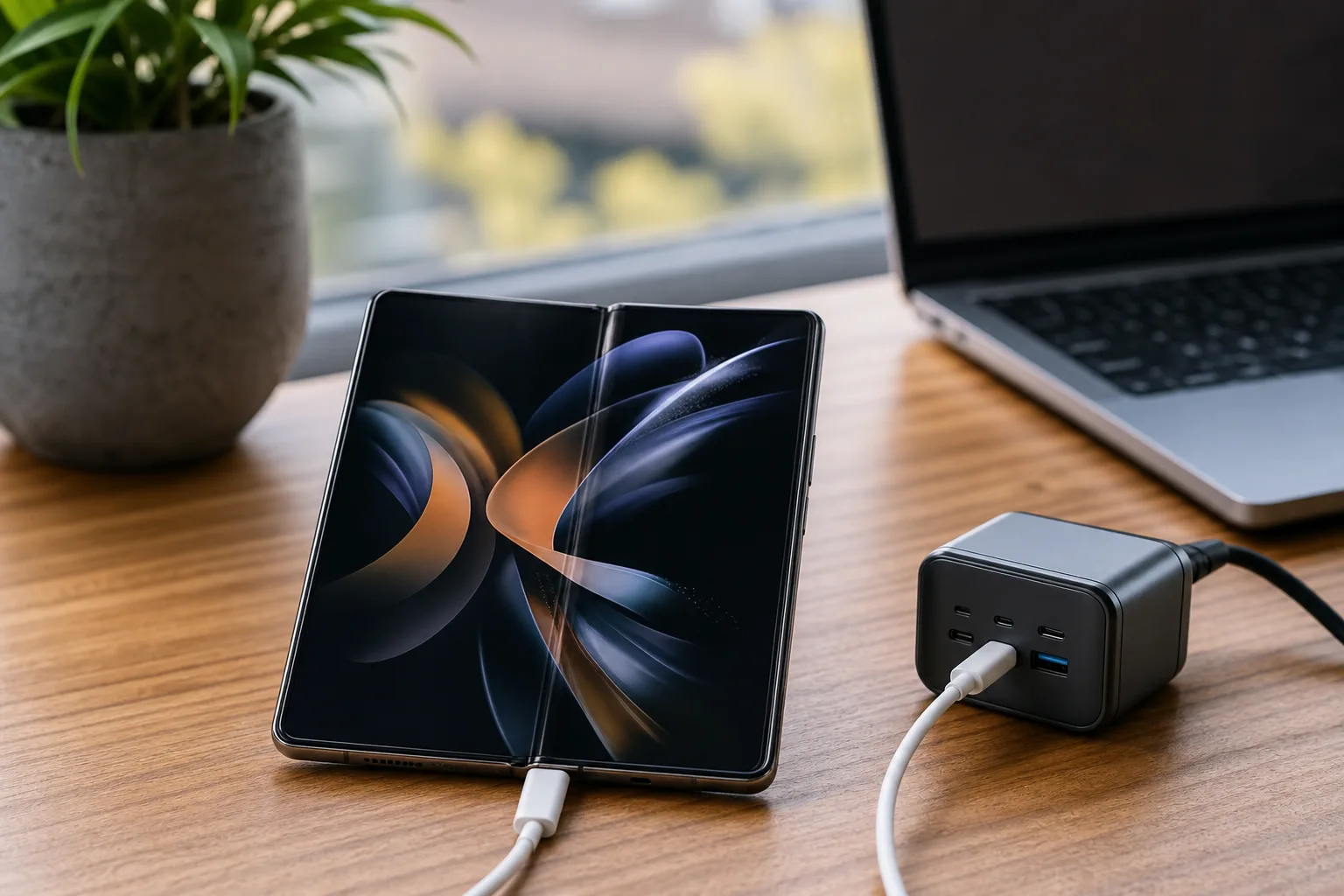
- A Galaxy Z Fold 8 charger needs USB PD PPS support at 15V and 3A to reach Samsung’s new 45W wired limit.
- The best Galaxy Z Fold 8 charger may be a multi-port GaN model, not Samsung’s own single-purpose power adapter.
- The supplied USB-C cable supports the Fold 8’s 45W charging requirement, avoiding the older need for a higher-rated 5A cable.
- Buy for your whole device lineup: laptops, tablets and phones benefit more from a capable multi-port USB-C charger.
Table of Contents
The Galaxy Z Fold 8 charger question is really about PPS
Samsung has finally addressed one of the most irritating compromises in its book-style foldables: charging speed. The right Galaxy Z Fold 8 charger can now push the Fold 8 or Fold 8 Ultra to 45W over a wire, up from the 25W ceiling that made previous models feel oddly sluggish beside similarly priced rivals. For a phone that costs laptop money, that improvement was overdue.
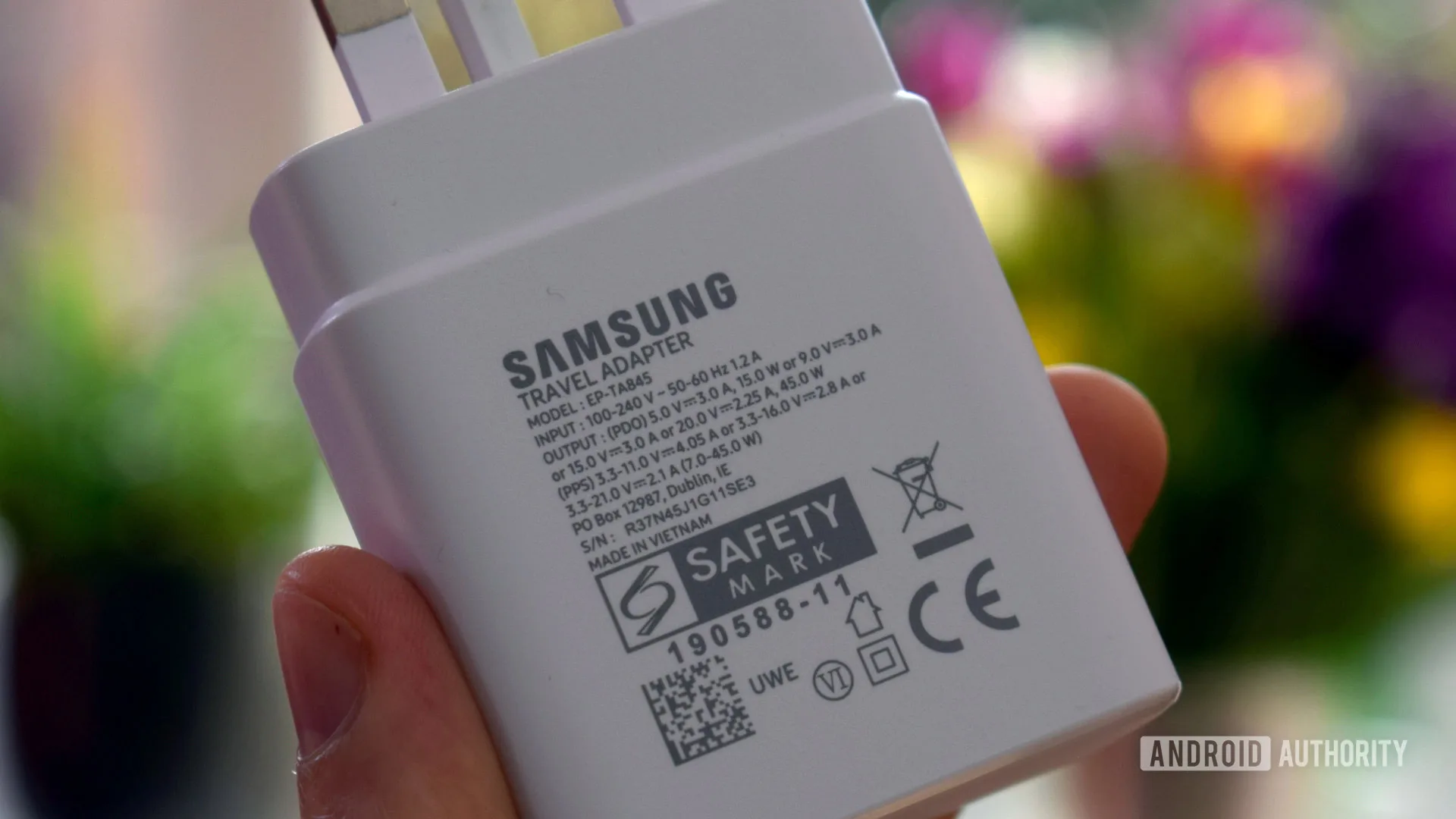
But 45W is not the whole story. A power brick can print 45W, 65W or even 100W on its casing and still fail to give Samsung’s foldable its best result. The detail that matters is USB Power Delivery Programmable Power Supply, usually shortened to USB PD PPS. To hit the phone’s top rate, the adapter needs to offer a PPS profile at 15V and 3A.
That sounds maddeningly technical for something as basic as charging a phone. Frankly, USB-C’s promise was supposed to spare us this kind of spec-sheet archaeology. Yet this is the practical reality: wattage is the headline; voltage profiles are the fine print.
The good news is that buyers no longer need to treat Samsung’s logo as a compatibility requirement. Samsung’s own 45W Travel Adapter and 50W Duo adapter have the appropriate specifications, and they are perfectly sensible buys when discounted. Still, the broader USB-C accessory market is now mature enough that an official brick is often the convenient choice, not automatically the best one.
What to look for in a Galaxy Z Fold 8 charger
Start with the label or the manufacturer’s technical specifications. A proper Galaxy Z Fold 8 charger should explicitly mention PPS, then list an output range that includes 15V at 3A. Some chargers support PPS up to 21V. That works. Others list fixed profiles and a separate PPS line. Also fine, as long as 15V is covered.
This is where shopping gets unnecessarily messy. Plenty of early PPS chargers stop at 9V or 11V, which suited older Samsung handsets but not the Fold 8’s faster mode. And even in 2026, some brands bury the PPS range in a tiny product image, the manual, or an answer to a customer question. If the listing only says ‘PD 3.0’ or ‘fast charging,’ assume nothing.
Samsung has made one part easier. Unlike some of its earlier 45W phones, the Fold 8 does not require a 5A e-marked cable. The included 3A USB-C cable is enough for the 15V/3A arrangement. That means you can replace the wall plug without immediately tossing another cable into the cart, which is both cheaper and less wasteful.
Multi-port charging changes the math, too. A 65W adapter may offer 45W to one USB-C port, but split its output when a tablet or earbuds are attached. A good manufacturer publishes a power-sharing chart. A vague listing that does not is a yellow flag, especially if you want one bedside charger to serve several devices. For the underlying standard, the USB Implementers Forum provides USB Power Delivery information.
Samsung’s adapter is safe, but it is not the obvious winner
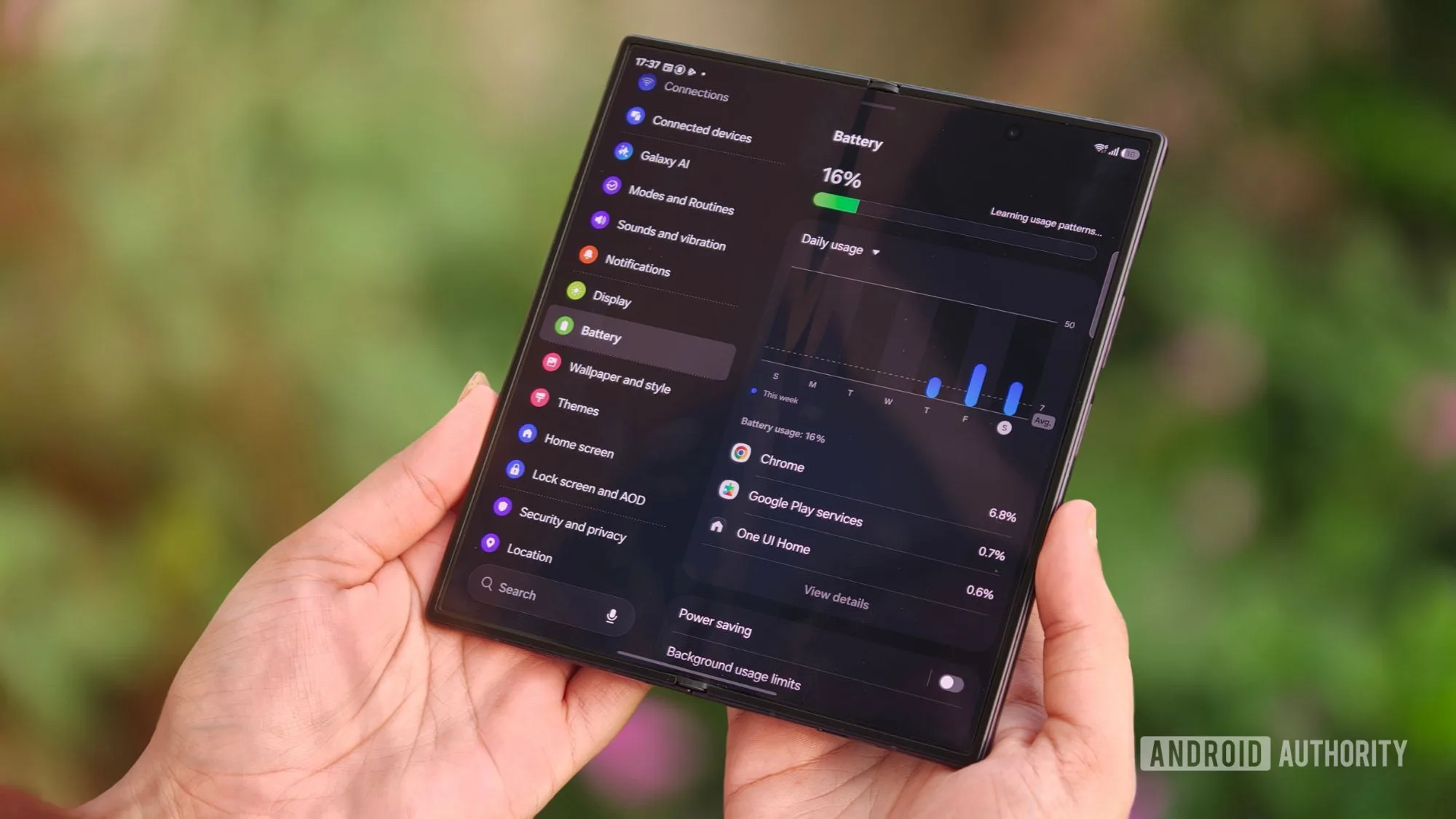
There is nothing wrong with buying Samsung’s 45W Travel Adapter. It is compact, has the expected PPS support, and removes compatibility anxiety. If you catch one near $30, it is a reasonable purchase. Sometimes boring and known-good is exactly what you need before a work trip.
My read, though, is that a single-port phone charger is increasingly a poor long-term investment. The Fold 8 is a premium device aimed at people who probably also carry a laptop, a tablet, a watch, and at least one other USB-C gadget. Buying a narrowly specified plug for one handset is like buying a kitchen knife that can only cut tomatoes.
Third-party options from established accessory makers make a stronger case. UGREEN’s Nexode Pro 65W GaN charger, for example, has three ports and supports the relevant PPS profile. It is often discounted into the same price territory as Samsung’s official 45W hardware. Anker’s newer Prime range includes compatible models as well, though shoppers need to verify each model rather than assuming the whole line behaves identically.
For travel, the MINIX P1 66W is the kind of compact, foldable-prong adapter that makes more sense than hauling a dedicated phone brick and a separate laptop adapter. At the other extreme, 100W and 165W desktop GaN chargers from brands such as Satechi and UGREEN are arguably excessive for the Fold alone. But that is sort of the point: a Galaxy Z Fold 8 charger can be part of a broader charging setup instead of another drawer-bound accessory.
More watts do not mean faster charging every time
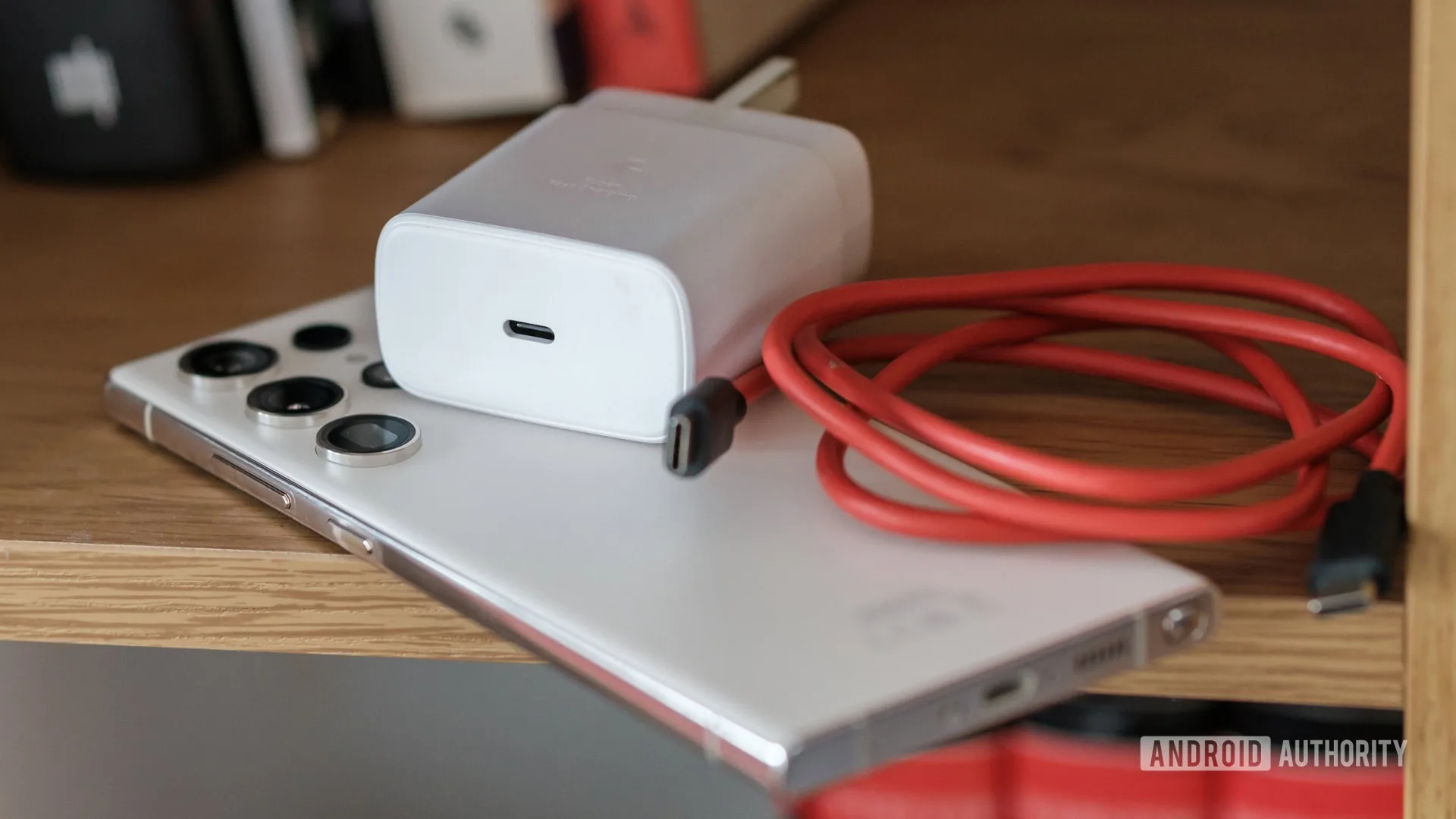
Here is the part that trips people up: plugging the Fold 8 into a 100W or 165W adapter will not make it charge at 100W or 165W. The phone negotiates its maximum supported input, which is 45W. The value of a higher-capacity adapter is headroom for other devices, plus a better chance that a laptop and phone can charge together without one dropping to a crawl.
USB-C Power Delivery is designed around that negotiation, matching power sources with devices. It is a better system than the old days of proprietary fast-charging silos. But it has also created a retail aisle full of superficially identical chargers with very different capabilities.
That is why cheap, anonymous adapters remain a bad gamble. The issue is not snobbery about accessories; it is that power equipment sits between the wall and devices worth hundreds or thousands of dollars. Stick with Samsung, Anker, UGREEN, Satechi, Belkin, MINIX, or another brand that publishes real electrical specifications and has a credible warranty. A no-name 100W claim can be too good to be true because, well, it often is.
The smarter buy is the charger you will keep using
The Fold 8’s 45W upgrade makes fast charging worth pursuing at last. A compatible Galaxy Z Fold 8 charger can make the difference between a long coffee stop and a genuinely useful top-up before heading out. But Samsung’s official adapter should be the baseline, not the default answer.
Look for 15V/3A PPS, check how power splits across ports, and choose capacity based on the devices you actually use each day. The industry has spent years asking people to replace chargers with every new phone. USB-C is finally giving us a chance to stop doing that. Samsung’s Fold 8 may benefit from the change, but the bigger win is buying one good Galaxy Z Fold 8 charger and keeping it through the next several gadget cycles.
Frequently Asked Questions
What Galaxy Z Fold 8 charger specification delivers 45W charging?
For the Fold 8 and Fold 8 Ultra to reach their stated 45W wired charging rate, look for a USB Power Delivery charger with PPS support capable of supplying 15V at 3A.
Do I need a 5A USB-C cable for the Galaxy Z Fold 8?
No. Samsung’s newer Fold 8 phones can use a standard 3A USB-C cable for their 45W charging mode, and Samsung includes a suitable cable in the box. That is a welcome change from some earlier Samsung 45W phones, which required a 5A cable for their top charging speed.
Can a laptop charger fast-charge the Galaxy Z Fold 8?
Yes, provided the charger supports USB PD PPS with the needed 15V at 3A profile. Check the PPS voltage details before buying.