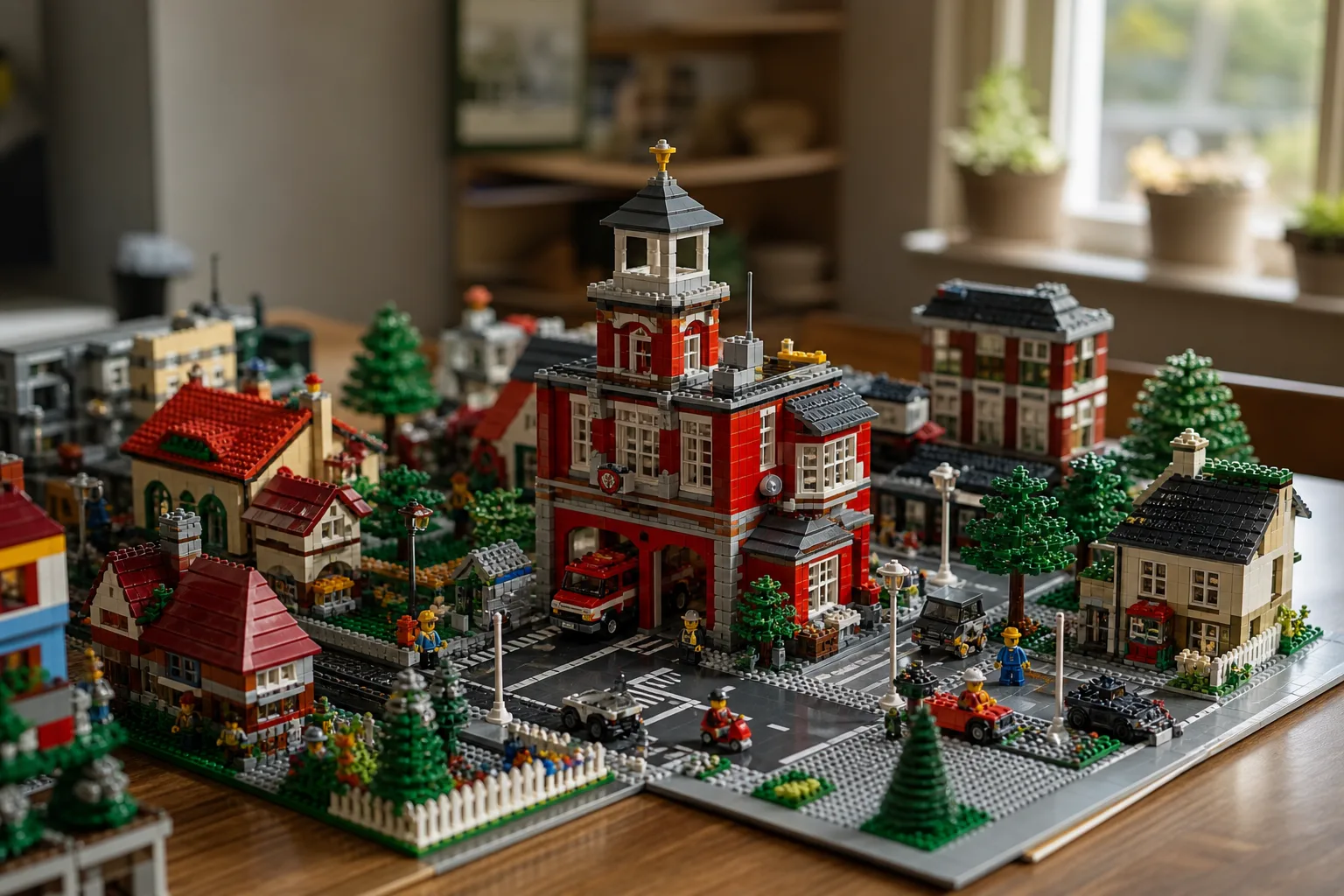
There’s something disarmingly sensible about Lego Skylines. City builders can become accounting software with traffic jams: deeply satisfying for a certain kind of player, but intimidating to everyone else. Lego, meanwhile, has spent generations teaching people that a wonky bridge, a house with no roof, and a fire station built three times too large are all perfectly valid design choices.
That combination is now becoming a game. Announced during Gamescom Opening Night Live, Lego Skylines is a city-building title from Iceflake Studios and publisher Paradox Interactive, due for Steam, PlayStation 5, Xbox Series X and S, and Nintendo Switch 2. There is no release date yet. The early footage points toward a colorful, approachable take on familiar urban-planning chores: placing homes, building services, responding to fires, and making a settlement function one brick at a time.
The pitch is obvious, but it’s not shallow. If Iceflake can preserve the pleasure of watching a town grow without burying newcomers under spreadsheets and broken road hierarchies, Lego Skylines could give Paradox a much-needed second route into a genre it already knows very well.
- Lego Skylines is a new city builder coming to Steam, PlayStation 5, Xbox Series X and S, and Nintendo Switch 2.
- Lego Skylines is being made by Iceflake Studios, the team now helping Paradox repair Cities: Skylines II.
- The announcement signals Paradox’s attempt to pair a troubled simulation genre with Lego’s welcoming, broadly recognizable creative appeal.
- No release window has been given, leaving the game’s depth and business model as major open questions.
Table of Contents
Lego Skylines puts playfulness ahead of municipal punishment
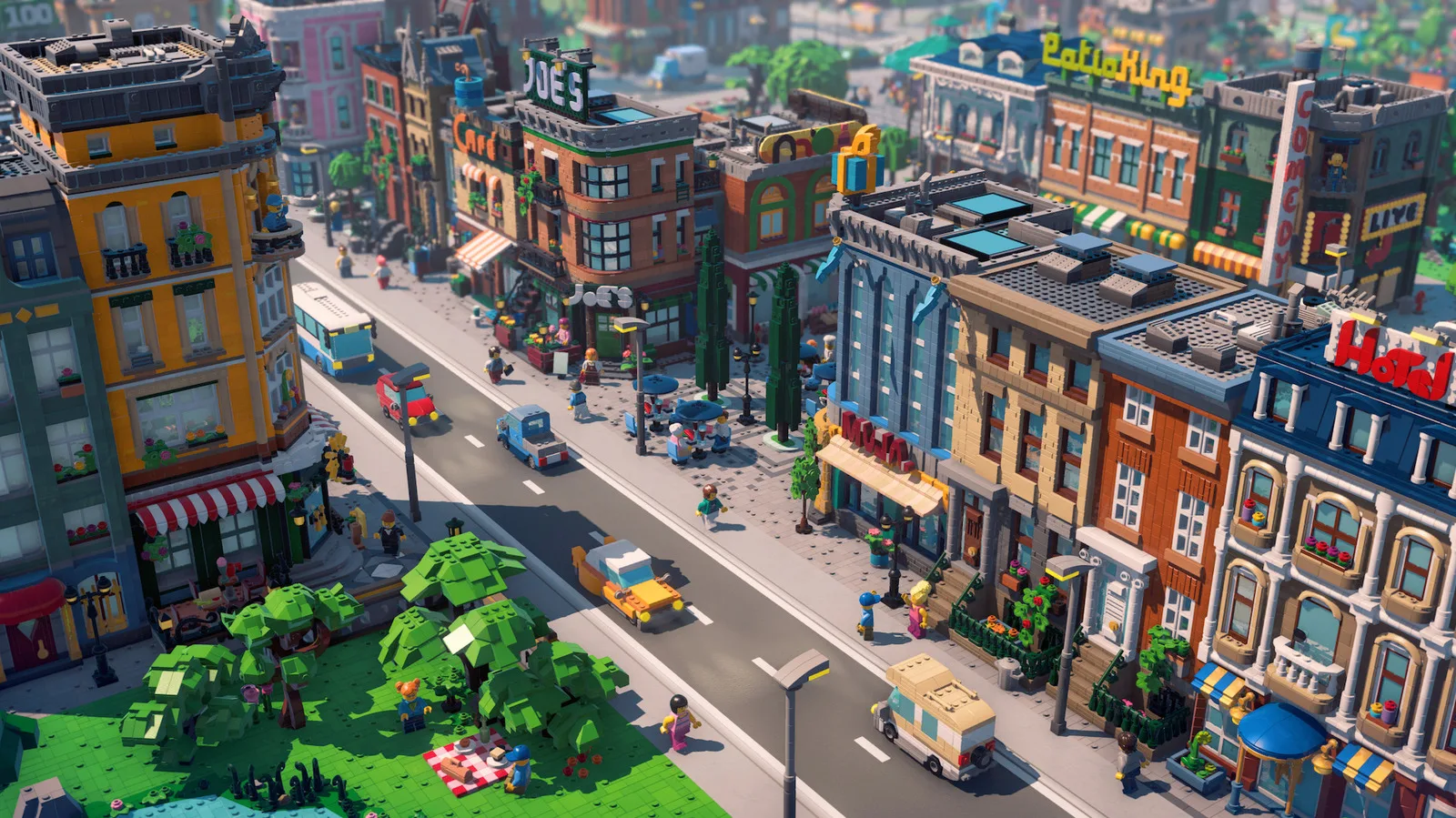
The announcement trailer presents the kind of bright, hand-built town that looks as though it escaped from a kid’s bedroom floor and acquired a zoning department. Buildings arrive in chunky Lego form. Citizens bustle around. A fire brigade appears to be a genuine requirement rather than decorative scenery. Anyone who has spent an evening desperately trying to rescue a Cities: Skylines interchange from its own five-lane ambition will recognize the basic loop.
But the mood matters. Most serious city simulations ask players to think like planners, engineers and budget managers all at once. That can be brilliant. It can also be a lot. Lego Skylines appears to be aiming for the same creative satisfaction with fewer barriers between an idea and the act of putting it on screen.
That doesn’t necessarily mean it will be simple. Lego games have often worked best when they understand the difference between accessible and empty. The toy itself is a useful model: a basic kit can entertain a six-year-old, while an adult fan can lose an entire weekend building a painstaking replica of a landmark. The question is whether this game can offer a similarly wide on-ramp, then provide enough underlying systems to hold players after the novelty of plastic-looking houses wears off.
The simulation depth, progression systems, mod support, pricing, and whether players can expect the sort of complex transport and economic modeling associated with its other city-builder remain unclear. Those details will decide whether Lego Skylines becomes a lasting platform or a pleasant curiosity.
Why Iceflake Studios is the part to watch
Iceflake Studios is not a random choice for the job. The Finnish developer is currently working on Cities: Skylines II, the sequel whose difficult launch became one of the more painful recent examples of a publisher and its core community falling out of step. Colossal Order, the original developer behind Cities: Skylines, was removed from active work on the sequel by Paradox after months of performance problems, delayed content, and mounting player frustration.
That history hangs over Lego Skylines, even if the new project has a different audience and a different tone. Paradox’s city-building credibility took a real hit when Cities: Skylines II launched with technical issues that made its ambitious simulation hard to enjoy for many PC players. Console versions were delayed, while the publisher repeatedly pushed back expansion content and worked through fixes. Remember when a city-builder’s biggest problem was whether your roundabout could handle rush hour? Those were simpler times.
Iceflake has since inherited part of the repair job. My read is that Paradox sees the studio as more than a maintenance crew: it is testing whether Iceflake can shape a city-building experience from the beginning, under the massive commercial umbrella of the Lego brand.
That’s a high-stakes assignment. A game based on Lego brings instant warmth, but it also carries high expectations. Players won’t be especially forgiving if the digital bricks lack the freedom, tactile charm and chaotic experimentation that make the physical sets work. A Lego city builder that feels overly managed would be like being handed a huge tub of bricks and a strict instruction manual for every possible creation.
Paradox has a chance to reach beyond simulation diehards
For Paradox, Lego Skylines looks like a smart strategic swing. The company’s catalog has long appealed to players willing to learn dense systems, from Crusader Kings to Europa Universalis and the Cities: Skylines series. That focus built a devoted audience, but it can limit the size of the front door. Lego is the opposite: a global brand whose appeal spans children, parents, collectors and adults who never quite stopped rearranging bricks.
The industry has seen this formula work before, though not automatically. Lego Star Wars turned a licensed game into a co-op institution by keeping the movies recognizable while making the interaction silly and physical. Lego Fortnite found a huge audience by making construction and survival approachable inside Epic’s existing ecosystem. Even the enduring popularity of Minecraft proves there is enormous demand for virtual building toys that give players a simple vocabulary and let imagination do the rest.
Lego Skylines has a narrower challenge. A city needs to feel alive, and that requires consequences. If roads are meaningless, if budgets never bite, or if services exist only as cute animations, the game risks becoming a digital diorama. On the other hand, too much simulation friction would undermine the reason to use Lego in the first place. There’s a sweet spot between sandbox freedom and civic problem-solving, and it’s harder to hit than the trailer’s cheerful colors suggest.
The platform list tells its own story. By launching across PC, current-generation PlayStation and Xbox hardware, plus Nintendo Switch 2, Paradox is clearly not treating this as a niche simulation release. The Switch 2 version in particular could matter: the console audience has repeatedly shown up for thoughtful, low-pressure management games, from Animal Crossing to Two Point Campus. A city builder designed for a controller from day one may also avoid the awkward console compromises that have tripped up more PC-first simulations.
The details will matter more than the bricks
The official Lego brand gives the project a powerful emotional shorthand, while Paradox and Iceflake supply genre experience. That’s a promising foundation, not a finished building. We still need to know how much players can customize, whether cities have meaningful long-term challenges, how the game will handle expansions, and whether it lands as a full-priced release or something more segmented.
Frankly, a gentler city builder is overdue. The genre has spent years chasing bigger maps, deeper simulation and more layers of data. Those things have value, but they can obscure the central joy: you made a place, people use it, and somehow your absurd little town works. If Lego Skylines can make that feeling immediate while still giving players reasons to care about the next block, Paradox may have found a sturdier future than another attempt to out-simulate everyone else.