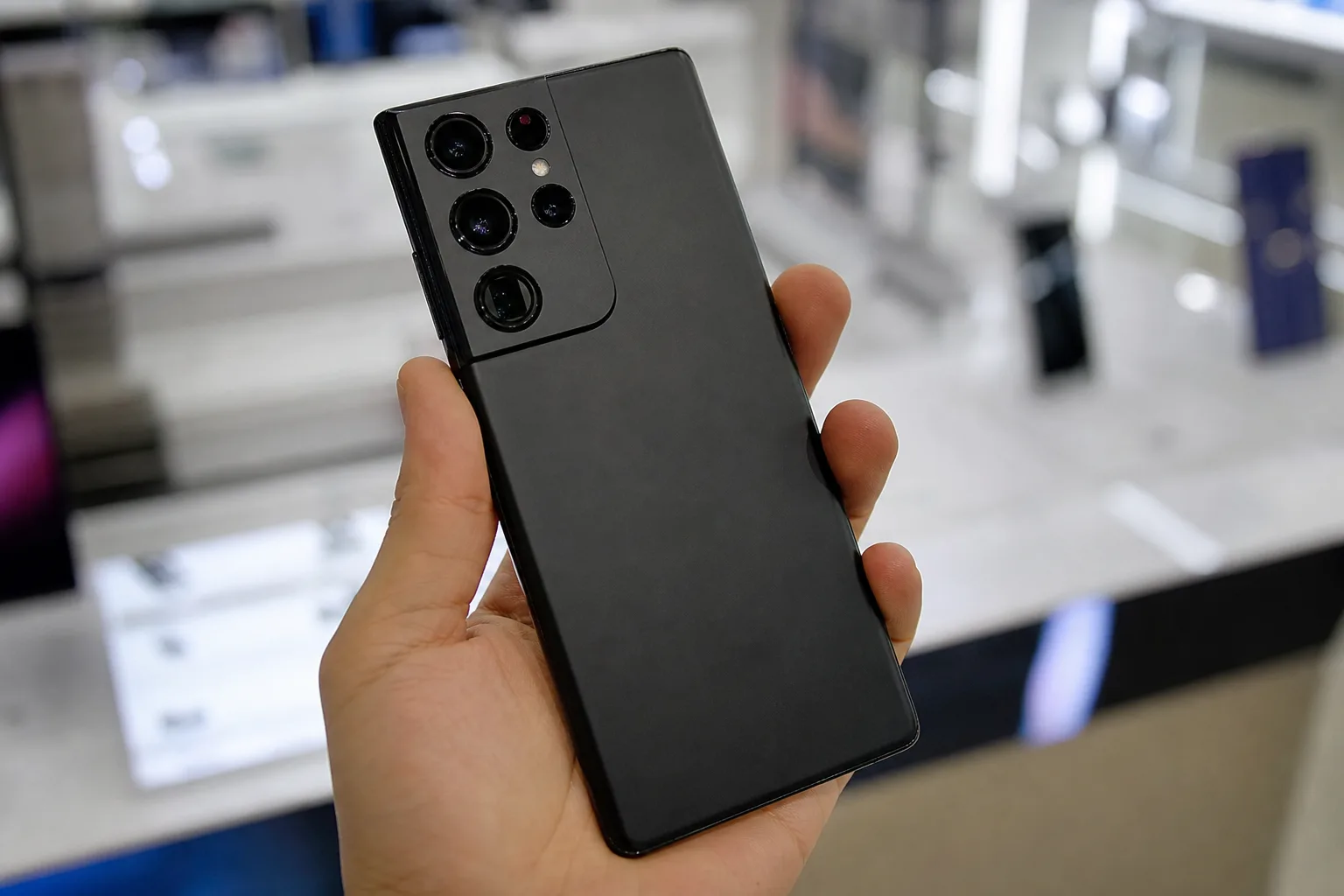
- The Galaxy S26 Ultra was the world’s best-selling Android phone during the second quarter of 2026, according to Counterpoint Research.
- Galaxy S26 Ultra sales benefited from Samsung’s unusually late February launch, which moved more early demand into the April-to-June quarter.
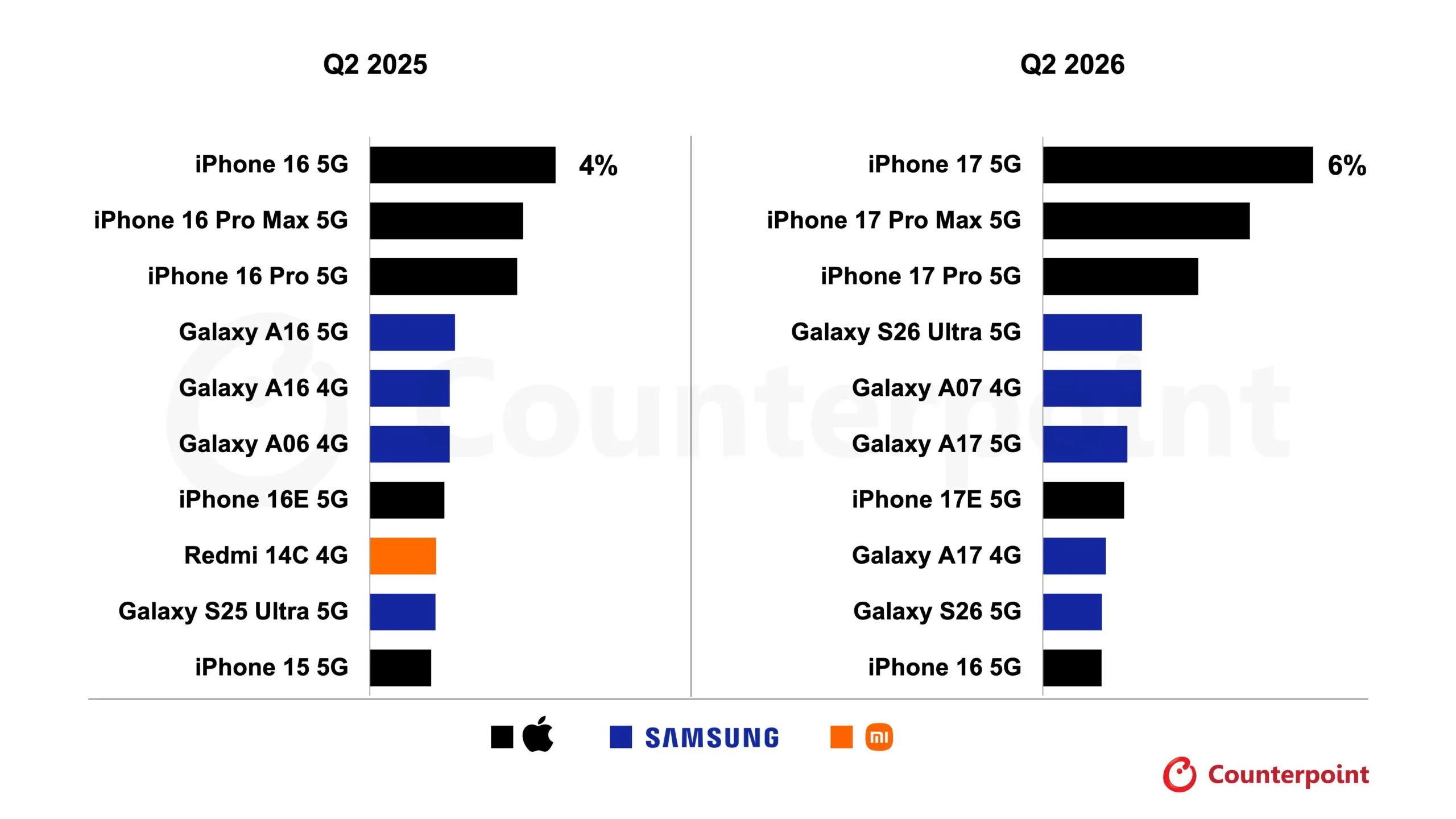
- Samsung placed five phones in Counterpoint’s global top ten, spanning its flagship S series and lower-cost Galaxy A lineup.
- Apple still held the top three global positions, showing premium Android momentum has not dented the iPhone’s broader sales advantage.
Table of Contents
Galaxy S26 Ultra breaks the usual Android sales pattern
The Galaxy S26 Ultra has done something expensive Android phones rarely manage: it became the best-selling Android handset worldwide in the second quarter of 2026. Counterpoint Research places Samsung’s $1,300 flagship fourth across all smartphones sold, behind only Apple’s iPhone 17, iPhone 17 Pro Max, and iPhone 17 Pro.
That fourth-place finish matters because the global Android volume crown usually belongs to a budget phone. A cheap Galaxy A model, a Redmi handset, or another device sold in enormous numbers across India, Southeast Asia, Latin America, and Africa is the more familiar story. Premium phones get attention; affordable phones shift units. The Galaxy S26 Ultra temporarily flipped that formula.
Counterpoint calls it the first time an “ultra-premium” Android device has led Android sales during a second quarter. That’s a real milestone for Samsung, even if it comes with an asterisk large enough to see from orbit: Samsung moved the S26 launch later than usual, releasing the line on February 25. Senior analyst Harshit Rastogi said the timing “shifted more sales into Q2.”
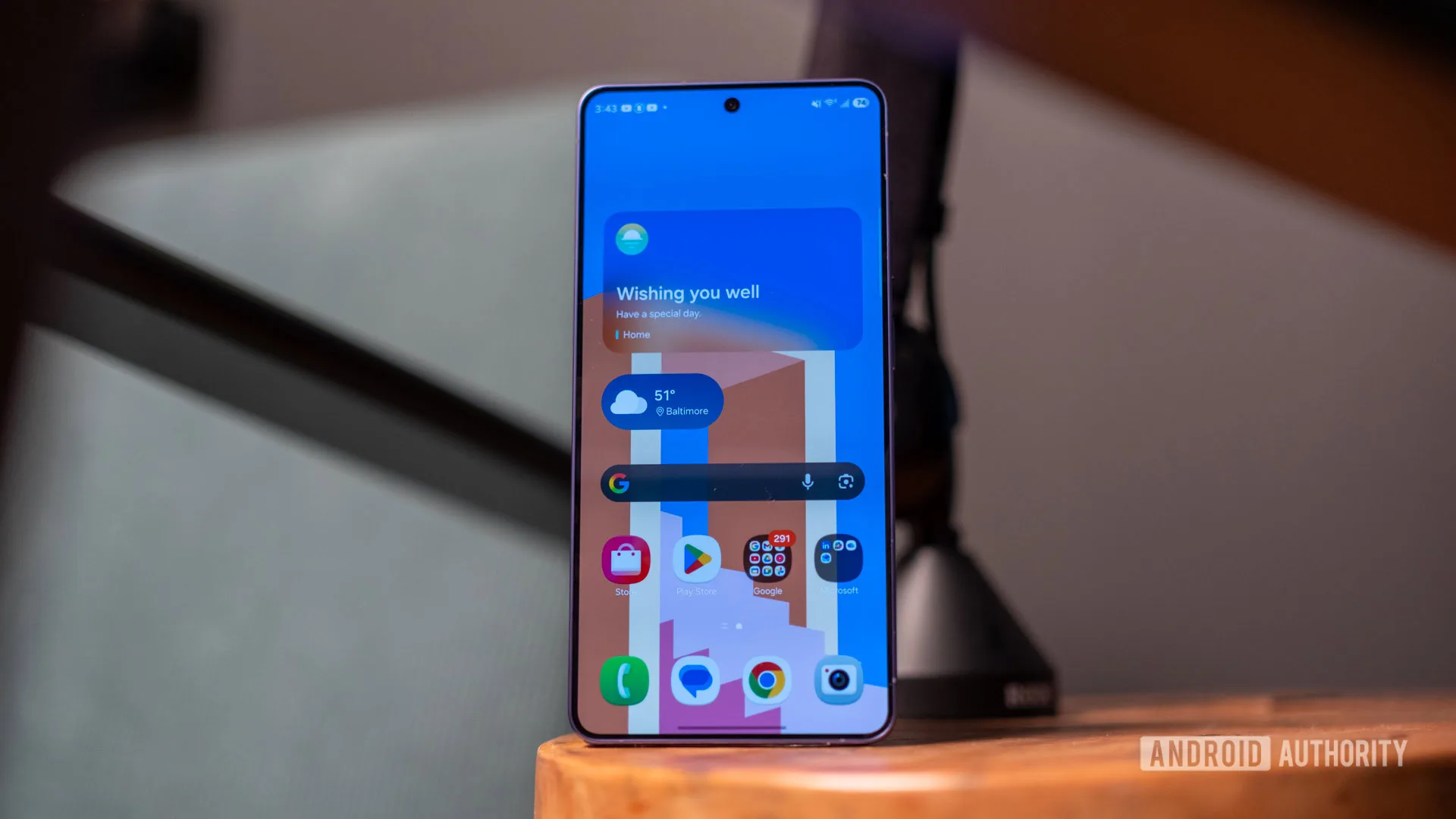
This doesn’t prove that everyone suddenly decided a four-figure phone is a sensible purchase. It means the sales calendar gave Samsung’s flagship a much longer runway in the April-to-June reporting window than its predecessors typically get.
A delayed launch can make a quarterly chart look very different
Smartphone rankings are snapshots, not permanent scoreboards. Release timing changes them dramatically. Samsung normally introduces its Galaxy S phones early enough that the initial retail rush heavily boosts first-quarter numbers. By pushing the S26 family closer to March, Samsung effectively carried a chunk of launch demand into Q2.
That helps explain the contrast with last year. The Galaxy S25 Ultra reached ninth place in Counterpoint’s Q2 2025 ranking, while the regular Galaxy S25 missed the list entirely. This time, the Galaxy S26 Ultra climbed to fourth and the standard Galaxy S26 reached ninth. Samsung didn’t merely have one strong flagship; it had a healthier-looking high-end range.
Still, I’d resist declaring a permanent premium-phone boom based on one quarter. Quarterly market-share lists can be a little like judging a restaurant by the line outside on opening weekend. You need to know when the doors opened, what promotions ran, where inventory landed, and whether competitors had a new product sitting in warehouses.
The more useful read is that Samsung’s distribution machine remains formidable. It can turn a flagship launch into a global event across carriers, retailers, trade-in programs, and regional storefronts at a scale most Android brands simply can’t match. Google sells plenty of Pixels by its standards; Samsung sells phones with the logistical force of a consumer-electronics utility.
Samsung’s five-phone showing tells the broader story
The Galaxy S26 Ultra may have grabbed the headline, but Samsung’s depth on the chart is arguably more valuable. The Galaxy A07 4G ranked fifth, the Galaxy A17 5G took sixth, and the Galaxy A17 4G landed eighth. Add the base S26 in ninth, and Samsung accounted for half of the ten best-selling smartphones in Counterpoint’s global table.
That range is the company’s real advantage. Apple’s lineup dominates the high end with startling consistency, but Samsung can compete for a buyer at the lower end of its lineup and another spending $1,300 without sending either customer to a different brand. Xiaomi’s Redmi 14C 4G appeared in the same Q2 ranking a year ago, but no Xiaomi model made this year’s top ten.
Counterpoint also highlighted a less flashy common thread: every Samsung phone in the ranking carries a promise of at least six years of software updates. That won’t be the sole reason someone buys an A07 rather than a rival, frankly. Price, retailer financing, battery life, and brand familiarity tend to win that battle. But long support windows are becoming a tangible part of the purchase calculation, especially as consumers hold on to phones for longer.
Samsung has spent years borrowing one of Apple’s strongest arguments: a phone should remain useful long after the first year of ownership. The company’s software-support commitments have helped make that case more credible. Six years is no longer a premium-only perk, and that is quietly changing the Android value equation.
Apple still owns the top of the table
For all of Samsung’s momentum, the larger ranking remains an Apple story. The iPhone 17 led global shipments in Q2, followed by the iPhone 17 Pro Max and iPhone 17 Pro. The iPhone 16 rounded out the top ten in tenth position. Apple occupied the first three slots with phones that are hardly cheap, which says plenty about the durability of the iPhone upgrade cycle and the company’s grip on premium spending.
Samsung’s achievement, then, is not that it beat Apple overall. It didn’t. The Galaxy S26 Ultra beat every other Android phone in a quarter where high-end devices often lose out to mass-market models. That’s a narrower claim, but still an impressive one.
Android makers should take note. Chasing Apple at the very top is expensive and difficult, yet Samsung has shown there is demand for a fully loaded Android phone when the hardware, software policy, retail muscle, and launch cadence line up. The Ultra name has become Samsung’s clearest answer to the Pro Max, even if its sales volumes still sit a tier below Apple’s.
What Samsung needs to prove next
The real test comes when the calendar stops helping the Galaxy S26 Ultra. A normal early launch next year could pull demand back into Q1 and make a Q2 comparison look weaker even if annual sales improve. That’s why annual shipment data, not a single quarterly ranking, will ultimately tell us whether the Ultra has expanded its audience.
My read is that Samsung should take the win without overreading it. The company has earned a powerful marketing line, and it has proof that its flagship can sit near Apple at the global sales counter. But the bigger opportunity lies in connecting that flagship prestige to the Galaxy A buyers who already make up the backbone of its business. If Samsung can keep those customers in its ecosystem for six years, the next upgrade may be worth far more than one favorable quarter.