

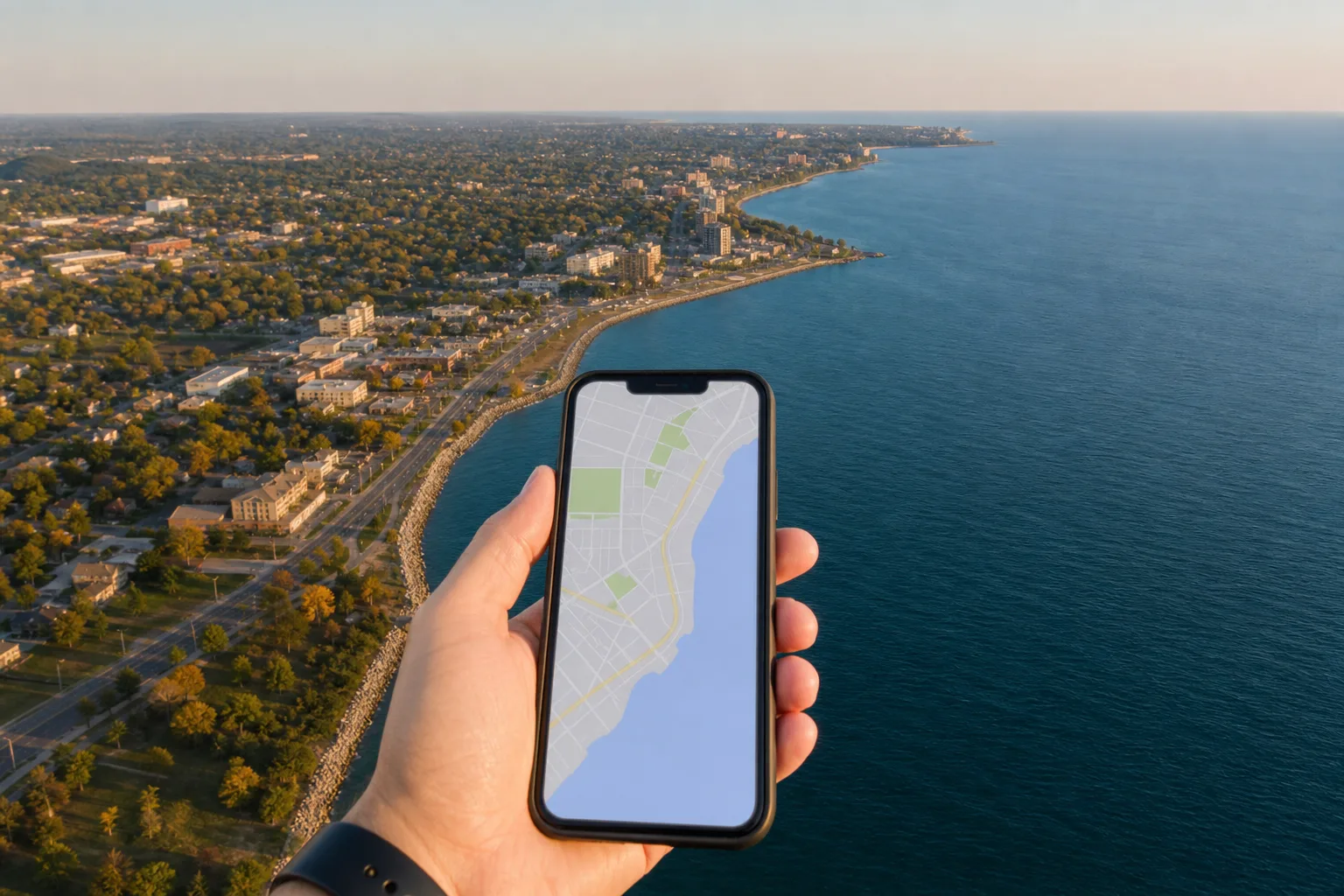
- Lake America is rolling out on Apple Maps for US users, while Canadian users continue to see Lake Ontario.
- The Lake America change follows a reported direct appeal from President Trump to Apple over the federal naming order.
- Apple and Google have adapted their map labels by region, turning a geographic name into a cross-border political display.
- MapQuest’s refusal to rename Lake Ontario briefly pushed the aging navigation service to the top of Apple’s App Store.
Table of Contents
Lake America arrives on Apple Maps
Maps are supposed to settle arguments about where things are. Instead, Lake America has turned Apple Maps into the latest front in a very public disagreement over who gets to name one of North America’s most recognizable bodies of water.
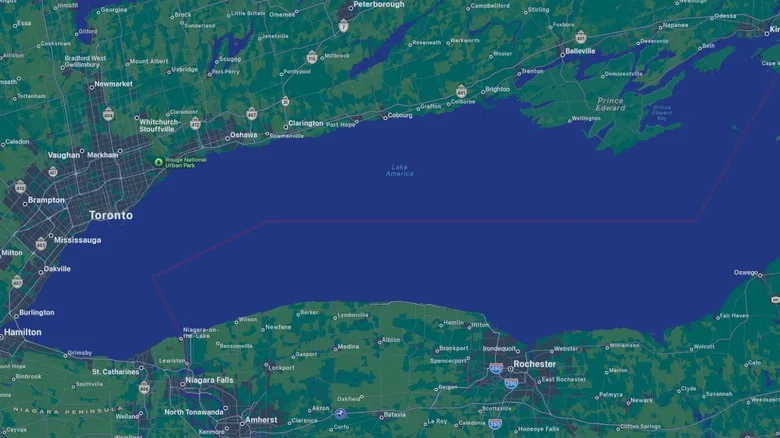
Apple has begun showing Lake Ontario as Lake America for users in the United States, following an executive order from President Donald Trump. The change does not appear to be identical everywhere yet: Bloomberg reported that Canadian users will continue to see Lake Ontario, while people in other countries may see both names. At publication time, the desktop version of Apple Maps showed the new US label, while some mobile users were still seeing both names during the rollout.
A staggered launch is normal for a service with Apple’s scale. The unusual part is the object being updated. This isn’t a newly built road, a business listing, or an amended speed limit. It is a Great Lake with a name used by Canada, international organizations, educators, scientists, shipping operators, and millions of people who live along its shore.
Apple Maps’ US view now reflects the federal preference, a reminder that map labels can change as quickly as any other software setting.
Why Lake America became an Apple problem
Interior Secretary Doug Burgum said Trump had “reached out to Apple directly,” according to Reuters. That detail matters. Apple can reasonably say it is aligning the US-facing version of its map with the federal government’s naming direction. But a direct presidential request makes this feel less like an ordinary geographic-data update and more like a visible test of corporate compliance.
Lake America is also not Apple’s first encounter with the administration’s map-politics agenda. Apple and Google previously updated US map labels for the Gulf of Mexico to read Gulf of America after a separate executive order. In both cases, the practical effect is narrow: a map can show different labels depending on where its user is located. Yet the symbolism is broad, especially when the feature in question is installed by default on phones.
Map providers have long made regional calls on disputed geography. Google Maps, for example, uses localized naming for places whose sovereignty or borders are contested, because a single global label often satisfies nobody. Apple’s treatment of Lake America follows that same product pattern: the US gets one name, Canada gets another, and elsewhere users may get both. Technically, that is a sensible way to avoid forcing one country’s political language on another.
Still, there is a difference between carefully handling a long-running international territorial dispute and changing the presentation of a shared lake by executive order. The former is an unavoidable mapping challenge. The latter looks, frankly, like a company choosing how prominently to display a political demand.
A name on a map can travel far
Navigation apps are part utility, part public reference book. They shape how a kid searches for a school project, how a traveler plans a drive to Niagara, and how reporters, businesses, emergency services, and logistics teams describe a place. When Apple Maps adopts Lake America, it does not legally rewrite Canadian usage. It does, however, give the term a powerful daily distribution channel.
The regional split may be the most consequential part of Apple’s decision. The company is not removing Lake Ontario from the world. It is creating different versions of the same geographic reality for different audiences. Anyone who has watched streaming catalogs vary by country will understand the basic mechanics. But geography carries a special authority. A map feels factual even when it is making editorial choices.
The United States has a formal process for standardizing domestic geographic names through the US Board on Geographic Names, which is administered by the US Geological Survey. That process helps federal agencies use consistent terminology, but it cannot compel Canada or other nations to adopt US naming preferences. Lake Ontario is shared by the two countries, and Canada has every reason to keep using the name it recognizes.
The politics around the label land at a particularly strained moment in US-Canada relations, with trade friction already putting pressure on a relationship that normally runs on quiet competence. You can argue over whether a map label is trivial. Try making that argument to a Canadian city whose waterfront, tourism materials, local businesses, and history are tied to Lake Ontario.

MapQuest found an opening in the backlash
The most entertaining side effect may be MapQuest’s sudden return to relevance. The veteran mapping brand said on X that it would not rename Lake Ontario, and it subsequently climbed to the top of Apple’s App Store navigation rankings. Remember MapQuest? For a lot of internet users, it occupies the same mental shelf as printing directions before a road trip. Yet its stance gave people a reason to download it.
That spike does not mean MapQuest is about to become a durable threat to Apple Maps or Google Maps. Habit is brutally hard to break in navigation, and the largest platforms are woven into phones, cars, search engines, and business listings. But the episode demonstrates that naming decisions can become product decisions. A small competitor can differentiate itself by refusing an update that larger platforms decide they cannot—or will not—resist.
My read is that Apple’s compromise will hold: Lake America for US users, Lake Ontario in Canada, and a dual label elsewhere. It minimizes legal and diplomatic exposure while meeting Washington’s immediate demand. But it also establishes a precedent worth watching. If governments increasingly treat consumer maps as a political scoreboard, Apple, Google, and every smaller mapmaker will be asked to decide which version of the world appears on your screen.

