

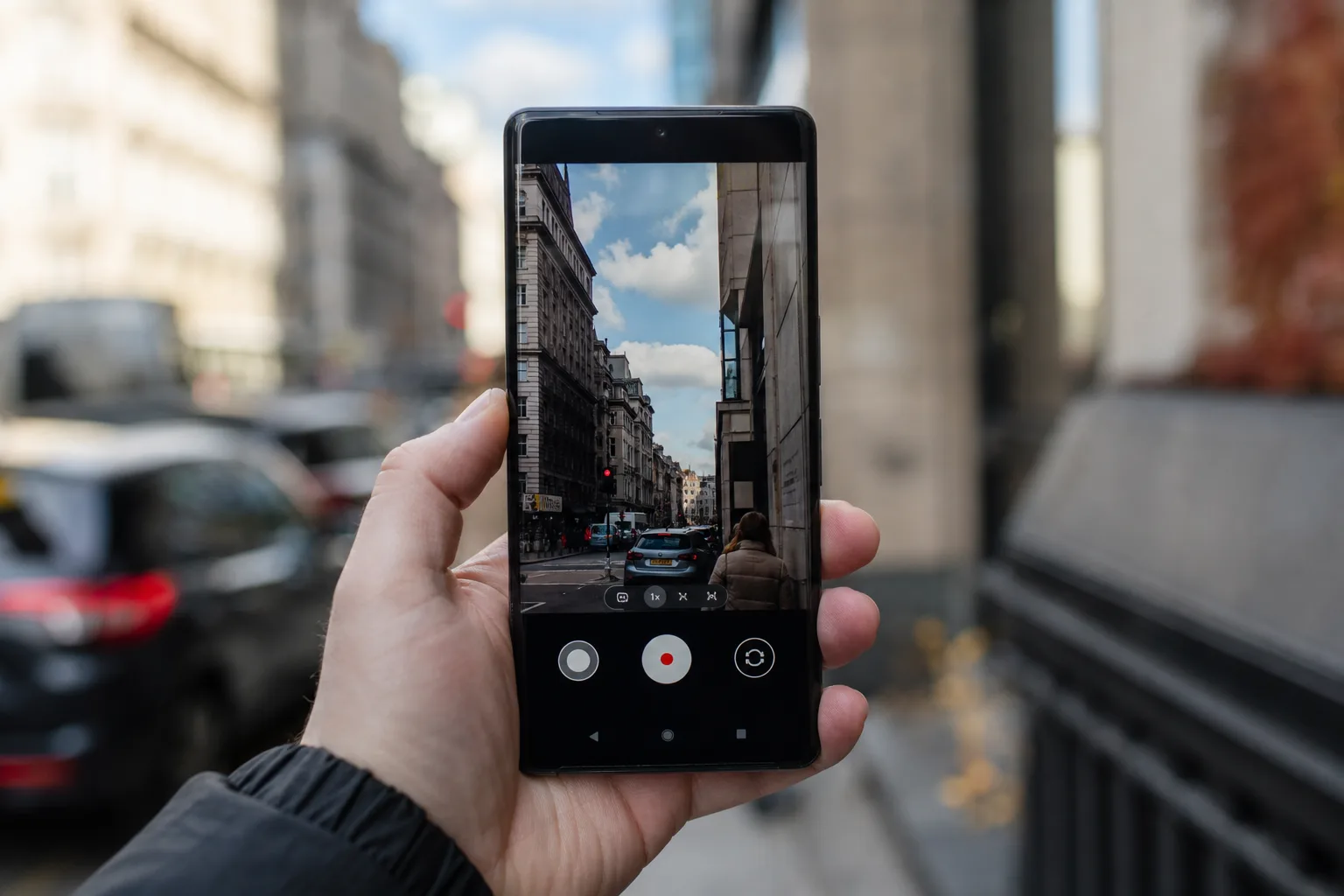
Phone makers love reserving their neatest camera trick for the next expensive handset. That is why Samsung Horizontal Lock showing up on the Galaxy S25 is more interesting than it first sounds. A video shared by X user CID appears to show the Galaxy S25 holding recorded footage upright as the phone itself is slowly rotated through a full turn. For anyone who has watched an otherwise good clip become sideways chaos, the appeal is immediate.
The feature has reportedly arrived in One UI 9 Beta 1, Samsung’s new Galaxy S25 beta release based on Android 17. Samsung’s public changelog does not appear to call out every camera change, so this is the sort of addition that tends to emerge only after beta testers start poking through menus and trying things in the real world.
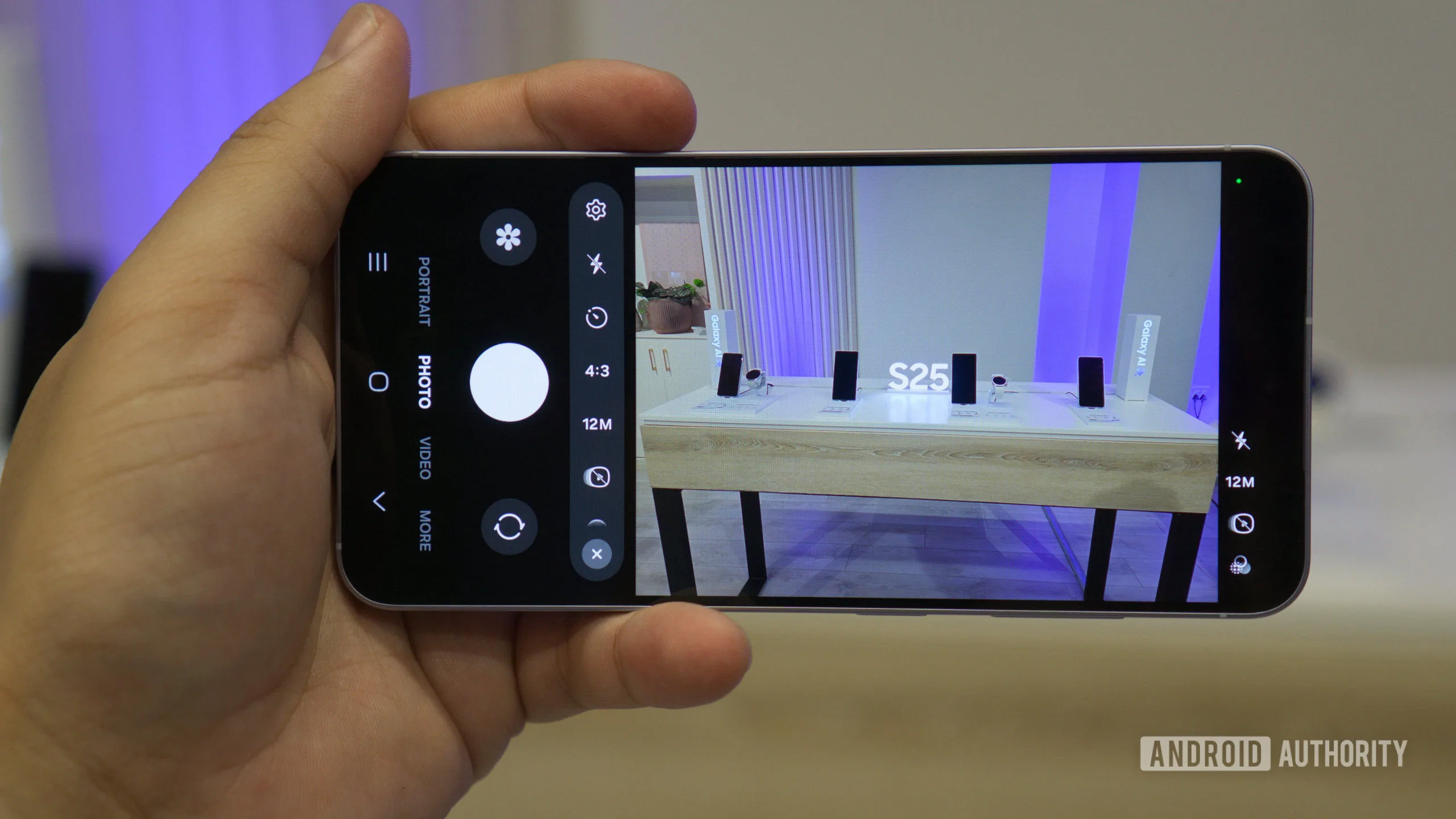
- Samsung Horizontal Lock has surfaced in the Galaxy S25 One UI 9 Beta 1 camera experience, according to a shared demonstration.
- The Samsung Horizontal Lock feature keeps Super Steady footage upright while a user rotates or turns the handset during recording.
- Samsung appears to be bringing a Galaxy S26 camera capability to its previous flagship generation rather than holding it back.
- Heavy cropping remains the likely trade-off, making the mode best suited to action clips rather than everyday video recording.
Table of Contents
Samsung Horizontal Lock keeps the horizon where it belongs
The basic job of Samsung Horizontal Lock is simple: it tries to stop your video from following every twist of your wrist. In the shared clip, the handset rotates while recording, but the resulting frame remains vertically oriented instead of spinning with the device. Think of it as a digital gimbal’s most useful instinct: keep the world level even when the person holding the camera is not.
Samsung first introduced the tool on the Galaxy S26 line as part of its Super Steady video mode. It uses the phone’s motion sensors alongside aggressive image cropping to create a stable, horizon-locked frame. The broader mechanics behind video stabilization tools involve leaving extra room around an image, then shifting the visible crop to counter movement.
That last point matters. Samsung Horizontal Lock is not magic, and it cannot repeal physics. If the camera needs room to reframe a clip while you tilt, shake, or flip the phone, it has to discard pixels around the edge. The final shot may look calmer, but it will usually have a narrower field of view and potentially less detail than standard video.
Still, that is a reasonable bargain in the situations where this mode makes sense. Picture filming a child on a bike, walking through a crowded concert, or trying to capture a quick vertical social video while moving around. A level clip is often more watchable than a technically sharper one with a horizon bouncing around like a poorly mounted picture frame.
Why this Galaxy S25 addition matters
Samsung Horizontal Lock had previously been spotted in an internal One UI 9 build for the Galaxy S25 Plus, which suggested Samsung was at least testing the possibility. A public beta appearance is a stronger signal, though beta software always comes with an asterisk. Features can change, vanish, or arrive only in particular regions before the final stable update lands.
Even so, my read is that Samsung deserves some credit here. The smartphone business has developed an exhausting habit of treating software features as artificial hardware boundaries. A new phone gets a clever camera toggle; last year’s model, which has plenty of processing power, somehow does not. Apple and Google do this too, sometimes for legitimate sensor or performance reasons, and sometimes because the annual upgrade cycle needs a sales pitch.
If Samsung Horizontal Lock reaches the finished One UI 9 release for the full Galaxy S25 family, it would be a welcome counterexample. The Galaxy S25 is hardly an underpowered relic. There is no obvious reason an advanced stabilization option should be reserved exclusively for its successor if the older phone can deliver a credible result.
There is a commercial logic to sharing it as well. Samsung sells more than annual launch excitement; it sells a promise of long-term support. Bringing visible, practical camera improvements to a year-old flagship makes that promise feel less like marketing copy and more like a reason to stay in the ecosystem.
Super Steady has a price: crop, light, and expectations
Before anyone starts treating Samsung Horizontal Lock as a substitute for proper camera technique, a reality check is in order. Super Steady modes typically work best in bright environments. They rely on faster shutter speeds and enough detail for the software to stabilize the scene without turning moving subjects into smeared watercolor.
Low light is where the compromises become more obvious. Cropping can reduce the camera’s light-gathering advantage, while stabilization algorithms may struggle with moving people, flashing lights, or a scene that has little visual detail to track. If you are recording a dim restaurant dinner, standard video stabilization may deliver a better-looking clip than the most aggressively locked horizon.
There is also the question of intent. A phone that stays level while you deliberately rotate it can make an action clip look polished, but it can also erase a creative move. Filmmakers sometimes want a Dutch angle or a rolling camera effect because unease is the point. Samsung Horizontal Lock should be viewed as a useful switch, not a permanent default.
One UI 9 may have more S26 hand-me-downs
One UI 9 Beta 1 began rolling out to Galaxy S25 users in South Korea, the United Kingdom, and India, bringing Android 17 into Samsung’s next software cycle. Google’s Android developer documentation is the clearest official reference point for the underlying platform changes, but Samsung’s version of Android always lives or dies by its own apps and features. Camera behavior is a perfect example.
Samsung Horizontal Lock deserves attention beyond its narrow use case. It may be one of several Galaxy S26-era refinements that Samsung is willing to pass down through One UI 9, even when the formal changelog is vague. Beta testers will likely uncover more in the weeks ahead, and not every discovery will make the stable build.
But this one feels like the right kind of upgrade: useful, easy to notice, and not designed to make a perfectly capable phone feel old before its time. Samsung should keep going. The real test is whether it can resist saving the next useful camera button for the Galaxy S27.

