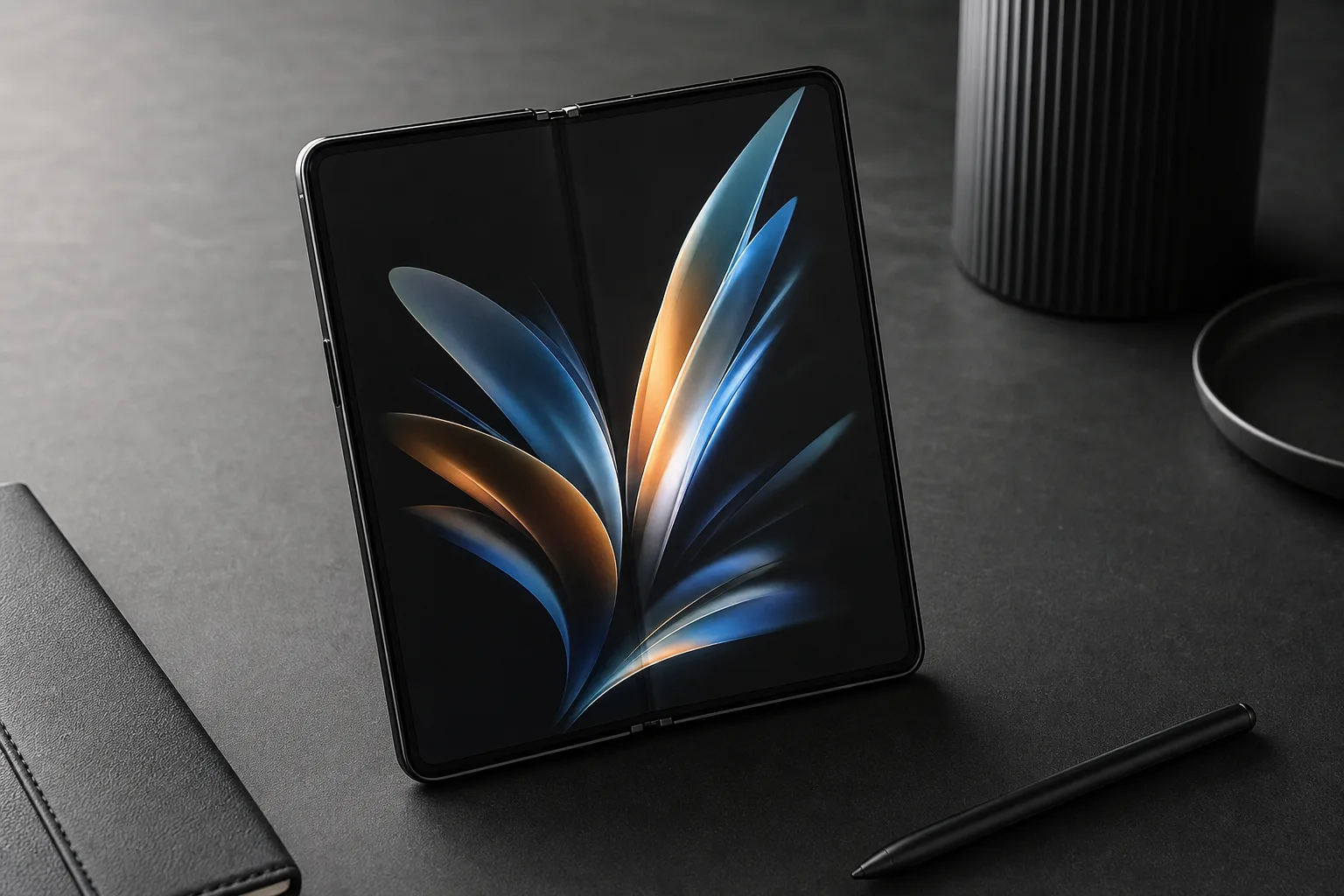
- Google’s Pixel 12 Pro Fold is reportedly being built around a dual-UTG panel that could make the inner-display crease much harder to see.
- A new supply-chain report says Google’s Pixel 12 Pro Fold could use display technology related to Apple’s first foldable iPhone.
- Samsung Display is reportedly working with Google, Oppo, and Vivo on custom ultra-thin glass assemblies for their upcoming foldable phones.
- A smoother screen would close one of Google’s most obvious gaps as Samsung, Oppo, and Honor improve their foldable display hardware.
Table of Contents
Pixel 12 Pro Fold could finally tackle the crease
Google has spent years making foldables that are sensible, capable, and just a little too easy to describe as sensible. The Pixel 12 Pro Fold, expected in 2027, may be where that changes. A report from Korean outlet The Elec says Google is working with Samsung Display on a dual-layer ultra-thin glass screen architecture intended to greatly reduce the crease running down the center of a foldable display.
That sounds like an incremental component upgrade. It isn’t. The crease has become the visual shorthand for the compromises behind every book-style foldable phone: a visible line across expensive glass, a tactile dip under your finger, and a reminder that the device’s most impressive trick involves bending a display.
Google’s current Pixel Fold line has other strengths. Its software takes better advantage of a large inner panel than many rivals, its camera approach is recognizably Pixel, and Android’s tablet-style app support is healthier than it was a few years ago. But hardware is where Google has looked conservative. Against recent foldables from Oppo, Honor, and Samsung, the inner screen crease has felt more pronounced than it ought to on a premium device.
If this report holds up, the Pixel 12 Pro Fold would be Google’s attempt to close that gap rather than explain it away. Frankly, that is overdue. On premium devices, buyers should not have to accept a display flaw that cheaper competitors are increasingly managing to hide.
What dual ultra-thin glass actually changes
Ultra-thin glass, usually shortened to UTG, is the flexible protective glass layer placed over a foldable OLED screen. It has replaced the plastic-heavy surfaces found on early foldables, bringing a more normal glass-like feel while retaining enough flexibility to bend around a hinge.
The reported design for the Pixel 12 Pro Fold goes further: one UTG layer would sit above the OLED panel while another would support it from beneath. Samsung Display and its partners would reportedly tailor that stack to each phone maker’s mechanical requirements. The goal is simple: keep the folding area from sinking inward so dramatically when the phone is closed and opened.
Think of a folding screen like a hardcover book with a soft, unsupported spine. Even if the cover looks polished, the center will eventually show where the structure gives way. Add support beneath that area, control how the materials bend, and the depression becomes much harder to spot. The difficult part is doing all of this without making the device thicker, heavier, or less durable.
Samsung’s latest foldable-display work reportedly uses a titanium support plate beneath the OLED layer. Oppo has taken a different route, using liquid 3D printing to fill and flatten the folding area alongside thicker glass. The approaches differ, and a dual-UTG Pixel 12 Pro Fold may have its own construction. But the industry is clearly reaching the same conclusion: the crease is now a problem worth solving, not merely tolerating.
Samsung Display has long been one of the central suppliers in this market, providing OLED technology for its sister company as well as outside brands. For more information, see official OLED technology materials. Adding glass and structural support makes the balancing act even tougher.
Apple’s arrival is putting pressure on everybody
The striking detail in The Elec’s report is that Google may be pursuing the same broad display approach expected for Apple’s first foldable iPhone. Apple has spent years watching the foldable category from the sidelines, which is very Apple: let everyone else discover the ugly engineering failures, then enter once the technology can better meet its standards.
Its first foldable has been repeatedly linked to a reduced-crease display, and Apple’s suppliers appear to be treating that requirement as a serious technical target. Whether Apple’s final device truly looks crease-free in ordinary use remains to be seen. Marketing language can be elastic. Still, Apple’s entry could reset consumer expectations in the same way the original iPhone changed expectations around touch interfaces.
For Google, the Pixel 12 Pro Fold matters because it cannot afford to look like a second-generation answer to a first-generation Apple product. Google makes Android, the software foundation of nearly every major foldable outside Apple’s orbit. Yet Samsung has done most of the commercial heavy lifting, while Chinese manufacturers such as Oppo and Honor have often pushed hardware design faster.
A crease-light Pixel 12 Pro Fold would give Google a more credible chance to present its handset as Android’s reference foldable. That is a useful position, especially as Google pushes Gemini features and wider-screen multitasking. A polished inner display makes those software experiences feel less like a demo and more like something you might actually use every day.
The schedule leaves Google with little room for error
The report places Oppo and Vivo launches using this display direction in the first half of 2027, while Google’s next foldable would arrive in the second half, likely around the company’s usual August hardware window. That timing creates a familiar Google problem: its technical improvement may land after rivals have already shown consumers what it looks like.
There is also a big caveat. A less visible crease does not guarantee a better foldable. Google still needs to nail hinge durability, screen protection, battery life, thermal performance, cameras, and the kind of repairability that has been painfully absent from much of the category. Remember when foldable screens felt like devices you had to baby? Buyers have not forgotten, even as the hardware has matured.
The Pixel 12 Pro Fold will also face the awkward question of price. Dual UTG layers and more sophisticated supporting structures are unlikely to make manufacturing cheaper. If Google asks more money for a smoother screen, consumers may reasonably ask what else they are getting for it. Thinness, better cameras, longer battery life, and an improved hinge would all matter more than a spec-sheet victory.
My read is that Google has to make this move. Foldables have reached the stage where the novelty is no longer enough; people are comparing them like regular flagship phones, and regular flagship phones do not have a visible groove through the middle of their displays. If the Pixel 12 Pro Fold can erase that reminder without introducing a new compromise, Google may finally have hardware that matches its ambitions for Android’s most interesting form factor.