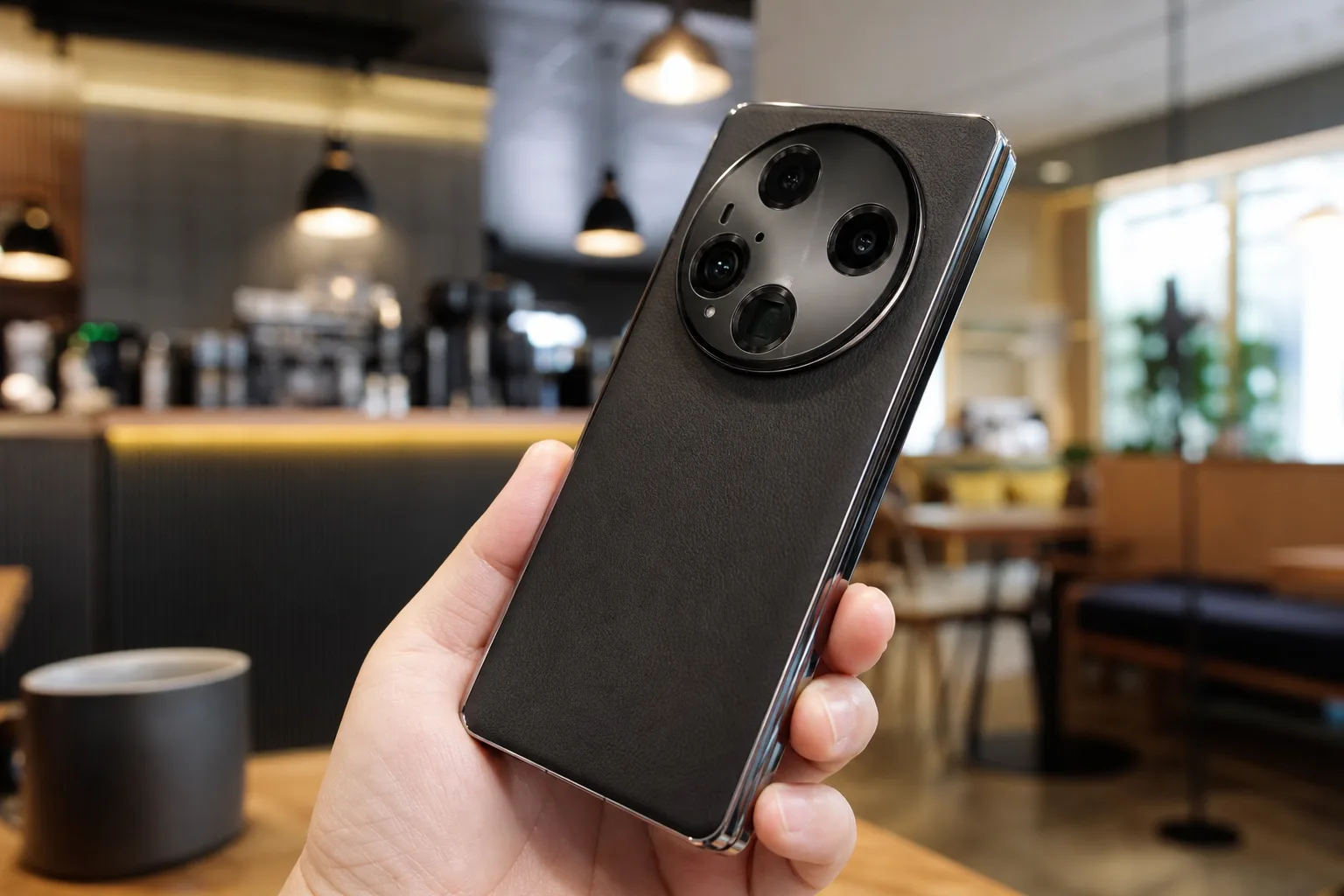
The Oppo Find X10 Pro Max appears to be making a very specific argument: flagship phones do not have to look, feel, or behave like an iPhone to command iPhone-level money. That may sound obvious, but in the premium-phone business it is a harder trick than it ought to be. Apple sells consistency. Samsung sells familiarity. Google sells computational cleverness. Oppo is trying to sell desire.
Early hands-on reporting around the global model points to a phone built with that goal front and center: polished materials, an unapologetically large presence, and the sort of finish meant to be noticed across a café table. The rumored pricing is equally important. If Oppo asks top-tier money, it cannot be merely a handsome Android handset with an ambitious camera bump. It has to feel complete from the first unlock to the fourth year of ownership.
That is the bar now. The expensive-phone market has become brutally unforgiving, and frankly, it should be.
- The Oppo Find X10 Pro Max is positioned as a premium Android phone built to compete where design and camera hardware matter most.
- A global version of the Oppo Find X10 Pro Max gives Oppo a clearer opening beyond its core Chinese market.
- Premium materials alone will not settle the flagship battle; software support, cameras, and regional availability remain decisive.
- Oppo’s latest Find branding signals an effort to make a coherent alternative to Apple, Samsung, and Google.
Table of Contents
Oppo Find X10 Pro Max puts design back in the argument
For years, Android makers have struggled with a slightly unfair comparison. An iPhone can make a conservative design change and call it refinement; an Android brand often has to take a much bigger swing simply to earn attention. Oppo has generally been among the companies willing to take that swing with the Find series, using unusual camera layouts, premium glass and metal, and finishes that avoid the generic black-slab trap.
The Oppo Find X10 Pro Max seems to continue that instinct. The big point from an early look is not one isolated specification. It is the physical impression: this is meant to be a luxury object as much as a communications tool. That sounds like marketing-speak until you remember how people actually buy $1,000-plus phones. They hold them every day, put them face-up on tables, photograph their kids and pets with them, and expect them not to feel like a compromise.
Apple understood this years ago. Samsung has learned it, too, especially with the Galaxy S Ultra line. Oppo’s opportunity is to offer a more expressive version of that experience without wandering into gimmick territory. A distinctive phone is good. A phone that requires a five-minute explanation of why its strange hardware is practical is not.
The company already has a credible foundation here. Its Find X flagships have often looked more considered than their sales figures would suggest, particularly in markets where Samsung and Apple dominate retail shelves and carrier stores. The issue has rarely been whether Oppo can design premium hardware. The issue is whether enough people can buy one, service one, and trust it for several years.
The global model matters more than a flashy launch
A global edition of the Oppo Find X10 Pro Max is more consequential than it may first appear. Chinese smartphone makers regularly unveil compelling hardware for their home market, where pricing, software services, and retail relationships work in their favor. Bringing the Oppo Find X10 Pro Max abroad is where the difficult work begins.
Global customers care about details that rarely make a dramatic launch slide: supported cellular bands, local warranty coverage, banking-app compatibility, reliable contactless payments, Android Auto behavior, and the quality of software updates after the launch-week excitement dies down. Anyone who has imported a phone knows the routine. The hardware can be excellent, right up until your carrier’s 5G network behaves oddly or an essential app decides the device is not supported.
Oppo has experience selling internationally, and its official global site shows the company is hardly a newcomer. Still, the premium tier is a different fight. At lower prices, a buyer may forgive a few rough edges in return for better hardware. At flagship prices, those edges become the whole story.
That is why the global release deserves more attention than the usual “Android alternative” framing. The Oppo Find X10 Pro Max needs to be available in meaningful markets, not treated as a collector’s item for import enthusiasts. It needs a clear update policy, strong carrier compatibility, and a retail presence that lets people try it before spending serious money. The most beautiful phone in the world cannot build market share if customers have to hunt for it like rare vinyl.
Camera ambition is table stakes now
No modern flagship can skip the camera conversation, and the Oppo Find X10 Pro Max arrives in a category where camera hardware has become a kind of arms race. Bigger sensors, elaborate periscope lenses, tuned image processing, and AI editing features are everywhere. The old distinction between “camera phone” and “normal phone” has mostly collapsed.
That creates a strange problem for Oppo. The company can put outstanding hardware on paper, but buyers will compare the result with an iPhone’s reliable video, a Pixel’s point-and-shoot processing, and Samsung’s expansive zoom range. They will not grade on a curve because the camera module looks striking.
My read is that Oppo’s best chance is not to chase every rival’s strength at once. The Oppo Find X10 Pro Max should focus on consistency: natural-looking people, dependable low-light photos, fast shutter response, and zoom that holds up beyond a sunny demo zone. Those are the moments where expensive phones earn their keep. Nobody cares that a camera can capture a dramatic moon shot if it keeps turning a moving toddler into a blurry watercolor.
There is also a wider industry lesson here. Smartphone photography is moving into an era where component lists matter less than taste. Most premium phones can capture a technically good image. The differences are increasingly about color science, skin tones, motion handling, and whether the software understands when to leave the photo alone. Oppo has room to establish a recognizable look, provided it does not confuse aggressive processing with personality.
What the Pro Max name really commits Oppo to
“Pro Max” remains Apple’s vocabulary, even when Android brands use different labels for the same idea: the largest, priciest, most feature-packed version. The Oppo Find X10 Pro Max is entering that space with expectations already set by the iPhone 16 Pro Max, Samsung’s Galaxy S Ultra family, and Google’s Pixel Pro XL devices.
Those rivals have something Oppo cannot manufacture overnight: accumulated trust. Buyers know roughly what they will get from an iPhone, a Galaxy, or a Pixel. They know where to find cases, where to get repairs, and how their devices fit into broader ecosystems of watches, tablets, laptops, and earbuds.
Oppo can answer with hardware confidence and perhaps a more adventurous design language, but it also needs to make ownership boring in the best way. Updates should arrive on schedule. Battery life should remain solid six months later. The software should avoid nagging users with duplicate apps and regional clutter. Customer support should be easy to find. This is not glamorous work, but it is what separates a great launch phone from a great phone.
If the rumored premium price holds, the Oppo Find X10 Pro Max will be judged less as an underdog and more as a direct rival. That is a tougher assignment, yet it is also where Oppo wants to be. The company does not need to turn every iPhone owner into an Android convert. It needs to persuade enough buyers that the safe choice is no longer the only sensible one.
A better kind of Android competition
The strongest argument for the Oppo Find X10 Pro Max may be that it gives the high-end Android market another serious personality. Samsung’s Ultra phones are increasingly the dependable all-rounders. Google’s Pixels are the software-forward cameras. OnePlus tends to chase speed and enthusiast value. Oppo can occupy the space for people who want an Android flagship that feels deliberately designed rather than assembled from a checklist.
That positioning has real value, assuming Oppo backs it with the dull but essential fundamentals. Premium phones are not won through one launch event or one glossy finish. They are won through confidence. Can this handset compete for four years, across networks and updates and accidental drops? Can a buyer recommend it without adding a dozen caveats?
We will need a full review, not a first look, to answer that. But the direction is promising: the market benefits when Android makers stop trying to imitate Apple’s restraint and instead make a convincing case for their own version of premium. Oppo now has to prove that this phone is more than a very attractive first impression.