

The M6 MacBook Pro has a familiar Apple problem: it may be a very good laptop that makes less sense the longer you stare at its price tag. At $1,999, this entry-level 14-inch Pro arrives with a new chip but apparently without much of the new stuff people associate with a premium MacBook purchase.
That distinction matters. Apple’s laptop line has always been ruthlessly tiered, but this particular machine seems trapped in the least comfortable gap of all: too expensive to be a casual upgrade, too constrained to feel like the full-fat professional model. It’s a capable middle child, and middle children rarely get the exciting hand-me-downs.
- The M6 MacBook Pro brings a capable new chip to Apple’s familiar 14-inch chassis, but skips the visual upgrades buyers expect.
- At $1,999, the M6 MacBook Pro costs substantially more than previous entry models while sitting uncomfortably close to premium configurations.
- Apple’s product segmentation leaves this model caught between the lighter MacBook Air and more ambitious high-end MacBook Pro hardware.
- Buyers who need sustained performance may find value here, but most shoppers should compare storage, memory, and display trade-offs carefully.
Table of Contents
M6 MacBook Pro performance meets an old shell
The main attraction is Apple’s M6 processor. If the reporting so far is right, it should deliver the kind of fast, quiet, battery-conscious performance Apple silicon users now take almost for granted. That’s no small thing. Apple’s in-house chips have reset expectations for laptops since the M1 arrived in 2020, particularly for people who spend their days in photo editors, development tools, audio software, or an unreasonable number of browser tabs.
The M6 generation may also come with a small strategic wrinkle. Rumors suggest Apple may not produce M6 Pro, M6 Max, or M6 Ultra variants, which would give the standard chip a more distinctive role than usual. If that holds, the base M6 could avoid being immediately eclipsed by three bigger siblings with similar naming. But rumors are not a product roadmap, and buyers should treat that possibility as context, not a reason to rush out with a credit card.
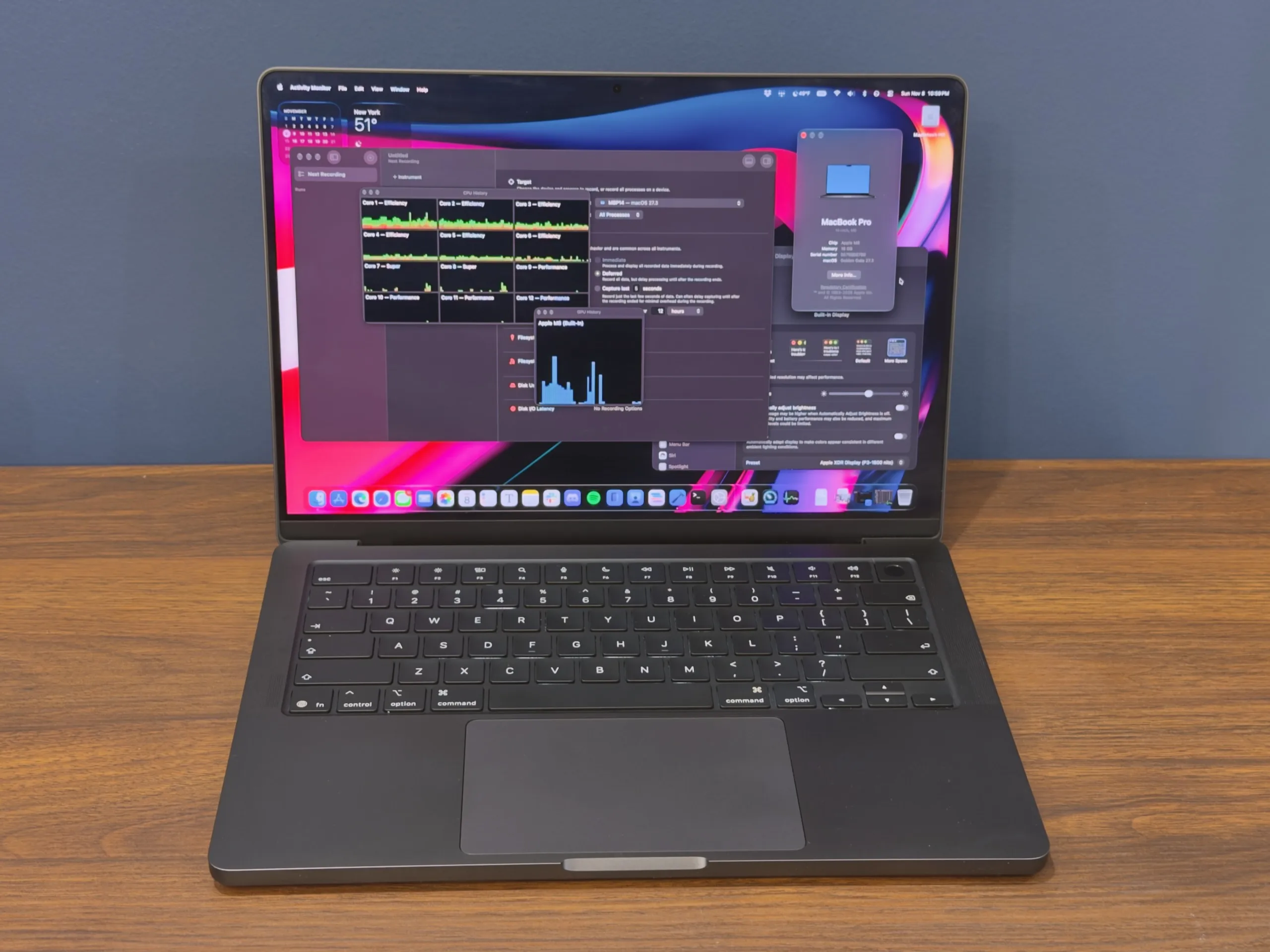
What seems clearer is that Apple has paired the M6 chip with the same broad 14-inch MacBook Pro design it has used since 2021. It remains a handsome machine. The squared-off aluminum enclosure, useful port selection, MagSafe charging, and cooling system are all things many working users will appreciate. This is not a bad physical design; it’s simply no longer new enough to make a $1,999 starting point feel effortless.
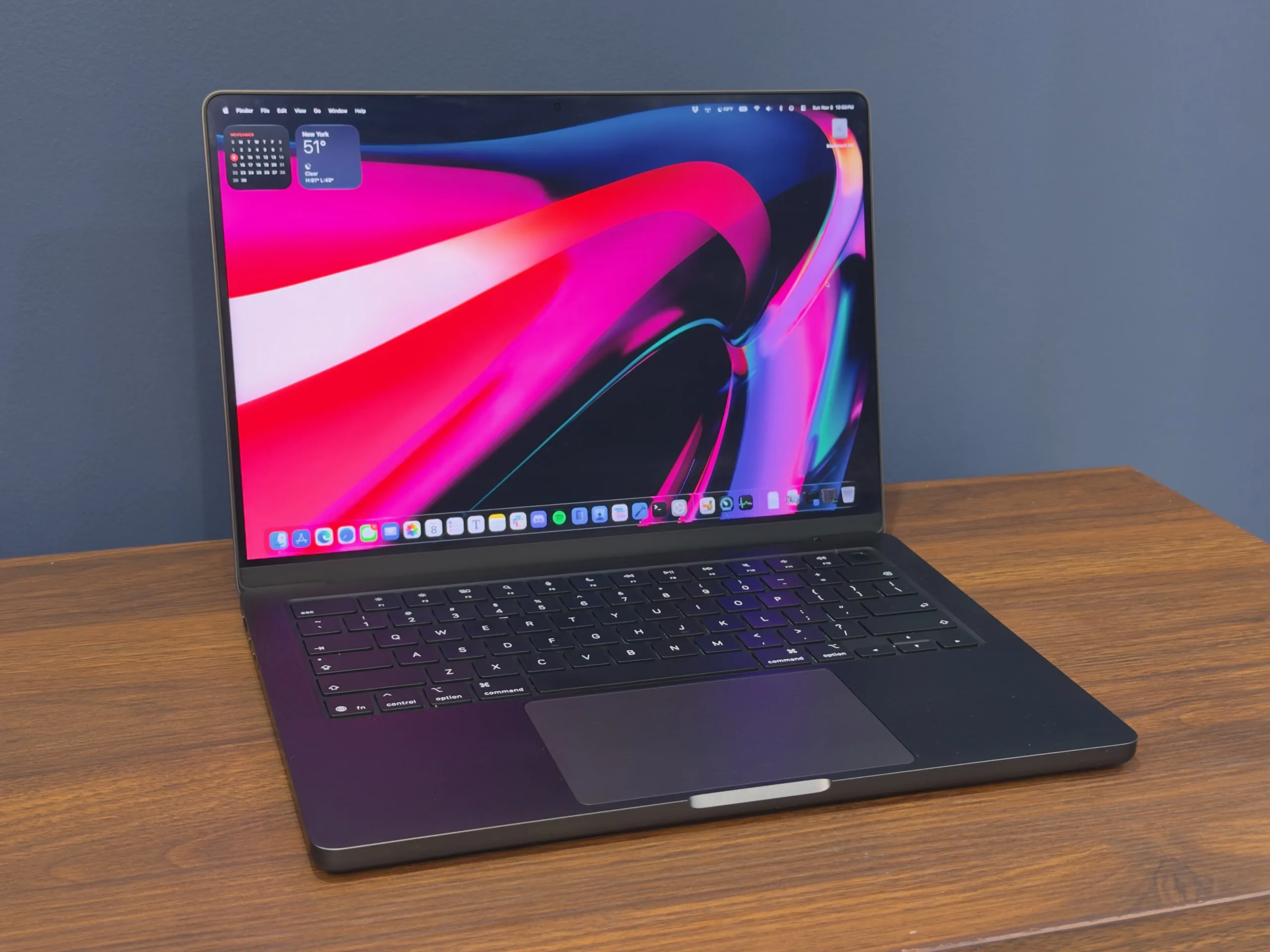
Apple has spent years teaching customers that the word Pro means they should expect more than raw processor throughput. They expect the best screen, the most forward-looking hardware, and a little bit of delight when they open the lid. The M6 MacBook Pro reportedly misses several of those cues: no OLED panel, no touchscreen, no reduced weight, and none of the newer visual flourishes associated with Apple’s more expensive laptop direction.
The $1,999 problem is bigger than one laptop
The pricing is where this gets awkward. The M6 MacBook Pro starts at $1,999, a figure that is $700 above the entry M1 MacBook Pro price from 2020 and $400 above the prior year’s starting M5 model. The earlier price also came with its own caveat: Apple’s broader pricing changes reportedly made a 1TB storage configuration mandatory and raised the cost. Still, consumers don’t buy caveats. They buy the number on the product page.
Two thousand dollars is not an impossible price for a work machine. A freelance video editor, software engineer, architect, or musician can reasonably make that investment back through time saved. But those people are also precisely the buyers likely to inspect RAM limits, external-display support, GPU capability, and storage expansion before choosing a machine. If the entry model carries lower ceilings in these areas than the higher-end MacBook Pros, Apple has made the upsell unusually easy.
The comparison with the MacBook Air is just as uncomfortable. Apple’s Air models have become extremely competent, with strong battery life and enough performance for a huge share of office, school, coding, and creative work. The Pro’s fans and ports still matter for sustained workloads. Rendering video for an hour is different from editing a few photos over coffee. But for ordinary use, the M6 MacBook Pro may feel like bringing a commercial refrigerator to store a week’s groceries: excellent equipment, probably more than most homes need.
Apple’s own MacBook Pro product page has historically sold the family on display quality, power, ports, and all-day mobility. That makes a pared-back entry configuration especially tricky. When the marquee experience is withheld, buyers can see the seams in the lineup.
Apple’s long-running entry-Pro compromise
This is not a new maneuver. Apple has repeatedly used lower-end Pro models as a bridge between mainstream Macs and its true premium machines. Sometimes it has worked. Other times, the compromises have been almost comical. Remember the 13-inch M1 and M2 MacBook Pro? Those machines kept the aging 2016-era design and the Touch Bar long after Apple had quietly moved on. Anyone still maintaining Touch Bar edge cases in macOS has earned a very strong cup of coffee.
The M6 MacBook Pro sounds less compromised than those models in absolute terms. It has a modern 14-inch enclosure and a current-generation processor, which already puts it in a better position. Yet Apple appears to be repeating the same essential calculation: offer enough Pro hardware to justify the label, while keeping the genuinely fresh hardware higher up the ladder.
Frankly, this strategy is becoming harder to defend as laptops mature. The performance gulf between a well-equipped Air and a base Pro is not as intuitive to consumers as it was in the Intel era, when fans, cores, heat, and throttling could radically change the experience. Apple silicon has made even lower-tier Macs feel good. That’s a triumph for Apple engineering, but it complicates Apple marketing.
Who the M6 MacBook Pro is really for
There is still a sensible buyer for the M6 MacBook Pro: someone who needs more sustained performance than an Air can comfortably provide, values the Pro chassis and ports, and has no interest in paying further for the top display or maximum specifications. In a business fleet, where reliability, familiar hardware, and support cycles often outrank excitement, it could be a perfectly rational purchase.
For an individual spending personal money, I’d argue patience is the smarter posture. Compare the exact M6 MacBook Pro configuration against a higher-memory MacBook Air and against the next MacBook Pro tier. Do not compare headline prices alone. Apple is exceptionally skilled at making the starting model look tidy while the useful configuration climbs several hundred dollars.
The larger question is whether Apple can keep treating the base Pro as a holding pen for last-generation ideas. A new chip will carry this machine a long way, because Apple’s chips are genuinely good. But at $1,999, good silicon and a four-year-old shell may no longer be enough. The next move should be simple: either give the entry Pro a clearer identity, or stop pretending the middle of the lineup is where the most demanding buyers want to live.
Frequently Asked Questions
Is the M6 MacBook Pro worth $1,999?
It depends on the workload and the configuration available. The M6 chip appears to offer strong performance, but the $1,999 starting price is hard to separate from the older chassis and missing display upgrades. Buyers should compare it against both the MacBook Air and higher-end MacBook Pro options.
Why does the M6 MacBook Pro use an older design?
Apple has long used product segmentation to reserve its newest industrial design and display technology for more expensive models. The entry 14-inch MacBook Pro reportedly retains the design introduced in 2021, while more premium models receive features such as OLED display technology and touchscreen support.
Who should buy Apple’s entry-level 14-inch MacBook Pro?
It may suit buyers who want the M6 chip in a MacBook Pro but can accept the older design, missing newer display features, and lower memory and storage ceilings than higher-end models.