

- Apple Black Friday deals include a $250 reduction on select M5 MacBook Air configurations, a meaningful discount for current hardware.
- The strongest Apple Black Friday deals may be on AirPods Pro 3, AirPods Max 2 and Apple Watch Series 12 models.
- MacBook Neo at $650 broadens Apple’s entry-level laptop pitch, though buyers should assess storage and performance needs first.
- Deep discounts on iPhone Air and premium iPad Pro configurations suggest retailers are clearing inventory as aggressively as accessories.
Table of Contents
Apple Black Friday deals are unusually broad this year
The headline number is not a single doorbuster. The real story is the breadth of the Apple Black Friday deals now circulating across laptops, headphones, watches, tablets and accessories. A $250 break on a current MacBook Air is the sort of discount that can change a buying decision; a few dollars off a newly released iPad mini, less so. Shoppers should treat this sales week as a chance to buy a device they already needed, not an excuse to assemble an expensive pile of aluminum and USB-C cables.
According to 9to5Mac, retailers are listing the 13-inch M5 MacBook Air with 16GB of memory and 512GB of storage for $1,049, down from $1,299. That same $250 reduction reaches several 13-inch and 15-inch configurations, including models with 1TB of storage and 24GB of unified memory. In a market where Apple hardware rarely gets genuinely cheap soon after launch, that is the sale worth paying attention to.
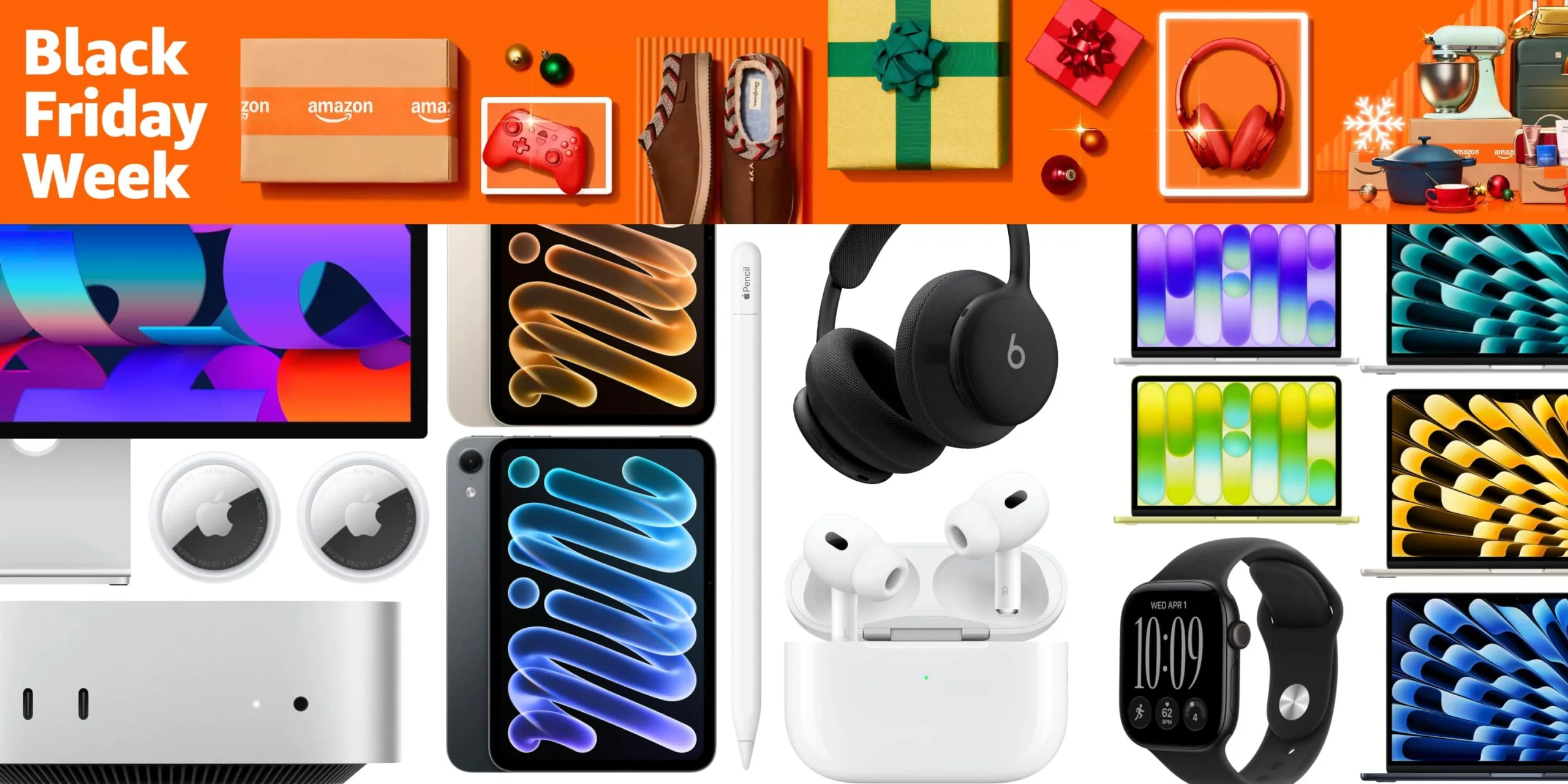
The rest of the list is substantial: the entry MacBook Neo is advertised from $650, the M6 MacBook Pro begins at $1,849 in a 16GB and 1TB configuration, and the M6 Mac mini starts at $779. Apple’s own retail store traditionally prefers gift cards and narrow promotions to straightforward cuts, so third-party pricing is where the real Black Friday action tends to live. That pattern is hardly new, but the direct discount is a much cleaner deal for anyone who does not need another branded gift card in a drawer.
The MacBook Air is the sensible place to start
Among these Apple Black Friday deals, the M5 MacBook Air pricing has the best mix of relevance and savings. The 16GB and 512GB version at $1,049 avoids the two classic compromises of entry-level Apple laptops: too little memory for a machine intended to last years and storage that becomes cramped after a few creative projects, local photo libraries or offline files. For students, remote workers and most people who do not need a sustained-performance workstation, it is likely the most balanced offer in the bunch.
The $650 MacBook Neo deserves a more cautious reading. Its price puts a modern Apple laptop closer to the territory normally occupied by midrange Windows machines and Chromebooks, which is strategically interesting. But the cheapest computer is only the best value if it will still suit you in three years. Buyers should look closely at its memory, storage and port selection before assuming it is automatically preferable to a discounted MacBook Air. A low sticker price can be a bargain, or it can be the tech equivalent of buying the smallest suitcase before a two-week trip.
Apple Black Friday deals also extend to more specialized gear. The reported M6 MacBook Pro reductions range from $150 off 14-inch models with 1TB storage, while 16-inch M5 Pro models with the so-called PROLED XDR display are listed with savings of up to $250. Those are respectable reductions, but the audience is narrower. A developer compiling large projects, a video editor or somebody with serious local AI workloads may reasonably value the extra thermal headroom and ports. Everyone else should resist paying Pro money simply because the word Pro is stamped on the lid.
There is also a $200 cut on several Apple Studio Display versions, bringing standard-glass configurations to $1,399. That remains an expensive monitor by any normal-person definition. Yet Apple’s display pricing has held unusually firm over time, and a discount is relevant for Mac users already committed to its high-resolution ecosystem. Those who are not should compare specifications with professional displays from Dell, LG and Asus before checking out.
Apple Black Friday deals on audio and wearables offer clearer savings
The most immediately understandable Apple Black Friday deals may sit in audio. AirPods Pro 3 are listed at $179, a $70 drop from $249, while AirPods Max 2 fall to $419 from $549. The latter is a sizeable $130 reduction, although $419 still places Apple’s over-ear headphones against formidable competition from Sony, Bose and Sennheiser. Brand loyalty is not a feature set. Anyone outside Apple’s ecosystem should compare codec support, multipoint behavior and comfort reporting before assuming the AirPods Max are the default choice.
The newer Beats 360 headphones are also advertised at $249, down $100. Beats occupies a useful position in Apple’s portfolio: familiar design, broad compatibility and usually less of the precious-object pricing that has shadowed AirPods Max. The numbers make that product worth a look for buyers who want over-ear headphones but do not specifically need Apple’s flagship model.

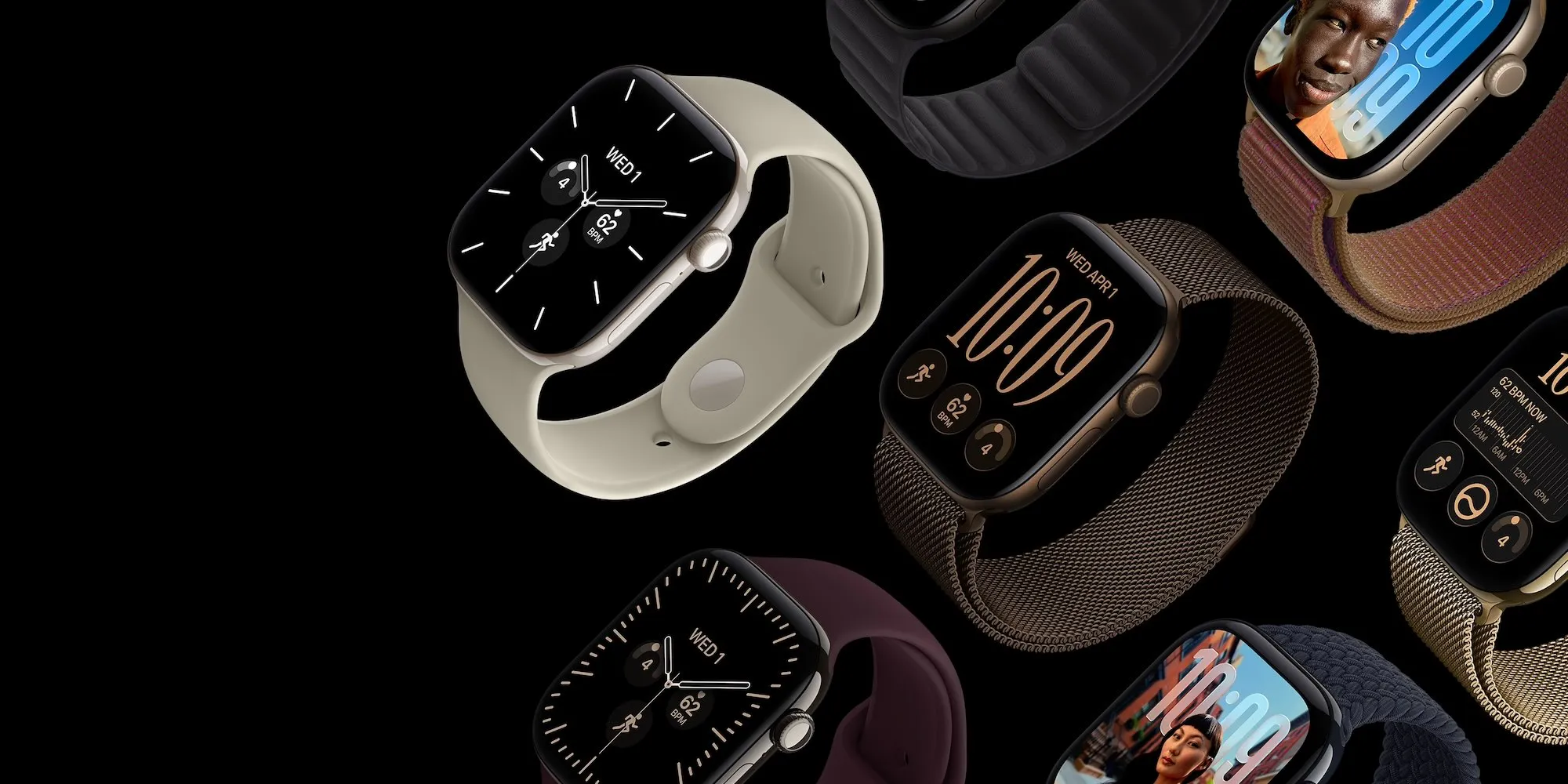
On the wearable side, Apple Watch Series 12 GPS models begin at $329 for 42mm and $379 for 46mm, each $70 below their standard prices. Cellular versions see the same $70 reduction, while ceramic variants are $70 off as well. The Apple Watch SE 3 is down to $199 in 40mm sizing and $229 in 44mm. That makes the SE arguably the more practical gift recommendation: it covers core fitness tracking, notifications and safety features without turning a present into a $700 proposition.
Apple’s official Watch lineup remains useful for comparing materials, sizes and connectivity before buying. Watch discounts often look uniform in percentage terms but are not equal in practice. Paying more for titanium or ceramic makes sense only if you value the material and finish, not because a sale temporarily makes the premium version appear reasonable.
Tablets, phones and chargers need more skepticism
Some Apple Black Friday deals deserve more skepticism than others. The new OLED iPad mini with Apple’s A20 Pro chip is discounted by only $30 on the 128GB model, falling to $669. That qualifies as an early price cut, not a compelling reason to rush. Apple Black Friday deals on the M5 iPad Pro are more consequential: the 11-inch 1TB model is reportedly near $300 off at $1,499, and the 13-inch base 256GB version is $1,199 rather than $1,499. Still, an iPad Pro is a luxury purchase for many people once a keyboard and Pencil enter the equation. Its gorgeous hardware does not solve iPadOS’s long-running awkwardness for certain professional workflows.
The iPhone Air discounts are the most striking and potentially most revealing: prices reportedly start at $800 for 256GB, against a $1,099 list price. A $299 gap is not ordinary sale noise. It may reflect retailer inventory pressure, limited demand for a particular configuration, or a push to make room before the next product cycle. One promotion cannot establish which explanation is correct, but it does show that the newest Apple product is not always the one holding value most stubbornly.
Finally, do not ignore the boring equipment. Anker’s 45W or 60W Nano Neo charger is listed at $16, while Qi2 charging stations and laptop power banks are marked down more heavily. These are the kinds of purchases that can make a new laptop or phone easier to live with every day. Check wattage, cable inclusion and Qi2 compatibility, though. Charging accessories are a thicket of nearly identical names, and retailers know it.
Buy the configuration, not the sale badge
The practical rule for Apple Black Friday deals is simple: decide on the exact configuration first, then verify its normal street price and return policy. Even within Apple Black Friday deals, products often appear on sale at a reference price that few buyers actually pay outside the launch window. Stock can disappear quickly, particularly for less common colors, larger storage tiers and premium watch materials, but urgency is no substitute for checking the model number.
If these prices hold through the weekend, the M5 MacBook Air and $179 AirPods Pro 3 are the clearest recommendations because their discounts are meaningful on products with broad appeal. The iPhone Air pricing is the deal to watch, not blindly buy. The broader lesson is hard to miss: even Apple, long the master of holding the line on price, is increasingly reliant on retailer promotions to keep its hardware looking competitive when shoppers have more capable alternatives than ever.