

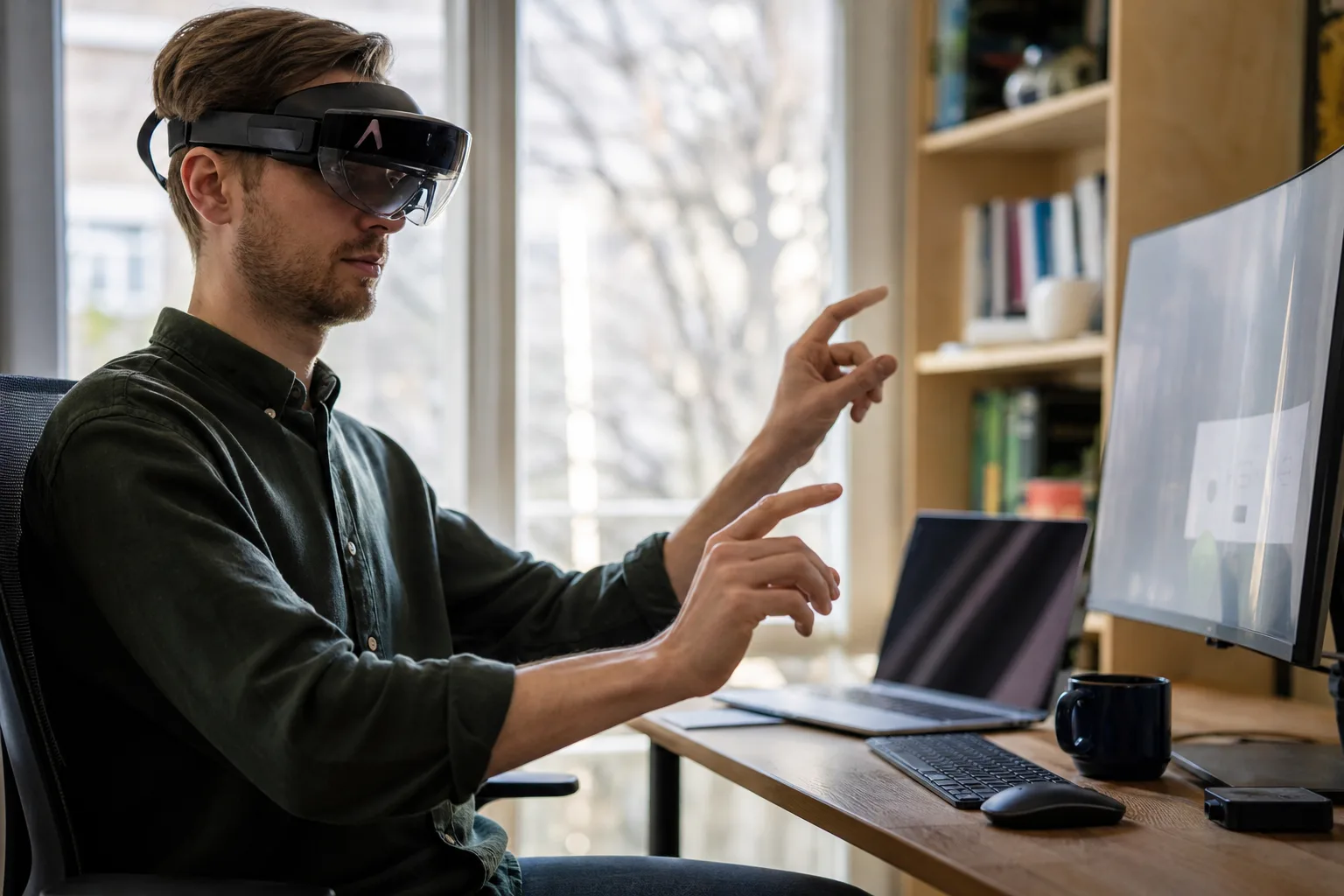
The Apple Vision Pro did not fail because Apple forgot how to make impressive hardware. It failed because technical ambition and a viable consumer product are very different things. A $3,500 face computer was always going to need an answer to one brutally practical question: why should normal people buy one?
That question looks even sharper now. As Engadget reported, Apple’s headset never found the momentum enjoyed by Meta’s cheaper Quest line, despite being capable and polished.
Polish doesn’t create demand. The Apple Vision Pro became a vivid example of a recurring technology-industry mistake: confusing a dazzling demo with a habit people will build their lives around. Google Glass ran into its own version of that wall a decade ago. So did Microsoft’s HoloLens, though it eventually found a more credible enterprise lane. Apple’s challenge was bigger because it positioned Vision Pro as a new way to compute, then gave many buyers an expensive way to watch movies, arrange floating windows and make a few memorable FaceTime calls.
- Apple Vision Pro put extraordinary display and tracking technology behind a $3,500 price that shut out nearly every ordinary buyer.
- Apple Vision Pro also faced an app marketplace trap: developers needed users, while users needed compelling native software.
- Meta’s Quest line benefited from lower prices, gaming roots and enormous corporate investment, yet VR remains a niche consumer category.
- The industry’s next test is whether lightweight smart glasses can offer useful daily features without demanding a headset-sized commitment.
Table of Contents
Apple Vision Pro had a price problem before it had an app problem
Start with the number: $3,499 in the US. That was the starting price, not the final bill for everyone. Buyers who needed prescription lens inserts could pay more, as could anyone who wanted extra storage or AppleCare. At that point, the Apple Vision Pro was competing less with a Meta Quest and more with a well-specced MacBook Pro, a television upgrade, a vacation or, frankly, a month of rent in plenty of cities.
Apple is no stranger to premium pricing. The company has trained millions of customers to accept four-figure iPhones and costly laptops because those devices are central to modern work, communication and entertainment. Carrier financing also disguises the real cost of an iPhone remarkably well. A headset without a carrier subsidy, used mostly at home and requiring an unfamiliar interaction model, has no such safety net.
The company’s spatial computing language did not help much either. It was elegant Apple terminology, but it avoided the more ordinary question buyers were asking: what do I do with this every day? Watching a film on a giant virtual screen is compelling. Working with multiple screens can be useful. Neither use case automatically justifies a device that costs several times more than a high-end TV and a respectable laptop combined. For many households, Apple Vision Pro was simply too expensive to justify as an experiment.

Headset makers also keep trying to wave away a basic social problem. Smartphones are accepted because they fit in a pocket. Laptops make sense at a desk. A large headset creates a visible barrier between a person and the room around them. For a solitary movie night, that may be fine. For family life, office life or simply answering the door, it is a substantial compromise. Technology doesn’t win merely by doing more; it wins when it asks less of people.
The Apple Vision Pro developer trap
The software situation made the price harder to defend. Apple launched with a sizable number of compatible iPad and iPhone apps, plus purpose-built visionOS software, but compatibility is not the same thing as a reason to purchase new hardware. The Apple Vision Pro needed several applications that could not be replicated convincingly on a phone, tablet, television or laptop. It never found them at scale.
This is the classic platform deadlock. Developers tend to follow audiences. Audiences tend to follow software. Apple can break that cycle when it ships an iPhone or Apple Watch because its existing customer base is enormous and its distribution machine is unmatched. But a premium headset with a limited installed base is a much tougher proposition. That left Apple Vision Pro developers facing a market too small to justify major investment. A studio or productivity startup can admire the platform while still deciding that its engineering time belongs on iOS, Android, web apps or AI features.
Apple’s own public materials made the promise clear: Vision Pro would blend digital workspaces into physical rooms. Vision Pro is presented as a spatial computer for work, entertainment and connection. The pitch makes sense on paper. The problem is that coherence is not the same as urgency. A person already productive on a Mac has to see a dramatic improvement, not a futuristic alternative, before spending thousands of dollars.
Reports of an M5-based refresh in late 2025 only reinforced the awkwardness. Processor updates matter to enthusiasts and developers, but they do not solve the category’s central problem. No one delayed a headset purchase because the chip roadmap was unclear. They delayed it because there was no obvious reason to own the headset at all.
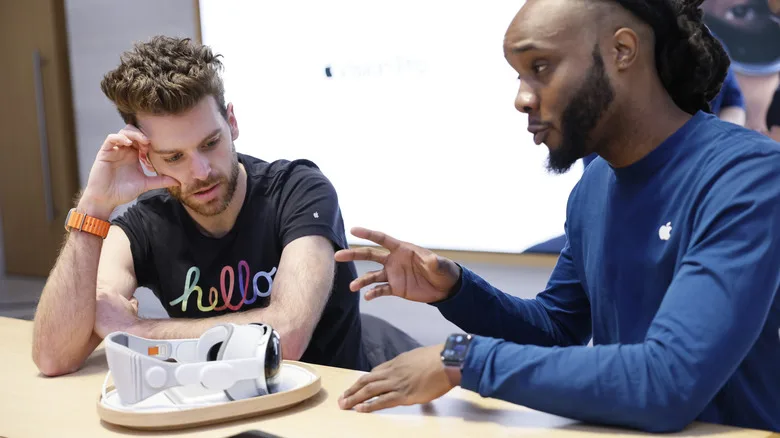
Meta Quest succeeded, but VR still has not gone mainstream
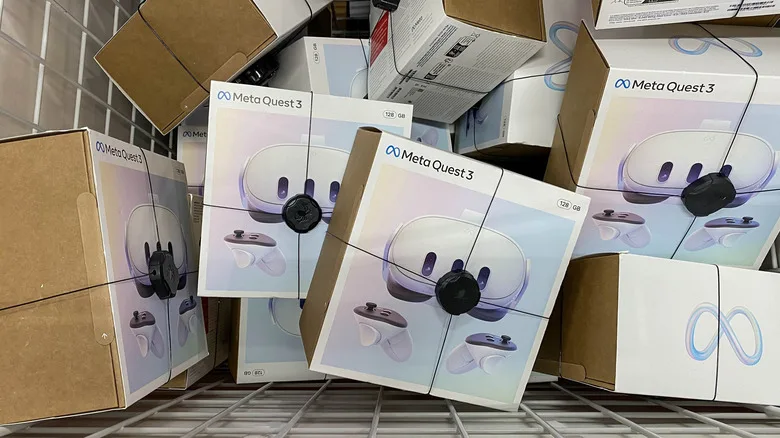
Meta is the useful comparison because it demonstrates both what Apple got wrong and how limited VR’s success has been. Quest 2 became the best-selling VR headset to date, with estimates commonly placing sales around 20 million units. That is a meaningful result for a young category. It is also tiny next to the consumer electronics that actually shape daily life: Sony sold more than 100 million PlayStation 4 consoles, while Apple moves hundreds of millions of iPhones in a typical year.
Meta’s advantage was accessibility. Quest 2 was cheap enough to become a gift, a fitness gadget, a gaming accessory or an experimental purchase that did not require a household budget meeting. Quest 3 raised the hardware bar while retaining that consumer framing. The Apple Vision Pro, by contrast, asked buyers to become early adopters of an entirely new computing philosophy.
Meta’s own history also contains a warning Apple should have taken seriously. The $1,500 Quest Pro launched in 2022 with eye tracking, improved passthrough and workplace ambitions. It did not catch on. Meta cut its price by $500 within months and later discontinued it. High-end mixed reality had already shown that it was a difficult sell, even for the company spending billions to make the metaverse happen.
Mark Zuckerberg once called the metaverse the “next chapter for the internet.” Meta even renamed itself around that belief and poured more than $80 billion into Reality Labs from 2021 onward, according to the reporting cited by Engadget. Yet the market has been stubborn. People like individual VR experiences: Beat Saber, fitness apps, flight simulators, virtual cinema. They have not embraced headsets as the general-purpose computing device that Silicon Valley promised.
Apple may have learned the right lesson
If reports that Apple has redirected resources toward smart glasses prove accurate, that could be an admission of market reality rather than a retreat from ambition. Smart glasses are not easy either. Battery life, cameras, privacy, displays and fashion all impose nasty constraints. But they start from a better premise: technology worn on the face has to fit into life before it can replace a screen.
The Apple Vision Pro may still matter as a research project that pushed displays, interfaces and video passthrough forward. First-generation Apple products have sometimes been stepping stones, and it would be foolish to write off the company’s long-term interest in spatial interfaces. But the original iPhone succeeded because it immediately combined an iPod, a browser and a phone in a form people understood. Vision Pro asked consumers to imagine the future first and find the use case later.
That is backwards. The next winner in this category probably won’t be the headset with the most pixels or the most persuasive launch film. It will be the one that earns a place in someone’s routine without turning that routine into a technology demonstration.
Frequently Asked Questions
Why did Apple Vision Pro struggle to sell?
The headset entered the market at $3,500, making it too expensive for mainstream appeal. It also launched without killer apps, leaving few reasons for users to adopt a new computing platform.
Is Apple Vision Pro discontinued?
Apple was pulling staff from the project to focus on cheaper, more approachable smart glasses. Analyst Ming-Chi Kuo suggested that Apple had dropped its headset program entirely.
Why has Meta Quest sold better than Apple’s headset?
Meta’s Quest headsets targeted more accessible price points, while Apple’s Vision Pro cost $3,500. Meta also spent heavily trying to establish its metaverse strategy, although its headset sales remain small compared with consoles and smartphones.