

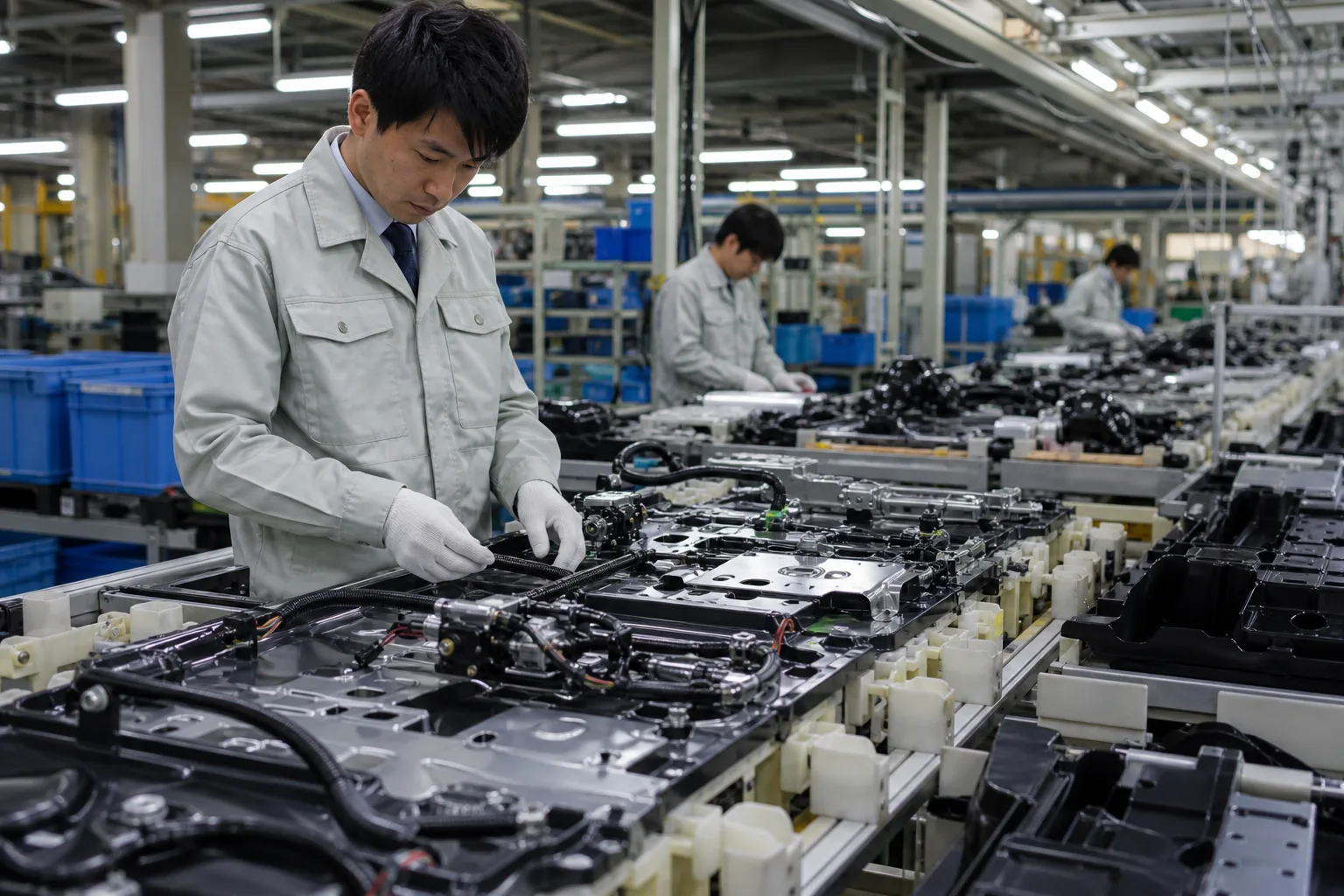
- Automotive parts standardization will begin with steel quality, plastics protocols, and wiring-harness color codes across Toyota, Honda, and Nissan.
- The automotive parts standardization effort targets costly components customers rarely see, preserving each automaker’s visible design and product identity.
- Japan’s biggest carmakers are responding to pressure from Chinese manufacturers with a shared push to free cash for future technology.
- Domestic suppliers will join initial talks, with international suppliers expected to enter the standards process later.
Table of Contents
Automotive parts standardization starts where drivers will not notice
The parts that make a car affordable are often the ones nobody sees. That is the point of automotive parts standardization for Toyota, Honda, and Nissan: it offers a way to squeeze waste from the industrial plumbing of vehicle production without turning three distinct brands into the same appliance on wheels.
As Car and Driver reported, the three Japanese giants are planning common criteria for steel quality, shared protocols for plastics and resins, and uniform color coding for wiring harnesses. The initial work is expected to begin with domestic suppliers, while overseas suppliers will be included later. Automotive News reported that the first standards could take effect next year.
That may sound gloriously unglamorous. It is. But this is where a modern car company can either save serious money or quietly bleed it away across thousands of components, multiple supplier contracts, certification processes, and production lines.
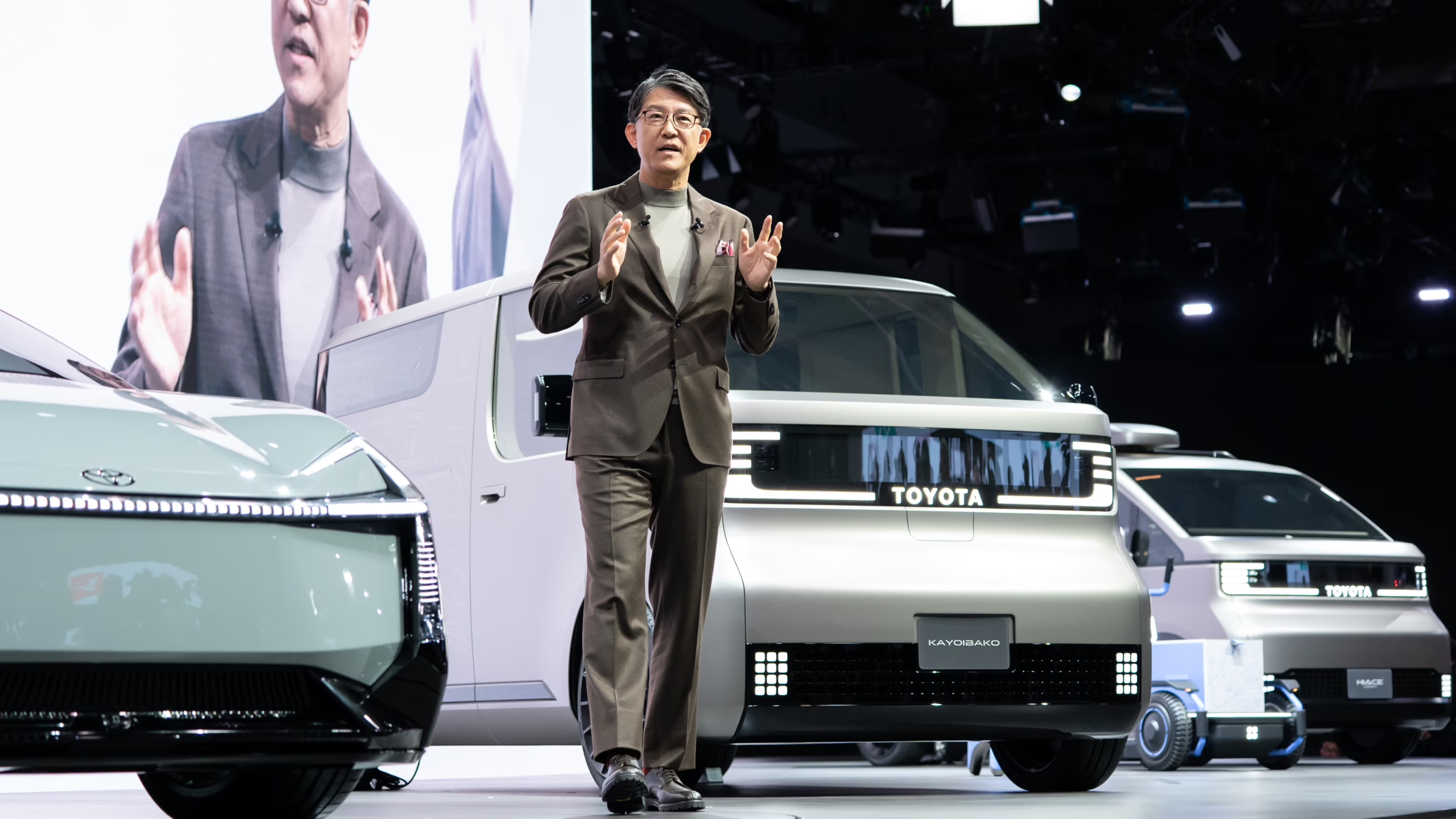
Koji Sato, chairman of the Japan Automobile Manufacturers Association and Toyota vice chairman, framed the move as a response to urgency. “We all share this strong sense of crisis, creating a momentum for change,” he said. “Based upon our sense of a crisis, we decided to choose these three areas.”
The language is unusually blunt for an industry that normally prefers carefully polished optimism. Japan’s carmakers know the competitive map has changed.
Japan’s automotive industry is entering this debate as Chinese brands expand rapidly in electric vehicles, batteries, software features, and price-sensitive export markets. The Japan Automobile Manufacturers Association represents the country’s automakers and their policy interests, and its official materials make clear how central suppliers and manufacturing remain to Japan’s wider industrial base.
Why automotive parts standardization matters now
For decades, automakers have chased scale through shared platforms, common engines, joint factories, and supplier consolidation. Toyota has done this within its own sprawling group; Nissan and Renault built an alliance around it; Honda has pursued selective partnerships, including electric-vehicle work with General Motors. Automotive parts standardization is a related idea, but it crosses company boundaries more directly.
Start with steel. If manufacturers can align the quality specifications used for certain applications, suppliers may be able to produce at greater volume with fewer bespoke validation requirements. The same basic logic applies to plastics and resins. A supplier that does not have to constantly reformulate, test, document, and segregate near-identical materials for each customer has a better chance of lowering unit costs.
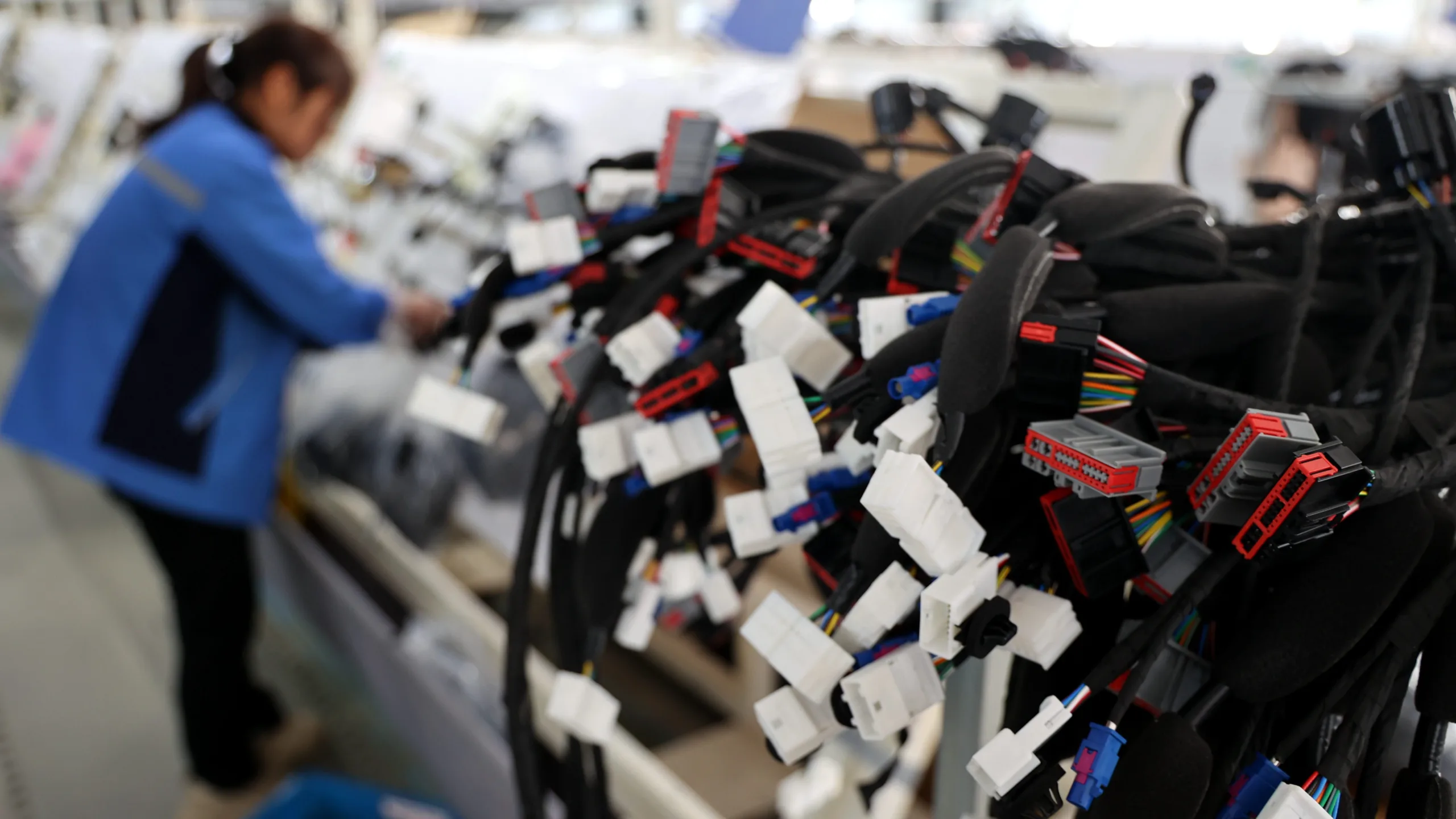
Wiring harness colors are an especially sensible first target. Harnesses are the nervous system of a vehicle, carrying power and signals between components. Standard colors can simplify assembly, maintenance documentation, supplier training, and perhaps fault tracing. No buyer chooses a Honda over a Toyota because a wire behind the dashboard is a particular shade of blue. There is no brand magic to protect there.
That distinction matters. The companies appear to have selected areas where common rules will not dilute styling, driving character, dealer networks, software interfaces, or the engineering decisions customers actually encounter. It is the automotive equivalent of agreeing on electrical outlet safety standards rather than insisting every appliance must look alike.
Automotive parts standardization could also make a supply chain less brittle. A component ecosystem built around too many proprietary specifications can become painfully rigid when a factory closes, a shipping route is disrupted, or a raw-material shortage hits. The pandemic-era semiconductor crunch exposed exactly how fragile automotive production can be when every part is optimized for one narrow program rather than interchangeable at scale.
The supplier question is bigger than the color code
The hard part will not be agreeing that red wires should mean the same thing. It will be determining who pays when standards change, how intellectual property is handled, and whether smaller suppliers retain enough room to compete on quality rather than simply price.
Japan’s auto sector has historically relied on close, long-running supplier relationships. That model can support extraordinary manufacturing discipline, but it can also leave suppliers exposed when carmakers demand annual cost reductions. A shared standard could expand a supplier’s potential customer base, which is good. It could also give three enormous buyers more bargaining power at once, which is less comforting.
That tension will decide whether the plan becomes a genuine industrial upgrade or merely another procurement exercise. If Toyota, Honda, and Nissan want the savings to last, they need suppliers to see enough upside to invest in common processes and capacity. Otherwise, the industry risks moving costs around instead of removing them.
The geopolitical stakes are harder to ignore. Japanese companies increasingly need supply chains that can withstand trade friction and regional disruption while still serving global factories. Bringing international suppliers into the effort will be essential, but it will make governance much messier. Different markets have different safety rules, environmental requirements, and manufacturing norms. Standardizing a domestic spec sheet is one thing; creating rules that travel is another.
Can shared basics help Japan compete with China?
The financial logic is easy to follow: use savings from automotive parts standardization to pay for the expensive work that will decide the next decade. Batteries, power electronics, vehicle software, advanced driver assistance, connected services, and factory automation all demand capital. So does the transition to lower-emission production.
Chinese automakers have not succeeded solely because they build cheaper cars. Companies such as BYD have paired battery scale with rapid product cycles and aggressive vertical integration. They have treated the car less as a static mechanical object and more as a platform whose electronics, supply chain, and software need to move quickly together. Japanese manufacturers remain formidable at quality control and global production, but those strengths are not an automatic defense against a competitor that can ship capable EVs at lower prices.
That is why automotive parts standardization should not be read as a minor back-office initiative. It is a tacit admission that the old model of every national champion optimizing independently has become too expensive. The three companies are not merging, and they are not likely to stop competing fiercely. But they are acknowledging that there are costs no customer should have to fund three times.
Frankly, the plan’s first steps are modest by design. Steel specifications and harness colors will not suddenly close the gap in battery economics or software development. Yet industrial change often starts in the boring places, with engineers agreeing on definitions and purchasing teams agreeing not to reinvent the same component specification for the twentieth time.
If the early standards work, the association has indicated that it wants to extend the approach to more parts across the vehicle. That is the real test. Automotive parts standardization becomes consequential only when it reaches enough of the bill of materials to alter development costs and supplier economics. Japan’s automakers have spotted the problem. Now they have to prove they can cooperate before Chinese competitors make the decision for them.