

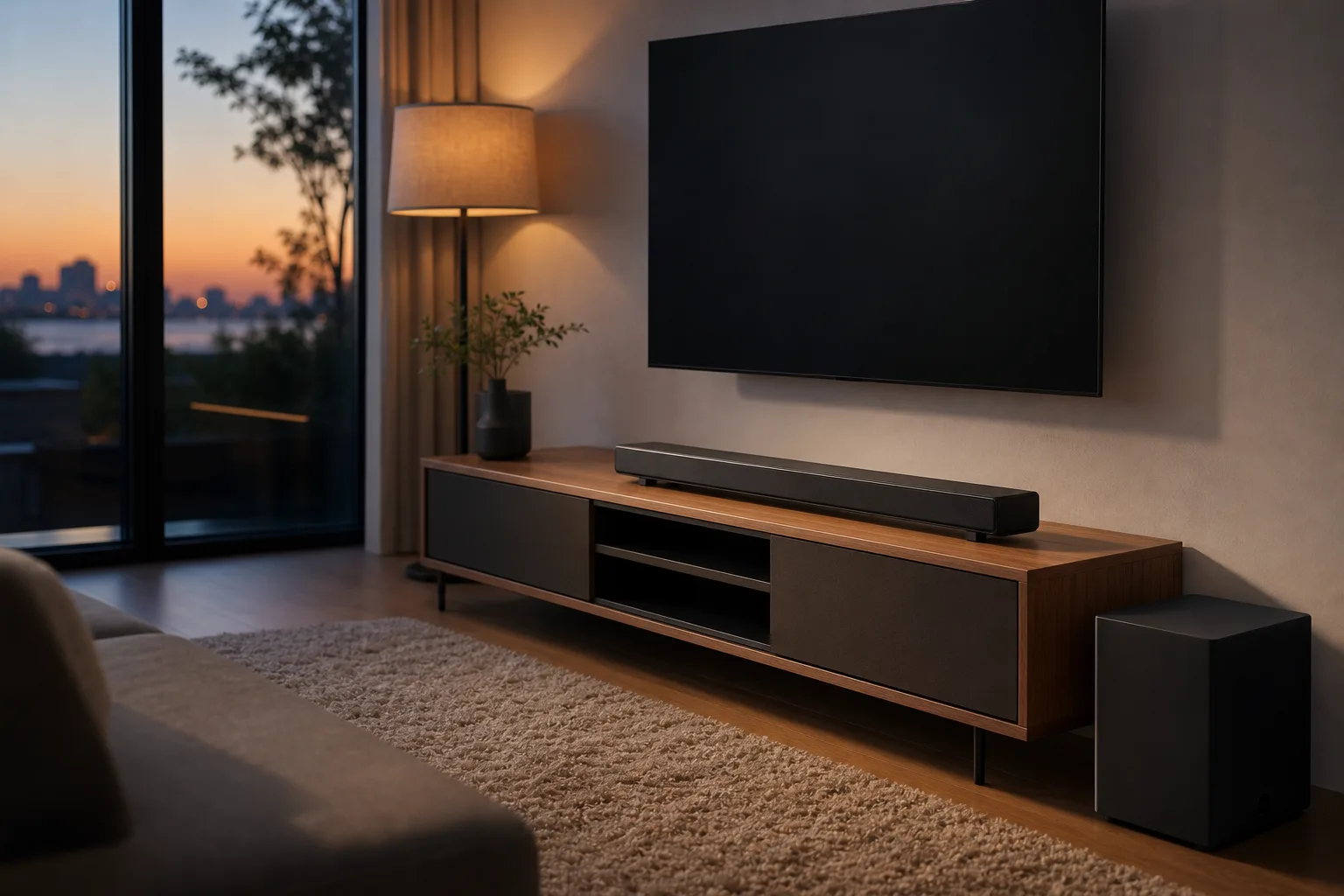
- The Samsung HW-Q800H is listed on Amazon at a reported 36% discount ahead of Black Friday shopping.
- Samsung HW-Q800H combines a 5.1.2-channel soundbar with a wireless subwoofer for buyers seeking Dolby Atmos-ready home audio.
- The sale puts the package below many premium soundbar systems, though rear surround speakers are not included.
- The deal is another example of television and audio makers using seasonal discounts to move higher-end living-room hardware.
Table of Contents
Samsung HW-Q800H drops into a more competitive price bracket
The Samsung HW-Q800H is the kind of living-room upgrade that tends to stay on a wish list until a sale makes the arithmetic less painful. Amazon is offering Samsung’s 5.1.2-channel soundbar package with a wireless subwoofer at a reported 36% discount ahead of Black Friday, as reported by Android Authority. At that price, the system starts competing with a much wider range of setups.
For a soundbar in this class, that discount matters. It is still real money, obviously. But it moves the package from a premium purchase into the part of the market where people cross-shop it against a midrange TV, a basic receiver-and-speaker setup, or simply a much cheaper bar with a virtual Atmos badge on the box.
The Samsung HW-Q800H is positioned above entry-level TV speakers and compact bars. Its 5.1.2 arrangement refers to five main channels, one subwoofer channel, and two height channels intended to support object-based formats such as Dolby Atmos. Put less clinically: the aim is to give dialogue a dedicated home, give action scenes proper low-end weight, and create some sense that rain, aircraft, or soundtrack effects exist above the screen rather than only beside it.
That last part is often where the marketing gets ahead of physics. A soundbar can produce a convincing expanded sound field in the right room, but upward-firing drivers depend heavily on ceiling height, ceiling material, seating position, and room shape. Anyone expecting discrete ceiling speakers from a single bar should keep expectations in check.
What the Samsung HW-Q800H package actually offers
The appeal of the Samsung HW-Q800H is that Samsung is selling more than a slim speaker for making TV dialogue louder. The wireless subwoofer is central to the proposition. Modern TVs have become impressively thin, which is wonderful until an explosion, a bassline, or a football crowd needs air moved. There simply isn’t much cabinet volume available in a panel that is barely thicker than a tablet.
A separate subwoofer tackles that problem, at least in theory, by putting the bass hardware in a larger enclosure that can sit elsewhere in the room. It also means buyers do not need to run a speaker cable from the bar to the subwoofer, though ‘wireless’ should not be confused with battery-powered: the subwoofer still needs wall power.
Samsung reportedly outlines its current soundbar ecosystem, features, and television integration options on its official soundbar page. Compatibility details matter more than brands would sometimes like to admit. A buyer with a recent Samsung television may be interested in Samsung-specific pairing and sound modes; a buyer with an LG, Sony, TCL, or Hisense set should focus instead on the basics: HDMI eARC support, format compatibility, input availability, and whether the TV reliably passes through the audio formats they use.
That is not glamorous advice, but it prevents a familiar post-purchase annoyance. A soundbar can be technically capable of handling advanced audio formats while the television, streaming box, HDMI cable, or settings menu becomes the weak link. Home theater remains a small pile of standards pretending to be plug-and-play.
Why 5.1.2 still makes sense for most rooms
There is a tendency to treat channel counts like smartphone camera counts: bigger must be better. Not always. The Samsung HW-Q800H sits in a sensible middle ground for apartments, condos, and ordinary family rooms. A 5.1.2 system has more potential for separation and height effects than a basic 2.1 or 3.1 bar, without requiring the full commitment of a receiver, speaker stands, cable routing, and a partner who is very patient about speaker placement.
The important caveat is rear channels. This package, as described in the deal reporting, includes the bar and wireless subwoofer rather than a complete set of rear surround speakers. That does not make it a bad deal. It does mean that surround effects are being created primarily from the front of the room and reflected around it. Dedicated rear speakers remain the cleaner route to convincing sound behind the listener.
For many shoppers, that trade-off is entirely rational. The bar-and-subwoofer format is easier to place, less visually intrusive, and far simpler to explain to someone who just wants the television to sound good on movie night. Frankly, convenience is why soundbars won the mainstream living room in the first place.
Compare the whole package, not the percentage badge
A 36% discount looks dramatic because it is dramatic, but percentage-off labels are not a buying strategy. The useful question is whether the Samsung HW-Q800H at this discounted price is a better fit than what else that same money buys today.
At that level, shoppers will find Dolby Atmos-capable bars from Sonos, Bose, Sony, LG, and Samsung itself, though configurations vary wildly. Some rival products include a subwoofer but fewer channels. Some offer a bar alone and ask buyers to add a subwoofer later. Others bundle rear speakers but make compromises elsewhere. Looking only at the headline price is like comparing airline tickets before checking whether the cheaper one includes a bag, a seat, or the destination you actually need.
Buyers should also look at price history before treating the Amazon listing as a once-only event. Seasonal sales can be genuine, but major audio brands regularly rotate promotions through retailers. If the current price suits the room, waiting for an imaginary extra $50 may not be worth missing the purchase window. If the price has appeared repeatedly, though, there is no need to panic-buy because a countdown timer says so.
The Samsung HW-Q800H makes the most sense for someone building a cleaner, Atmos-capable TV setup without stepping into the complexity of separate components. It is less compelling for an audio enthusiast who already knows they want true rear channels, substantial upgrade flexibility, or a carefully matched speaker system.
Black Friday is becoming a test of product tiers
Samsung’s discount is part of a broader shift in how consumer electronics are sold. Premium television and audio hardware is increasingly introduced at ambitious prices, then pulled rapidly into more realistic territory through retailer events. Black Friday has become less a single day than a long negotiation between list price, inventory, and consumer skepticism.
That does not mean every deal is cosmetic. The discount materially changes the case for the Samsung HW-Q800H, especially for someone who has been tolerating flat TV audio. But shoppers should treat it as a configuration decision, not a trophy purchase. Measure the cabinet, check the television ports, consider where the subwoofer can live, and decide whether rear speakers are a future requirement rather than an afterthought.
If these discounts hold through the holiday season, the bigger question is whether premium soundbars are becoming a standard companion to large TVs rather than an enthusiast add-on. Television makers have spent years making displays thinner. The bill for better sound was always going to arrive somewhere.