Table of Contents
One video destination, but several different audiences
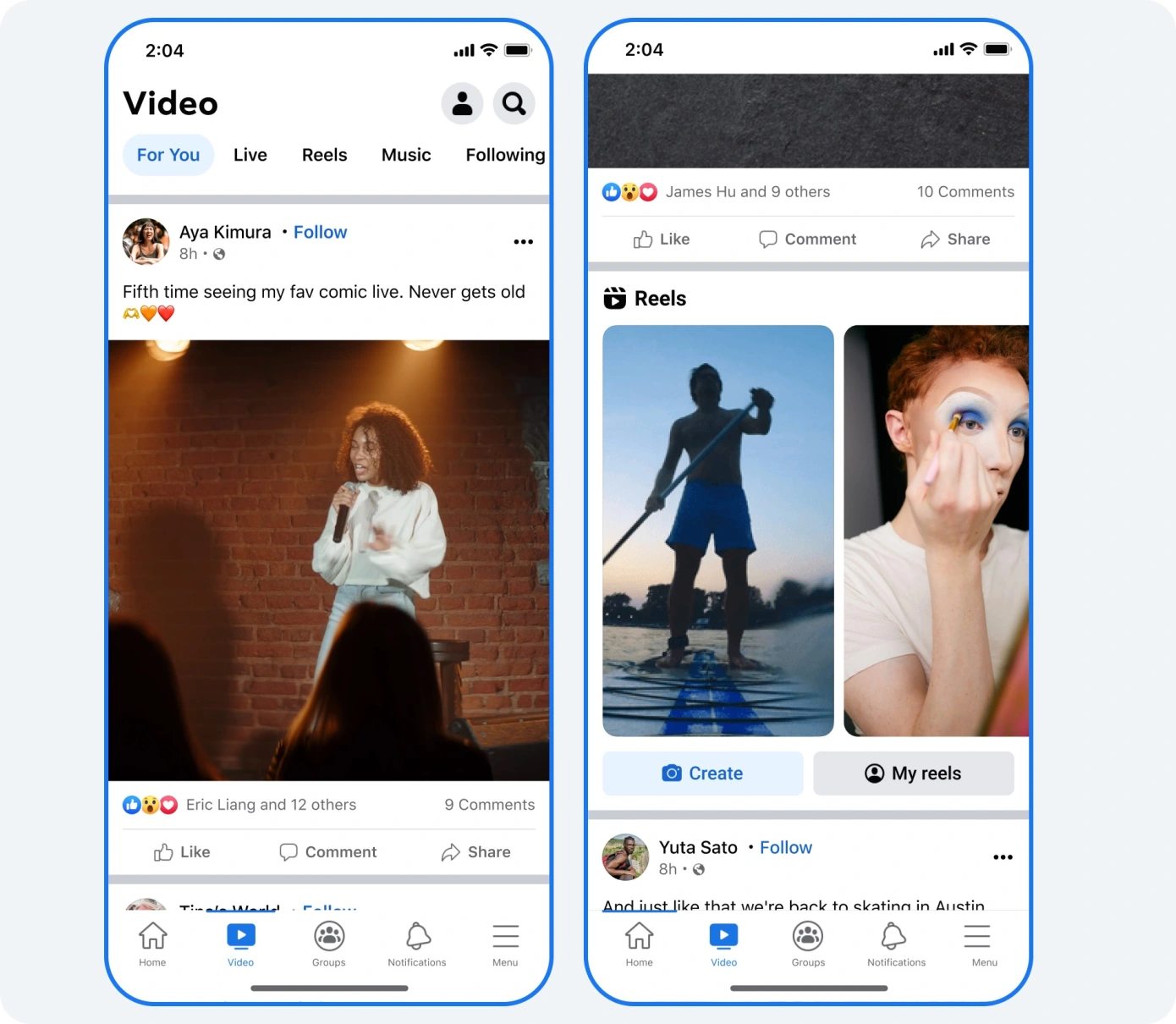
Facebook is rolling out a set of video features aimed at a problem the company has been trying to solve for years: how to make one app work for people watching quick clips, longer uploads, live broadcasts and creator-led entertainment. The update adds editing and discovery tools intended to make Facebook more competitive with YouTube and TikTok, while also renaming the “Watch” tab as the “Video” tab.
The name change is more meaningful than it may first appear. “Watch” was associated with Facebook’s earlier attempt to establish a distinct destination for programmed and longer-form viewing. “Video” is a broader label, and that appears to be the point. Reels, long-form content and live videos will all sit within the new Video tab, replacing the Watch tab and presenting Facebook’s video products as parts of one experience rather than separate formats with separate identities.
For users, that may reduce some of the friction created by Facebook’s overlapping video surfaces. For Meta, it is an acknowledgement that the old division between “short-form” and “traditional” video is increasingly hard to maintain. People can move from a brief Reel to a longer video without thinking much about the format; Facebook wants its product structure to reflect that behavior.
Editing tools move beyond Reels
One of the most practical changes is Facebook’s decision to port editing tools for Reels to videos made for the main feed. That means users can create both short and long videos from one place, rather than treating Reels as the only format with a modern in-app editing workflow. These tools are already available to Meta Business Suite users.
The new editing options include the ability to adjust speed, reverse footage and replace clips. Those are familiar controls in mobile video creation, but their arrival matters because they make Facebook’s main-feed video publishing feel less like a stripped-back upload process. A creator no longer has to think of a longer video as something that must be edited elsewhere before it is posted. Facebook is trying to make creation inside its own app a more viable default.
Meta is also adding audio-focused tools to help people find an appropriate audio track, reduce noise and record a voiceover. Audio has become central to how short-form video travels across social platforms: it can set a format, establish a joke or give a clip a recognizable tone. Noise reduction and voiceover controls serve a different, more functional need, particularly for explainers, demonstrations and videos where the speaker matters more than a music track.
HDR video support on Reels, for both uploading and playback, is another sign that Facebook wants creators to see Reels as a serious publishing format rather than a lightweight companion to the main feed. Better-looking video can help a post stand out, though it also raises the stakes for creators who feel pressure to produce increasingly polished material.
Discovery becomes more feed-like
The redesigned Video section will offer two ways to browse. Users can scroll vertically from one video to the next, or move horizontally through a carousel to see different Reels. The vertical feed is an unmistakable response to the viewing habits popularized by short-form video apps. Facebook is not abandoning longer videos in the process; instead, it is placing them in the same discovery environment as Reels.
Meta says the Video section will appear on the top bar of the Android app and the bottom bar of the iOS app. Placement matters because navigation determines which products feel like core parts of an app and which feel tucked away. A dedicated, visible Video tab gives Facebook more room to direct attention toward video across formats.
Users will also be able to access an explore page behind the search button. Tapping it will surface different hashtags and topics with related short and long videos. That feature is designed to make Facebook video less dependent on following a particular person or page. Search and topic browsing can give viewers a reason to stay in the video experience after they have exhausted posts from accounts they already know.
Facebook is also enabling people to comment on Instagram Reels they watch on Facebook through video discovery. To do that, users need to add both accounts in the Accounts Center. It is a small but telling piece of product unification. Meta has long had an incentive to make Facebook and Instagram feel connected without making them identical, and shared interaction around Reels is a way to tie the two services together at the content level.
A reset after Watch’s uneven history
Facebook released Facebook Watch in 2018 as a response to YouTube’s success. Since then, Watch has gone through many changes. Watch Party, which allowed people to watch videos in groups, was closed. Earlier in 2020, the company discontinued its original programming division. Last year, Facebook also chose to discontinue live video products such as shopping and game streaming.
That history explains why the shift from Watch to Video should not be read as a simple cosmetic rebrand. Facebook has repeatedly adjusted its video strategy as viewing habits and creator priorities changed. The current rollout puts less emphasis on making Watch a standalone destination with a particular programming identity. Instead, it leans on a blended model: short clips for quick discovery, longer videos for deeper viewing, live video where it still fits, and editing tools that can support all of them.
For the last few months, Meta has been taking steps to make Reels a more popular video format on Facebook and Instagram. In March, Facebook extended the Reels limit from 60 to 90 seconds per clip. That expansion gives creators a little more room for stories, explanations and formats that do not fit neatly into a brief clip, while keeping Reels within the fast-moving style that has driven its appeal.
Creators, however, will judge this video push by more than editing controls and placement in the navigation bar. Meta has stopped offering incentives to creators for making Reels on Facebook and Instagram, but started testing a performance-based ad revenue sharing program in May. The company is now aiming to combine its video products through this rollout, yet Facebook has not announced new plans for compensating creators while promoting discovery of long-form videos.
That gap is important. Better discovery can bring viewers, and a unified video destination can make Facebook easier to navigate. But long-form video often requires more time, planning and editing than a short Reel. If Facebook wants creators to invest in that work, the question of compensation will remain difficult to avoid.
See also: Meta launches the Threads app