

The Article Tells The Story of:
- Advanced AI Weather Model: GenCast provides accurate weather predictions up to 15 days ahead using AI-based ensemble forecasting, surpassing traditional models like ECMWF’s ENS.
- Efficiency and Precision: The model processes forecasts in just 8 minutes using Google Cloud TPU v5, excelling in predicting extreme weather conditions like heatwaves, winds, and cyclones.
- Broad Applications: GenCast enhances renewable energy planning, disaster preparedness, and decision-making through precise forecasts of risks and weather patterns.
- Open Collaboration: Google has made GenCast’s code and data publicly accessible, fostering advancements in weather forecasting and climate research through global collaboration.
GenCast is an AI weather model built around a practical truth that is sometimes lost in forecast headlines: the useful question is rarely “what will happen?” alone. For governments, grid operators, emergency planners, and anyone responsible for public safety, the better question is often “what could happen, how likely is it, and how much time do we have to prepare?”
That is why GenCast’s use of ensemble forecasting matters. Traditional deterministic models provide a single weather outcome. An ensemble approach instead produces multiple possible weather scenarios. The difference is not merely technical. A single forecast can create an illusion of certainty; an ensemble shows the range of plausible conditions around it. That makes it easier to identify risk, judge confidence, and plan for outcomes that may be less likely but carry serious consequences.
GenCast predicts weather up to 15 days ahead and is designed to provide accurate forecasts across that window. Its stated performance puts it ahead of traditional systems including the European Centre for Medium-Range Weather Forecasts’ ENS. That comparison is significant because weather prediction is not a field where broad claims should be accepted casually. Established forecasting systems are the result of long-running scientific work, powerful computing infrastructure, and continual operational testing. Beating one in forecast benchmarks suggests that AI models are moving beyond attention-grabbing demonstrations and into a more consequential conversation about forecasting capability.
Table of Contents
Why the ensemble approach changes the conversation
Weather is a chaotic system. Small changes in atmospheric conditions can lead to very different outcomes over time, especially as a forecast reaches further into the future. Forecast users have long relied on ensembles because they expose uncertainty instead of concealing it. GenCast brings that established forecasting logic into an AI-based model.
The model was developed using four decades of historical data from the ECMWF and operates at a resolution of 0.25°, intended to capture intricate weather patterns. Resolution alone does not settle the question of forecast quality, but it matters when a model is trying to represent changing conditions across a wide area. Combined with an ensemble method, it gives GenCast a way to address both everyday variables and the more difficult challenge of extreme events.
In testing, GenCast delivered better results than ECMWF’s ENS in 97.2% of cases, particularly for forecasts beyond 36 hours. The model offers higher accuracy for variables including temperature, wind speed, and pressure. That detail deserves more attention than the familiar marketing language around AI. Temperature, wind, and pressure are not abstract outputs; they feed into decisions about energy demand, transport, safety, agricultural work, and emergency response. Improvements in these variables can have real value well before a weather event becomes a crisis.
Still, better benchmark performance should not be confused with weather becoming predictable in a simple or absolute sense. Forecasts remain probabilistic, and local conditions can be difficult. The value of a system like GenCast is not that it removes uncertainty. It is that it can make uncertainty more useful to the people who need to act on it.
Speed is part of the forecast
GenCast generates a full 15-day ensemble forecast in just eight minutes using Google Cloud TPU v5 technology. Traditional systems, by contrast, require hours of processing on supercomputers. That efficiency is one of the model’s most important claims because weather data has a shelf life. A forecast produced faster can be updated more often, assessed alongside new observations, and put in front of decision-makers while choices still matter.
This does not mean conventional forecasting infrastructure suddenly becomes unnecessary. Traditional models remain deeply embedded in operational meteorology, and forecasting agencies bring scientific expertise that cannot be reduced to a model output. But faster AI forecasting could change the division of labor. It can create room for more scenario analysis, more frequent guidance, and more time for experts to interpret what a forecast means for a particular region or risk.
That last point is central. A forecast is not the same as a warning, and a warning is not the same as preparedness. Public agencies and organizations still need to communicate risk clearly, determine thresholds for action, and allocate resources. Faster model runs improve the inputs to that process; they do not automate the hard judgments that follow.
Extreme weather is the real test
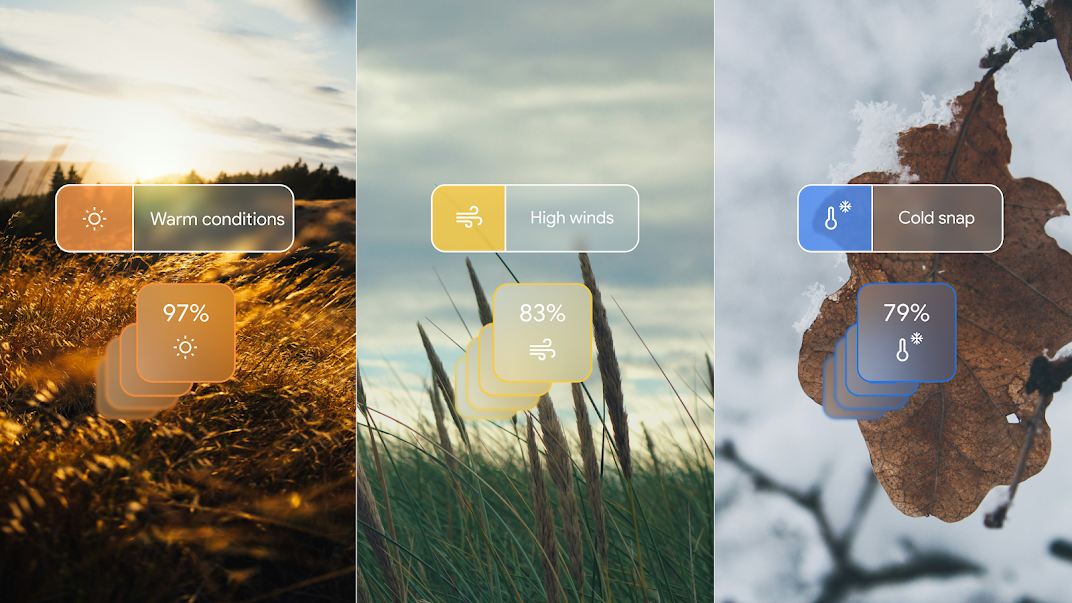
GenCast is presented as particularly effective at predicting heatwaves, strong winds, and cyclones. These are exactly the events where a forecast’s practical value rises sharply. A small improvement in timing, track, or likely intensity can affect evacuation planning, the positioning of staff and equipment, and the ability of communities to prepare.
The article’s example is Typhoon Hagibis. GenCast accurately tracked the storm’s path and refined its forecast as it neared Japan’s coast. This is a useful illustration of why updating matters. A weather model is most valuable not when it produces one dramatic long-range call, but when it continues to narrow and improve the picture as conditions evolve.
There is also an important distinction between predicting an extreme event and managing its effects. AI cannot eliminate damage from heatwaves, winds, or cyclones. What it can do is give governments and organizations earlier, more precise information from which to take preventive action. Used well, that can help minimize damage, save lives, and optimize resource allocation during disasters.
Energy planning has a clear use case
Renewable energy is another natural application. Wind power depends on knowing when wind conditions are likely to support generation and when they may not. GenCast’s accurate wind power predictions can improve the reliability of energy from wind turbines, supporting planning around a resource that varies with the weather.
The implication is broader than wind farms alone. Electricity systems have to balance supply and demand in changing conditions. Better forecasts can help planners anticipate weather-driven shifts and make more informed decisions. The promise here is not that AI makes renewable energy predictable in every moment. It is that more precise information can make variable generation easier to manage, encouraging broader adoption of sustainable energy solutions.
For disaster preparedness, the same principle applies. Forecasting does not replace resilient infrastructure, emergency services, or public trust. It strengthens the information layer that helps those systems respond. That is less glamorous than claims that a model will “redefine” weather, but it is where the technology’s social value is likely to be felt.
Open access matters, with collaboration doing the hard work
Google has made GenCast’s code, weights, and forecasts publicly available. That decision gives researchers and organizations an opportunity to examine the model, integrate its insights into their own work, and test where it performs well or needs refinement. In a field tied to public safety and climate science, openness is more valuable than a black-box claim of superiority.
Google is also working with weather agencies and experts to refine GenCast and other AI-driven forecasting models. That collaboration is essential. Weather agencies understand local forecasting needs, warning systems, and the limits of model guidance. Researchers can probe performance and improve methods. Organizations using forecasts can identify the decisions where better information has the greatest effect.
GenCast represents a significant development in weather prediction at a time when climate change and extreme weather events are placing greater pressure on forecasting and preparedness. Its advantages in accuracy, ensemble forecasting, and processing speed are meaningful. The more measured conclusion is also the stronger one: GenCast could become a valuable tool for understanding weather risk, provided its forecasts are tested, interpreted, and used alongside the expertise of the people responsible for acting on them.
Related reading: How /dev/agents is Transforming AI Collaboration with $56M in Funding
Stay Updated: Tech News – Artificial Intelligence

