
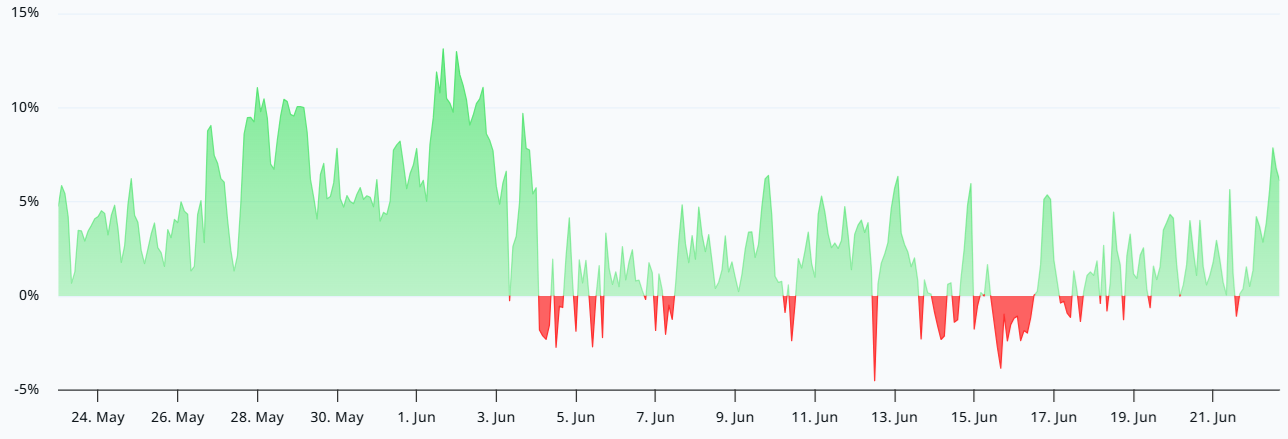
The Bitcoin funding rate climbed to 7% on Monday — its highest reading in nearly two weeks — as traders piled into bullish leveraged positions and order books tilted in favour of buyers. On the surface, that looks like a setup primed for a run at $70,000. Dig a little deeper, though, and the picture gets considerably more complicated.
- The Bitcoin funding rate jumped to 7%, its highest point in nearly two weeks, reflecting growing bullish confidence among traders.
- Despite the Bitcoin funding rate signalling optimism, six consecutive weeks of spot ETF outflows — $228M last week — are capping upside.
- Simultaneous weakness in stocks, bonds, and gold points to a broad preference for cash, creating a cautious macro backdrop for BTC.
- Order-book bids on major exchanges outpaced offers by $12 million on Monday, suggesting underlying demand remains intact near $65K.
Table of Contents
What the Bitcoin Funding Rate Is Actually Telling Us
In perpetual futures markets, the Bitcoin funding rate is one of the cleaner real-time gauges of trader sentiment. When it rises, it means longs are paying shorts to keep their positions open — a sign that demand for bullish exposure is growing. Monday’s reading of 7% annualised keeps BTC comfortably within the broadly neutral 6%–12% range tracked by data platform Laevitas, but the direction of travel matters just as much as the absolute number. Three weeks ago, this figure was meaningfully lower, and the shift upward coincides with fresh geopolitical relief after US Vice President JD Vance confirmed that the Strait of Hormuz remains open — a critical waterway for global oil supply — amid what he described as ‘encouraging progress’ in talks with Iran.
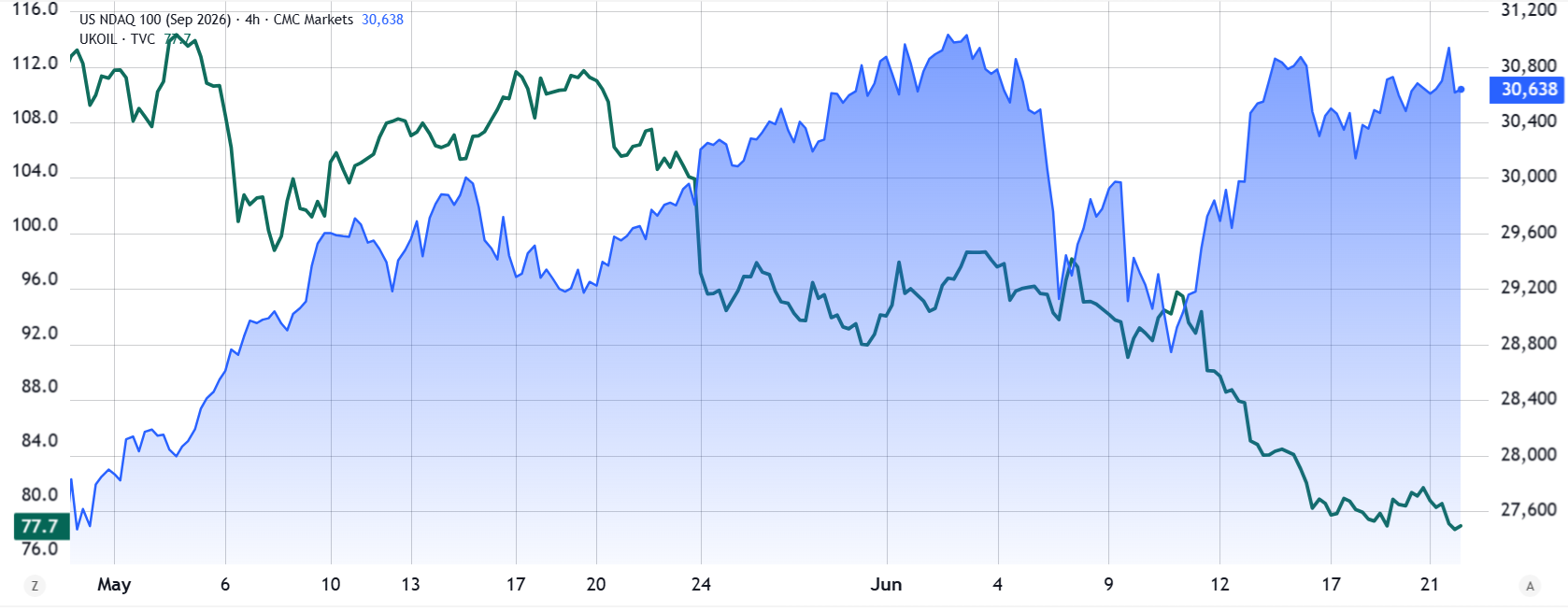
Lower oil prices tend to reduce inflationary pressure and, by extension, the likelihood of further rate hikes — a broadly positive signal for risk assets. Brent crude fell to $77.50 per barrel on Monday, its lowest point since March, which gave traders in Bitcoin and equities alike a reason to lean bullish, at least briefly.
Order Books Look Healthy — But That’s Not the Whole Story
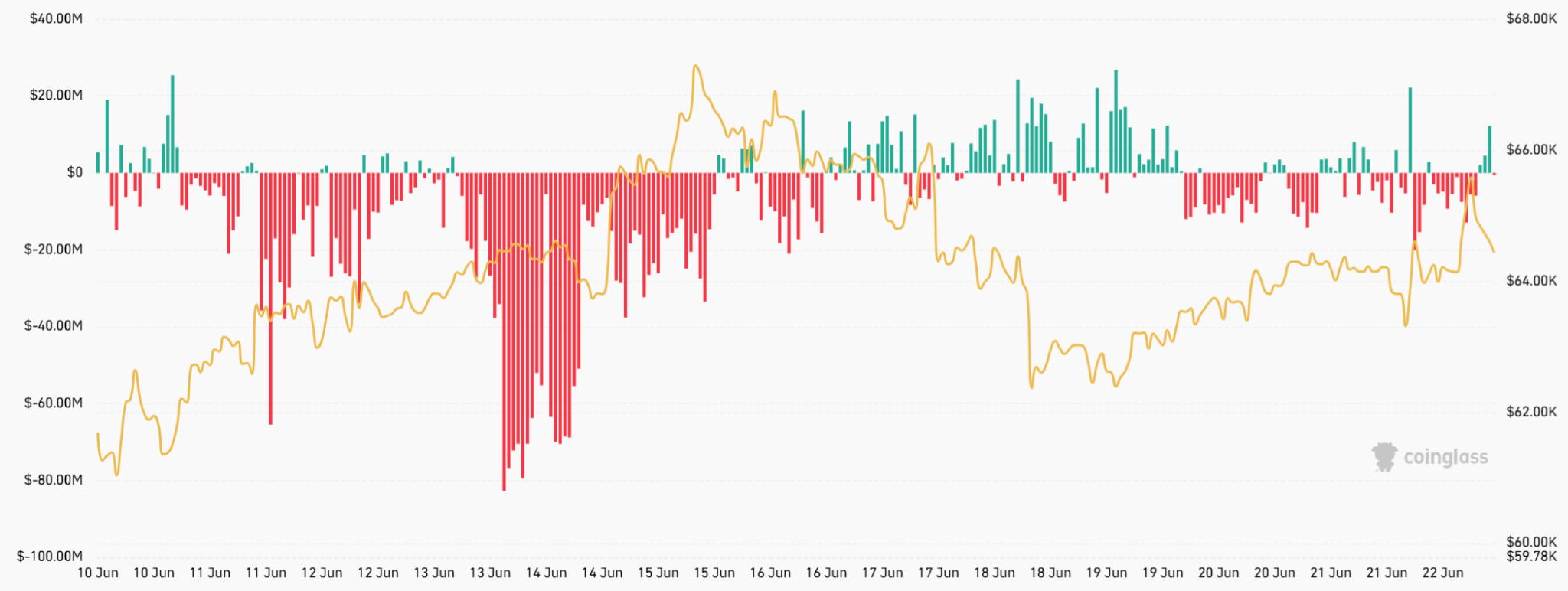
Beyond the Bitcoin funding rate, order book data from CoinGlass showed bids on major exchanges outpacing offers by $12 million on Monday, reversing the pattern seen over the weekend. That kind of liquidity support near the $65,000 level is meaningful. It suggests that even if BTC dips below that psychological threshold, there’s genuine buying interest waiting — not a vacuum.
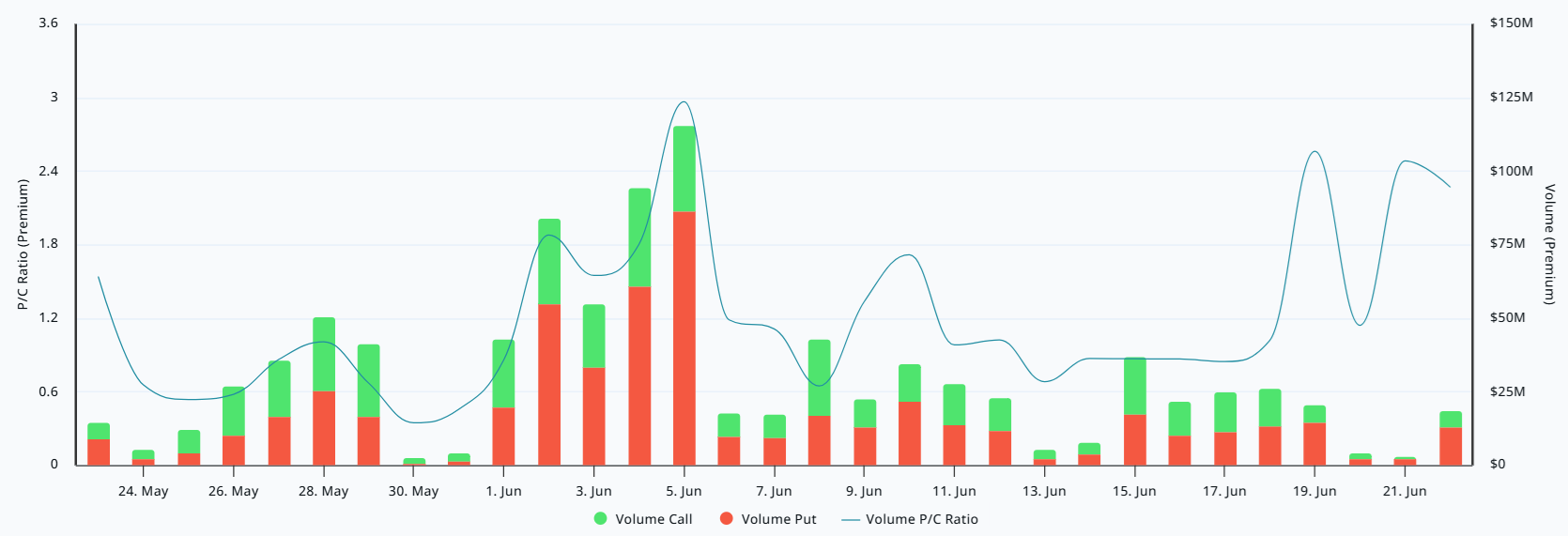
At the same time, options markets are telling a slightly different story. On Deribit, demand for put options — effectively insurance against a price decline — was running at more than double the demand for calls on Monday. That put-to-call imbalance has been in place since Friday, reversing the more optimistic lean from the week prior. Traders are simultaneously buying bullish futures exposure and hedging with downside protection, which is less a contradiction than it sounds. It’s a classic ‘cautiously long’ positioning — optimistic enough to hold exposure, nervous enough to buy a parachute.
The Macro Backdrop Isn’t Doing Bitcoin Any Favours
Here’s where the bullish Bitcoin funding rate narrative runs into serious headwinds. Monday saw weakness across virtually every major asset class simultaneously. The Nasdaq 100 slipped around 1%, dragged lower partly by AI-adjacent names. SpaceX (SPCX US) was a notable casualty, with shares dropping 13% after the company announced plans to raise debt — a move that unnerved investors already questioning whether the broader AI and space-tech sector can generate returns before burning through another cycle of capital.
Gold fell 0.9%, US government bond prices slipped (pushing yields higher), and equities softened. When stocks, bonds, and gold all fall together, it typically points to one thing: investors are moving to cash. That’s an uncomfortable environment for Bitcoin, which despite its ‘digital gold’ narrative still trades with significant correlation to risk-on sentiment during periods of genuine macro stress.
Rising Treasury yields deserve particular attention here. Higher yields on US 5-year Treasuries indicate that bond buyers are demanding better returns, whether because they’re worried about inflation or about the long-term sustainability of US government debt issuance. Either interpretation is bearish for assets that don’t generate yield — and Bitcoin is squarely in that category.
Bitcoin ETF Outflows: Six Weeks and Counting
Perhaps the most concrete reason to temper enthusiasm about a near-term push to $70,000 is the sustained outflow picture from US-listed Bitcoin spot ETFs. According to CoinGlass data, these products saw $228 million in net outflows during the most recent week tracked — and that’s part of a six-week consecutive outflow streak. That’s not a blip. That’s a trend.
When the spot ETFs launched in January 2024, they were widely credited with helping drive Bitcoin’s push above $70,000 in March of that year. The logic was straightforward: a new, regulated, accessible on-ramp for institutional and retail money would bring fresh capital into the market. Outflows reverse that logic entirely. They represent capital leaving the Bitcoin ecosystem through one of its most visible and widely tracked channels, and six weeks of sustained redemptions tells you that institutional appetite — at current prices, in the current macro environment — simply isn’t there in force.
The Bitcoin funding rate can signal all the optimism it wants. Without genuine inflows from the ETF channel, a sustained breakout above $65,500 looks like a heavy lift.
Strategy’s Shadow Over the Market
There was also some noise around Strategy — the company formerly known as MicroStrategy — which continues to function as a kind of leveraged Bitcoin proxy in public markets. Strategy holds 847,363 BTC, acquired at a total cost of approximately $64.1 billion. On Monday, its stock was trading roughly 13% below that implied net asset value, meaning the market was pricing in a discount to Strategy’s Bitcoin holdings. That kind of discount often reflects concern that the company might eventually be forced to sell reserves — a scenario that would put significant downward pressure on BTC prices.
Those fears eased somewhat after Strategy announced an additional $300 billion cash position, providing a clearer buffer against any short-term liquidity crunch. The company currently carries around $6.75 billion in debt, which on its own isn’t alarming given the scale of its Bitcoin holdings, but the market is clearly watching this closely. Any hint that Strategy might become a forced seller would ripple through crypto sentiment fast. When that risk is elevated, even a rising Bitcoin funding rate struggles to sustain upward price momentum.
Is $70K Next — or Is That the Wrong Question?
The Bitcoin funding rate hitting a two-week high is a genuine signal worth paying attention to, but it’s one data point in a market full of conflicting signals right now. Bulls can point to solid order book depth, improving geopolitical conditions, falling oil prices, and growing appetite for leveraged longs. Bears can point to persistent ETF outflows, a flight-to-cash macro environment, weak equity markets, and an options market that’s paying up for downside protection.
The $70,000 question is less about whether Bitcoin can get there and more about when the conditions are right for it to stick. The March 2024 all-time high wasn’t driven by the Bitcoin funding rate alone — it was driven by a perfect confluence of ETF inflow momentum, macro tailwinds, and retail FOMO. Right now, at least two of those three ingredients are missing. Until the ETF picture turns, or until the macro environment gives risk assets a clearer runway, $65,000–$66,000 is likely to remain a ceiling rather than a floor for Bitcoin’s near-term price action.
Frequently Asked Questions
What does the Bitcoin funding rate tell us about market sentiment?
The Bitcoin funding rate reflects demand for leveraged long positions in perpetual futures. A rising rate signals that bulls are willing to pay a premium to hold bullish bets. At 7%, the rate sits within the neutral-to-positive 6–12% range, indicating confidence without signalling overheating.
Why haven’t Bitcoin spot ETFs seen inflows recently?
Bitcoin spot ETFs have recorded net outflows for six straight weeks, with $228 million leaving in the most recent week alone according to CoinGlass data. Analysts point to broader macro caution — including rising Treasury yields and a preference for cash — as the main driver keeping institutional buyers on the sidelines.
What is Strategy’s connection to Bitcoin and why does it matter?
Strategy holds 847,363 BTC acquired at a total cost of roughly $64.1 billion. Its stock trades at a discount to that figure, which has spooked some investors. The company recently announced a $300 billion additional cash position, easing fears it might need to liquidate Bitcoin reserves.
Could Bitcoin realistically reach $70,000 in the short term?
Most market signals currently point against a quick move to $70K. While order books and the Bitcoin funding rate are constructive, persistent ETF outflows, weak equity markets, and macro pressure from rising bond yields make a sustained breakout above $65,500 difficult in the near term.