

Table of Contents
The North Korean Pixel clone has an awkwardly impressive spec sheet
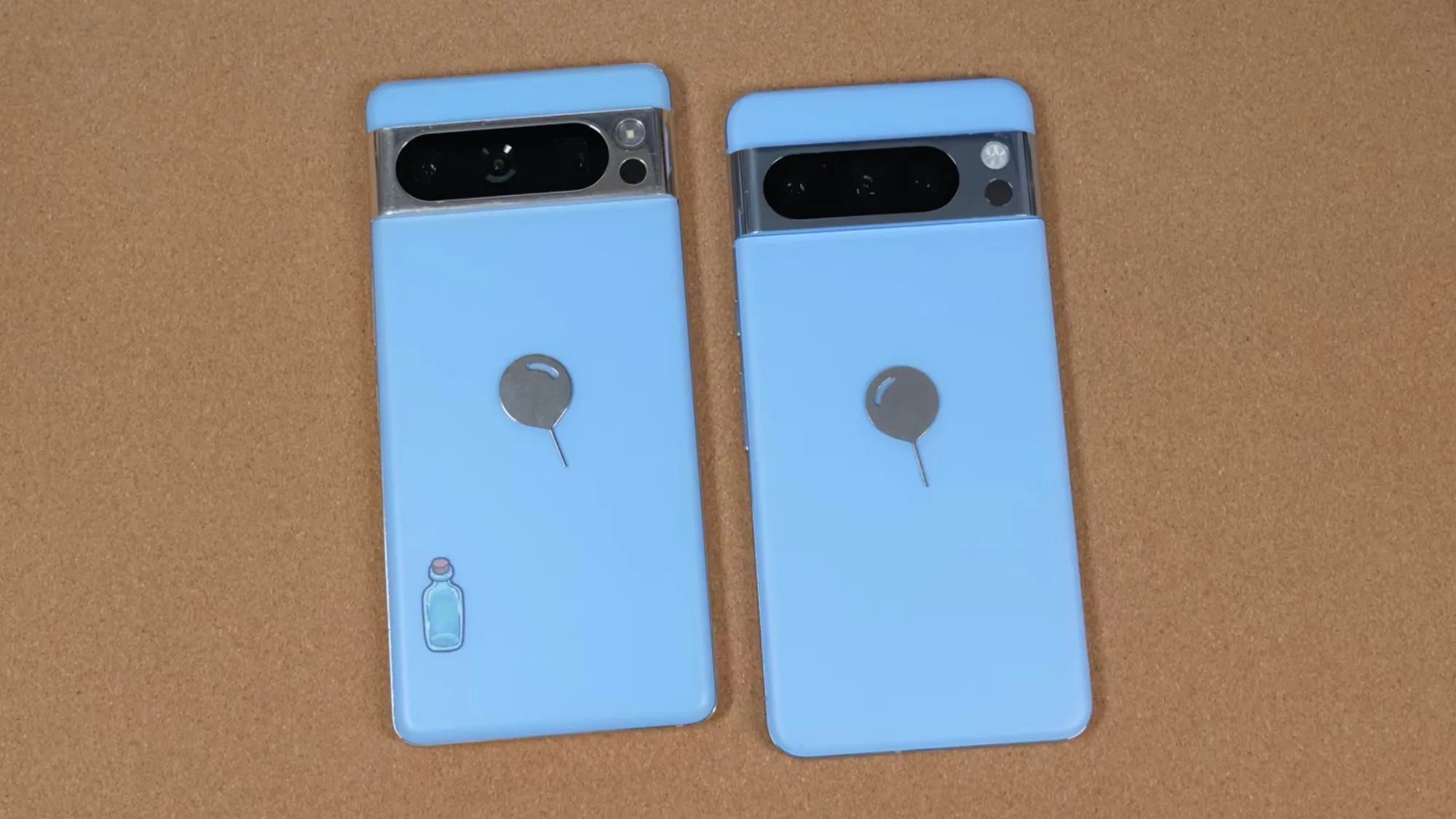
The North Korean Pixel clone reportedly making the rounds in a hands-on video has the familiar silhouette of Google’s Pixel 8 Pro, right down to the horizontal camera bar. That alone would normally put it in the usual knockoff-phone category: convincing from six feet away, deeply disappointing once you turn it on. But this particular device appears to be more complicated than that.
According to YouTuber fenibook’s testing, the phone combines a MediaTek Dimensity 7050 processor with 16GB of RAM and 256GB of storage. More RAM does not, by itself, turn a copy into a speed demon. It is only one piece of the performance puzzle. Still, finding 16GB in a device presented as a clone is unusual enough to make you look twice.
The design is plainly indebted to Google’s flagship: frosted-looking rear glass, a prominent full-width camera enclosure, and proportions close enough that most people would probably assume they were looking at a Pixel. The reported device originally carried a North Korean marking on its rear panel, though that branding was obscured in the video.
There is a basic caveat hanging over every claim here. A phone’s stated specifications, its origin, and the software it runs are hard to independently verify from a single hands-on video. Clone-phone sellers have never been shy about inflating storage or camera figures, either. In other words, this is an intriguing field report, not a lab result. Even so, the North Korean Pixel clone’s reported hardware mix is odd enough to deserve a closer look.
Cooler performance may be the North Korean Pixel clone’s real trick
The most interesting result isn’t the extra memory. It’s heat. Fenibook found that the North Korean Pixel clone remained noticeably cooler than the Pixel 8 Pro under sustained gaming and other heavy workloads. That is a pointed comparison because the Tensor G3-powered Pixel 8 Pro was never celebrated for thermals. Google’s chip delivered excellent photography and useful AI features, but lengthy sessions could turn the handset warm in a hurry.
The Dimensity 7050 is not a flagship-class rival to Tensor G3. Its official Dimensity 7050 product page identifies the chip. In benchmark-heavy tasks, demanding games, and AI workloads, the Pixel should have more to offer.
Yet peak performance and sustained performance are not the same thing. Think of it like a sports car stuck in summer traffic: massive horsepower doesn’t matter much if the engine has to keep pulling back. A slower chip paired with less aggressive power targets, a larger thermal buffer, or simply a less demanding software load can feel steadier over 30 minutes than a faster chip running hot.
That’s the narrow but legitimate win claimed for the North Korean Pixel clone. If these observations hold up, it may be more comfortable for long gaming sessions than Google’s original. It does not mean it is the better phone. Frankly, it means Google still has work to do on the thermal behavior of its Tensor hardware.
Camera hardware tells only part of the story
The reported camera array shows why spec-sheet comparisons can be deceptive. The clone is said to use 50-megapixel main, ultrawide, and periscope telephoto cameras, plus a 32-megapixel front camera. Its telephoto lens reportedly focuses close enough to produce macro-style shots that the Pixel 8 Pro’s zoom camera cannot match in that exact scenario.
That could be genuinely useful for photographing flowers, watches, circuit boards, or the occasional tiny spider you’d rather not get physically close to. The North Korean Pixel clone may have an optical advantage for that niche job, assuming the reviewer’s results are repeatable.
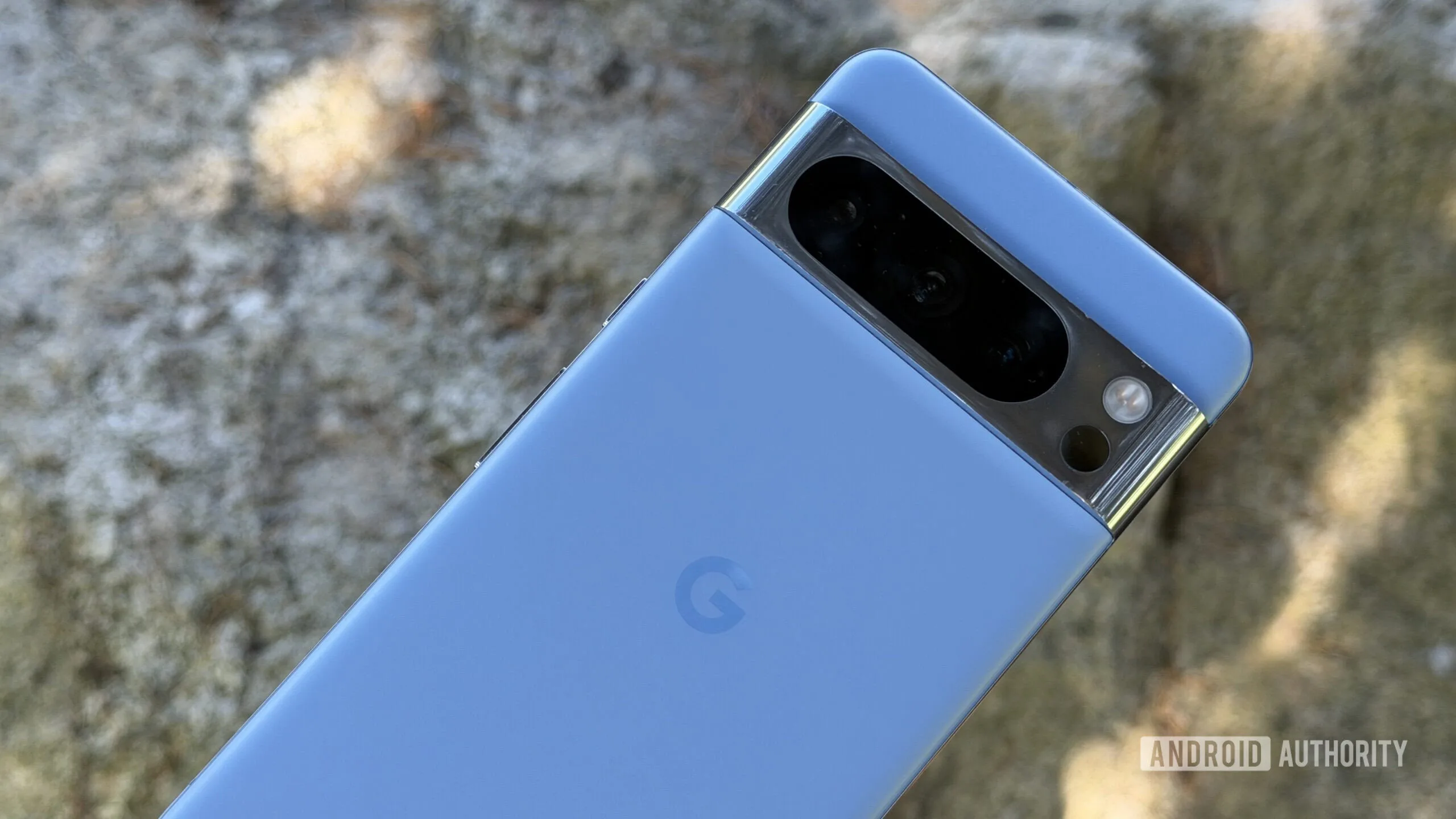
But this is where Google’s advantage becomes much harder to dismiss. Pixel cameras are not defined by sensor resolution alone. Google’s image pipeline handles exposure blending, motion, skin tones, Night Sight, Super Res Zoom, and processing consistency across lenses. The company’s Pixel 8 Pro specifications also show a purpose-built camera system, rather than a generic collection of high-resolution modules.
A close-focus telephoto lens can beat a Pixel in one particular composition and still lose badly when lighting falls, subjects move, or you need reliable color from shot to shot. That is usually the clone-phone problem in miniature: hardware components can be purchased; a mature camera pipeline takes years of expensive tuning.
An unlocked bootloader is useful, and potentially alarming
The strangest reported detail is software. The device allegedly arrives with an unlocked bootloader, allowing an owner to install stock Pixel software and access Google services. For enthusiasts, that sounds almost charming: a copycat handset that invites tinkering instead of locking the owner into an opaque Android fork.
For everyone else, it should set off alarms. An unlocked bootloader is not automatically unsafe, but it weakens a key layer of device protection if the owner does not understand what has been installed. More importantly, flashing a different operating system cannot answer the deeper question: what is in the firmware, modem stack, storage controller, or supply chain? You cannot audit trust into a phone merely by giving it a Pixel-like launcher.
That makes the North Korean Pixel clone a fascinating device for hardware-watchers and a poor recommendation for ordinary buyers. Banking apps, work accounts, personal photos, and two-factor authentication are not things I’d hand to an unknown handset with uncertain origins, regardless of how familiar the camera bar looks.
Google should still pay attention
The lesson here is not that a clone has somehow dethroned the Pixel 8 Pro. Google offers a stronger chip, proven camera processing, official Android updates, established repair channels, and an ecosystem built around services that many people actually depend on. Those are real advantages, not marketing garnish.
Still, the North Korean Pixel clone is an uncomfortable little reminder that flagship makers cannot coast on design recognition. More RAM, cooler sustained operation, and a telephoto lens capable of close-up work are tangible features. Consumers notice those things, particularly when premium phones keep getting more expensive.
My read is that this North Korean Pixel clone is best understood as a curiosity rather than a competitor. But Google’s next Pixel team should probably watch the teardown, if one ever surfaces. Getting shown up by a copycat on thermals is the kind of embarrassment that tends to concentrate engineering minds.

