Table of Contents
A small controller with a bigger ambition
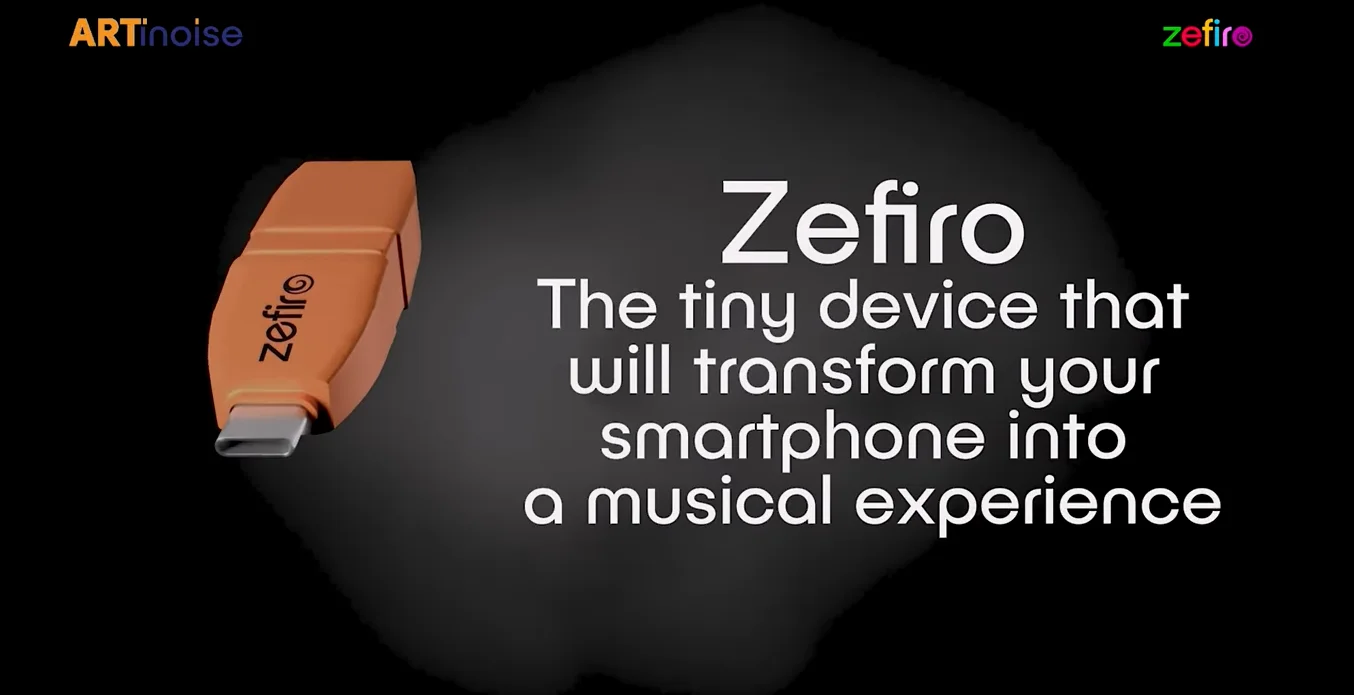
Artinoise, an Italian startup, has unveiled Zefiro, a USB-C mouthpiece designed to turn smartphones, tablets, and PCs into musical instruments. It resembles the mouthpiece of a recorder, but its real purpose is to give touchscreens and computers a form of breath-based expression that they do not naturally have.
That distinction matters. A phone can already run a capable music app, but tapping a glass display is a very different experience from shaping a note with air. Zefiro is trying to close that gap without asking players to buy a traditional electronic wind instrument or learn a complex hardware setup. Connected to a compatible device, it acts as a MIDI breath controller: the companion app provides virtual buttons, keys, or wind holes, while built-in lip and air-pressure sensors interpret breath intensity to control pitch and volume.
The result is a hybrid instrument rather than a digital version of any one acoustic instrument. Artinoise says the app can produce up to 32 instrument sounds, including flutes, violins, trumpets, and bagpipes. That range makes Zefiro less about faithfully reproducing the feel of a flute or trumpet and more about offering a common physical input for different musical voices. A player blows into the mouthpiece, while the screen handles the changing layout of the instrument.
For newcomers, that may be the point. Conventional wind instruments demand a relationship between finger placement, embouchure, breath control, and the instrument’s own physical response. Zefiro moves some of that complexity into software. Virtual controls can be easier to see, potentially easier to modify, and less intimidating than a full set of keys or holes. The trade-off is equally clear: playing through a phone or tablet is unlikely to feel identical to holding the physical instrument being emulated. Zefiro’s appeal lies in creating an expressive route into music-making, not in replacing an acoustic instrument.
The app is doing much of the important work
The mouthpiece is only half the proposition. Zefiro’s companion app includes breathing exercises, sound layering, a looper function, and background-noise customization. Users can record and share audio directly through the app. Those features position the device as something that can support practice and casual creation as well as performance.
The breathing exercises are especially telling. Breath-controlled instruments can be rewarding because they make dynamics feel direct, but they can also be demanding for people who have never played one. An app that treats breath as something to practise, rather than merely an input signal to calibrate, could make the controller more approachable. Sound layering and looping, meanwhile, let one player build beyond a single melodic line. That is useful for quick sketches and experimentation, where the ability to capture an idea matters more than a polished studio workflow.
Artinoise plans to release updates every two months. Planned additions include customizable interfaces that let users position virtual buttons or add personal images for a more personal playing experience. Software flexibility is one of the stronger arguments for this kind of controller. The physical mouthpiece remains the same, but the screen can change according to a player’s needs, preferred layout, or visual comfort.
That approach also gives the product room to develop after launch. Hardware instruments are often defined by the controls they ship with. Zefiro’s interface can evolve through the app, although the value of that promise will depend on whether Artinoise follows through on its planned update schedule and whether the changes make playing clearer rather than simply adding options.
Accessibility is more than a side feature
Artinoise presents Zefiro as an accessibility-minded device, and this may be one of its most compelling uses. Its sensor is intended to be easy to use for people with physical or respiratory challenges. Users with limited lung capacity can adjust the settings so that only gentle breath is required.
That is a meaningful design choice because many musical interfaces assume a standard range of movement, grip, reach, or breath strength. Digital instruments can lower some of those barriers, but only if their controls can be adapted to the person using them. Zefiro’s combination of a simple mouthpiece and adjustable software settings suggests a different model: expression need not be tied to forceful breath or a fixed physical layout.
The company also plans optional accessories, including a hands-free headpiece. That could allow guitarists and pianists to use Zefiro as a complementary instrument, adding breath-controlled sounds while their hands remain occupied. It is an intriguing idea because it frames the mouthpiece not only as a standalone instrument but as another controller in a musician’s setup.
Artinoise also envisions open-source applications in early 2024, enabling developers to build accessibility-focused uses. One example is controlling smart home devices. That possibility moves Zefiro beyond music, although it remains a future plan rather than a current product capability. Still, breath is a legitimate input method, and an inexpensive USB-C device could be useful if developers are given practical tools to build around it.
Price is central to the pitch
Zefiro targets a niche where MIDI wind controllers typically cost hundreds of dollars. Artinoise’s Kickstarter launch price is €22 ($23 USD) for backers, with an expected retail price of €42 ($44 USD). At those figures, the device is not competing on the same terms as established, dedicated wind controllers. It is offering a much lower-cost way to test whether breath control fits into someone’s musical workflow.
That affordability could matter for students, curious hobbyists, and musicians who already own a phone, tablet, or PC but do not want to commit heavily to a specialized controller. It also creates sensible expectations: at this price, buyers should view Zefiro as a compact software-linked instrument and MIDI breath controller, rather than assume it will deliver every capability or tactile detail of hardware that costs hundreds of dollars.
The first batch is set to ship worldwide by late January or early February. Artinoise has two patents pending in the U.S. and Italy, a sign that the company is seeking protection for the product’s approach. Patents pending do not settle the practical question of whether a device will earn a place in musicians’ bags, but they do show that Artinoise sees the mouthpiece-and-app combination as more than a short-lived novelty.
Zefiro’s strongest idea is simple: expressive music control should not require a large, expensive instrument. Its versatility, low entry price, and attention to inclusive use make it a promising option for musicians and tech enthusiasts who want to experiment with breath as a digital input. The real test will be whether the app’s 32 sounds, customization plans, accessories, and open-source ambitions come together into an experience people return to after the initial novelty fades.
Check out a similar article: Meet Alarmo: Nintendo’s New $100 Sleep-Tracking Gadget on SquaredTech.
For more updates: Gadgets.