

Table of Contents
As editors at Squaredtech.co, we test gear that pushes creative boundaries. Apple launches the Studio Display XDR at $3,299. This 27-inch 5K monitor targets video editors and designers. It crushes rivals in brightness and contrast. Pros justify the spend because it speeds workflows. We break down its strengths, quirks, and value. The Studio Display XDR upgrades Apple’s lineup smartly.
Studio Display XDR Design and Key Features
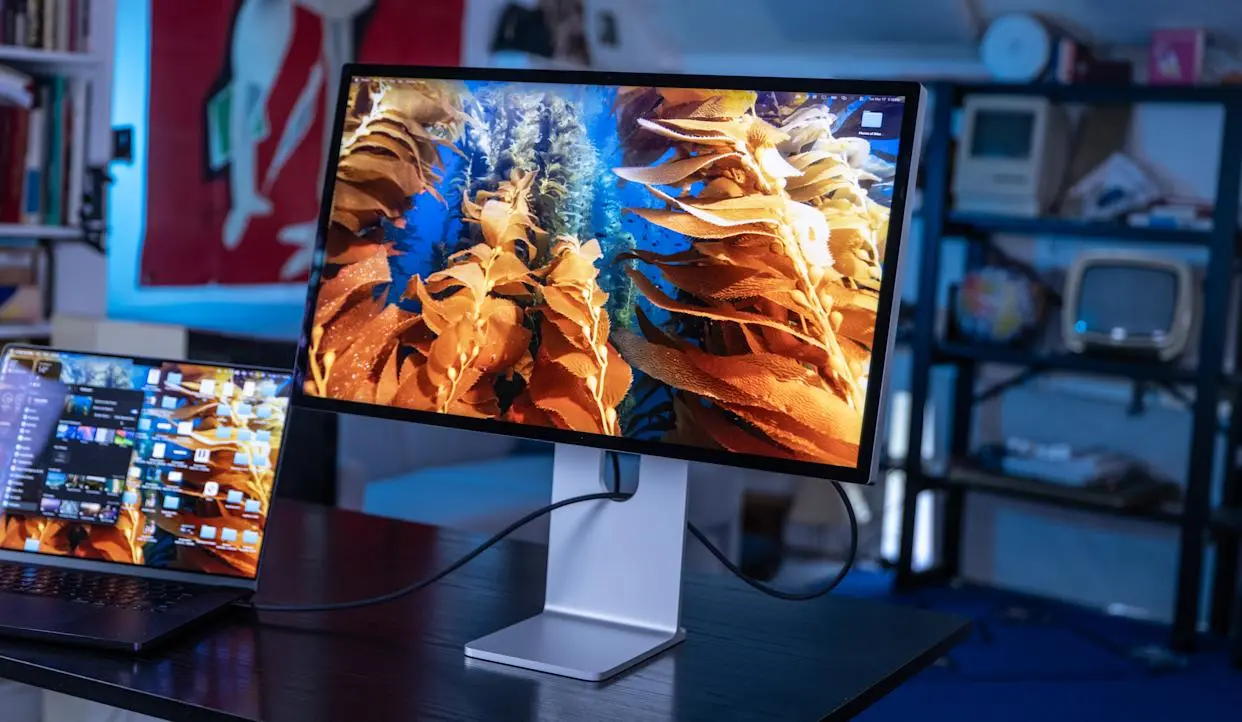
Apple crafts the Studio Display XDR with premium brushed aluminum. Vents line top and bottom edges. A quiet fan expels heat silently. The body echoes the prior Studio Display. Buyers recognize the clean lines instantly.
Internal brains power advanced tasks. An A19 Pro chip handles image processing. It manages 12GB RAM for dimming and HDR mapping. This setup runs webcam features too. The included stand adjusts tilt and height smoothly. Users apply light pressure for four inches of rise. No swivel option exists. VESA mount swaps in at base price.
Ports mix high-speed options. Two 120Gbps Thunderbolt slots connect Macs or drives. Two 10Gbps USB-C ports add flexibility. One Thunderbolt delivers 140W charging for MacBook Pros. A thick Thunderbolt 5 cable ships included. Power cord looks sleek but stays fixed.
Bezels measure 0.75 inches thick. They bulk up the front profile. Rivals like ASUS ProArt trim to 0.25 inches. A 12MP camera hides in the top bezel. Center Stage tracks faces in calls. Nano-texture glass cuts glare for $300 extra.
Apple optimizes for recent Macs. M-series chips hit 120Hz full speed. Older M1 to M3 models cap at 60Hz. Intel Macs and Windows PCs run at 60Hz too. Mini-LED tech avoids OLED burn-in. It pairs with quantum dots for punchy output. Local dimming zones reach 2,304. This quadruples the Pro Display XDR’s count.
Resolution hits 5K at 5120×2880. Pixels pack 218 per inch. Refresh rate climbs to 120Hz with Adaptive Sync. Colors span 1 billion shades. P3 and Adobe RGB gamuts deliver deep greens and cyans. True Tone adjusts to ambient light.
Stand design prioritizes stability. Weight balances the screen perfectly. Cable management hides wires neatly. Footprint fits desks without dominating space. We analyze build quality as elite. Aluminum resists fingerprints. Fan noise stays below 20dB. Ports charge devices fast during edits.
Studio Display XDR Performance: Brightness Dominates
The Studio Display XDR peaks at 1,000 nits SDR and 2,000 nits HDR. Tests confirm 1,991 nits in 25% windows and 988 full-screen. No clipping mars bright HDR clips from YouTube or Netflix. ASUS ProArt stops at 1,400 nits.
Contrast ratio hits 1,000,000:1. Blacks deepen without OLED infinity. Blooming vanishes thanks to 2,304 zones. Off-axis gamma holds steady at sharp angles. Delta E scores 0.8 for pro accuracy.
Mini-LED backlight controls light precisely. Each zone dims independently. Highlights pop in dark scenes. Video editors grade footage effortlessly. HDR mastering handles 2,000 nits peaks.
Color profiles number 16. Options cover P3 Digital Cinema, Photography, HDR, Design, Print, and Medical Imaging. Lightroom and DaVinci Resolve shine. BT.2020 coverage reaches 81%. No Dolby Vision support lags some ASUS models.
Gaming benefits from 120Hz. Cyberpunk 2077 on Mac renders smoothly. Adaptive Sync cuts tears from 47-120Hz. Brightness reveals shadows others miss. Size draws critique at 27 inches. Pros prefer 32-inch canvases. 5K sharpness suits single-monitor setups. Multi-display users pair multiples seamlessly.
Apple solves legacy issues. More zones cut blooming fourfold over Pro Display XDR. Brightness doubles SDR output. Quantum dots boost gamut without burn risks. We measure real-world gains. Skin tones stay true in mixed lighting. Explosions burst vividly in Tenet. Night King battles in Game of Thrones gain detail.
Studio Display XDR Camera, Audio, and Competition
The 12MP webcam upgrades sharpness. Low light brightens faces clearly. Center Stage centers you dynamically. Desk View needs forward tilt.
Six speakers pump Spatial Audio and Dolby Atmos. Bass deepens over prior models. Volume fills rooms crisply. It trails soundbars but leads monitors. Value stacks up smartly. Pro Display XDR cost more at 6K without stand or speakers. Studio Display XDR includes them at lower price.
Rivals challenge specifics. ASUS ProArt PA32UCX offers 32 inches and 1,600 nits for similar cash. It halves dimming zones. OLED ASUS PA27 hits 1,000 nits cheaper but risks burn-in.
Studio Display XDR wins for Mac ecosystems. Seamless integration boosts productivity. Colorists praise halo reduction. Photographers hit Adobe RGB peaks.
Downsides persist. HDMI absence forces adapters. Size limits immersive work. Older silicon throttles refresh. Apple positions it as pro essential. Pre-orders started March 4, 2026; ships March 11. India prices at Rs. 3,99,900.
Squaredtech.co views it as category king for Mac users. Brightness and accuracy justify premium for creators. Bigger siblings may follow.
Stay Updated: Gadgets

