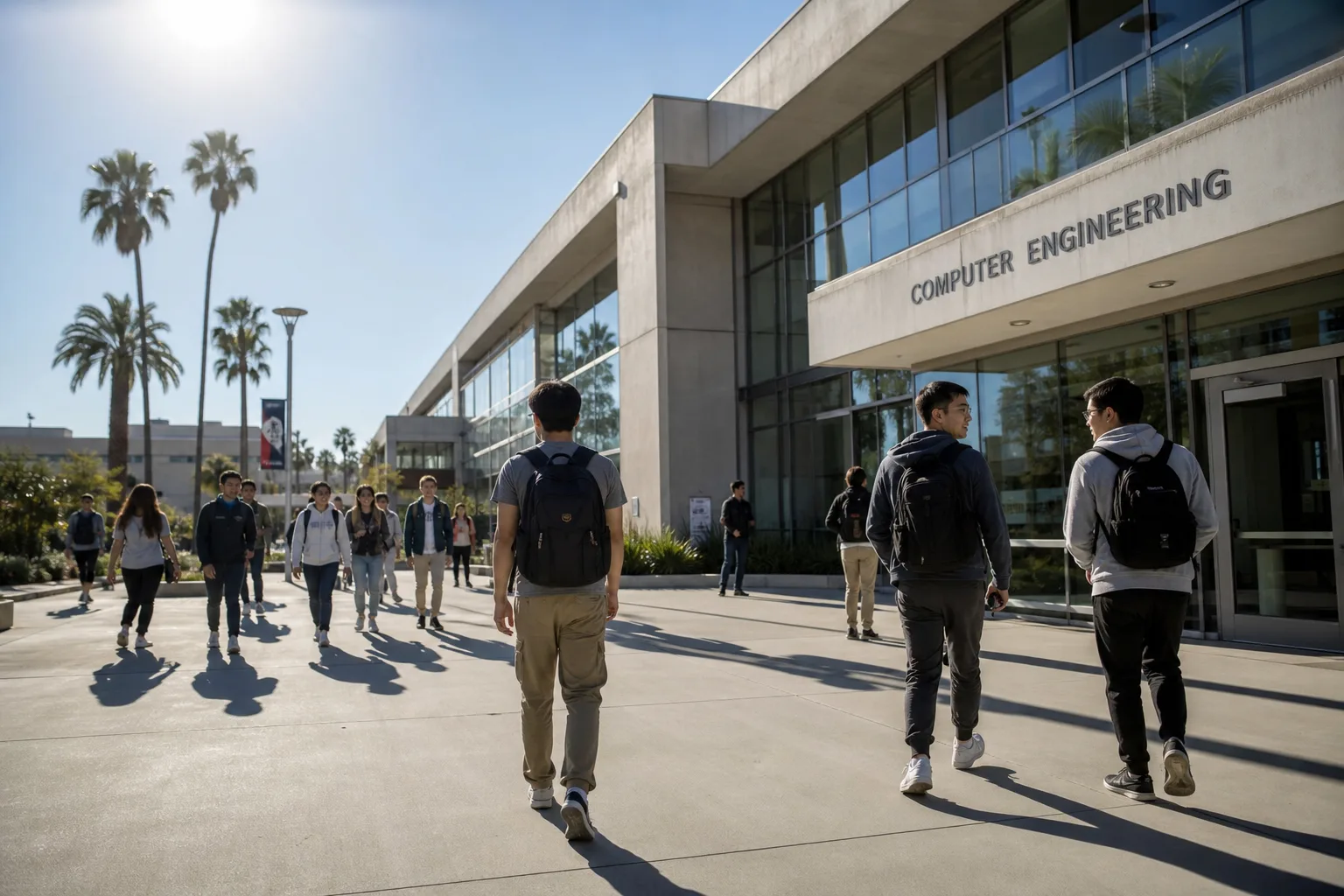
- San Jose State University has climbed into the nation’s top tier for AI and software engineering programs.
- San Jose State University’s rise reflects its unique position embedded within the Silicon Valley tech ecosystem.
- The rankings signal growing demand for regional universities that produce job-ready AI and engineering graduates.
- Industry partnerships and proximity to major tech employers give SJSU graduates a measurable edge in hiring.
Table of Contents
San Jose State University Earns Its Place Among the Best
San Jose State University has landed among the nation’s top-ranked institutions for artificial intelligence and software engineering — and if you know anything about where SJSU sits geographically, it’s hard to call that a surprise. Nestled in downtown San Jose, right at the southern tip of Silicon Valley, the university has spent decades cultivating a relationship with the tech industry that most schools can only dream about. Now, the rankings are starting to reflect what the local job market has quietly known for years.
What makes this moment worth paying attention to isn’t just the bragging rights. It’s what the recognition signals about the broader shift in how employers, students, and policymakers are thinking about tech education — and about which institutions are actually delivering value in the age of AI.
Why Location Is Still One of the Biggest Advantages in Tech Education
There’s a reason elite coastal universities have historically dominated engineering rankings: access. Access to research funding, to influential alumni networks, to the companies that shape hiring pipelines. San Jose State University, as a California State University campus, doesn’t carry the same research-university pedigree as nearby Stanford or UC Berkeley. But it has something those schools don’t offer at the same scale — affordability combined with genuine Silicon Valley immersion.
San Jose State University’s student body includes a significant share of first-generation college students and those from working- and middle-class Bay Area families. For those students, the difference between attending a school with direct recruiting ties to Apple, Google, Cisco, and Adobe versus one that’s geographically removed from that ecosystem is enormous. It can mean the difference between landing a competitive internship junior year or spending graduation sending cold applications into the void.
That embedded, practical advantage is increasingly being formalised. Tech companies — particularly those facing heat over hiring pipelines and workforce diversity — have strong incentives to build structured relationships with institutions like SJSU. The result is a university whose curriculum gets shaped, at least in part, by the actual demands of the industry sitting on its doorstep.
The AI Factor: Rankings in a Fast-Moving Field
Software engineering rankings have existed for decades, but AI as a distinct academic discipline is still finding its footing. University programs are scrambling to build out AI-specific coursework, hire faculty who aren’t being poached by industry at six-figure salaries, and invest in the computing infrastructure that serious AI research demands. That’s a genuinely difficult set of challenges to navigate, and not every school is managing it well.
San Jose State University’s appearance in the top-tier rankings for AI programming is notable precisely because the field is so contested right now. U.S. News & World Report’s graduate school rankings in computer science and AI-adjacent fields have traditionally been dominated by MIT, Carnegie Mellon, Stanford, and a handful of other research powerhouses. Breaking into that conversation — even at the undergraduate or professional program level — requires a serious, sustained commitment to building relevant faculty expertise and industry-connected curriculum.
The demand side of this equation can’t be overstated. AI talent is one of the most sought-after commodities in the current job market. Companies aren’t just looking for PhDs from elite research labs anymore — they need engineers who can implement, fine-tune, and deploy AI systems in production environments. That’s a practical skillset, and practical skillsets are something regional universities with strong industry ties are often better positioned to teach than research-first institutions that are more focused on advancing the theoretical frontier.
What This Means for Students Choosing a Path in AI and Engineering
For prospective students, the San Jose State University rankings offer a useful data point in what’s become an increasingly confusing landscape. The cost of a four-year computer science degree at a private university has become genuinely prohibitive for many families. Meanwhile, the return on that investment is no longer as clear-cut as it once was — particularly as the tech industry has gone through multiple rounds of significant layoffs since 2022, hitting even the most elite hiring pipelines.
San Jose State University represents a different kind of value proposition: strong industry proximity, a diverse and collaborative student body, and now a nationally recognised standing in some of the most in-demand technical disciplines. That’s not a consolation prize. For the right student — particularly one who wants to work in the Bay Area and build a professional network while still in school — it’s arguably a smarter path than taking on six-figure debt for a brand-name degree.
California’s higher education system has long served as a talent factory for the tech industry, with UC schools like Berkeley and UCLA getting the lion’s share of the attention. SJSU’s rising profile suggests that the Cal State system is increasingly being taken seriously as a legitimate producer of AI and engineering talent — not just a fallback option but a first-choice destination for students who know exactly what they want out of a technical education.
The Bigger Picture: Regional Universities and the Future of Tech Talent
SJSU’s rankings success is part of a broader pattern worth tracking. As AI reshapes nearly every corner of the tech industry, the demand for engineering talent is expanding faster than elite institutions can supply it. Companies can’t hire exclusively from a dozen top programs — there aren’t enough graduates, and frankly the concentration of hiring from a narrow band of schools creates its own problems around diversity of thought and background.
Regional universities, particularly those with smart industry partnerships and strong applied programs, are increasingly stepping into that gap. We’re seeing similar dynamics play out at schools like the University of Texas at Dallas, Georgia Tech’s satellite programs, and Arizona State University — institutions that have invested aggressively in engineering and computer science capacity and are now seeing the rankings and employer interest follow.
San Jose State University’s recognition in AI and software engineering isn’t a fluke. It’s the outcome of geography, institutional investment, and a student population that the tech industry genuinely needs. The more interesting question now is whether San Jose State University doubles down — expanding AI research infrastructure, recruiting faculty who can compete with industry salaries, and deepening the corporate partnerships that give its graduates such a tangible edge. If it does, this ranking moment could look like just the beginning.
Frequently Asked Questions
What makes San Jose State University stand out in AI and software engineering?
San Jose State University benefits from its location in the heart of Silicon Valley, enabling deep partnerships with major tech companies. That proximity translates into internship pipelines, faculty connections, and curriculum shaped by real industry needs — advantages most universities simply can’t replicate from afar.
How do regional universities compete with elite schools in engineering rankings?
Regional schools like SJSU increasingly compete by focusing on applied, industry-aligned curricula rather than pure research prestige. Employers hiring at scale often prefer graduates from schools that emphasise practical skills and local networking over theoretical depth alone.
Is San Jose State University a good choice for a software engineering degree?
Based on its latest national rankings in software engineering and AI, SJSU is a strong option — especially for students who want Silicon Valley access without the price tag of a private university. Its employer network and location remain major selling points.
What AI-related programs does San Jose State offer?
SJSU offers programs spanning computer science, software engineering, and data science with coursework touching machine learning and AI systems. The university has been expanding its AI-focused offerings to meet surging industry demand across the Bay Area and beyond.