- The FTT token jumped more than 50% in 24 hours after SBF formally applied for a presidential pardon.
- Traders are treating the FTT token as a political bet on clemency, not as an asset with any real utility.
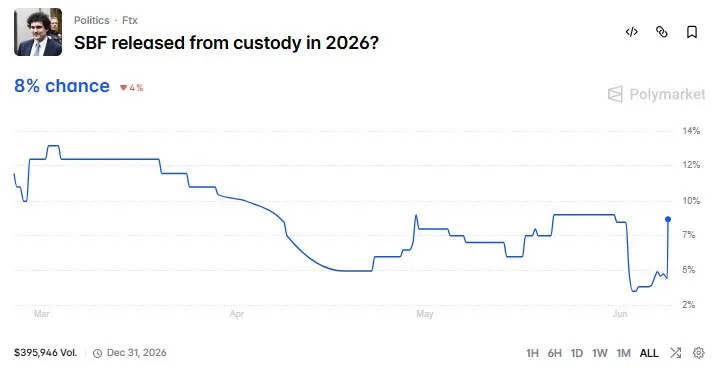
- Trump has publicly ruled out pardoning SBF, and Polymarket puts the odds of clemency at just 8%.
- A pardon would not revive FTX, restore the token’s platform function, or alter creditor claims in bankruptcy.
Table of Contents
The FTT Token Is Trading on Hope, Not Fundamentals
The FTT token — the long-dead native asset of the bankrupt FTX exchange — surged more than 50% in a single 24-hour window this week, briefly climbing to $0.35 after touching an all-time low of $0.2141 just days earlier. The catalyst wasn’t a product launch, a protocol upgrade, or any kind of business recovery. It was a prison filing. Sam Bankman-Fried, currently serving a 25-year federal sentence, formally submitted a presidential pardon application through the Department of Justice’s Office of the Pardon Attorney portal — and crypto markets did what crypto markets do.

Trading volume for the FTT token exploded by more than 600% in the same window, surpassing $16 million according to CoinMarketCap data. Roughly 30% of that activity ran through Binance — the same exchange that, in November 2022, triggered FTX’s bank-run death spiral by publicly announcing it was liquidating its own FTT holdings. There’s a certain dark irony in that detail. The token that Binance helped kill is now being pumped on Binance by traders betting on its creator’s political salvation.
To be clear about what FTT actually is at this point: it’s a ghost asset. There’s no development team maintaining it, no exchange platform generating fee revenue behind it, and no credible recovery plan attached to it. FTX has been in bankruptcy since late 2022. The token exists in a kind of financial limbo — technically still tradeable, but fundamentally untethered from anything that would normally justify a price. What’s happening here isn’t investing. It’s speculation on a narrative.
SBF’s Pardon Play: Bold Strategy or Long Shot?
Bankman-Fried’s formal pardon application is technically premature by conventional legal standards. The DOJ’s standard guidance recommends waiting at least five years after sentencing before applying for executive clemency. SBF was sentenced in March 2024, which puts him well short of that threshold. His legal team is essentially arguing around the rules before the rules even apply — which is either bold legal maneuvering or a sign of desperation, depending on your read.
The move formalises what had already been a months-long shadow campaign, with family members and legal allies quietly lobbying for his release. His public-facing argument has consistently leaned on the claim that FTX wasn’t truly insolvent when it collapsed — that it faced a liquidity crisis, not a fraud-driven hole in its balance sheet, and that customer funds could have been made whole if management hadn’t been ceded to outside restructuring advisers.
That framing clashes directly with what prosecutors proved at trial. The government’s case — supported by testimony from former FTX executives including Caroline Ellison, Gary Wang, and Nishad Singh, all of whom cooperated with investigators — established that customer deposits were secretly funnelled to Alameda Research and spent on trading losses, real estate, political donations, and debt repayments. Ryne Miller, FTX’s own former general counsel, publicly dismissed SBF’s post-conviction solvency claims on X, writing that available assets in November 2022 were nowhere near adequate and that company insiders were still scrambling to put together asset lists as the whole thing came apart.
The jury wasn’t persuaded by SBF’s version of events. US District Judge Lewis Kaplan sentenced him to 25 years, three years of supervised release, and more than $11 billion in forfeiture across two counts of wire fraud, two counts of conspiracy to commit wire fraud, and additional conspiracy counts tied to securities fraud, commodities fraud, and money laundering. That’s not a regulatory technicality. That’s one of the largest financial fraud verdicts in American history.
Trump’s Crypto Pardons: Where SBF Doesn’t Fit
There’s a plausible surface-level argument for why SBF might think a Trump pardon is worth pursuing. The current administration has shown genuine willingness to extend clemency to prominent crypto figures. In October 2025, Trump pardoned Changpeng Zhao, the founder of Binance, who had pleaded guilty to anti-money laundering violations. Earlier, Ross Ulbricht — the Silk Road creator who became a libertarian cause célèbre — received a commutation, as did BitMEX executives including Arthur Hayes. Trump has clearly decided that the crypto industry deserves a more sympathetic ear from the executive branch than it got under the previous administration.
But the political logic that applied to those cases simply doesn’t extend to SBF. Zhao’s conviction centred on compliance failures and AML violations — the kind of regulatory overreach argument that resonates with the administration’s deregulatory instincts. Ulbricht’s case had been reframed by advocates as a criminal justice reform issue. Hayes’s charges involved technical money transmission violations. Each had a political hook that made clemency relatively easy to frame as principled rather than corrupt.
Bankman-Fried’s case offers no such hook. He was convicted of directly defrauding retail customers — ordinary people who deposited money on FTX and watched it disappear. He donated heavily to Democratic political causes before the collapse, which doesn’t exactly warm the current White House to his situation. And Trump has already answered the question directly. In a January 2026 interview with The New York Times, he explicitly ruled out a pardon for SBF. The White House has not softened that position since.
What a Pardon Would — and Wouldn’t — Actually Do
Even setting aside the near-zero political probability, it’s worth understanding why traders betting on the FTT token as a pardon proxy are taking on more risk than they may realise. A presidential pardon would affect one thing: Bankman-Fried’s personal liberty and legal status. It would not reopen FTX. It would not restore any utility to the FTT token. It would not alter the structure of the bankruptcy estate or change how creditors — many of whom are now finally seeing recovery distributions under the FTX estate’s restructuring plan — receive what they’re owed.
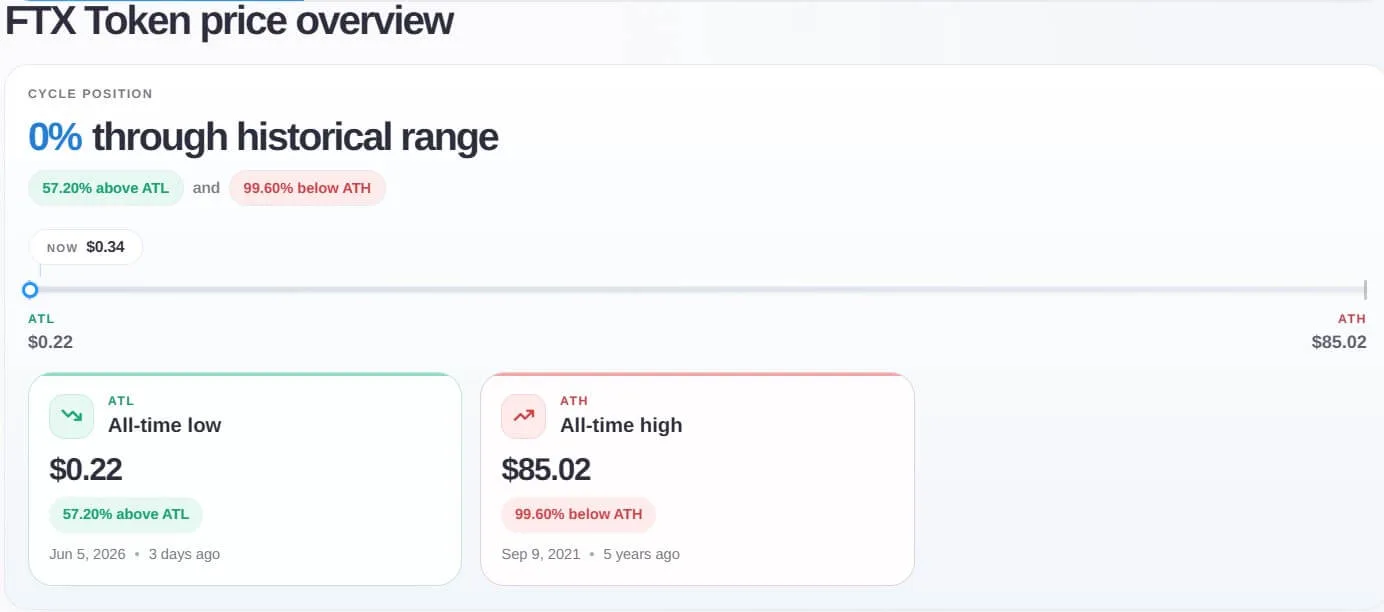
The FTT token jumped because markets conflated “SBF gets out of prison” with “FTX comes back to life.” Those are not the same thing, and there’s no realistic mechanism by which they become the same thing. The exchange’s assets have been liquidated, distributed, or earmarked for creditors. The brand is radioactive. Even if Bankman-Fried walked free tomorrow, rebuilding FTX from scratch would be a years-long endeavour that no serious investor would touch — and the regulatory environment for crypto exchanges in the US, while somewhat friendlier under the current administration, is still not a blank cheque.
What you’re really seeing in the FTT token price action is the crypto market’s well-documented tendency to trade on story rather than substance. The token has become a financial instrument for expressing a political view — one with an 8% probability attached to it according to Polymarket, and a 0% real-world mechanism for converting a pardon into token value even if that 8% comes in.
A Cautionary Tale That Keeps Writing Itself
The broader lesson here extends well beyond FTT. Crypto markets have always had a speculative character, but the post-2022 landscape has produced a peculiar sub-genre of “distressed narrative” trading — assets with no utility, no development, and no fundamental value that nevertheless spike on headlines because the underlying story hasn’t fully resolved. FTT is arguably the purest example of this phenomenon currently active in the market.
What makes this particular episode uncomfortable is who it implicates. Millions of retail customers lost real money when FTX collapsed — people who believed they were holding funds on a legitimate, well-regulated exchange. The fact that the token bearing FTX’s name is now being actively traded as a vehicle for political speculation, generating millions in volume and fees for exchanges, sits uneasily alongside that reality. The people who lost the most from FTX’s collapse aren’t the ones making money on this rally.
SBF’s pardon application will almost certainly fail. The FTT token will almost certainly give back most or all of this week’s gains when that reality reasserts itself. But the episode is a useful reminder that in crypto, even the most discredited assets can find a new life as instruments of pure speculation — and that the line between a market and a casino can get very thin, very fast.
Frequently Asked Questions
Why did the FTT token spike after SBF’s pardon request?
The FTT token has no active utility or development team, but crypto markets frequently react to sentiment and breaking news. Traders appear to be speculating that a successful pardon could briefly revive public interest in FTX-linked assets, making FTT a proxy bet on that outcome — however unlikely.
What are the real odds of Sam Bankman-Fried receiving a Trump pardon?
Prediction market Polymarket prices the probability at just 8% by year-end. President Trump explicitly ruled out clemency for SBF in a January 2026 interview with The New York Times, and the White House has held that position since.
Would a pardon actually help FTT token holders or FTX creditors?
No. A pardon would affect only Bankman-Fried’s personal liberty. It would not restart the FTX exchange, restore the FTT token’s former platform utility, or change how creditor claims are structured in the ongoing bankruptcy proceedings.
Has Trump pardoned other crypto figures before?
Yes. Trump pardoned Binance founder Changpeng Zhao and issued earlier commutations for Silk Road creator Ross Ulbricht and BitMEX executives including Arthur Hayes. Those cases were framed around regulatory overreach — a very different political argument from SBF’s fraud conviction.