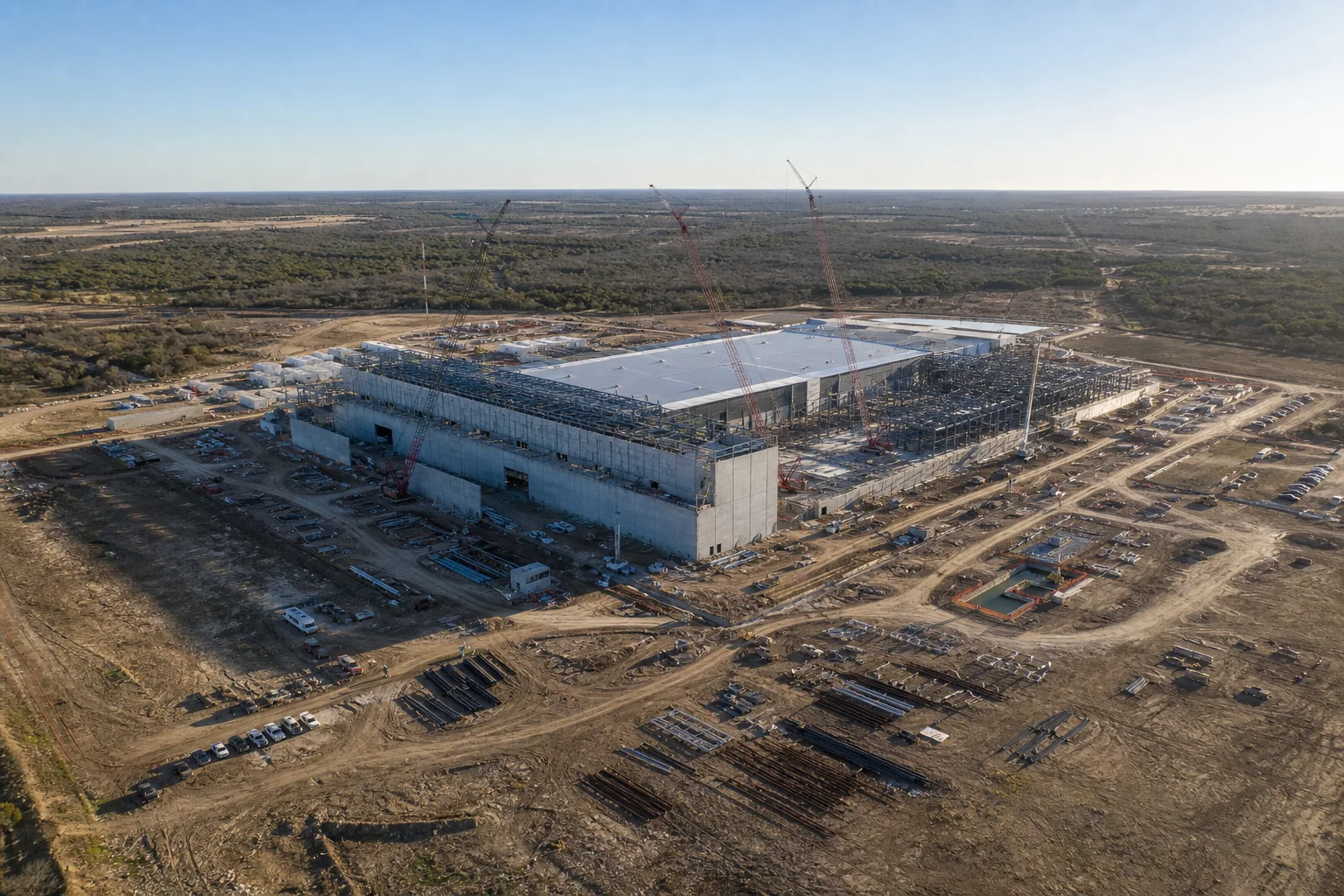
- A Texas data center is now being built on land a farmer donated specifically for use as a public park in Taylor, TX.
- The Texas data center developer Blueprint paid $10 million for land the city originally acquired for just $10 in 1999.
- Resident Pamela Griffin uncovered a deed clause restricting the land to parkland use, sparking a legal fight against construction.
- City officials say the Texas data center project can’t be stopped due to existing Employment Center zoning on the property.
Table of Contents
A Farmer’s Gift, Quietly Sold Off
The Texas data center industry has become one of the most voracious consumers of land in the American Southwest — but rarely does a site acquisition come loaded with quite this much moral weight. In Taylor, Texas, a small city of roughly 16,267 people about 30 miles northeast of Austin, a plot of land once gifted to the community for a public park is now being cleared to make way for a 135,000-square-foot Texas data center facility. The developer behind it is a company called Blueprint. The price they paid: $10 million. The price the city originally paid to accept the land as a donation from the Bland family farm back in 1999: $10. That’s not a typo.
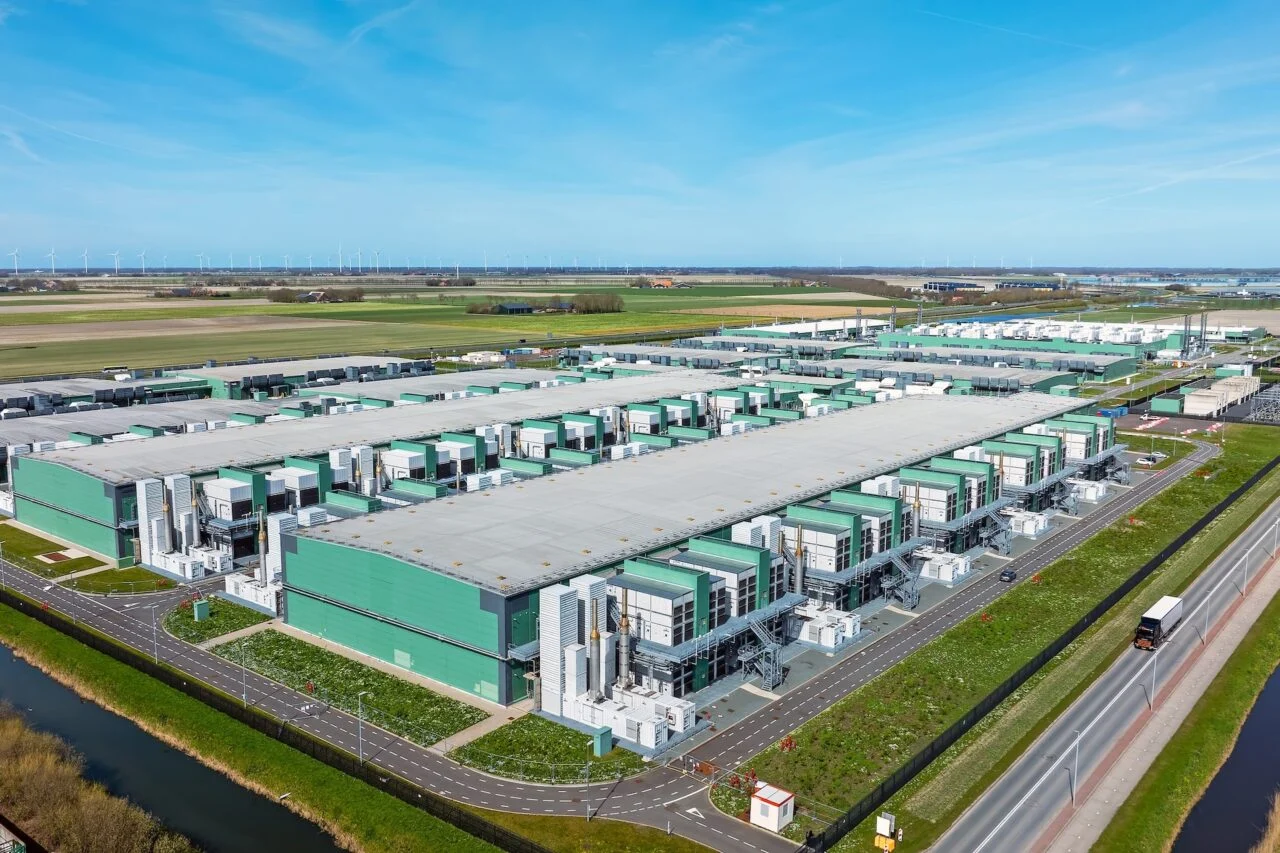
According to documents reviewed by 404 Media, the original deed was explicit about the land’s intended purpose. It granted nearly 88 acres to the Texas Parks and Recreation Foundation, a non-profit, ‘to be held in trust for future use as parkland by Williamson County, Texas.’ The language wasn’t vague. It wasn’t buried in legalese. The Bland family wanted kids to have somewhere to play, and they made that intention clear in writing. What happened next is a case study in how bureaucratic indifference can quietly undo an act of genuine generosity over the course of two decades.
How 88 Acres Changed Hands Five Times
The ownership trail reads like something designed to obscure accountability. In 2003, the Texas Parks and Recreation Foundation transferred the land to a separate non-profit called the Williamson County Park Foundation. A month later — just thirty days — that foundation handed the property outright to the City of Taylor. At that point, the community’s claim on the land as a future park seemed secure. Then 2008 arrived.
That year, the City of Taylor sold the land to the Taylor Economic Development Corporation (TEDC) for $15,000. It’s worth pausing on that number. The city accepted a charitable donation valued at a symbolic $10, watched it appreciate in the hands of non-profits for nearly a decade, and then offloaded it to an economic development body for $15,000 — still a fraction of what the land was presumably worth. The TEDC sat on the property for years without developing it, until last year when it sold the plot to Blueprint for $10 million. The TEDC reportedly pocketed a significant windfall on land that was never really meant to be a commercial asset in the first place.
Daniel Seguin, the City of Taylor’s executive director of community services, told 404 Media that Blueprint can proceed with the Texas data center project without city approval ‘because the property’s existing Employment Center zoning already allowed such a use.’ The city’s own FAQ on the matter asks bluntly: ‘Can the City just say no to data centers?’ The answer it provides is equally blunt: ‘In short, no.’
The Woman Who Remembered
What makes this story more than just another land-use dispute is Pamela Griffin. A lifelong Taylor resident, Griffin grew up playing near the contested property. She recalls a conversation her father had with Mr. Bland himself — a memory that suddenly became legally significant when data center opponents knocked on her door last year to rally community opposition to Blueprint’s plans.
‘I’m thinking about giving this land for parkland because these kids need somewhere to play,’ Griffin recalled Bland saying, in remarks to 404 Media. That memory, combined with a willingness to dig through public records, gave the opposition something concrete: documentary evidence that the parkland deed restriction was real, and that it had potentially been violated somewhere along the chain of ownership transfers.
Griffin isn’t treating this as a local planning squabble. She’s framing it as something larger. ‘I keep trying to tell everybody,’ she told 404 Media, ‘if they start messing with deeds in Texas? Allowing deeds to be not upheld? What’s going to happen to all of us?’ It’s a fair point that extends well beyond Taylor. Property deeds with conditional language are a foundational instrument of land-use agreements across the country. If a city can transfer land through a chain of non-profits and economic development bodies until the original conditions become unenforceable, that has implications for every charitable land donation ever made with strings attached.
Texas Data Center Expansion and the Towns Caught in Its Path
Taylor isn’t an accident. The city sits in Williamson County, which has become one of the most aggressively courted Texas data center corridors in the state. Samsung alone announced a massive semiconductor investment in the area. The region’s power grid access, land availability, and tax incentive structures have made it a target for tech infrastructure spending at a scale that smaller communities weren’t built to absorb.
The problems a Texas data center creates for small towns are by now well-documented: the noise from cooling systems running 24 hours a day, the draw on local power and water resources, the light pollution from facilities that never go dark, and the minimal job creation relative to the footprint they occupy. A 135,000-square-foot facility in a town of 16,000 people isn’t a background hum — it’s a defining feature of the landscape. The city’s own website acknowledges concerns about ‘air, noise, light, and other potentially harmful emissions’ from the proposed facility, while simultaneously insisting the project is essentially a done deal.
City officials point to a projected $30 million in tax revenue over the next decade as justification. Griffin doesn’t find that persuasive. And honestly, it’s hard not to see her point: the community was never consulted, the deed restrictions were apparently ignored across multiple ownership transfers, and the primary financial beneficiary of the entire chain of events appears to be the TEDC — which turned a $15,000 municipal purchase into a $10 million sale to a private Texas data center developer.
A Legal Fight That’s Already Uphill
Griffin and her family hired an attorney and filed suit. Blueprint responded by filing a motion to dismiss, which the presiding judge granted. When Griffin’s legal team sought an injunction to pause construction while the case works its way through the Third Court of Appeals in Austin, that too was denied. Construction on the Texas data center is continuing.
That doesn’t mean the fight is over. Appeals courts have reversed lower court decisions on deed restriction cases before, particularly when the conditional language is as clear as it reportedly is in this instance. Texas property law takes deed covenants seriously — which is precisely the argument Griffin’s side is pressing. The irony is that the city’s own position — that Employment Center zoning supersedes the deed’s parkland restriction — is exactly the kind of argument that, if it holds, makes charitable land donations to public bodies a riskier proposition everywhere.
Who would donate land for a community purpose if a city can simply reclassify it, transfer it to an economic development corporation, and sell it to the highest bidder a decade later? The Bland family’s gesture was an act of civic faith. The question the appeals court will have to answer is whether that faith was legally enforceable — or just morally binding, which, in practice, turns out to mean almost nothing at all.
Big tech’s infrastructure hunger isn’t slowing down. If anything, the AI buildout is accelerating demand for Texas data center capacity across the Sun Belt and beyond. Towns like Taylor are going to keep finding themselves in the path of that expansion. The Griffin case, whatever its outcome, is a preview of the fights that are coming — over land use, over deed restrictions, over who actually controls the terms of a gift once it’s been given.
Frequently Asked Questions
Can the Texas data center construction in Taylor be legally stopped?
It’s proving very difficult. A judge denied an injunction to halt construction while the case moves through the Third Court of Appeals in Austin. The city maintains that existing Employment Center zoning permitted the development without additional city approval, making a reversal unlikely in the short term.
What does the original deed say about the land’s intended use?
The original deed granted the land to the Texas Parks and Recreation Foundation to be held in trust for future use as parkland by Williamson County. Opponents argue this language legally restricts what can be built there, regardless of subsequent ownership transfers.
How did the land go from a donation to a $10 million data center sale?
The Bland family donated nearly 88 acres for $10 in 1999. Ownership passed through two non-profits before the City of Taylor sold it to the Taylor Economic Development Corporation for $15,000 in 2008. The TEDC then sold the plot to Blueprint for $10 million.
What are residents’ concerns about the data center beyond the deed issue?
Local residents have raised concerns about air quality, noise pollution, and light emissions from the proposed 135,000-square-foot facility. Taylor has a population of just 16,267, making the scale of the development a significant community concern beyond the legal dispute over the land deed.