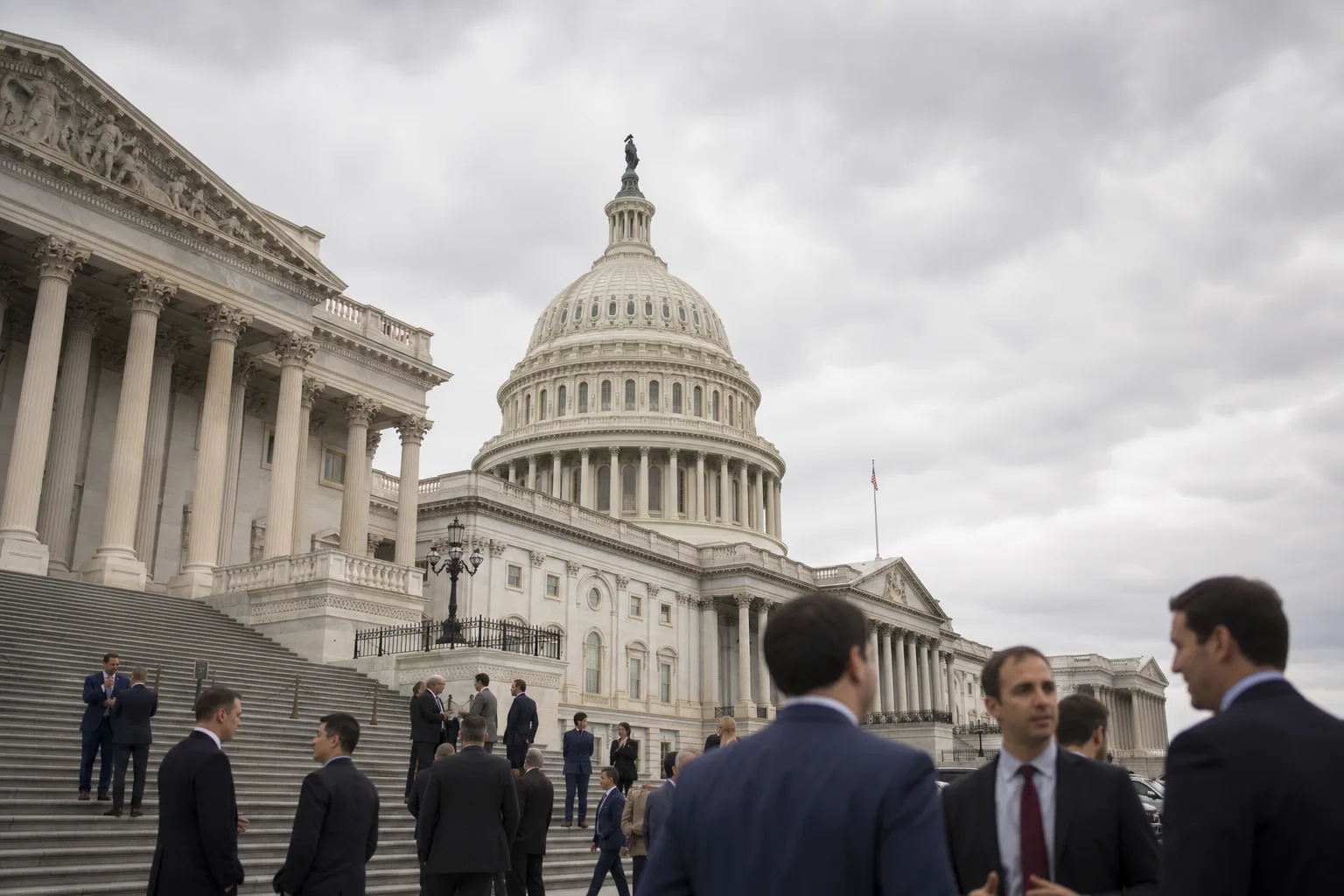
- Several crypto industry groups have signed a letter urging the Senate to pass the CLARITY Act before the August recess.
- The CLARITY Act faces unresolved ethics and illicit finance provisions that could cost it the 60 votes it needs to pass.
- Galaxy Digital has cut its odds of the bill passing in 2026 from 75% to 60% as the Senate has yet to schedule floor time.
- Two separate Senate committee versions of the CLARITY Act still need to be merged before a full floor vote can happen.
Table of Contents
The CLARITY Act and the Industry’s Ultimatum
A coalition of lobby groups has signed a joint letter demanding the Senate pass the CLARITY Act — and the urgency in the message is hard to miss. The letter, coordinated through lobby groups including Stand With Crypto, The Digital Chamber, the Blockchain Association, and the Crypto Council for Innovation, frames this as a make-or-break moment for the US’s standing in the global digital asset market. The core argument is straightforward: if Congress doesn’t act soon, the innovation, investment, and jobs tied to crypto infrastructure will simply continue migrating offshore.

The letter puts it bluntly: ‘Digital asset markets are global, growing, and central to the future of financial infrastructure. The question before Congress is whether that future will be built in the United States — under U.S. law, U.S. oversight, and American values — or continue moving to offshore jurisdictions with less transparency, weaker consumer protections, and limited accountability.’ That’s not just lobbying rhetoric — it’s a pitch that’s genuinely hard for lawmakers to dismiss in an era when the US is competing with the EU’s MiCA framework and Hong Kong’s fast-moving licensing regime for credibility as a digital finance hub.
Why the Clock Is Running Out on the CLARITY Act
The Senate has not yet scheduled floor time for the CLARITY Act — which, given the legislative calendar, is a serious problem. Galaxy Digital said on Friday that it has cut its odds of the bill passing in 2026 from 75% to 60%, citing a hard deadline: the bill needs to clear the Senate before the August recess in late July. Galaxy was explicit that ‘after that, the window effectively closes.’ With midterm elections on the horizon in November, lawmakers’ attention will shift sharply toward campaigning, making ambitious financial legislation increasingly unlikely to move.
That ticking clock puts the crypto industry in a difficult spot. The momentum that seemed to build through committee-level progress now risks stalling entirely at the floor stage, which is often where bills go to quietly die. The CLARITY Act isn’t a done deal — it’s a bill that has passed through individual committees but hasn’t yet been stitched together into a version the full Senate can vote on.

The Structural Problem: Two Bills, Not One
Here’s the less-discussed complication beneath the headlines. The Senate Agriculture Committee and the Senate Banking Committee have each passed their own version of the CLARITY Act — covering commodities law and securities law respectively. Before the bill can go to a full Senate floor vote, those two versions need to be reconciled into a single, unified piece of legislation. That’s not a minor drafting exercise. These are substantively different areas of financial law, overseen by committees that don’t always share the same priorities or political pressures.
Galaxy Digital has said it hasn’t seen any evidence that this process has meaningfully advanced, or that the contentious provisions have been resolved. That matters because the market has been pricing in a relatively optimistic scenario for crypto legislation this cycle, and any further slippage in the odds is likely to have downstream effects on how investors and companies plan around regulatory risk in the US.
The Sticking Points: Ethics, Illicit Finance, and Stablecoin Yields
Even if the two committee versions get merged, the bill still faces substantive opposition on the floor. Senators have flagged two specific areas that need fixing before the CLARITY Act can attract the 60 votes needed to avoid a prolonged procedural battle. The first is ethics — a concern tied to the broader political climate around crypto’s relationship with political figures and potential conflicts of interest in Washington. The second is illicit finance, with some lawmakers wanting tighter provisions addressing how the legislation handles anti-money laundering and sanctions compliance in decentralised systems.
Senator Cynthia Lummis, one of the bill’s most vocal champions, told CNBC this week that lawmakers are actively working through both issues. But Galaxy Digital’s assessment — that there’s no visible sign of progress on these specific provisions — suggests the gap between ‘working on it’ and ‘resolved it’ may be larger than supporters would like to admit.

Then there’s the longer-running fight over stablecoins. Banking groups have pushed for the bill to include an outright ban on platforms offering yield on stablecoins — a provision the traditional finance lobby views as essential to preventing crypto savings products from operating like unlicensed banks. The crypto industry, meanwhile, has fought hard to secure explicit protections for developers building decentralised protocols, arguing that holding developers liable for how their open-source code is used would effectively make US-based DeFi development impossible. Both sides have been negotiating for months, and neither appears to have fully given ground.
What the Industry Is Actually Asking For
Reading between the lines of the coalition letter, the industry’s ask is fairly specific: pass something workable before the window shuts, even if it’s imperfect. The signatories know that a bill that clears 60 votes will require compromises — on stablecoin yields, on developer liability, on ethics provisions. What they’re pushing back against isn’t the idea of compromise; it’s the prospect of another cycle where crypto legislation gets this far and then stalls indefinitely, leaving companies to operate in a legal grey zone that makes long-term investment planning difficult.
That grey zone has real costs. Without clear rules distinguishing which digital assets are commodities and which are securities, US-based projects continue to face an unpredictable enforcement environment from both the SEC and the CFTC. Competitors in the EU, Singapore, and elsewhere operate under frameworks that, whatever their flaws, at least tell companies where they stand. That regulatory clarity — the thing the CLARITY Act is literally named after — is increasingly a competitive disadvantage for the US.

What Happens Next
The next few weeks will be telling. If the two committee versions of the CLARITY Act get merged and the ethics and illicit finance provisions find language that satisfies enough centrist senators, a floor vote before the August recess is still theoretically possible. Galaxy Digital’s 60% probability isn’t a death sentence — it’s a reflection of real uncertainty, not inevitability.
But if the Senate heads into recess without scheduling a vote, the bill’s prospects dim considerably. The November election cycle will dominate legislative bandwidth, and any attempt to revive the CLARITY Act would essentially need to start the floor process from scratch in a much less hospitable political environment. For an industry that’s been waiting years for the US to provide a coherent legal framework, that outcome would be a significant setback — and, as the coalition letter argues, a competitive gift to every jurisdiction that’s already moved faster.
Frequently Asked Questions
What is the CLARITY Act and what does it cover?
The CLARITY Act is US federal legislation designed to create a clear legal framework for digital assets, covering both commodities and securities law as they apply to crypto. It addresses issues including stablecoin yields and protections for developers of decentralized platforms.
Why is the CLARITY Act stalling in the Senate?
Two separate committee versions of the bill still need to be merged into one. Senators have also flagged unresolved concerns around ethics and illicit finance, and the bill needs at least 60 votes to advance without a prolonged debate, which remains uncertain.
What happens if the CLARITY Act doesn’t pass before August recess?
According to Galaxy Digital, the window for passing the CLARITY Act this year effectively closes after the August recess in late July. With midterm elections looming in November, legislative momentum is expected to slow sharply after that point.
Which organisations signed the letter supporting the CLARITY Act?
The letter was signed by four major crypto lobby groups: Stand With Crypto, The Digital Chamber, the Blockchain Association, and the Crypto Council for Innovation, representing interests across the digital asset industry.