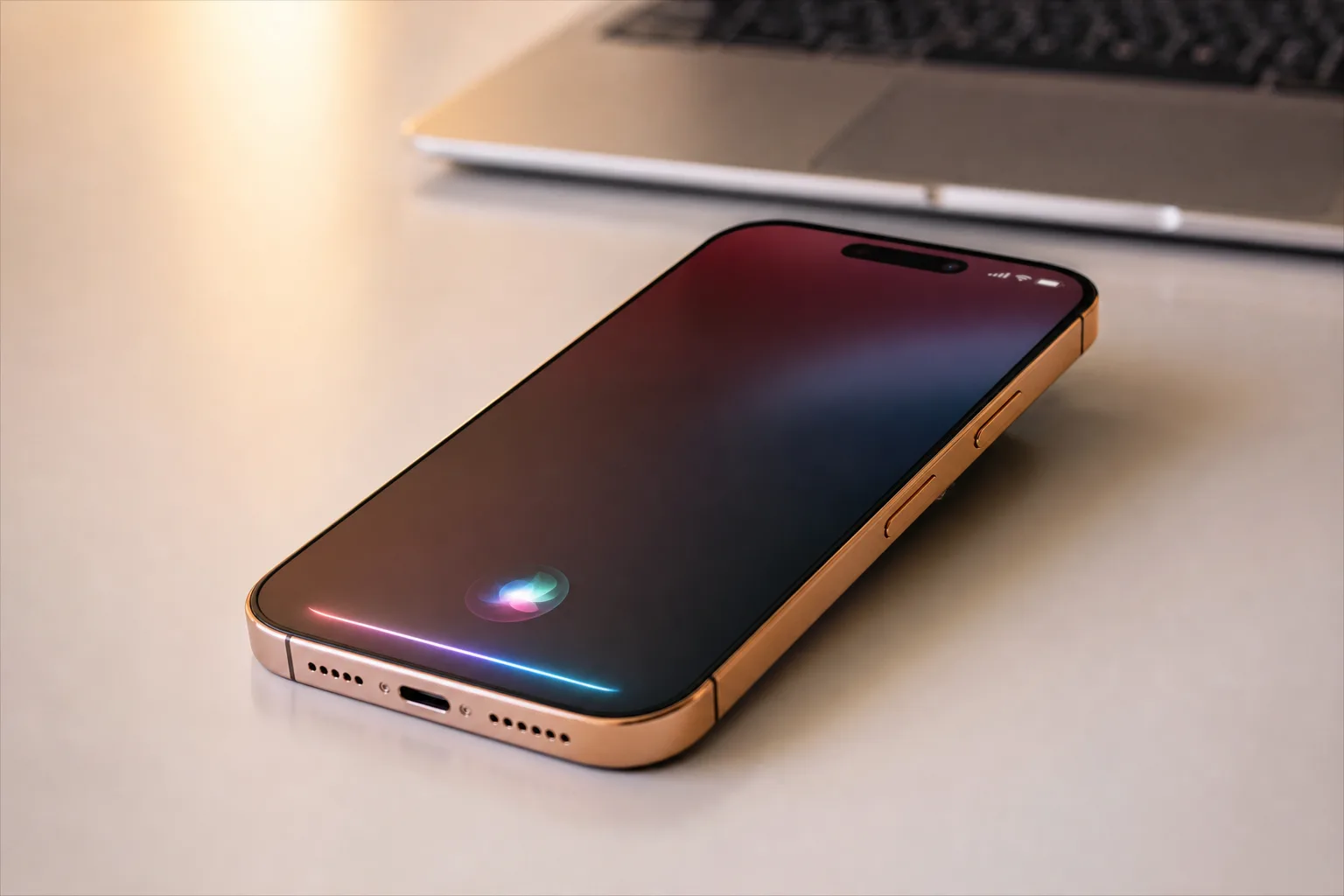
- Apple Intelligence returns with a rebuilt Siri that runs on foundation models co-developed with Google and Nvidia-backed cloud infrastructure.
- The most capable Apple Intelligence features require at least 12 GB of RAM, locking out the standard iPhone 17 and iPhone 16 Pro Max.
- EU iPhone and iPad users won’t get Siri AI at launch — Apple cites the Digital Markets Act, blaming failed negotiations with the European Commission.
- Tim Cook opened his final WWDC keynote as CEO before handing the role to John Ternus in September.
Table of Contents
Apple Intelligence Gets the Rebuild It Always Needed
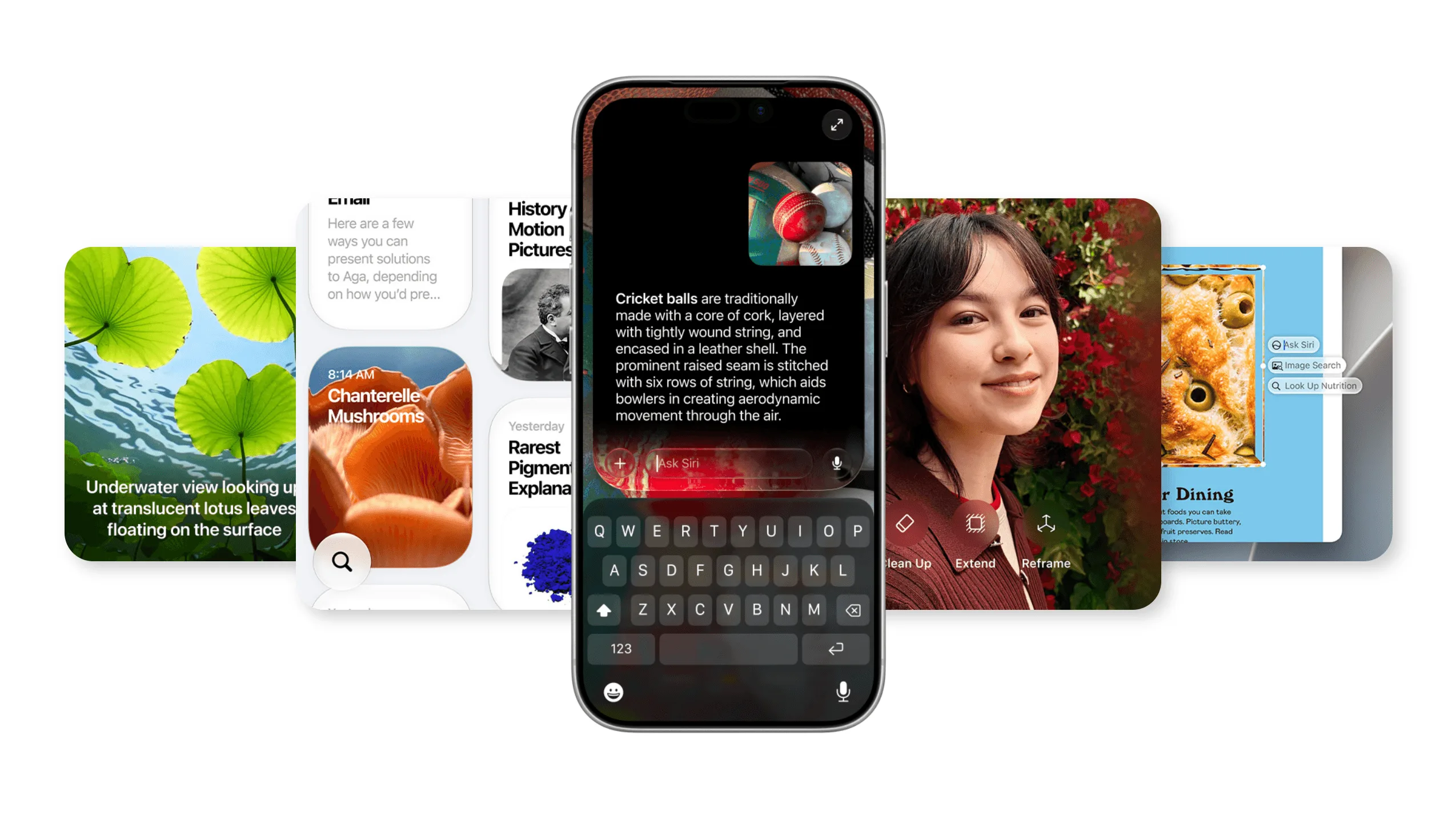
Two years after Apple first teased a smarter, more contextual Siri, Apple Intelligence has finally arrived in a form that resembles what was originally promised. At WWDC 2026, Apple unveiled ‘Siri AI’ — a ground-up reconstruction of its virtual assistant, now capable of system-wide actions, on-screen reading, and pulling personal context from your messages, emails, and photos. There’s a dedicated Siri app that syncs conversations across all your devices through iCloud. On paper, it’s exactly what Apple said it was building back in 2024. That it took this long to ship — and required outside help from both Google and Nvidia to get there — tells you a lot about how difficult this problem turned out to be.
Google and Nvidia Are More Involved Than You Might Expect
The headline partnership is with Google, and it’s worth being precise about what that actually means. Apple built its third-generation Apple Foundation Models in close collaboration with Google, using Gemini frontier models to help refine outputs. But Apple was quick to draw hard lines at the WWDC Tech Talk that followed the keynote. Craig Federighi, Apple’s senior VP of software engineering, was blunt about the scope: ‘The amount of the Google Assistant we use is none.’ Apple doesn’t use the Gemini app, Google’s consumer-facing models, or Google Search as a knowledge base. For factual world knowledge, it relies on its own ‘World Knowledge Service,’ reportedly built over several years in-house.
The third-generation AFM suite consists of five models. Four of them — AFM Core, AFM Core Advanced, AFM Cloud, and AFM Cloud Image — are built for Apple Silicon and were only refined using Gemini outputs. The fifth, AFM Cloud Pro, is where the Nvidia connection comes in. That top-tier model runs on Nvidia GPUs inside Apple’s Private Cloud Compute infrastructure, which Apple has now expanded into Google Cloud for this purpose. Apple’s AI lead Amar Subramanya told CNBC that AFM Cloud Pro is ‘comparable in quality’ to Google’s Gemini frontier models — though no independent benchmarks have been published yet, so that comparison remains Apple’s word against itself.
A component Apple is calling the ‘System Orchestrator’ decides in real time whether any given query runs locally on your device or gets routed up to cloud servers. Federighi described this router as central to the system’s privacy architecture — the idea being that simple, personal queries stay on-device, while heavier lifting moves to Private Cloud Compute when necessary. It’s an elegant framing, and it does address one of the core criticisms Apple has faced: that cloud-dependent AI fundamentally conflicts with the company’s privacy positioning.
What Siri AI Can Actually Do Now
The feature list is genuinely broad. Apple Intelligence can now handle system-wide agent actions — navigating apps, executing tasks, and pulling context across your entire device rather than just answering isolated questions. Visual Intelligence has expanded meaningfully: point your camera at a restaurant receipt and Siri AI can split the bill via Apple Cash; aim it at a plate of food and it surfaces nutritional information. Visual Intelligence is also coming to visionOS, which makes sense given that platform’s camera-forward design.
One of the more quietly interesting features is automatic password changing. If a password is flagged as compromised, Apple Intelligence will navigate to the relevant website, log in, change the password, and save the new credentials in the Passwords app — without you lifting a finger. Apple hasn’t published reliability data for this, and that caveat matters. Automated credential handling is exactly the kind of task where a single failure mode is a significant security event. Security researchers have already demonstrated that AI systems with deep system access can be manipulated to steal passwords, exfiltrate photos, or make unauthorized account changes. Apple’s architecture is designed to prevent this, but the company’s choice not to share reliability figures is a gap worth watching.
Other additions include Safari getting a ‘Notify Me’ feature and smarter tab organization, a new Image Playground app, Spatial Reframing in Photos, AI-generated video descriptions for HomeKit Secure Video clips, and summarized notifications in the Home app. For developers, Apple is opening the Foundation Models Framework with support for image inputs, custom skills, and server-side model execution. Xcode also gains an expanded coding assistant built for agentic workflows — a direct play for the developer audience that’s increasingly accustomed to tools like GitHub Copilot and Cursor.
Apple Intelligence Needs 12 GB of RAM — and Most iPhones Don’t Have It
Here’s the hardware reality check. The most capable on-device Apple Intelligence model requires an iPhone 17 Pro or iPhone Air, an M4 iPad with at least 12 GB of RAM, or an M3 Mac with 12 GB. The standard iPhone 17, which ships with 8 GB of RAM, doesn’t make the cut. Neither does the iPhone 16 Pro Max — a phone that retailed for over $1,000 just months ago. Users on unsupported hardware can still access many features through Private Cloud Compute, but with higher latency and less privacy control. The split creates a two-tier Apple Intelligence experience that the company hasn’t been particularly loud about in its marketing materials.
This memory threshold isn’t arbitrary — running large on-device language models requires substantial RAM to load model weights and maintain context without constant disk swapping. But the optics are awkward. Apple has spent two years positioning Apple Intelligence as a platform-level feature, not a Pro-only luxury. The reality is that the full experience is tied to a hardware refresh cycle, which is exactly the kind of thing that frustrates users who upgraded recently and expected to be covered.
The EU Won’t Get Siri AI on iPhone or iPad
The most consequential geographic limitation is the EU exclusion. Apple Intelligence in its Siri AI form won’t launch on iOS or iPadOS in the European Union — and Apple has published a Newsroom post explaining why, pointing squarely at the Digital Markets Act. Apple’s reading of the regulation is that complying would require it to give any third-party virtual assistant the same deep system access Siri AI has: the ability to read and send messages, make purchases, access files, and trigger actions across all installed apps. Apple proposed a ‘Trusted System Agent’ — a middleware layer that would securely extend those capabilities to rival assistants, paired with a phased 18-month rollout. The European Commission rejected that proposal, along with every other alternative Apple put forward.
The impasse leaves EU users in a strange position. Apple Intelligence will be available on macOS 27 and visionOS 27 in the EU, because the DMA’s gatekeeper designations only cover iOS and iPadOS as core platform services — macOS and visionOS fall outside that scope. But watchOS 27 requires a paired iPhone with Siri AI active, meaning EU Apple Watch users are caught in the crossfire too. EU developers can’t test or integrate Siri AI features on iOS, iPadOS, or watchOS, which creates a fragmented development environment that’s going to frustrate third-party app makers trying to build consistent cross-market experiences. Apple hasn’t given any timeline for resolving the standoff.
A Two-Year Delay and a CEO’s Last Keynote
Context matters here. Apple first demoed a contextual, personalized Siri with screen awareness and app actions at WWDC 2024, originally targeting iOS 18. The features shown this week at WWDC 2026 largely deliver on that promise — but they’re arriving roughly two years late, following what multiple reports have described as significant internal turbulence. Craig Federighi’s on-stage rhetoric about Apple’s approach — ‘Some appear to be racing forward, seemingly pursuing AI for the sake of AI, without clear regard for the people that it’s ultimately meant to serve’ — is a pointed jab at competitors, but it also reads as a reframing of Apple’s own timeline struggles as principled restraint.
Tim Cook opened the keynote for the last time as CEO. He steps down in September, handing the role to hardware chief John Ternus. That transition hangs over the entire WWDC 2026 narrative — Apple Intelligence is as much a statement about the company’s future direction as it is a product announcement. Whether Ternus steers Apple deeper into AI infrastructure partnerships or attempts to bring more capability in-house will define the platform’s trajectory for the next several years. What’s clear from WWDC 2026 is that Apple’s AI ambitions now depend, structurally, on both Google and Nvidia in ways that would have seemed unlikely just three years ago. That’s a significant shift for a company that has historically prized end-to-end control above almost everything else.
Frequently Asked Questions
What hardware do you need to run Apple Intelligence’s best features?
The most capable on-device Apple Intelligence model requires an iPhone 17 Pro or iPhone Air, an iPad with M4 and at least 12 GB of RAM, or a Mac with M3 and 12 GB of RAM. The standard iPhone 17 with 8 GB doesn’t qualify, nor does the iPhone 16 Pro Max.
Does Apple Intelligence use Google’s Gemini AI models?
Not directly. Apple developed its own Apple Foundation Models in collaboration with Google, with the smaller models refined using outputs from Gemini frontier models — but Apple doesn’t use the Gemini app, Google’s consumer models, or Google Search. Craig Federighi confirmed: ‘The amount of the Google Assistant we use is none.’
Why won’t Siri AI launch on iPhone and iPad in the EU?
Apple cites the Digital Markets Act, which it interprets as requiring it to grant any third-party virtual assistant the same deep system access Siri AI has. The European Commission rejected every proposal Apple made, including a ‘Trusted System Agent’ middleware solution with an 18-month rollout.
When did Apple first announce the features shown at WWDC 2026?
Apple first demoed a personalised Siri with screen context and app actions at WWDC 2024, originally targeting iOS 18. The features shown at WWDC 2026 largely deliver on that two-year-old promise — arriving significantly later than originally indicated.