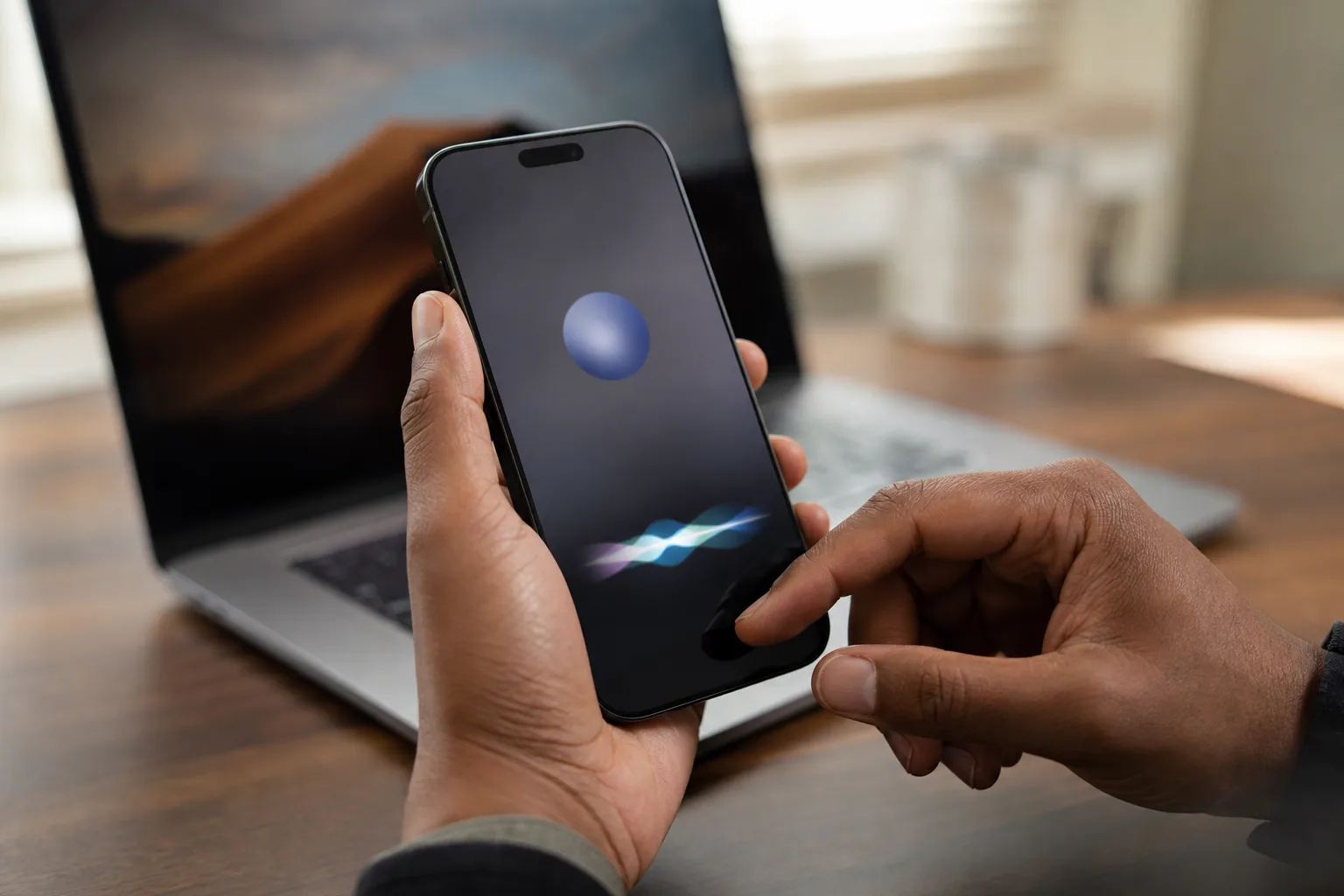
- Apple’s AI ambitions depend on whether it can outperform Google using the same Gemini models it licensed.
- Analyst Ming-Chi Kuo warns Apple’s AI ambitions could stall if Gemini becomes the ceiling, not the foundation.
- Apple’s business momentum stays strong through 2026 regardless, but the long-term bull narrative faces real scrutiny.
- On-device AI processing via Apple silicon could be the one area where Apple genuinely differentiates itself.
Table of Contents
Apple’s AI Ambitions Run Straight Into a Borrowed Engine
Apple’s AI ambitions don’t exist in a vacuum — they’re being built, at least in part, on top of someone else’s technology. At WWDC 2026, Apple confirmed what had long been rumoured: Google’s Gemini models sit underneath the revamped Siri and a significant chunk of the new Apple Intelligence feature set. And that single fact raises a question that analyst Ming-Chi Kuo put bluntly in a post on X: can Apple actually build better AI experiences than Google when both companies are drawing from the same well?
It sounds almost paradoxical. Apple — the company famous for owning its entire stack, from the silicon up — is now shipping a flagship feature that depends on a model designed, trained, and controlled by its biggest competitor in the AI space. For a company that has spent years positioning itself around privacy, vertical integration, and ecosystem lock-in, that’s a significant philosophical concession. Whether it’s also a strategic mistake is exactly what Kuo is asking the market to think harder about.
The Real WWDC Test Nobody’s Talking About
Most post-keynote analysis will focus on the demos, the new interface polish, and whether Siri finally feels like it’s caught up to ChatGPT or Gemini’s own consumer apps. That’s understandable — those are the things you can see and touch. But Kuo’s framework cuts deeper. He’s not asking whether the features look good on stage. He’s asking whether, six to twelve months from now, Apple’s Gemini-backed Siri outperforms Google’s Gemini-backed Assistant in real, daily use cases.
If the answer is yes — if Apple’s design philosophy, its understanding of user context, its tight hardware-software integration genuinely produces a better outcome with the same model — then Apple’s AI strategy looks smart. You don’t have to win the model race if you can win the application layer. That’s not a novel idea; it’s basically how Microsoft has played its OpenAI partnership, turning GPT-4 access into Copilot features across Office, Windows, and Azure without having trained the underlying model itself.
But if the answer is no — if Google’s own apps simply do more, do it faster, or do it more reliably with the same Gemini foundation — then Apple’s position gets uncomfortable fast. At that point, Apple’s AI ambitions are genuinely capped. Not by a competitor’s proprietary advantage that Apple could theoretically replicate, but by a dependency Apple agreed to.
Apple’s AI Ambitions and the ‘Will Eventually Win’ Assumption
There’s a narrative that has become almost axiomatic in tech investment circles: Apple is slow to AI, but Apple always catches up, and Apple always wins in the end. It’s been repeated so often it’s hardened into a near-religious conviction among long-term Apple bulls. Kuo is explicitly pushing back on that. Not because he thinks Apple is doomed — his own supply-chain checks suggest Apple’s business momentum stays healthy through the end of 2026 — but because the ‘will ultimately come out ahead’ assumption deserves more scrutiny than it’s currently getting.
The logic of that assumption relied on Apple eventually shipping its own world-class models. It didn’t really account for a scenario where Apple decides the model race isn’t worth fighting and opts to license instead. If that’s the path Apple is walking, the bull case changes shape entirely. It’s no longer about Apple’s AI eventually catching OpenAI or Google DeepMind. It’s about whether Apple can be the best software layer on top of someone else’s AI infrastructure. That’s a very different thesis, and it’s worth interrogating whether the market has actually priced in the distinction.
On-Device AI: Where Apple Might Actually Have an Edge
Here’s where it gets more interesting. The one area where Apple’s AI ambitions could carve out a genuinely defensible position isn’t in model quality — it’s in where computation happens. Apple’s custom silicon, from the A18 Pro in the iPhone to the M-series chips in the Mac lineup, is purpose-built with on-device AI processing in mind. Reports ahead of WWDC suggested Apple planned to show how its hardware lets it handle far more AI queries locally, without sending data to a cloud server.
That matters for two reasons. First, privacy — Apple’s long-standing brand promise. Processing requests on-device means less data leaving the phone, which is a genuine user benefit that Apple’s competitors, more dependent on cloud inference, can’t easily replicate without the same silicon investment. Second, speed and reliability. On-device inference doesn’t care about your Wi-Fi signal. For the kinds of lightweight, contextual tasks that make an AI assistant feel fluid and responsive — autocomplete, suggested replies, photo tagging, live translation — on-device processing wins.
Google processes enormous volumes of AI queries on its own infrastructure and it’s very good at it. But Apple silicon is arguably the best in-class consumer chip for on-device AI workloads right now. If Apple can shift enough of the Gemini-powered experience onto the device itself, it could build a moat that’s genuinely hard to cross — not because of the model, but because of the hardware running it.
Stock Price, Supply Chains, and Buying Time
Kuo is careful to separate the short-term market signal from the longer-term strategic risk. His supply-chain data suggests strong iPhone demand heading into the second half of 2026, and he expects that positive momentum to prop up Apple’s share price regardless of how WWDC lands with investors. The market, he predicts, will simply recalibrate to: ‘Apple is already doing well without AI fully baked in — imagine once it is.’
That’s not an unreasonable read. Apple has always been a company that moves markets more on hardware cycles than software announcements, and a strong iPhone supercycle narrative can carry a lot of sentiment. But Kuo’s point is that this narrative has a shelf life. The question of whether Apple’s AI plays out well or badly becomes increasingly urgent as you look past 2026 toward a period where AI is no longer a differentiator — it’s table stakes.
If Apple is still running on borrowed Gemini by then, and Google’s own AI applications are still visibly better than Apple’s implementations of the same technology, the bull thesis starts to crack in ways that a strong iPhone quarter can’t paper over indefinitely. Apple’s AI ambitions need a concrete answer — not a keynote promise, but real-world usage data — and WWDC 2026 has set the clock ticking on when that answer arrives.
Frequently Asked Questions
What are Apple’s AI ambitions with Google Gemini?
Apple is using Google’s Gemini models to power a revamped Siri and new Apple Intelligence features. The ambition is to build superior AI applications, agentic workflows, and hybrid on-device and cloud experiences on top of Gemini — outperforming Google’s own implementations of the same underlying technology.
Why does Ming-Chi Kuo think Gemini could limit Apple?
Kuo argues that if Apple can’t deliver meaningfully better AI experiences than Google using the same Gemini models, then Apple’s ceiling is set by a model it doesn’t own or control. That dependency, he says, weakens the long-term ‘Apple always catches up’ investment thesis.
Will WWDC 2026 announcements move Apple’s stock price?
According to Kuo, probably not in the short term. He expects Apple’s positive second-half 2026 stock trend to hold regardless of WWDC outcomes, as long as the core business narrative remains intact. The real risk to the bull case sits further out, beyond 2026.
How could Apple differentiate its AI if it uses the same models as Google?
Apple’s edge could come from its custom silicon. Reports suggest Apple is working to process more AI queries directly on-device rather than routing them to the cloud — a potential advantage in how it delivers AI experiences compared to more cloud-dependent approaches.