

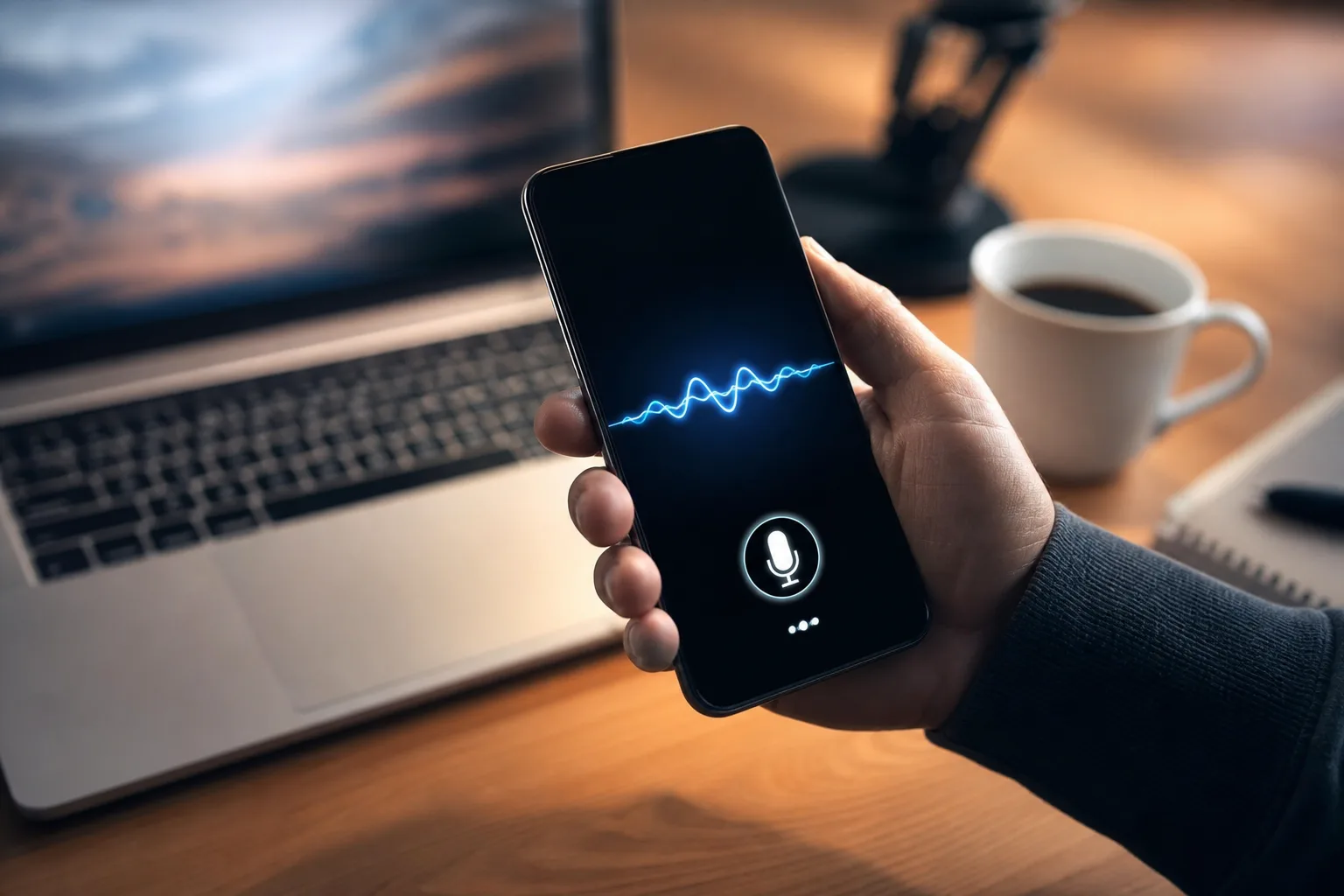
- Siri voice customization debuts at WWDC 2026, letting users adjust pace, expressivity, and accent via sliders and menus.
- Siri voice customization is locked to iPhone 17 Pro, M4 iPad, M3 Mac, and the M5 Apple Vision Pro — older devices need not apply.
- Even devices running iOS 27 and the new Siri AI won’t get voice controls unless they meet Apple’s strict hardware minimums.
- Apple’s Google partnership powers the upgraded Siri experience, raising fresh questions about where your voice data actually goes.
Table of Contents
Siri Voice Customization Arrives — With a Catch
Apple made a lot of promises at WWDC 2026 about the future of Siri, and for the most part it delivered. The headline story is a completely rebuilt assistant experience — a dedicated app, deeper context awareness, and a partnership with Google that gives Siri a genuinely competitive backbone. But buried inside the announcement was a detail that’s going to frustrate a lot of people: Siri voice customization, one of the most personal and frankly long-overdue new features, is only available on Apple’s most recent hardware. If your device isn’t on the list, you’re getting the new Siri — just not all of it.
The feature itself is genuinely impressive. For the first time, users can tune Siri’s speaking pace and expressivity using a pair of sliders, and pick an accent from a drop-down menu. That might sound modest on paper, but it’s a meaningful shift. Assistants from Google and Amazon have offered some degree of voice tweaking for years — being able to slow Siri down, or match its accent to your own, is the kind of quality-of-life control that makes daily interaction feel less like talking to a machine. Apple is late to this, but the implementation looks thoughtful.
The Hardware Requirements Are Strict
Here’s where things get complicated. Apple has drawn a clear line in the sand on which devices can actually access Siri voice customization. The minimum requirements are: iPhone 17 Pro or iPhone 17 Pro Max, the iPhone Air, iPad models running an M4 chip or newer with at least 12GB of unified memory, Mac models with an M3 chip or later and at least 12GB of unified memory, and the M5 Apple Vision Pro.
That’s a notably tight list. A standard iPhone 17 doesn’t make the cut. An M2 MacBook Air — a machine Apple was still selling not long ago — doesn’t qualify either. Even an M3 MacBook Air with 8GB of RAM falls outside the requirements. If you bought anything short of Apple’s pro tier in the last year or two, there’s a real chance this feature simply won’t appear in your settings.
It’s a pattern Apple has leaned into heavily since the Apple Intelligence rollout in 2024. On-device AI capabilities are progressively tiered by hardware generation, with the most compute-intensive features reserved for the newest chips. The 12GB unified memory minimum is the clearest signal here — Siri voice customization almost certainly runs a local language model component that needs that headroom to operate smoothly. Apple isn’t going to ship a feature that stutters.
Running iOS 27 Isn’t Enough
This is the part worth spelling out clearly because it’s going to catch people off guard. iOS 27, iPadOS 27, macOS 27 Golden Gate, and visionOS 27 will run on a range of devices — many of which also support the new Siri AI in its broader form. But software compatibility and feature eligibility are two different things here. You could be running the latest OS, with the new Siri app fully functional, and still have no access to the voice customization controls.
Apple has essentially created two tiers within the new Siri experience: the base upgrade available to a wider audience, and the personalisation layer available only to those with recent pro-grade hardware. That’s a legitimate design decision from a technical standpoint, but it makes the messaging tricky. When Apple announces ‘the new Siri,’ not everyone is getting the same new Siri.
What the Google Partnership Really Means
The elephant in the room at WWDC 2026 is that Apple’s revamped Siri now runs on infrastructure built in partnership with Google. Details remain thin on exactly what that collaboration entails technically, but it’s a significant admission — after years of insisting its AI stack was built in-house, Apple is sharing the engine room with its biggest rival in the mobile space.
For users, the practical upside is a smarter, more capable Siri that can handle more complex requests and maintain context across conversations far better than before. Google’s AI infrastructure is, by most measures, among the best in the industry. If the partnership means Siri finally stops misunderstanding basic requests, most people will take that trade-off without complaint.
But the privacy implications deserve scrutiny. Apple has long used on-device processing as a core privacy selling point. The Siri voice customization requirements — specifically that memory threshold — suggest Apple is working hard to keep the sensitive, personalised parts of the experience local. Whether that holds across the full Google-powered Siri stack is a question Apple will need to answer clearly before the public release.
A Familiar Frustration for Older Apple Devices
None of this is entirely surprising, but it’s still a friction point that Apple manages to generate with almost every major software announcement now. The company has been explicit that on-device AI requires serious silicon, and M-series chips are specifically designed to make these workloads possible. But the cadence at which features get locked to ‘latest only’ hardware is accelerating.
Consider the trajectory: Apple Intelligence at launch required an iPhone 15 Pro or A17 Pro chip. Now, specific features within Apple Intelligence — like Siri voice customization — are already stepping up to iPhone 17 Pro as the floor. A user who bought an iPhone 16 Pro less than 18 months ago is already excluded from a flagship personalisation feature. That’s a short shelf life for a premium device.
The counterargument is that Apple can’t hold back innovation to accommodate older silicon indefinitely. And that’s fair. But the company could do a better job communicating which features belong to which hardware tiers before purchase — rather than letting customers find out via a settings screen that simply never appears.
What to Expect When iOS 27 Ships
For those on the qualifying device list, Siri voice customization promises to be one of the more genuinely useful quality-of-life additions Apple has shipped in years. The ability to set Siri’s pace, dial in expressivity, and match an accent to your preference makes the assistant feel less generic — and for people who interact with it dozens of times a day, that adds up.
For everyone else, the new Siri AI is still a meaningful upgrade over what existed before. The partnership with Google has injected real capability into an assistant that had fallen well behind the competition. But the feature stratification Apple is building into its software ecosystem is only going to deepen as AI workloads become more demanding. If the last two WWDC cycles are any guide, the hardware bar for ‘full’ Apple Intelligence will keep moving upward — and it’ll be moving faster than most upgrade cycles can keep up with.
Frequently Asked Questions
Which devices support Siri voice customization?
Siri voice customization requires at minimum an iPhone 17 Pro or 17 Pro Max, iPhone Air, an M4 iPad with at least 12GB of unified memory, an M3 Mac with at least 12GB of unified memory, or the M5 Apple Vision Pro. Older hardware running iOS 27 does not qualify.
What can you actually change with the new Siri voice controls?
On supported devices, users can adjust Siri’s speaking pace and expressivity using on-screen sliders, and choose from a range of accents via a drop-down menu. It’s a notably more granular level of personalisation than Apple has offered for its assistant.
Does every device running iOS 27 get the new Siri AI?
Not entirely. While the new Siri AI and its revamped app experience have broader device compatibility under iOS 27, the specific voice customization feature is gated behind stricter hardware requirements. Running the latest OS is necessary but not sufficient to unlock it.
Why is Apple restricting Siri voice customization to newer hardware?
Apple hasn’t given a detailed technical explanation, but the feature is reserved for some of its most advanced and recent devices, which include minimum memory requirements on iPads and Macs. For now, older hardware is excluded even if it can run the new Siri AI.

