- Apple WWDC 2026 is set to unveil iOS 27 alongside major Siri and Apple Intelligence upgrades across all platforms.
- Apple WWDC 2026 will introduce three new AI photo editing tools — Extend, Enhance, and Reframe — taking on Google Photos and Adobe.
- VisionOS 27 brings meaningful accessibility features, including wheelchair control via eye-tracking, even without new Vision Pro hardware.
- WatchOS 27 is expected to debut a cleaner, simpler watch face design for the Apple Watch Ultra lineup.
Table of Contents
Apple WWDC 2026: What’s Actually on the Table
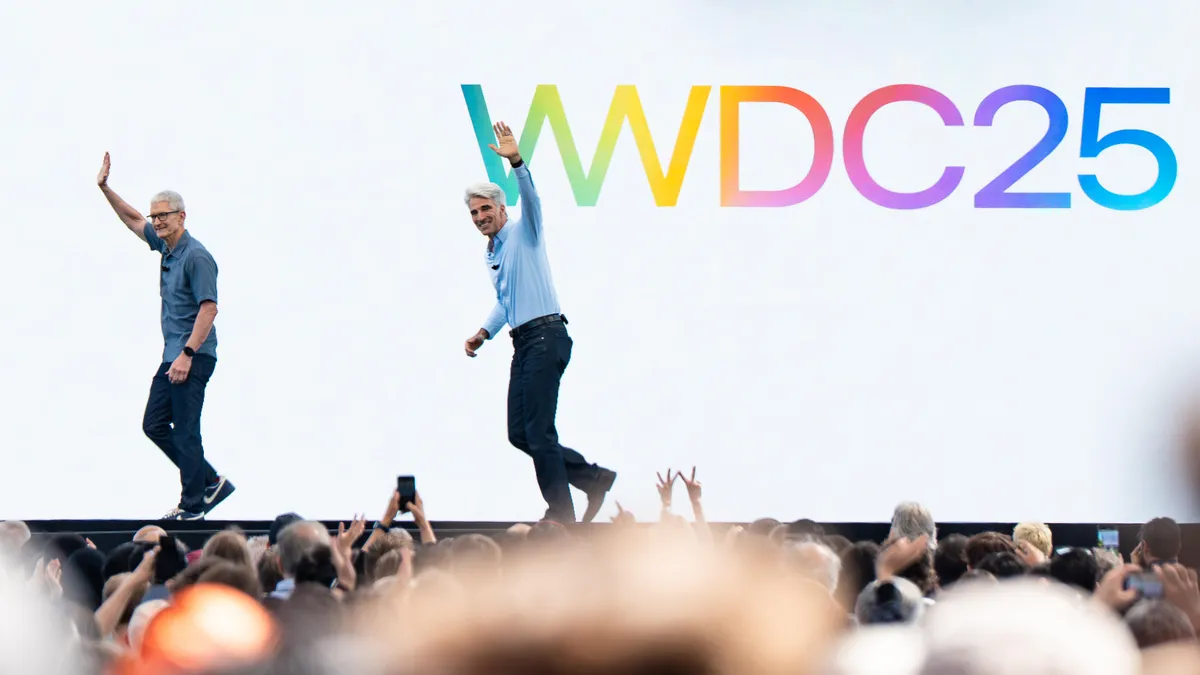
Apple WWDC 2026 kicks off this week, and for the first time in a few years, there’s a genuine sense that Apple has something to prove. After a 2025 that was widely characterised as the company’s ‘AI catch-up year,’ the pressure is on Craig Federighi and team to show that Apple Intelligence has grown into something that can stand toe-to-toe with Google’s Gemini features and Microsoft’s deeply embedded Copilot. Six operating systems are in the spotlight — iOS 27, iPadOS 27, macOS 27, tvOS 27, watchOS 27, and visionOS 27 — and each one is expected to carry at least some AI-forward changes.
Bloomberg’s Mark Gurman, who has been reliably accurate on Apple’s internal roadmap for years, has laid out the broad strokes of what to expect. The through-line across platforms is a smarter, more capable Siri — one that doesn’t just respond to discrete commands but can understand intent and chain together actions without the user having to hold its hand through every step.
Siri Finally Grows Up — Or So Apple Hopes
Let’s be honest: Siri has been the weak link in Apple’s ecosystem for the better part of a decade. Google Assistant and Amazon Alexa lapped it on natural language comprehension years ago, and ChatGPT’s arrival in 2022 made Siri look almost charmingly limited by comparison. Apple WWDC 2026 appears to be the moment Apple intends to address that head-on.
According to Gurman’s reporting, the updated Siri will handle natural language requests in a way that’s meaningfully more fluid than what we’ve seen before. The headline example is creating shortcuts — rather than navigating through the Shortcuts app and manually building automation flows, you’ll be able to describe what you want and have Apple Intelligence build it for you. That sounds small, but it’s actually a significant shift in how the assistant is meant to operate: less of a command-executor, more of an intent-interpreter.
Whether Apple can deliver on that promise at scale — across accents, contexts, and edge cases — is a different question entirely. Google has been refining its natural language models for over a decade and still stumbles. Apple is betting that its on-device processing advantage, backed by the Neural Engine in its A-series and M-series chips, gives it a privacy-preserving edge that cloud-dependent rivals can’t match. We’ll see if that argument holds when iOS 27 lands in users’ hands this autumn.
Three New AI Photo Tools That Take Aim at Google and Adobe
The most visually compelling additions coming out of Apple WWDC 2026 are the three new AI photo editing features: Extend, Enhance, and Reframe. Each one targets a specific creative workflow that, until now, users have largely had to leave Apple’s ecosystem to accomplish properly.
Extend is Apple’s answer to generative fill — the capability that Adobe Firefly and Google’s Magic Editor popularised, where AI intelligently synthesises new content to expand an image beyond its original frame. It’s a feature that photographers and social media creators have been begging Apple to add natively, and the fact that it’s apparently arriving in iOS 27 suggests Apple’s image generation models have matured enough for a public release.
Enhance takes a more subtle approach. Think of it as the kind of one-tap colour grading and lighting correction that Google Photos has been offering for a while now — the tool that makes a mediocre snapshot look like it was taken with intention. Apple’s version is expected to work similarly, analysing the image and making intelligent adjustments without turning every photo into an over-processed mess. Execution will be everything here.
Reframe is arguably the most technically interesting of the three. Rather than simply cropping or adjusting colour, Reframe uses 3D spatial data to change the apparent perspective of a photograph after the fact. This is the kind of feature that, done right, would be genuinely impressive — and done wrong, would produce unsettling AI-warped images that go viral for the wrong reasons. Apple’s computational photography team has a strong track record, but this is new territory.
Taken together, these three tools represent Apple’s clearest signal yet that it views the Photos app as a direct competitor to third-party editing suites. The question is whether they’ll be good enough to keep users from reaching for Lightroom or Snapseed — or, more pressingly, whether they’ll work well enough that casual users never feel the need to. Apple WWDC 2026 may well be the event that settles that debate.
WatchOS 27 and the Ultra’s New Look
Apple Watch has always been polarising in the watch design community — too digital for traditionalists, not digital enough for the tech crowd. WatchOS 27 looks set to lean further into simplicity, at least for the Ultra. Gurman’s sources point to a sleeker, cleaner watch face design for the Ultra tier, presumably stripping back some of the dense data complications that the current interface defaults to.
It’s a subtle change, but it matters. The Apple Watch Ultra has positioned itself as a serious tool watch — the kind you take diving or trail running — and a cleaner face aesthetic would align it more closely with the premium mechanical watches it’s quietly displacing in some demographics. Apple knows its customers upgrade on cycles, and giving the software a visual refresh keeps the existing hardware feeling current without requiring a new device launch. Among the watchOS announcements at Apple WWDC 2026, this design shift is the one most likely to resonate with existing Ultra owners.
VisionOS 27: Software Depth Over Hardware Hype
Here’s the realistic read on Vision Pro heading into Apple WWDC 2026: Apple is not ready to ship a second-generation headset this year, and it knows it. The original Vision Pro, at $3,499, remains a device for enthusiasts and enterprise customers rather than a mainstream product. Rather than rushing new hardware to market, Apple is deepening the software.
The most meaningful addition to visionOS 27 isn’t a flashy consumer feature — it’s an accessibility capability that Apple previewed back in May: the ability to control a motorised wheelchair using eye movement tracked by the headset. That’s a profound use case, and one that positions the Vision Pro as a genuine assistive technology platform rather than just a very expensive media viewer. Apple’s accessibility team has quietly built one of the most respected accessibility records in consumer tech, and this extends that legacy in an important direction.
Don’t expect new Vision Pro hardware until at least 2027. Apple typically takes its time between major hardware revisions — it took years between iPhone generations to meaningfully redesign the chassis — and the Vision Pro’s component complexity makes rapid iteration even harder. This year is about making the existing device worth owning for more people, not selling a new one.
The Bigger Picture: Apple’s AI Credibility Is at Stake
Every announcement at Apple WWDC 2026 sits within a larger competitive context that Apple can’t afford to ignore. Google announced sweeping Gemini integrations across Android and Workspace earlier this year. Microsoft has been shipping Copilot+ features on Windows 11 at a steady pace. OpenAI is reportedly in conversations with device manufacturers about deeper hardware integrations. The AI race in consumer technology has moved from research labs to home screens, and Apple’s response has been — until now — measured to a fault.
iOS 27 and its companion OS updates need to shift that narrative. Not with demos that look impressive in a keynote and disappoint in daily use — Apple has been burned by that before, with Siri’s original launch and with some early Apple Intelligence features that didn’t survive contact with real-world usage patterns. What Apple WWDC 2026 needs to deliver is something more durable: AI features that are reliable, privacy-conscious, and actually integrated into how people use their devices every day. If it pulls that off, the conversation about Apple falling behind in AI may look very different by the time the leaves change this autumn. Ultimately, Apple WWDC 2026 is less a product showcase than a credibility test — and the whole industry is watching.
Frequently Asked Questions
What new software is Apple announcing at Apple WWDC 2026?
Apple WWDC is expected to cover iOS 27, iPadOS 27, macOS 27, tvOS 27, watchOS 27, and visionOS 27. All six platforms are anticipated to receive new Apple Intelligence and AI-driven features, with Siri natural language improvements central to the update.
What are the new AI photo editing tools coming in iOS 27?
Three new AI photo tools are expected: Extend adds generative fill-style capabilities, Enhance adjusts color and lighting automatically similar to Google Photos, and Reframe uses 3D spatial data to alter the perspective of an image entirely.
Will Apple announce new Vision Pro hardware at WWDC 2026?
Not this year, according to current reporting. Apple is expected to wait another year before releasing new Vision Pro hardware. Instead, visionOS 27 will focus on software and accessibility improvements, including eye-tracking wheelchair control.
How is the new Siri different in iOS 27?
The updated Siri is expected to understand natural language commands well enough to run complex tasks — like creating custom shortcuts — without users needing to navigate menus manually. It’s a shift toward Siri functioning more like a proactive AI agent.