

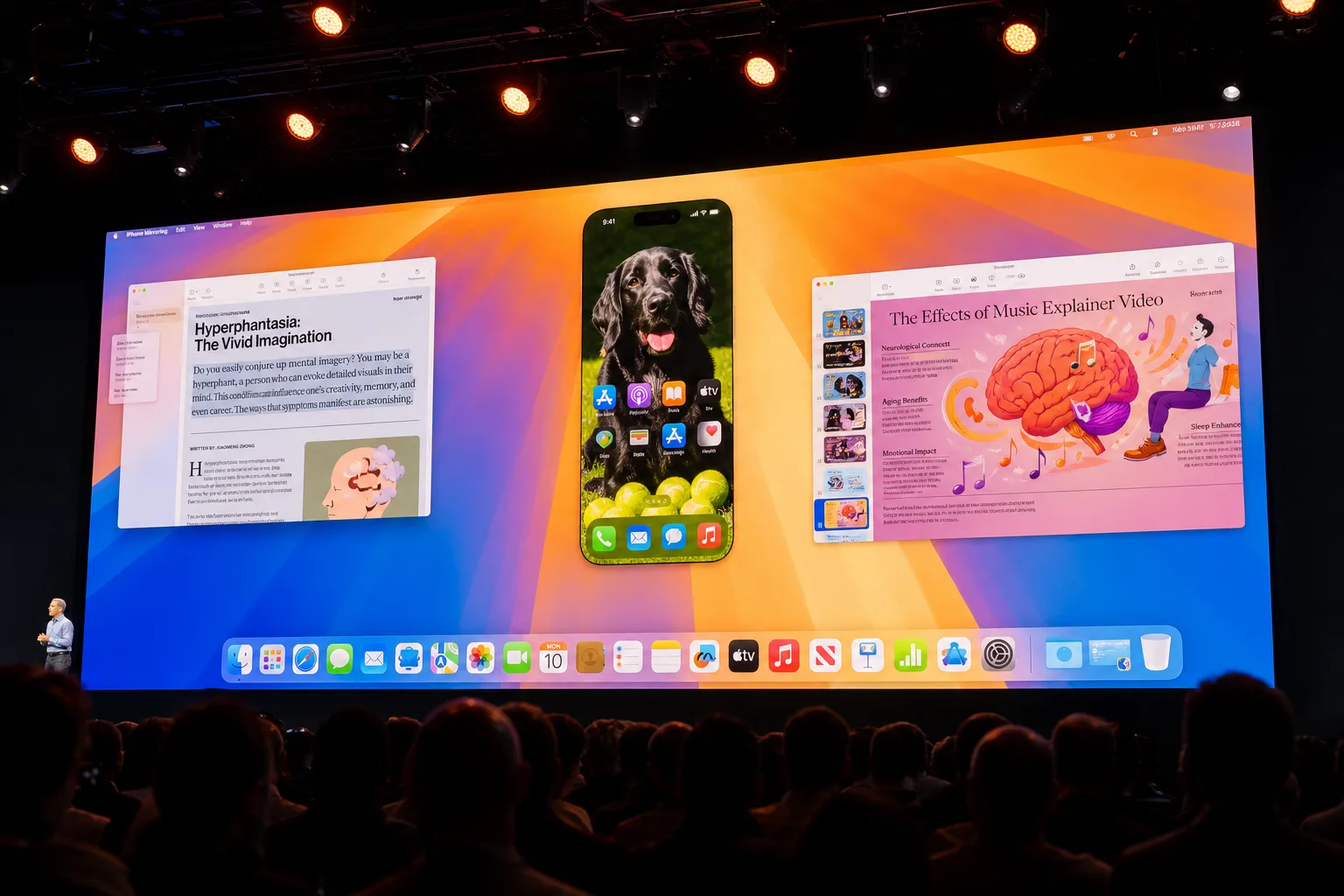
- The WWDC 2026 keynote kicks off June 8 at 1:00 p.m. ET, streaming live on YouTube, Apple TV, and Apple’s Events site.
- The WWDC 2026 keynote is expected to unveil iOS 27, macOS 27, watchOS 27, and a heavily overhauled version of Siri.
- Apple is reportedly prioritising bug fixes and performance improvements this cycle, meaning fewer headline features overall.
- A new chatbot-style Siri app powered by a large language model is among the most anticipated announcements of the year.
Table of Contents
The WWDC 2026 Keynote Is Happening Right Now — Here’s How to Watch
The WWDC 2026 keynote is live today, June 8, and if you haven’t tuned in yet, you still can. Apple kicked things off at 10:00 a.m. PT (1:00 p.m. ET) with its annual developer conference opener — the event that traditionally sets the software direction for every Apple platform for the next twelve months. Whether you’re watching from a laptop, a smart TV, or your iPhone, Apple has made it straightforward to follow along.
There are three reliable ways to catch the stream. Apple’s official YouTube channel is the easiest option for most people — it’s accessible anywhere, requires no app download, and historically delivers a clean, stable stream. Alternatively, the Apple TV app on iPhone, iPad, Mac, Apple TV, or even supported Samsung and LG smart TVs will carry the keynote. And if you prefer going direct, Apple’s own Events website at apple.com/apple-events works fine in any modern browser. All three options are free. There’s no reason to be hunting for a dodgy third-party stream.
iOS 27 and the Full Software Lineup
Every major Apple platform is getting a version bump this year. That means iOS 27, iPadOS 27, macOS 27, watchOS 27, tvOS 27, and visionOS 27 are all expected to be formally announced today at the WWDC 2026 keynote, with public releases to follow in the autumn alongside new iPhone hardware. That’s been Apple’s cadence for years now, and 2026 doesn’t appear to be breaking the pattern.
What does feel different this year is the emphasis. Rather than packing in dozens of splashy new features, Apple is reportedly taking a more measured approach — one that prioritises stability, performance, and battery life over novelty. That’s a direct response to years of user complaints about software quality degrading with each major release. It’s a smart move, even if it makes for a less dramatic keynote. Developers and power users have been asking Apple to slow down and fix things for a long time. It sounds like they’ve finally listened.
That said, ‘fewer features’ doesn’t mean ‘nothing new.’ The areas where Apple is investing heavily are significant enough to anchor the entire event on their own.
The New Siri: Apple’s Biggest AI Bet Yet
If there’s one announcement that could define the WWDC 2026 keynote, it’s the overhaul of Siri. Apple’s voice assistant has been the butt of tech jokes for years — routinely outclassed by Google Assistant, and more recently left looking flat-footed by ChatGPT and Gemini. That era may finally be ending.
Rumours point to Siri receiving its own standalone app for the first time, built around a chatbot-style interface that looks far closer to what users have come to expect from modern AI tools. More importantly, it’s reportedly being rebuilt on top of a proper large language model — which would represent a fundamental architectural shift from the rule-based, pipeline-heavy system Apple has been quietly patching for over a decade. The WWDC 2026 keynote is the first opportunity Apple has had to show this rebuilt Siri to the world in a controlled, public setting.
Apple’s partnership with Google is believed to be a significant factor here. Reports suggest that Gemini’s influence has reached Apple’s own Foundation Models, accelerating capabilities that Apple’s in-house AI team alone might have taken longer to ship. That’s a striking admission of where things stood internally, and it raises interesting long-term questions about how dependent Apple wants to be on a competitor for core functionality. For now, though, the focus is on what users will actually see: a smarter, more conversational, more capable Siri that can handle the kinds of requests people have been routing to third-party chatbots instead.
Apple Intelligence — the broader AI feature set Apple introduced last year — is also expected to expand significantly at this WWDC 2026 keynote. New writing tools, enhanced image generation, and deeper on-device processing are all reportedly in the mix.
Liquid Glass Gets a Polish, Not a Rebuild
Last year’s introduction of Liquid Glass was Apple’s most visible design shift in years — a sweeping visual identity update that touched everything from the dock to notification banners. The reaction was mixed. Some users loved the translucency and depth. Others found it garish, inconsistent, or just plain hard to read. Apple has apparently been paying attention.
iOS 27 and macOS 27 won’t bring another wholesale redesign — that would be unusual even by Apple standards. Instead, expect targeted refinements: better contrast in certain UI elements, smoother transitions, tweaks to how Liquid Glass behaves in different lighting contexts, and probably some concessions in accessibility settings for users who found the effect distracting. It’s the kind of iterative polish that rarely makes headlines but genuinely improves day-to-day usability.
Think of it as Apple sandpapering the rough edges. The design language is here to stay. What’s changing is the execution.
What This Year’s WWDC Tells Us About Apple’s Priorities
Zoom out a little and the shape of the WWDC 2026 keynote reflects something broader happening inside Apple. The company is navigating a genuinely tricky moment: the AI race has reshuffled competitive dynamics across the industry, Siri’s reputation is a liability it can no longer afford to ignore, and users are increasingly vocal about software quality. The response — a year with fewer features, a rebuilt AI assistant, and design refinements — reads like a company recalibrating rather than sprinting.
That’s not a criticism. The ability to slow down, consolidate, and invest in fundamentals is exactly what separates companies that age well from those that don’t. Apple has the luxury of doing this because its hardware sales give it a financial cushion most software companies could only dream of. The question is whether the new Siri will actually land — not just in the WWDC 2026 keynote demo, but in the hands of 1.5 billion active device users who’ve been disappointed before.
Today’s keynote will give us the pitch. The real test starts in September, when iOS 27 ships to everyone and the promises have to hold up in the real world.

