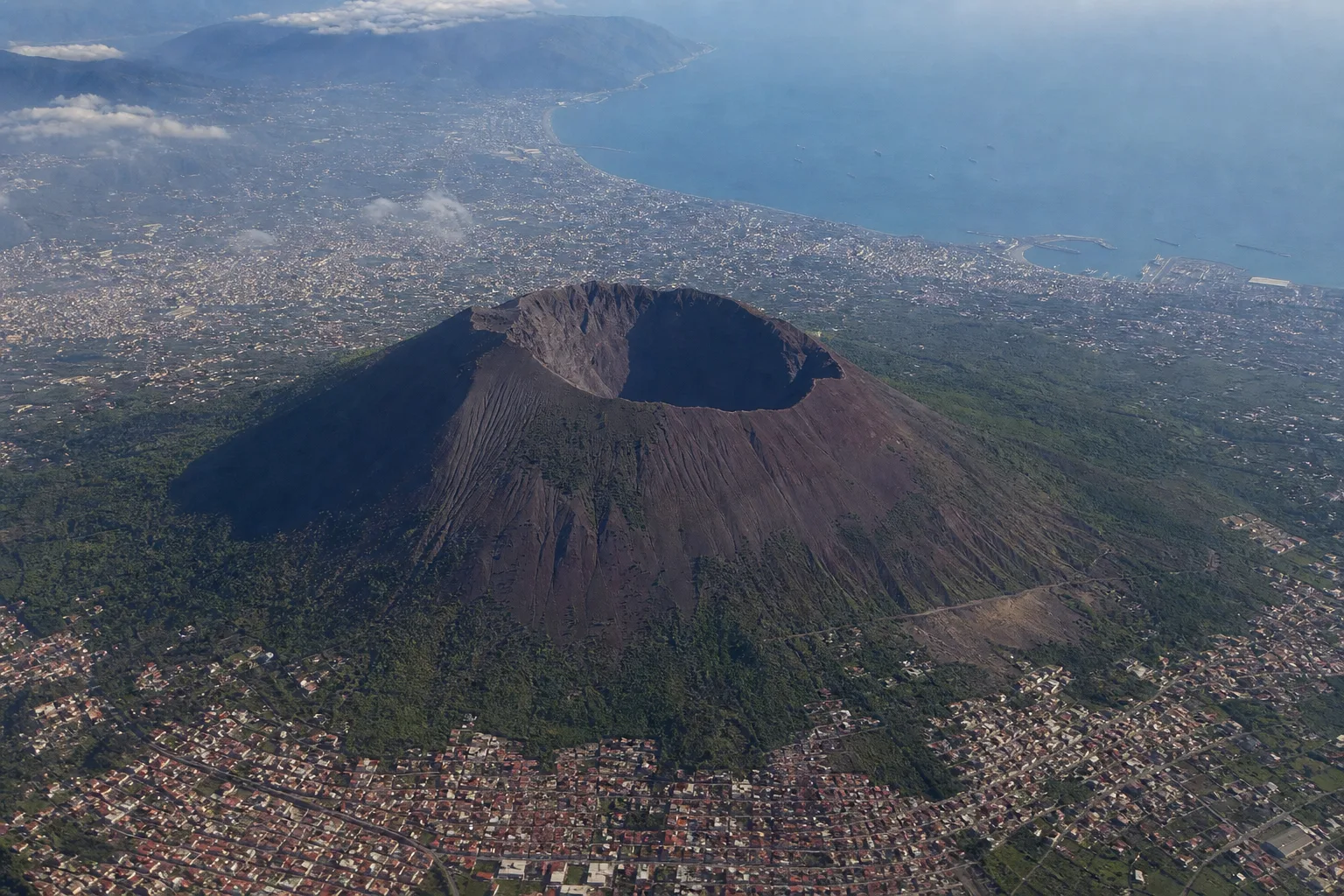
- ESA astronaut Sophie Adenot photographed Mount Vesuvius from space on Day 103 of the Crew-12 ISS mission.
- The Mount Vesuvius from space image was taken on orbit 1598, with Naples clearly visible spreading around the crater.
- Adenot also captured Sicily’s Mount Etna just minutes earlier, spotting its smoke plume through the station window.
- The Crew-12 team briefly sheltered in their Dragon capsule on June 5 due to a spacewalk-related leak concern.
Table of Contents
A View That Takes 103 Days to Earn
Getting a clear shot of Mount Vesuvius from space isn’t simply a matter of pointing a camera out the window. You’re travelling at roughly 17,500 miles per hour, orbiting the Earth every 90 minutes, and the window of opportunity over any single location is measured in seconds, not minutes. That’s what makes the photograph captured by French ESA astronaut Sophie Adenot so impressive — and so telling about the kind of presence of mind it takes to do science, maintenance, and observation all at once while living 250 miles above the planet.
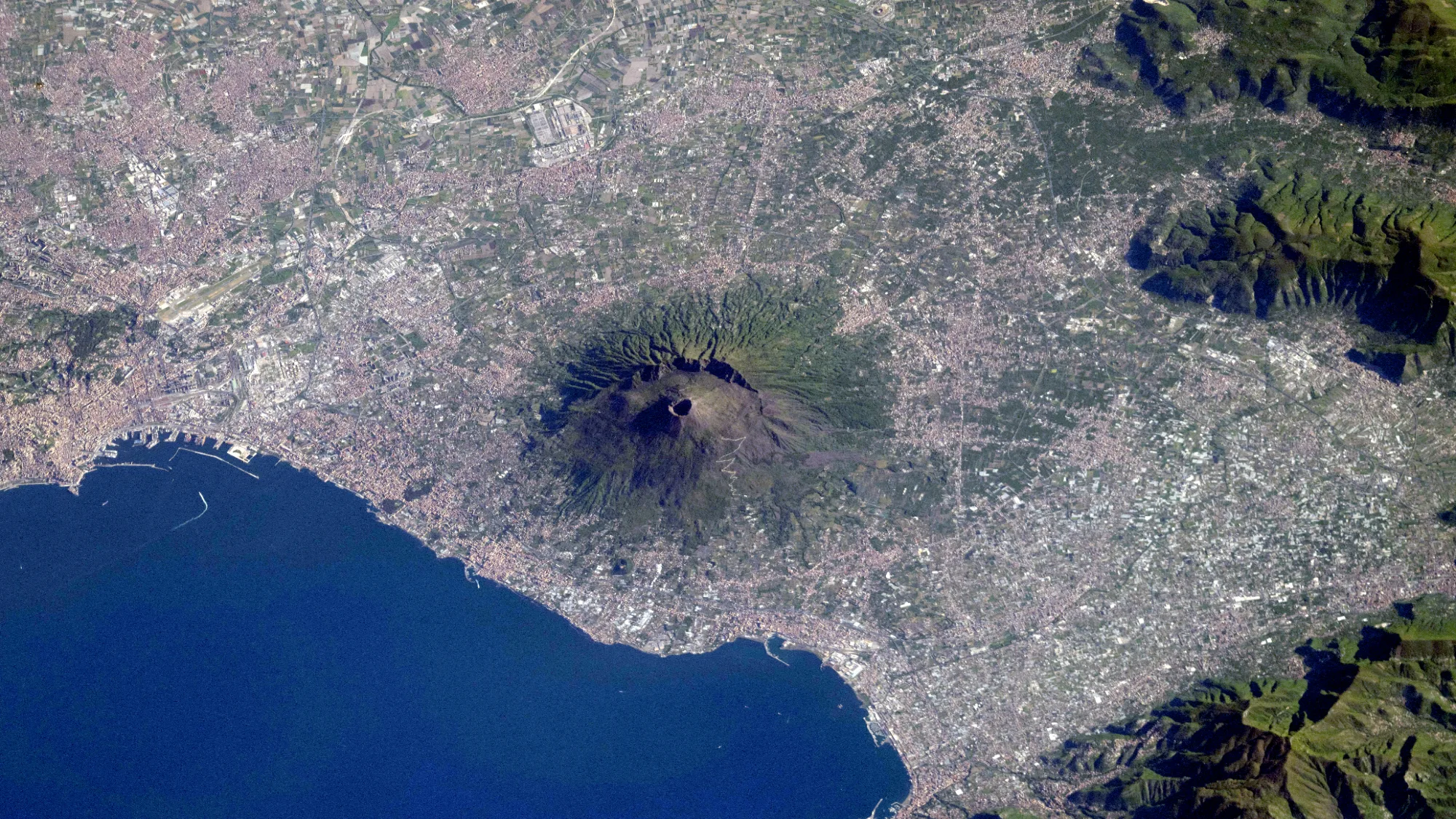
Adenot, currently aboard the International Space Station as part of SpaceX’s Crew-12 mission, snapped the image on Day 103 of her stay — orbit number 1,598, to be precise. She shared it publicly alongside a caption that gave the photo its full weight. The crew, which includes NASA astronauts Jessica Meir and Jack Hathaway and Roscosmos cosmonaut Andrey Fedyaev, arrived in February and is midway through a six-month mission. That’s a lot of orbits. A lot of sunrises. And apparently, some genuinely spectacular volcanic sightseeing.
What Adenot Actually Saw — and Said
The post that accompanied the image wasn’t a quick caption. It read like someone who had been genuinely awestruck, which is notable given that Adenot is a trained military helicopter pilot and test pilot — not someone easily rattled by a view. Writing about volcanoes as some of the most beautiful sights from orbit, she described being caught off guard one morning in late April when she opened the station’s window shutters and found Mount Etna staring back at her.
‘The whiteness of its slopes… and that elegant plume of smoke which is a gentle reminder that it’s only lightly, very lightly, asleep,’
That’s Etna — still technically active, still venting, but serene enough from 250 miles up to look almost peaceful. Adenot made a point of dedicating that shot to fellow ESA astronaut Luca Parmitano, who hails from Catania, a city that sits right at the base of the volcano. It’s a small, human detail that cuts through the vastness of the setting.
Then, less than a minute later — because that’s how fast the ISS moves — Mount Vesuvius from space came into view. And according to Adenot, it was unmistakable.
‘Instantly recognisable by the vast crater, the path winding up to the summit, and, most of all, Naples spread out all around it,’
That last detail is the one that sticks. Naples isn’t just near Vesuvius — it surrounds it. Nearly three million people live in the greater metro area within striking distance of a volcano that hasn’t had a major eruption since 1944 but remains classified as one of the most dangerous in the world. From space, the geometry of that risk becomes viscerally clear in a way that no map can fully communicate. Seeing Mount Vesuvius from space reframes the scale of the hazard entirely.
Mount Vesuvius from Space: Why the ISS Keeps Delivering These Moments
It’s easy to treat ISS Earth photography as a pleasant bonus — astronaut PR, essentially. But there’s genuine scientific and cultural value to what crews document from orbit. The station passes over the same ground track repeatedly, which means astronauts can track changes in glaciers, urban growth, deforestation, and yes, volcanic activity over time. Adenot’s shot of Mount Vesuvius from space joins a long archive of orbital volcano photography that researchers actually use.
NASA’s Gateway to Astronaut Photography of Earth database holds hundreds of thousands of images taken by ISS crews going back decades. Volcanoes are among the most-photographed features — partly because they’re visually dramatic, but also because tracking surface changes around volcanic calderas can inform hazard modelling. When Adenot notes the ‘path winding up to the summit,’ she’s inadvertently flagging exactly the kind of detail that volcanologists look for when assessing how accessible a site is and how population flow might behave in an emergency.
There’s also something worth sitting with here about the temporal compression of the moment. Two of Europe’s most iconic volcanoes — Etna and Vesuvius — photographed within 60 seconds of each other. That’s not luck, exactly. It’s a function of the ISS’s orbital path over the Mediterranean, but it still requires an astronaut to be alert, positioned at a window, and ready. Adenot was all three. The resulting image of Mount Vesuvius from space is a product of preparation as much as circumstance.
The Mission Beyond the Window
The beautiful photography happened against a backdrop of some genuine operational tension. On June 5 — just days before the Mount Vesuvius from space image was shared — the Crew-12 team was forced to shelter inside their SpaceX Dragon capsule temporarily. A spacewalk intended to address a troubling leak on the station had raised enough concern to move the crew to the vehicle as a precaution. It’s a reminder that life on the ISS is never fully routine, no matter how settled a long-duration crew becomes.
The Crew-12 mission is itself part of NASA’s ongoing commercial crew programme, with SpaceX providing the Dragon capsule and launch services. The international composition of the crew — French, American, and Russian — is standard ISS practice but increasingly pointed given the geopolitical friction that has at various moments threatened the US-Russia partnership on the station. That it continues to function, that crews work together, shelter together when needed, and share photographs of the world below, is its own kind of story.
Volcanoes as a Recurring Obsession from Orbit
Adenot isn’t the first astronaut to become captivated by volcanoes from the station, and she won’t be the last. Former NASA astronaut Scott Kelly famously photographed erupting volcanoes from the ISS during his year-long mission in 2015–2016. ESA’s own Tim Peake and Thomas Pesquet have both shared striking shots of volcanic landscapes. There’s a pattern here: something about the scale and structure of volcanoes makes them uniquely compelling from altitude — they’re large enough to read clearly, dramatic enough in form to photograph well, and alive in a way that most geological features simply aren’t.
For Adenot, a first-time ISS resident still in the middle of a six-month stay, the Etna and Vesuvius sequence likely represents a personal high point even amid a mission filled with science experiments, maintenance tasks, and the odd emergency shelter drill. The Mount Vesuvius from space photograph — taken on orbit 1,598, shared with a caption that felt more like a travel letter than a press release — is the kind of image that reminds you why humans in space still matter, even in an era when satellites and autonomous probes do so much of the observational work. There are some things that still require someone to open the shutters in the morning and actually look.
Frequently Asked Questions
What makes the Mount Vesuvius from space photo so distinctive?
Adenot described Vesuvius as instantly recognisable from orbit thanks to its vast crater, the winding path to the summit, and the sprawl of Naples surrounding it. The city’s density and the volcano’s isolation within it make it uniquely identifiable from hundreds of miles up.
Who is Sophie Adenot and what mission is she on?
Sophie Adenot is a French astronaut with the European Space Agency. She’s part of SpaceX’s Crew-12 mission aboard the ISS, alongside NASA astronauts Jessica Meir and Jack Hathaway and cosmonaut Andrey Fedyaev. The crew arrived in February for a six-month stay.
Did anything unusual happen during the Crew-12 mission around that time?
Yes. On June 5, the Crew-12 team temporarily sheltered inside their SpaceX Dragon capsule during a spacewalk that was meant to address a concerning leak on the station. The crew returned to normal duties after the situation was managed.
Which other volcano did Adenot photograph from the ISS?
Before spotting Vesuvius, Adenot photographed Mount Etna in Sicily, noting its white slopes and a gentle plume of smoke. She dedicated the Etna image to fellow ESA astronaut Luca Parmitano, who is originally from Catania, at the foot of the volcano.