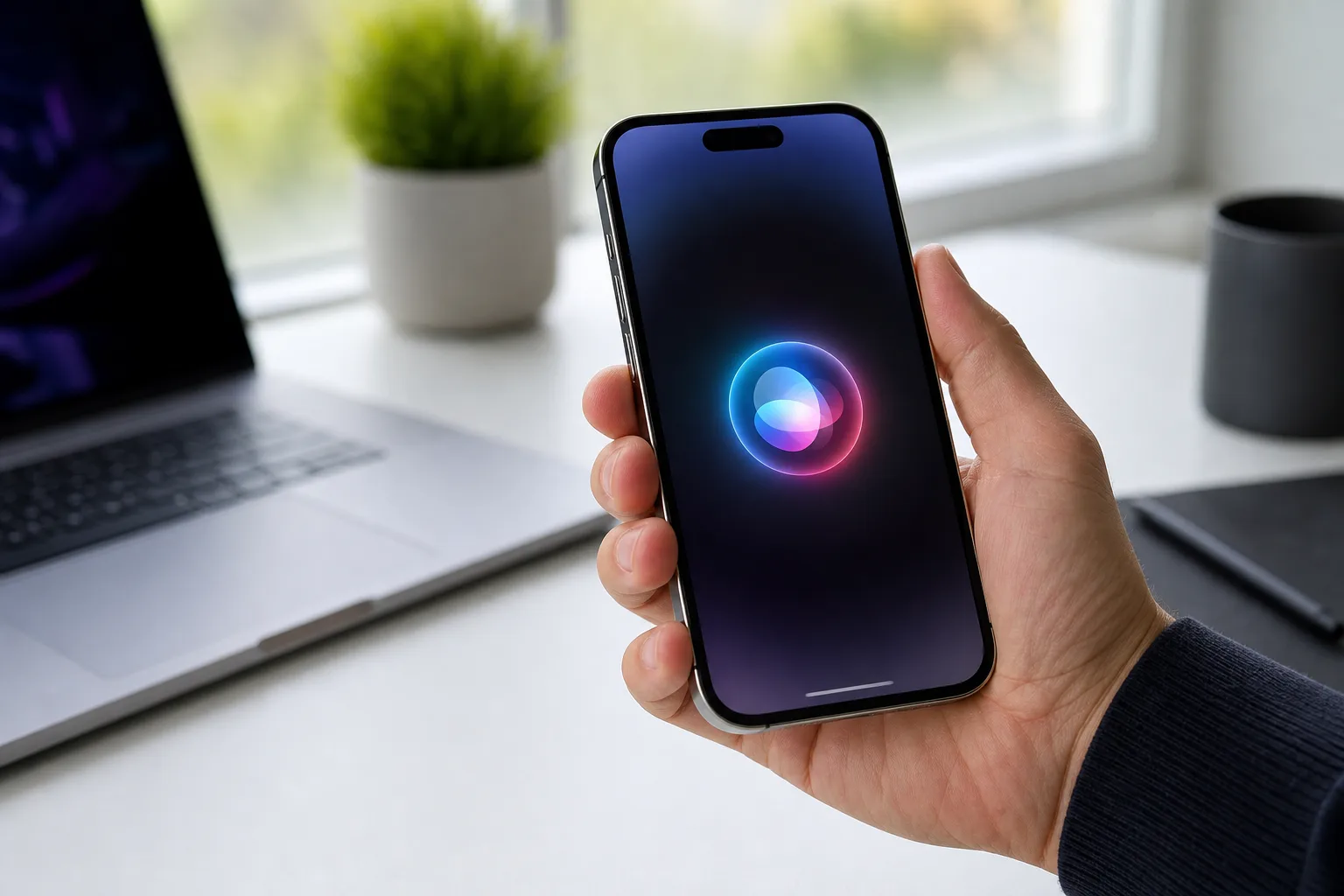
Apple has finally shown its hand. At WWDC 2025, the company unveiled Siri AI — a ground-up rebuild of its long-struggling voice assistant that brings genuine conversational ability, on-screen visual understanding, and deep system-wide integration to iPhones, iPads, Macs, and beyond. It’s the most significant update to Siri in the assistant’s 14-year history, and Apple clearly knows it.

- Apple’s new Siri AI can hold conversations, read on-screen content, and act across apps — the biggest Siri overhaul since 2011.
- Siri AI launches in developer beta now on iOS 27, with a public beta expected later this year, though not in the EU at launch.
- Apple Intelligence is expanding to Safari, Messages, Mail, Photos, and more with AI-powered features across the full platform.
- Tim Cook delivered his final WWDC keynote as CEO before John Ternus takes over as Apple’s chief executive on September 1.
Table of Contents
What Siri AI Actually Does Now
The old Siri — the one that confidently misheard your reminders and opened the wrong app — is being retired. The new Siri AI can hold back-and-forth conversations, remember context across a session, read and understand what’s currently on your screen, and take actions across multiple apps in a single request. Think of it less like a voice command interface and more like an assistant that actually knows what you’re doing on your device at any given moment.
During WWDC demos, Apple showed Siri AI drafting emails, editing and sharing photos, pulling up relevant messages, creating reminders, and shifting information between apps — all from natural language prompts. You can ask follow-up questions without repeating yourself. There’s a dedicated Siri app now, too, that stores your conversation history and syncs it across all your Apple devices via iCloud. Start a conversation on your Mac, pick it up on your iPhone. That kind of continuity has been embarrassingly absent from Apple’s ecosystem for years.
Under the hood, Siri AI runs on a new Apple Intelligence architecture that pairs on-device AI models with Apple’s Private Cloud Compute system — essentially a way to handle heavier processing on Apple’s own servers without, the company insists, storing or sharing your data. Apple says the system can be independently verified by outside security researchers, which is a meaningful commitment in an era where AI privacy promises are routinely vague.
Siri AI and the Visual Intelligence Push
One of the more genuinely useful additions is expanded visual capability. Point your iPhone camera at something and Siri AI can analyse what it sees — identifying objects, reading text, recognising places, answering questions about what’s in frame. This ‘Visual Intelligence’ mode is also coming to iPad, Mac, and Vision Pro, where it can work across screenshots, documents, and on-screen content.
Apple demonstrated practical use cases: identifying food, splitting a restaurant bill from a photo of the receipt, interacting with product labels. These aren’t flashy party tricks — they’re the kind of tasks that, if reliable, people will actually use every day. That’s historically been the gap between what Apple demos and what Siri delivers in the real world. Whether the execution matches the presentation is the question Apple still has to answer.
Apple Intelligence Spreads Across the Platform
Siri AI is the centrepiece, but the broader Apple Intelligence expansion touches almost every major app on the platform. Safari now uses AI to group open tabs by topic, monitor pages for changes like price drops or restocks through a ‘Notify Me’ feature, and generate browser extensions from plain-language descriptions. The Passwords app can navigate to websites and upgrade weak credentials on your behalf — a feature that sounds small but could meaningfully improve everyday security hygiene.
Photos gets new editing tools that can reframe shots, expand images beyond their original edges (similar to Google’s Magic Eraser-style tools), and remove unwanted objects. Apple is also redesigning Image Playground with photorealistic generation, and importantly, all AI-edited or generated images will carry SynthID watermarks — Google DeepMind’s content authentication standard — to identify them as machine-modified. That’s a responsible call, and it puts Apple ahead of several competitors on AI transparency.
Messages can now suggest actions from conversations — creating a reminder from a chat thread, for instance. Mail gains the ability to trigger actions through third-party apps. Calendar can generate events from a written description. The Home app will add video summaries and searchable footage from security cameras. Shortcuts gets plain-language automation building. Across the board, the theme is the same: natural language in, useful action out.
Developers aren’t being left out either. Apple is opening more of its AI platform through updates to App Intents, Spotlight integrations, and Foundation Models, giving third-party apps access to Siri AI’s contextual understanding and action capabilities. That matters more than it might seem — the strength of an AI assistant is ultimately determined by the apps it can talk to.
The Complicated Road to Get Here
It would be dishonest to cover this announcement without acknowledging how Apple got here. The rollout of Apple Intelligence — announced with considerable fanfare at WWDC 2024 — ran into significant turbulence. Key features were delayed. Apple was forced to dial back its AI messaging heading into this year’s conference. The company also faced a class-action lawsuit over marketing claims related to Siri capabilities that hadn’t actually shipped yet.
Those stumbles fed a genuine question in the industry: was Apple falling behind? OpenAI’s ChatGPT had already become a cultural phenomenon. Google was pushing Gemini aggressively across Android and its own services. Anthropic’s Claude was winning enterprise customers. Apple, meanwhile, was shipping partial features and walking back promises. For a company that built its reputation on things working beautifully out of the box, that was an uncomfortable position.
Apple’s answer, at least in part, has been to partner rather than go it alone. ChatGPT integration is already live. Earlier this year, Apple confirmed a deal to bring Google’s Gemini into its AI offerings as well. That’s a pragmatic strategy — and probably the right one — but it does raise genuine questions about how much of ‘Apple Intelligence’ is actually Apple’s intelligence.

Tim Cook’s Final WWDC — and What Comes Next
There was an undeniable emotional undercurrent to Monday’s keynote. Cook delivered what he confirmed was his final WWDC address as Apple’s CEO before handing the role to hardware engineering chief John Ternus on September 1. ‘On a personal note,’ Cook told the audience, ‘some of the greatest highlights of my time as CEO have been events like this, sharing powerful new tools with all of you, and then seeing what you create with them.’ He added: ‘It has been a constant reminder that imagination has no limits.’
Cook leaves behind a company in an interesting position. Apple has more cash, more users, and more hardware leverage than almost any company on earth — but in AI, it arrived late and spent much of the past year playing catch-up. Whether Siri AI is the moment that changes that calculus is something Ternus will be watching closely come September.
For now, Siri AI is available to developers today through Apple’s Developer Program on iOS 27, iPadOS 27, macOS 27, and visionOS 27, with watchOS support to follow. A public beta is expected later this year in English on supported devices. EU and China users will have to wait — regulatory friction in both markets has become a recurring theme for Apple’s AI ambitions, and there’s no quick fix in sight. The real test, as always, won’t be the demo stage at Apple Park. It’ll be what Siri AI actually does the first time a user asks it something hard.
Frequently Asked Questions
What devices will support the new Siri AI?
Siri AI is available on devices running iOS 27, iPadOS 27, macOS 27, and visionOS 27. Apple Watch support is coming in a future beta. The assistant will launch in beta later this year in English on supported devices.
Will Siri AI be available in the European Union?
No — at least not at launch. Apple confirmed Siri AI won’t be available on iPhone and iPad in the EU when it first rolls out. China is also excluded while Apple works through regulatory requirements.
How does Apple protect user data processed by Siri AI?
Apple uses Private Cloud Compute to handle more demanding requests on its own servers. The company says data processed this way is not stored or accessible to Apple, and the system can be independently verified by outside security researchers.
Does Siri AI work with ChatGPT or Google Gemini?
Yes. Apple has integrations with OpenAI’s ChatGPT already in place, and earlier this year struck a deal to bring Google’s Gemini into its AI offerings as well, signalling Apple’s strategy of combining its own models with third-party AI providers.