

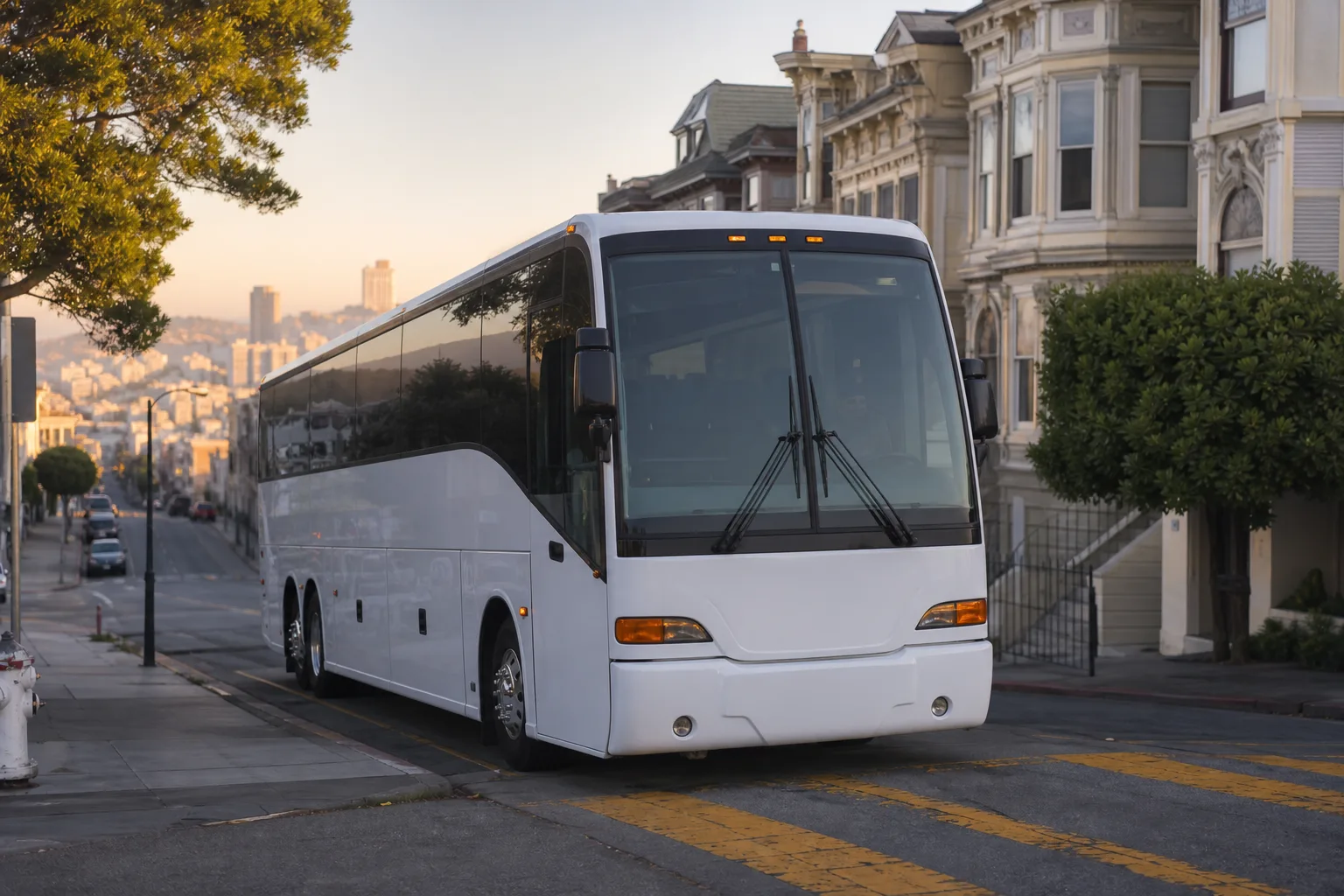
- The Google buses program was created by a single mid-level employee in 2004, starting with just 24 riders on one route.
- Google buses became a flashpoint symbol of San Francisco’s gentrification crisis, sparking theatrical protests across the city.
- The Mission District’s housing battle — including a failed moratorium — ran parallel to the shuttle controversy throughout the 2010s.
- Wi-Fi on moving vehicles was pioneered partly by the shuttle program, letting employees work during their commute.
Table of Contents
How the Google Buses Were Born — One Employee, One Cafeteria Conversation
The Google buses didn’t start in a boardroom strategy session or a sustainability committee. They started with a product manager who was absolutely sick of sitting in traffic. Cari Spivack had joined Google in the early 2000s after being drawn in by the company’s almost obsessively clean homepage — a white screen, a logo, a search box, and that charmingly confident button: ‘I’m feeling lucky.’ She saw something philosophically interesting in that design. Pure function, zero noise. She wanted in.
Getting in meant commuting. Spivack lived in Bernal Heights, a hilly, working-class-turned-mixed neighborhood in San Francisco’s southeast, and Google’s offices were in Mountain View — about 35 miles south down the Peninsula. That sounds manageable until you’ve done it. Caltrain, the diesel-powered commuter rail linking the two cities, was slow, infrequent, and required a lot of patience that nobody burning with startup energy actually had. Carpooling worked better, but the logistics were a constant grind. ‘We’re all leaving at the same time going to the same place on the same road,’ Spivack later recalled. ‘I thought there has to be a better way.’
The spark came from a friend at Genentech, the South San Francisco biotech company, who mentioned their employee shuttle that picked people up at the Glen Park BART station. Spivack brought the idea up at lunch, and word spread fast. ‘I was yapping about it at lunch with people and they were like, ‘Larry would love that idea,” she said. Larry Page, Google’s co-founder, was still accessible enough in 2004 that you could float him an idea in the cafeteria queue — and he said go for it. She had a month to make it real.
From 24 Riders to a City-Wide Fleet
Spivack sent a company-wide email to gauge interest. The response was overwhelming. Almost every San Francisco-based Google employee replied. She started with two stops — Glen Park BART and a parking lot near Candlestick Park — running two trips a day in each direction. Twenty-four people showed up on day one. That number only went up. Google, ever cautious about commitment, framed the whole thing as a ‘beta test,’ which Spivack recognized as a smart hedge. But there was nothing beta about the demand.
As ridership grew, so did the requests. Employees living in other parts of the city wanted stops near them. The Haight. The Castro. Noe Valley. The Mission. Spivack had never imagined the Google buses threading through the heart of San Francisco’s dense, transit-complicated neighborhoods, but she threw herself into the role of makeshift urban planner. She developed rules on the fly — one of which, she says, was a firm no-left-turn policy at traffic lights, to avoid backing up cars and enraging other drivers. It’s exactly the kind of detail that separates someone who actually thinks through logistics from someone who just has a good idea.
Then came the feature that would quietly matter a great deal: Wi-Fi. Some Google engineers volunteered to put wireless internet on the buses — a genuinely novel idea at a time when Wi-Fi was still a novelty and certainly didn’t exist on moving vehicles. Management loved it. If employees could work during their commute, the 45-minute ride south became productive time rather than lost time. In effect, the shuttle extended the workday. That detail would later feel either impressive or ominous depending on your relationship with work-life boundaries.
Why the Google Buses Became a Lightning Rod
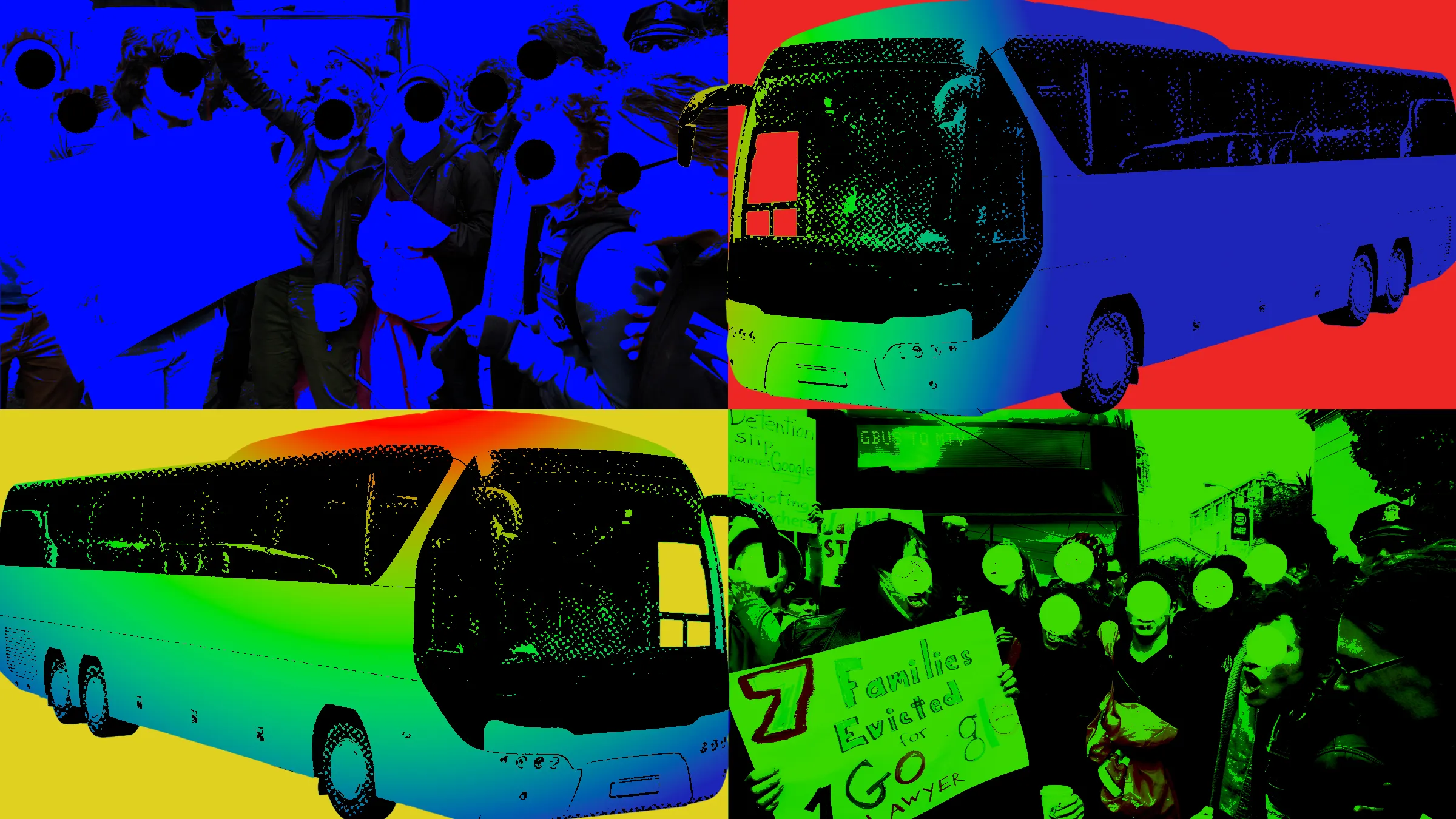
What started as a pragmatic commuter solution became, by the early 2010s, one of the most charged symbols in American urban politics. San Francisco was changing fast — and not gradually or quietly. Tech money was flooding in, rents were spiking, and longtime residents of neighborhoods like the Mission District were watching their communities transform around them in real time. The Google buses, enormous and white and stopping at public Muni bus stops without permission or payment, became the thing you could actually point at.
Protesters blocked the shuttles. They held signs. They filmed confrontations and posted them online. The phrase ‘Google buses’ — or a more colorful variant that became equally common — entered San Francisco’s political vocabulary as shorthand for everything wrong with the tech industry’s relationship to the city it was colonizing economically while refusing to pay into culturally or infrastructurally. The buses didn’t cause gentrification. But they made it visible in a way that abstract rent statistics simply couldn’t.
There’s a broader pattern here worth recognizing. Tech campuses in Silicon Valley had for decades operated as deliberately self-contained ecosystems — free food, gyms, dry cleaning, healthcare on-site. The shuttle program was an extension of that logic into urban geography. Move to San Francisco, live your life there, but let your employer ferry you to and from the mothership. The city got your body at night. Google got your mind during the day. The problem was that this arrangement inflated demand for San Francisco housing without injecting much into the city’s civic and economic life beyond restaurant tabs and real estate pressure.
The Mission District Fight — and How It Ran Parallel to the Bus Wars
The Google buses controversy didn’t happen in isolation. It played out against a furious, years-long battle over housing in the Mission District, San Francisco’s historically Latino neighborhood south of Market Street. By 2015, City Supervisor David Campos — who’d inherited the anti-gentrification mantle from his predecessor Chris Daly — was calling for a full moratorium on new housing construction in the Mission. His argument: new apartment buildings, even nominally market-rate ones, pushed rents higher by signaling to the market that the neighborhood was desirable and investable. Stop building, he argued, and you buy time to protect existing residents.
It’s a contested economic claim. Most housing economists would push back hard — restricting supply in a supply-constrained city tends to make affordability worse, not better. But Campos wasn’t really making a housing economics argument. He was making a community preservation argument. Those two things aren’t always the same, and conflating them is how these debates tend to generate more heat than light.
Scott Wiener, now a California State Senator but then a more centrist member of the San Francisco Board of Supervisors, led the charge against the moratorium. It failed — twice. Even the progressive-leaning Board found it too extreme. But the political pressure worked in practice. A proposed 10-story apartment building in the Mission, quickly branded ‘the Monster in the Mission’ by activists, was eventually abandoned. As of the most recent reporting, it’s being revived as an affordable housing project, though opposition continues and construction hasn’t begun.
The Deeper Question the Bus Protests Were Really Asking
It’s tempting to look back at the Google buses protests and see them as performative — city dwellers yelling at a coach because they couldn’t yell at a housing market. And there’s some truth to that. Blocking a shuttle doesn’t change a zoning code. But the protests were asking something real: who is a city for, and who gets to shape it?
San Francisco has always had a complicated relationship with industry. It welcomed the gold rush, then the shipping trade, then the defense contractors, then the first wave of tech in the 1990s. Each wave brought money and disruption. What made the 2010s tech wave feel different — to many residents, at least — was the speed, the scale, and the sense that this particular industry had no particular interest in integrating into the city’s existing social fabric. It wanted to eat the city’s culture and amenities while insulating its workers from its costs and contradictions.
The Google buses were a physical manifestation of that insularity. Cari Spivack built them to solve a real problem, and she built them well. But the thing she created became the face of something much bigger than one person’s commute frustration. That’s how symbols work — they accumulate meaning that their creators never intended and can’t control.
Today, private tech shuttles are a standard feature of Silicon Valley employment packages, and the debate has moved on — to remote work, to AI-driven displacement, to the question of whether San Francisco has recovered or permanently lost ground to cities like Austin and Miami that made a very different bargain with the tech industry. But the Google buses chapter established something important: when tech companies build parallel infrastructure rather than investing in shared public systems, cities notice, and eventually cities push back. The next version of that fight is already taking shape, just with different vehicles.
Frequently Asked Questions
Who created the Google buses shuttle program?
The Google buses program was created by Cari Spivack, a product manager at Google. Frustrated by her commute from Bernal Heights to Mountain View, she pitched the idea to co-founder Larry Page in a cafeteria line and was given a month to prove the concept.
Why did the Google buses become a symbol of gentrification in San Francisco?
The shuttles represented, visually and literally, the mass movement of high-earning tech workers into San Francisco neighborhoods while long-term residents faced rising rents and displacement. Protesters saw the buses as a daily, unavoidable reminder of tech industry wealth reshaping the city.
When did the Google buses program launch?
The program launched around 2004, starting with stops at Glen Park BART and a parking lot near Candlestick Park. It began with roughly 24 riders and expanded rapidly as more employees requested stops in different neighborhoods across the city.
What happened with the Mission District housing moratorium?
San Francisco Supervisor David Campos called for a full moratorium on new housing construction in the Mission District in 2015, arguing it was the only way to protect existing residents. The measure was voted down twice by the Board of Supervisors, though development in the area slowed considerably under political pressure.

