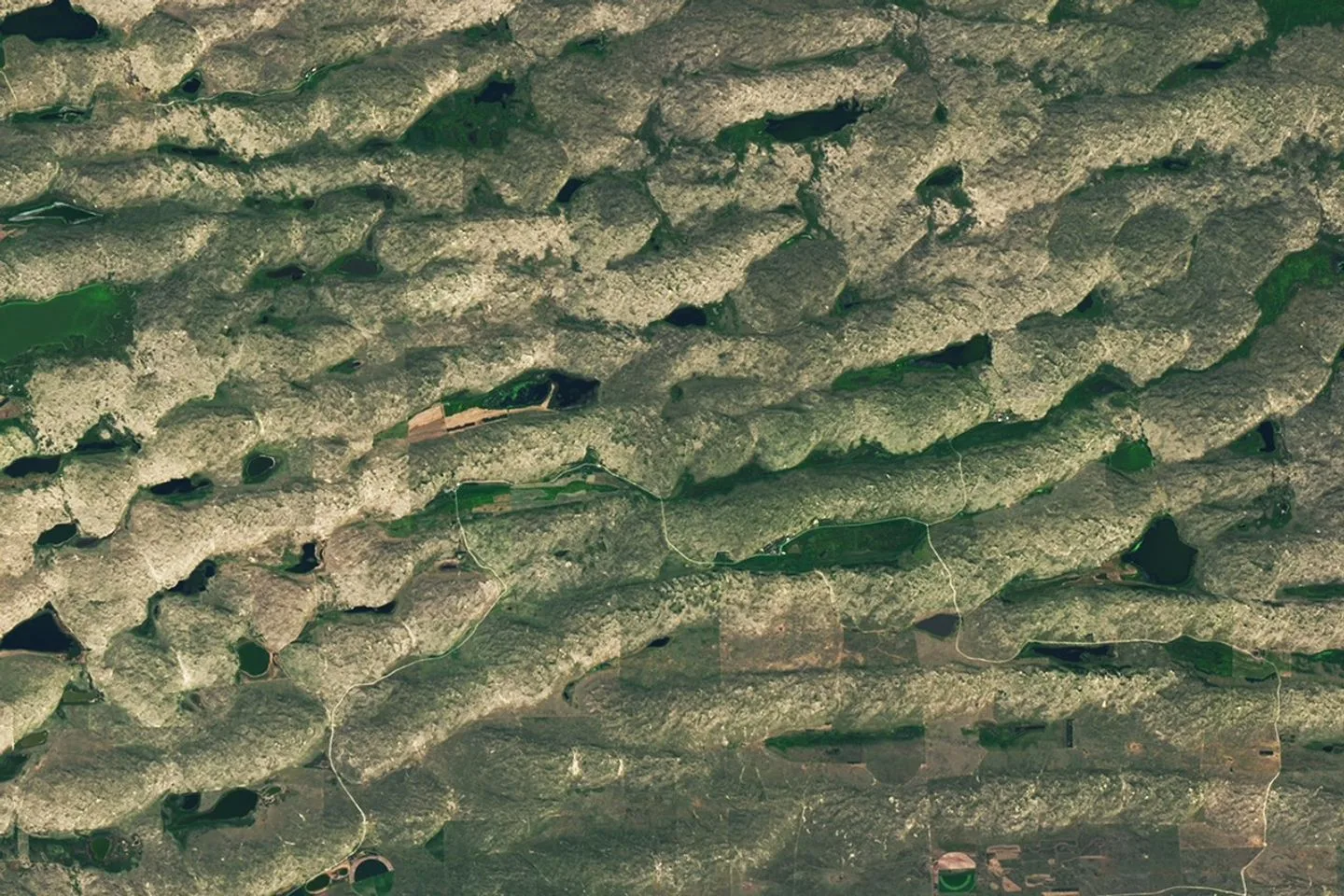
- The NASA satellite puzzler for June 2026 is now open, asking readers to identify a mystery location from a single image.
- Participants in the NASA satellite puzzler can earn extra recognition by naming the satellite, instrument, or spectral bands used.
- No cash prize is on offer — winners get public recognition and what NASA calls ‘puzzler bragging rights.’
- The answer and a full Earth Observatory Image of the Day story will be published roughly one week after the challenge closes.
Table of Contents
NASA Satellite Puzzler Returns for June 2026
Every month, without fail, NASA Earth Observatory drops a single satellite image and asks the internet a deceptively simple question: where on Earth is this? The NASA satellite puzzler is back for June 2026, and if past editions are anything to go by, what looks like a straightforward geography quiz will turn into a genuinely absorbing exercise in reading the planet’s surface like a map. These challenges have quietly built a devoted following — part citizen science, part detective game — and this month’s edition is already generating the kind of close-reading energy that makes the programme so compelling.
The premise is stripped back by design. NASA publishes one image. You figure out the location. That’s it. But the simplicity is almost a trick, because the moment you start zooming in on the image — scanning for the curve of a coastline, the geometry of agricultural fields, the particular rust-red of an iron-rich plateau — you realise there’s an entire scientific literacy embedded in the exercise. This isn’t just trivia. It’s remote sensing in its most accessible form.
What Makes a Great Puzzler Answer
NASA is clear that a bare location guess is perfectly valid. But the agency is equally open about what earns you a mention when the answer drops. Identifying the satellite and instrument that captured the image is a strong move — the distinction between, say, a Landsat 8 Operational Land Imager shot and a Sentinel-2 multispectral image carries real technical weight. Naming the spectral bands used pushes it further still: natural colour composites behave very differently from false-colour infrared renders, and knowing which palette you’re working with changes how you read vegetation, water, and urban texture entirely.
Then there’s geology and history. Some of the most memorable past puzzler submissions have come from readers who spotted a detail the casual viewer would scroll past — an ancient river meander fossilised in the landscape, the faint outline of a Roman road, the telltale circular geometry of a meteor impact structure softened by millennia of erosion. NASA explicitly says it will highlight ‘especially thoughtful or interesting answers,’ and that category has historically included people who simply shared why the location means something to them personally. The programme treats expert knowledge and personal connection as equally worth hearing.
The NASA Satellite Puzzler and the Broader Push for Earth Literacy
It’s easy to frame the NASA satellite puzzler as a fun monthly distraction, and it is that. But it also sits inside a much larger effort by NASA and peer agencies to get the public comfortable reading orbital data. The European Space Agency runs similar outreach through its Copernicus programme. Google Earth’s Timelapse feature and Planet Labs’ public data releases have each, in their own way, tried to democratise the view from above. What NASA’s puzzler does differently is force active interpretation rather than passive scrolling. You can’t just admire the image. You have to argue with it.
That friction is valuable. Remote sensing data underpins climate modelling, disaster response, agricultural monitoring, and urban planning — but the gap between the raw imagery and public understanding of what it shows has always been wide. Monthly puzzlers don’t close that gap on their own, but they chip away at it in a way that academic papers simply can’t. When a reader in Kansas correctly identifies a salt flat in Bolivia because they noticed the hexagonal cracking pattern in the surface crust, that’s a small but genuine transfer of scientific literacy.
Bragging Rights, Recognition, and Why That’s Enough
NASA doesn’t pretend the prize is lavish. The agency is almost self-deprecating about it, noting it can’t offer ‘prize money or a trip to space.’ What it can offer is public credit on one of the most visited science communication platforms in the world. The first person to correctly identify the June 2026 location gets named. Standout answers — the ones that go deep on spectral analysis or illuminate a piece of history most readers wouldn’t know — get highlighted alongside the official answer post.
That answer post isn’t a throwaway either. It links to an Earth Observatory Image of the Day feature, which typically provides a full editorial treatment of the location: its geography, its scientific significance, and the story behind why it looks the way it does from orbit. In practice, winning the puzzler is a gateway to a much richer piece of science communication. The bragging rights come with a genuinely good read attached.
How to Play the June 2026 Edition
Participating in this month’s NASA satellite puzzler is straightforward. Head to the NASA Earth Observatory website, find the June 2026 puzzler image, and study it as closely as you like — zoom in, look for patterns, cross-reference with what you know about global geography and geology. When you’re ready, submit your response through the official form on the page, select ‘Puzzler Answer’ as the topic, and include whatever name or alias you’d like to be credited under.
NASA has been clear that submitted comments may be edited, excerpted, and published as part of the reveal post. That’s standard for a public-facing programme of this kind, and it’s worth knowing before you write something you’d rather keep private. The reveal itself lands roughly a week after the challenge goes live, which gives the global community — NASA’s audience spans continents and time zones — a fair window to engage without the answer leaking too quickly.
Why This Format Still Works in 2026
In an era of AI image recognition tools that can geolocate a photograph from the reflection in a window, you might wonder whether a monthly ‘guess the place’ challenge still has teeth. It does, partly because the puzzle isn’t just about getting the right answer fast — it’s about demonstrating how you got there. An AI can output coordinates in milliseconds; it can’t tell you why the parallel ridges in the image betray a specific kind of fold-mountain geology, or what the colour of that water body says about algal bloom cycles. The NASA satellite puzzler, at its best, rewards the reasoning, not just the result.
There’s also something to be said for the community dimension. The programme’s comment section and the reveal post both function as a kind of distributed seminar, where geographers, geologists, amateur astronomers, and curious generalists end up teaching each other in public. As NASA continues to expand its Earth science data releases — the agency’s fleet of Earth-observing satellites is one of the most sophisticated in the world — getting more people fluent in how to read that data feels less like a nice-to-have and more like a genuine priority. The puzzler is one of the lowest-friction ways that happens.
Frequently Asked Questions
What is the NASA satellite puzzler and how does it work?
Each month, NASA Earth Observatory publishes a mystery satellite image and asks readers to identify the location. Participants submit their guesses via an online form, and NASA reveals the answer about a week later, recognising the first correct guesser and standout responses.
How do I submit an answer to the NASA satellite puzzler?
You submit through NASA Earth Observatory’s official online form, selecting ‘Puzzler Answer’ as the topic. Include your preferred name or alias. You can keep it to a simple location guess or go deeper with satellite and instrument details.
What kind of detail impresses NASA in a puzzler submission?
NASA specifically calls out identifying the satellite and instrument that captured the image, naming the spectral bands used, or highlighting a subtle geological or historical detail. Personal connections to the location are also welcomed.
Is there a cash prize for solving the NASA satellite puzzler?
No. NASA openly acknowledges it can’t offer prize money or a trip to space. The reward is public recognition on the Earth Observatory page — being credited as the first correct guesser, or highlighted for a particularly thoughtful answer.