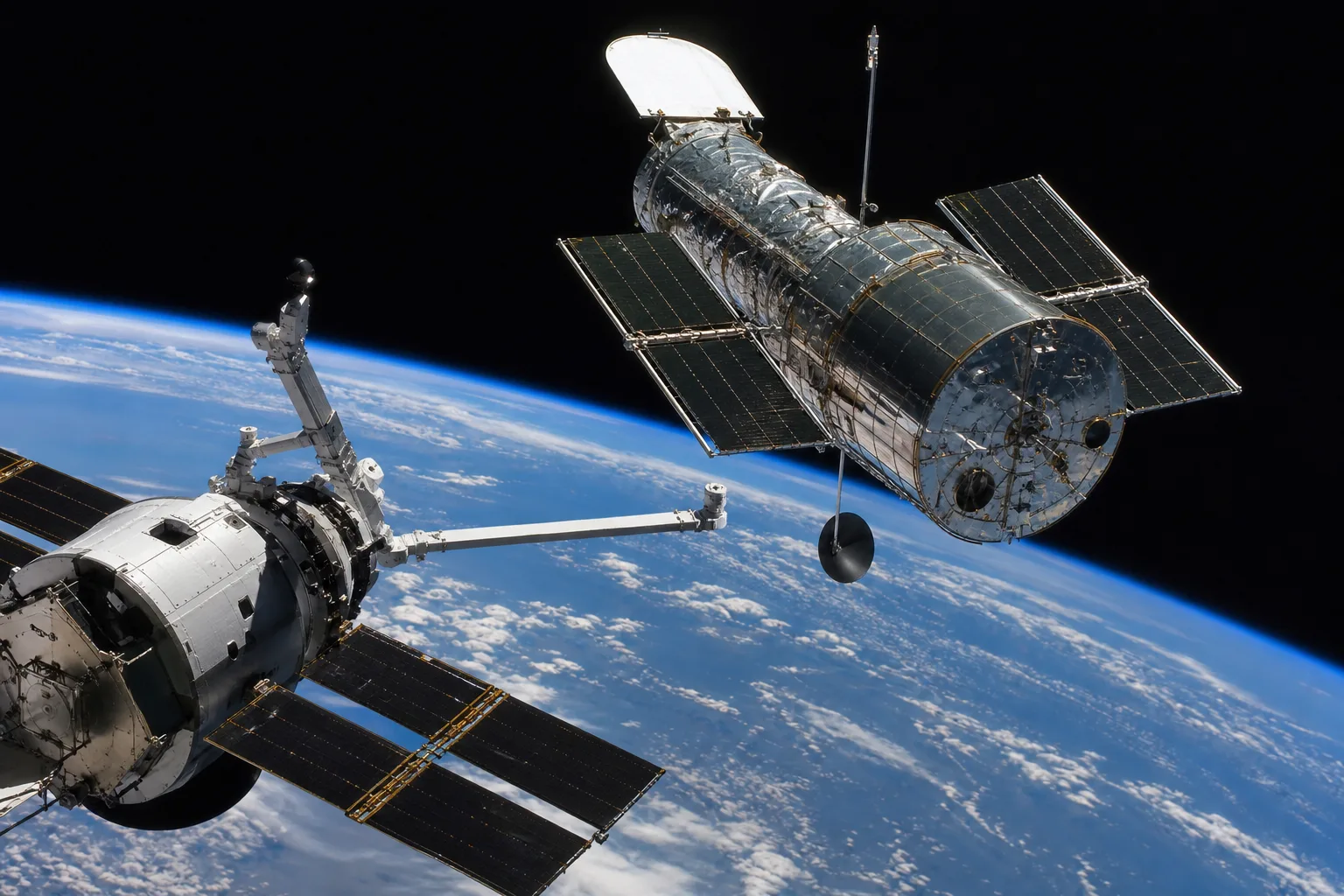
The Swift space telescope has been one of NASA’s quiet workhorses for more than two decades — hunting gamma-ray bursts, watching stars get torn apart by black holes, and generally punching well above its weight class. Now, it’s in trouble. And the plan to save it is unlike anything the space industry has tried before.
- The Swift space telescope is being dragged toward reentry by atmospheric drag, with some models predicting it could fall as soon as this summer.
- Katalyst Space Technologies’ robotic Link spacecraft will boost the Swift space telescope to a higher, safer orbit later this month.
- This marks the first time a private spacecraft has ever attempted to dock with a robotic U.S. government satellite.
- Link will launch aboard a Northrop Grumman Pegasus XL air-launched rocket from the Marshall Islands in the Pacific.
Table of Contents
What’s Happening to Swift
Launched in 2004, the Swift space telescope was placed into low Earth orbit to detect gamma-ray bursts — the most violent explosions in the known universe, capable of releasing more energy in seconds than the Sun will emit over its entire lifetime. Twenty years on, the telescope’s instruments are still functioning well. The science is still coming in. The problem isn’t the hardware — it’s physics.
Low Earth orbit isn’t actually empty. At altitudes of a few hundred kilometres, there’s still a thin wisp of atmosphere, and that’s enough to create drag. Over years and years, that drag bleeds orbital energy away. Satellites gradually sink. Without a propulsion system to compensate — and the Swift space telescope doesn’t have one — the observatory is on a one-way trip downward. Some orbital decay models have flagged this summer as a potential reentry window, which makes the urgency here very real.
Enter Katalyst Space Technologies and the Link Spacecraft
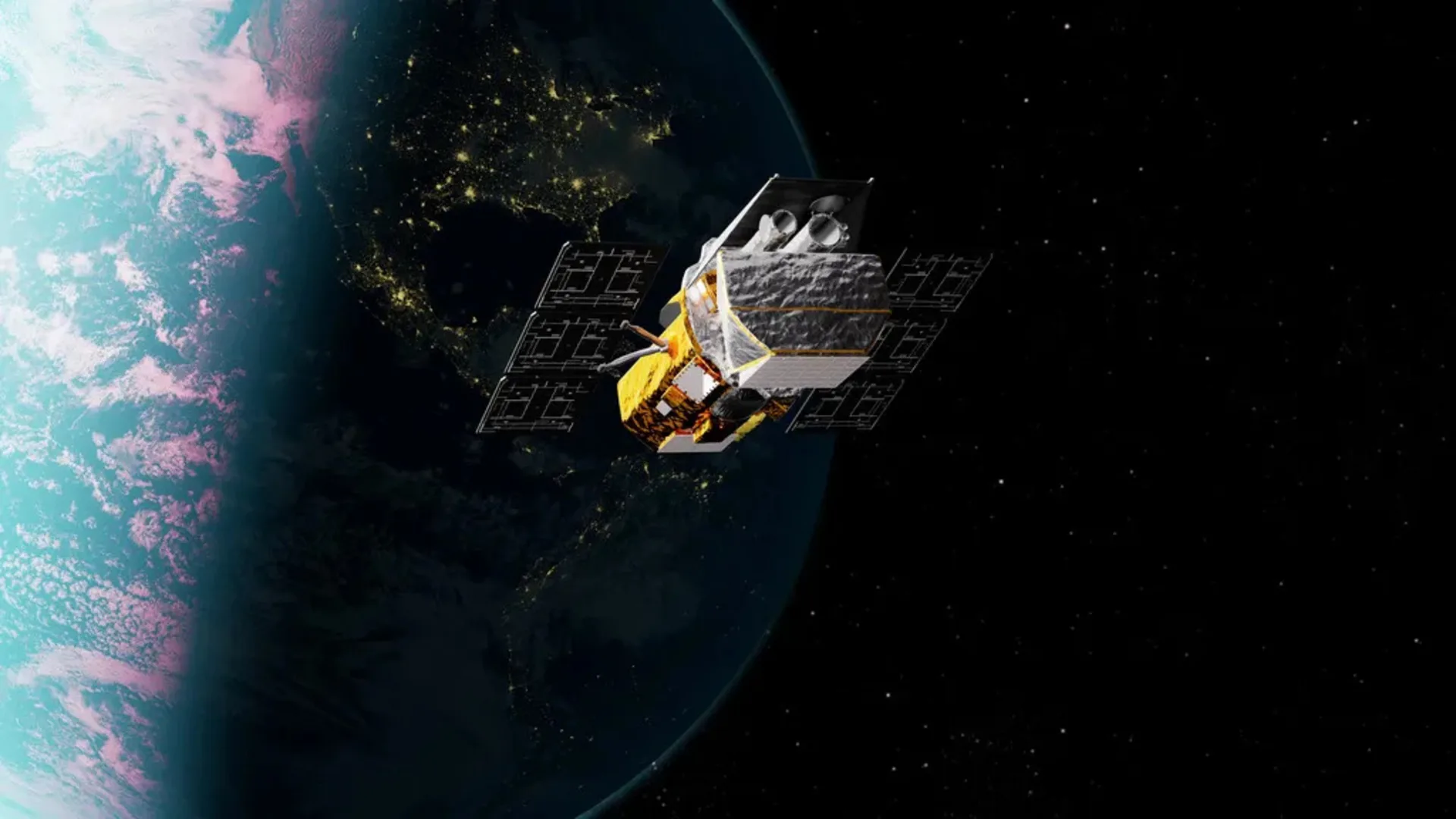
Last autumn, NASA awarded the job of saving the Swift space telescope to Katalyst Space Technologies, an Arizona-based company that has built a robotic servicing spacecraft called Link. The mission concept is straightforward in principle if not in execution: Link will rendezvous with the Swift space telescope in orbit, physically connect with it, and fire its own thrusters to push the telescope into a higher orbit — buying it more operational time, potentially years’ worth.
What makes this genuinely historic is that no private spacecraft has ever docked with a robotic U.S. government satellite. Human-tended servicing missions, like the legendary Hubble Space Telescope repairs carried out by Space Shuttle astronauts, are one thing. Fully autonomous robotic rendezvous and docking with a spacecraft that was never designed to be serviced is something else entirely. The Swift space telescope has no docking port. It wasn’t built with a rescue in mind. Pulling this off requires precision robotics, careful orbital mechanics, and a healthy tolerance for risk.
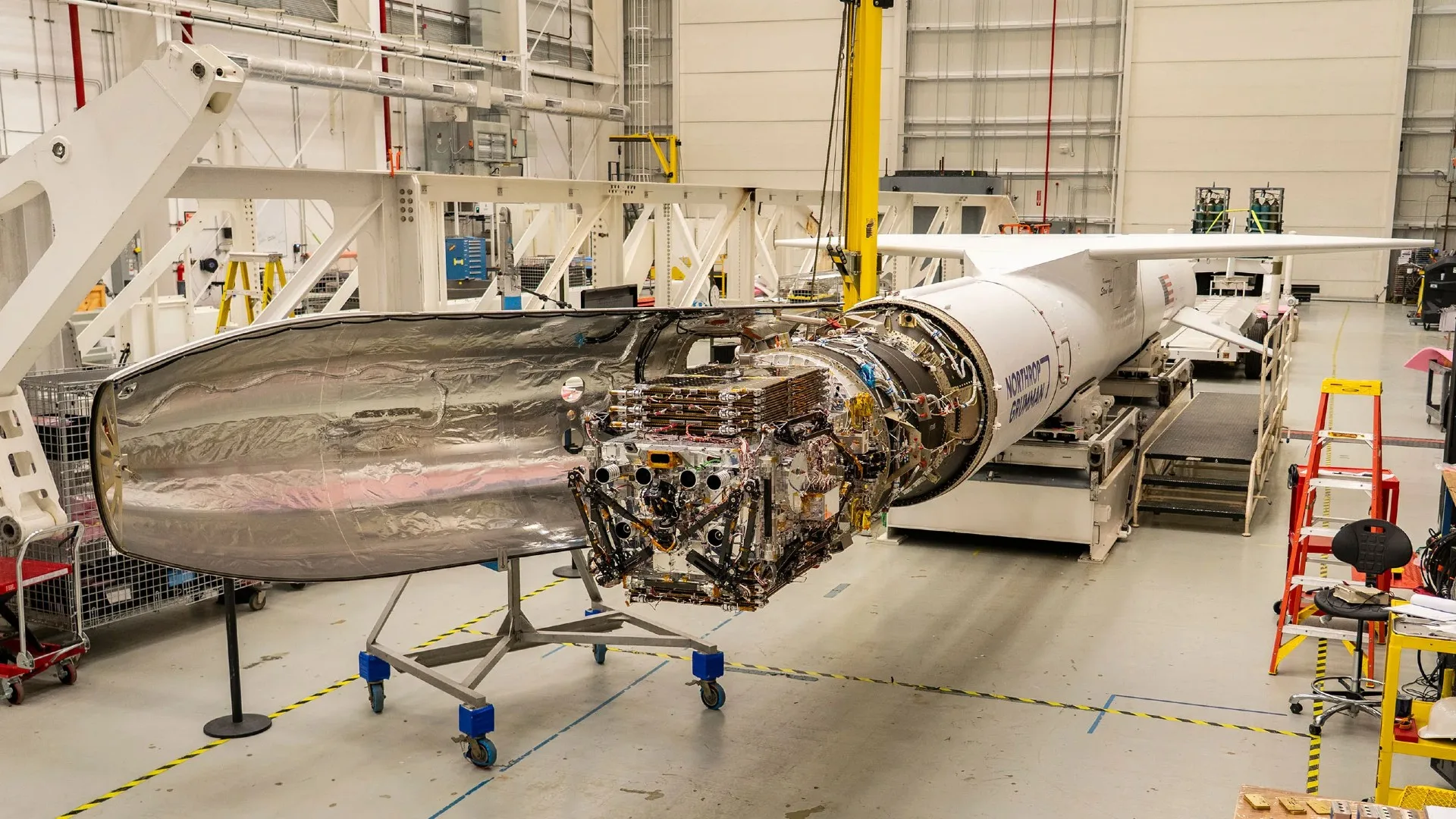
Katalyst has moved fast. The company confirmed Link will launch later this month from the Marshall Islands in the Pacific Ocean — though NASA has yet to confirm a specific date. The launch vehicle is a Northrop Grumman Pegasus XL rocket, an air-launched system that gets carried to altitude by a modified Lockheed L-1011 aircraft before igniting and climbing to orbit. It’s a capable, if relatively niche, launch option — Pegasus XL has a long history with small-satellite science missions, which makes it a fitting choice here.
Swift Space Telescope’s Scientific Legacy — and What’s at Stake
It’s worth taking a moment to appreciate just what NASA and the wider astronomy community would lose if the Swift space telescope came down prematurely. Since 2004, the observatory has detected thousands of gamma-ray bursts and provided rapid follow-up observations that allowed ground-based telescopes to study their afterglows. It contributed to the first detection of a kilonova — the collision of two neutron stars — in 2017, a landmark moment in multi-messenger astronomy that opened up an entirely new way of studying the universe.
The Swift space telescope is also agile. It can repoint to a new target in under two minutes, making it uniquely capable of catching transient events — things that flare up and fade quickly — across the X-ray and ultraviolet spectrum. No currently planned mission fully replicates that capability. Losing it before a successor is ready would leave a real gap in observational astronomy.
Brad Cenko, principal investigator for Swift at NASA’s Goddard Space Flight Center in Maryland, has been among those pushing for exactly this kind of intervention. The mission’s scientific case was compelling enough to justify an unprecedented operational approach, and NASA agreed.
A Broader Shift Toward Commercial Satellite Servicing
The Swift space telescope mission fits into a much larger story that’s been building quietly in the space industry. On-orbit servicing — the idea that satellites don’t have to be disposable — has been gaining serious momentum. Northrop Grumman’s Mission Extension Vehicles have already docked with aging geostationary communications satellites to extend their operational lives. DARPA has funded robotic servicing research. The European Space Agency has its own programs in development.
But those efforts have focused on commercial communications satellites, which are designed with standard docking interfaces and have owners who actively want the service. Servicing a science satellite — a government asset with legacy hardware and no built-in servicing provisions — is a different challenge, and it’s one the industry hasn’t tackled until now.
If Link pulls this off, it’s a proof of concept that could reshape how NASA and other agencies think about their existing fleets. There are other telescopes and satellites in low Earth orbit facing similar orbital decay problems. The question of whether they’re fixable — commercially, affordably, and in time — just got a lot more relevant.
The team presenting the plan includes Shawn Domagal-Goldman, division director for Astrophysics at NASA Headquarters; Kieran Wilson, principal investigator for Link at Katalyst Space; Robert Lamontagne, the company’s vice president of strategic partnerships; and Wes Collier, vice president of launch systems at Northrop Grumman. The lineup reflects how many moving parts this mission involves — science, engineering, commercial partnerships, and launch logistics all have to come together on a tight timeline.
Whether Link succeeds or not, the very fact that this mission exists says something significant about where the commercial space industry has arrived. A small Arizona startup is about to attempt something no private company has ever done, on behalf of one of NASA’s most productive telescopes, launching from a remote Pacific atoll on an air-dropped rocket. If that’s not a sign of how fast this industry is moving, it’s hard to know what is.