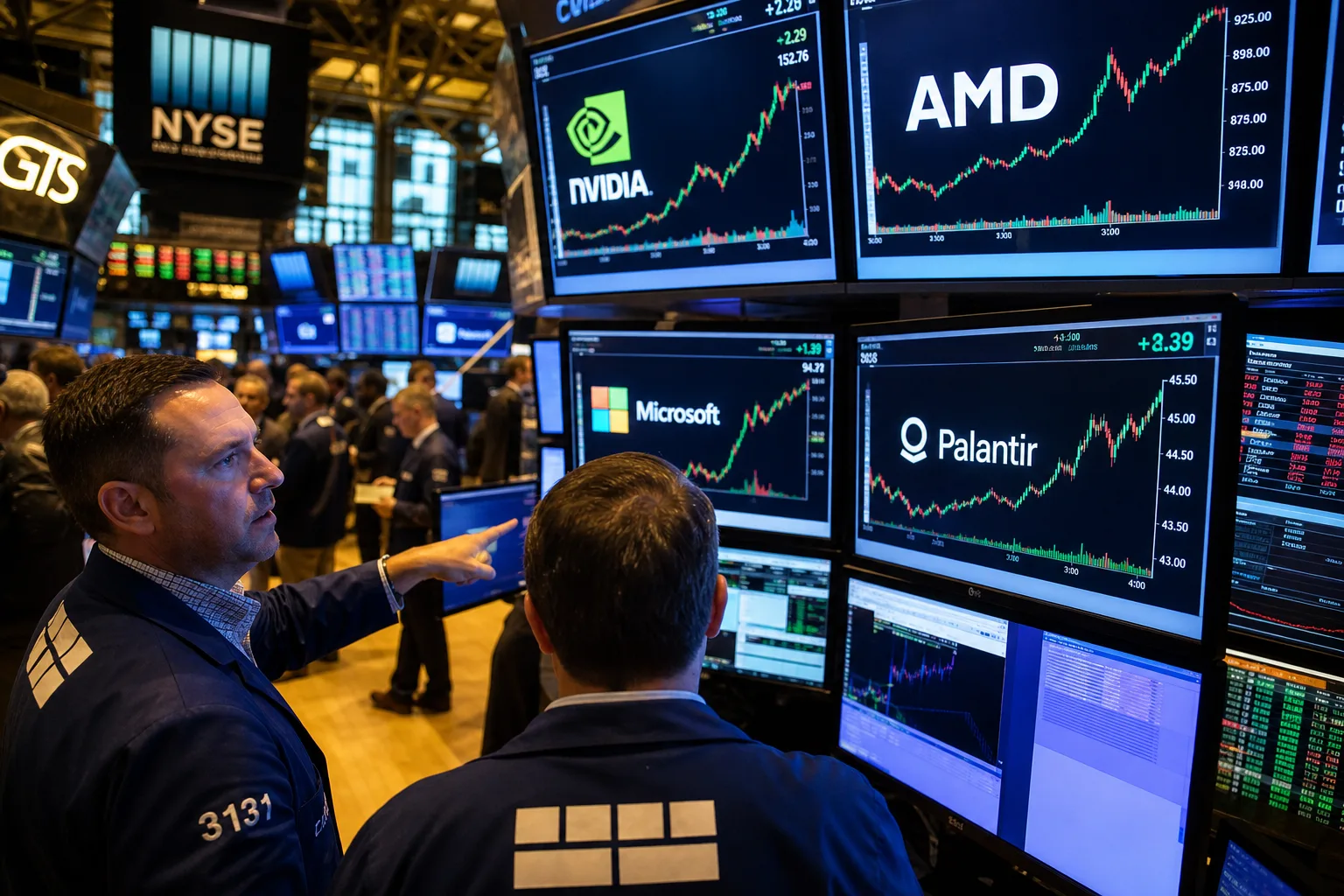
- The tech IPO summer of 2026 sees SpaceX, OpenAI, and Anthropic all targeting public markets in the same window.
- A new acronym — MANGOS — is replacing FAANG as the defining shorthand for tech IPO summer market leaders.
- Investors face a serious stress test as multiple trillion-dollar-scale AI and space companies list simultaneously.
- Public market debuts for AI firms like Anthropic and OpenAI will redefine how we value technology companies.
Table of Contents
The Tech IPO Summer Nobody Saw Coming
Welcome to the tech IPO summer that Wall Street has been nervously anticipating and Silicon Valley has been quietly engineering for years. In a compressed window that’s shaping up to be one of the most consequential stretches in market history, SpaceX, OpenAI, and Anthropic are all eyeing public listings — and they’re doing it at roughly the same time. The sheer weight of capital involved, the novelty of the business models, and the astronomical private valuations already attached to these companies make this a moment that goes well beyond a few ticker symbols appearing on a screen.
For context: the last time the public markets saw this kind of concentrated excitement around a single cohort of tech companies, it was the era of Facebook, Netflix, and Google’s ascent — the golden age of FAANG. That acronym became the defining shorthand of a generation of tech investing. Now, analysts and investors are already reaching for a replacement. This tech IPO summer feels, by almost every measure, larger in scale and stranger in character than anything that came before it.
MANGOS Is the New FAANG
Meet MANGOS. It’s the acronym quietly doing the rounds in VC circles and investment bank pitch decks, standing for Meta (or Microsoft, depending on your preference), Anthropic, Nvidia, Google, OpenAI, and SpaceX. Half of that group is actively moving toward public markets in this same tech IPO summer window. Whether or not the label sticks — and acronyms rarely survive contact with reality for long — it captures something true about where the gravity of the tech industry has shifted.
FAANG represented the platform era: companies that owned the pipes, the social graphs, the search results, and the streaming queues. MANGOS represents something different. It’s defined by AI models and space infrastructure — by companies whose core product is either intelligence itself or access to low Earth orbit. That’s a fundamentally different kind of value proposition to hand to public market investors, and it comes with questions that quarterly earnings calls aren’t really designed to answer.
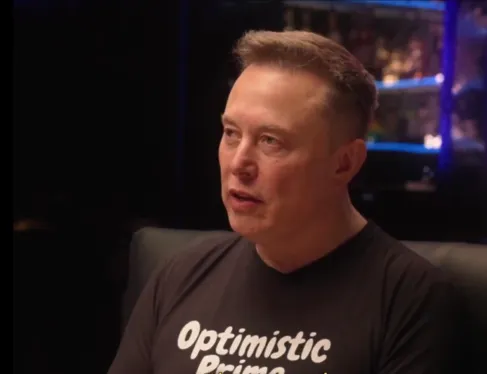
Elon Musk’s SpaceX is perhaps the clearest example of the challenge. The company has been profitable — largely thanks to its Starlink satellite internet division, which has become a genuine cash engine — but its ambitions extend so far beyond near-term revenue that traditional price-to-earnings analysis starts to feel almost quaint. You’re not just buying a rocket company; you’re buying a bet on Mars colonisation, global broadband dominance, and point-to-point Earth travel. How does a fund manager with quarterly reporting obligations price that?
OpenAI and Anthropic: AI Valuations Meet Public Scrutiny
Then there’s the AI pair. OpenAI and Anthropic are arriving at the public markets at a moment when the entire AI industry is facing harder questions about the path to sustained profitability. OpenAI’s latest private valuation implies the company will need to generate revenue at a scale that makes even the most optimistic growth projections feel stretched. The company has been burning through cash at a pace that’s become an industry talking point in itself.
Anthropic, backed heavily by both Amazon and Google, carries its own valuation pressure. The Claude model family has carved out a serious enterprise customer base and earned a reputation — particularly in regulated industries — for being the AI product that compliance teams feel they can actually talk to. That’s a real competitive differentiation. But ‘trust’ doesn’t appear as a line item on a balance sheet, and convincing public investors to pay a premium for it is a different challenge than convincing enterprise procurement teams.

What makes this tech IPO summer genuinely complicated for both companies is timing. The AI industry is simultaneously at peak hype and at the beginning of a necessary reckoning with unit economics. Inference costs are still significant. The major players are in an arms race for GPU capacity. Revenue is growing fast but so is spending. Going public in this environment means locking in a valuation narrative before the dust settles — and betting that public investors will remain patient while the story develops.
What This Means for Investors
For the institutional investors who will anchor these offerings, this tech IPO summer is a genuine stress test. It’s not just about whether any individual company is worth its asking price — it’s about whether the market has the appetite and the capital to absorb multiple mega-listings in rapid succession without triggering a valuation correction that drags all of them down together.
History offers a cautionary note here. The 2019 IPO cohort — Uber, Lyft, WeWork (eventually), Slack, Pinterest — was another moment where multiple high-profile private companies rushed toward the public market with inflated expectations. The results were mixed at best. Uber and Lyft opened below their IPO prices. WeWork’s listing imploded entirely and took the CEO with it. The companies that survived and thrived were the ones that could demonstrate a credible path to operating leverage, not just growth for growth’s sake.
The difference in 2026 is that SpaceX, OpenAI, and Anthropic have genuine revenue. They’re not pre-revenue bets on consumer behaviour changing. Starlink has a large and growing base of paying customers. OpenAI’s API and ChatGPT Plus subscriptions are generating real, recurring revenue. Anthropic has locked in enterprise contracts with major financial and healthcare institutions. That’s a more defensible starting point than a ride-sharing app that needed five years to approach profitability. Even so, seasoned observers of the tech IPO summer cycle caution that strong private-market revenue doesn’t guarantee a smooth public debut.
The Deeper Question: What Is a Public AI Company?
Beyond the numbers, there’s a more structural question that this tech IPO summer is forcing into the open: what does it actually mean for an AI company to be publicly traded? OpenAI, in particular, has been reshaping its corporate structure — moving away from its original non-profit model toward a more conventional for-profit arrangement — precisely to make a public listing viable. That transition isn’t without controversy. The company’s founding mission around safe AI development sits in visible tension with the shareholder primacy that public markets tend to demand.
Anthropic has framed its own identity around AI safety since day one, founded reportedly by former OpenAI researchers including Dario Amodei and Daniela Amodei, partly over concerns about the direction of OpenAI’s commercial ambitions. There’s an almost narrative irony in both companies ending up on the same public markets at roughly the same time, competing for the same pool of investor capital while nominally representing different visions of how AI development should proceed. The tech IPO summer of 2026 may ultimately be remembered as the moment that tension became impossible to ignore.
Public market scrutiny also brings disclosure requirements that these companies haven’t faced before. Investors will be able to see, in granular detail, how much it costs OpenAI to run GPT-4o, how Anthropic allocates its safety research budget relative to product development, and whether SpaceX’s Starship programme is genuinely on a financial trajectory that justifies its cost. That transparency might be the most consequential outcome of this whole moment — not the opening-day stock prices, but the quarterly filings that follow.
A Defining Window for the Next Era of Tech
The tech IPO summer of 2026 isn’t just a financial story. It’s a referendum on what the next generation of technology companies actually are, what they’re worth, and what obligations they carry once ordinary pension funds and retail investors own a piece of them. FAANG built the consumer internet. MANGOS — or whatever we end up calling them — are building the AI-powered infrastructure layer that sits underneath it.
Whether the public markets prove to be the right home for companies with 10- and 20-year time horizons is an open question. SpaceX’s Mars ambitions don’t fit in a five-year DCF model. OpenAI’s bet on artificial general intelligence isn’t a product roadmap. And yet, the capital available in public markets dwarfs what any private funding round can provide. That tension — between the patience these companies need and the quarterly cadence that public markets impose — will define how this tech IPO summer story ends. The listings are just the beginning.
Frequently Asked Questions
What is the tech IPO summer of 2026?
The tech IPO summer refers to a concentrated window in 2026 when several major private tech companies are expected to go public simultaneously, putting pressure on valuations, investor appetite, and market expectations for large-scale tech listings.
What does MANGOS stand for in the context of this tech IPO summer?
MANGOS is an emerging acronym meant to replace FAANG as shorthand for the most influential tech companies. It stands for Meta (or Microsoft), Anthropic, Nvidia, Google, OpenAI, and SpaceX — with several of those heading to public markets in the same period.
Why is Anthropic’s IPO significant?
Anthropic is one of the companies in the MANGOS group heading to public markets in the same window. Its listing is part of a broader stress test for investors, valuations, and expectations for public tech companies in 2026.
Has SpaceX confirmed it will IPO in 2026?
The source does not address whether SpaceX has formally confirmed a 2026 IPO. SpaceX is identified as one of the MANGOS companies, with half of that group heading to public markets in the same window.