First developer betas are supposed to be rough. That’s the whole point — they exist so developers can test their apps against unfinished software, file bug reports, and brace themselves for the occasional crash. So when iOS 27 beta stability turns out to be, by most early accounts, remarkably high right out of the gate, it’s worth asking why. Because the answer probably says more about Apple’s troubled recent history with Siri than it does about any routine engineering milestone.
- iOS 27 beta stability in the first developer build is unusually high, with almost no crashes or meaningful bugs reported.
- The exceptional iOS 27 beta stability strongly suggests Apple has been running this software internally for far longer than usual.
- Apple faced accusations of advertising vaporware when Siri features failed to ship on time with the iPhone 16.
- The evidence now points to over-optimism rather than deception — Apple had working builds but judged them too buggy to release.
Table of Contents
iOS 27 Beta Stability Is Unusually High for a First Build
Anyone who’s been following Apple’s developer beta cycle for a few years knows the drill. The first beta lands, the brave (or reckless) install it, and within 24 hours the forums light up with bug reports — apps refusing to launch, UI elements going haywire, battery life dropping off a cliff. It’s expected. It’s almost a rite of passage. That’s precisely why iOS 27 beta stability is attracting so much attention among those who’ve taken the plunge this cycle.
Reports from developers and early adopters who installed both the iOS 27 and macOS 27 developer betas describe an experience that feels less like early-access software and more like a polished release candidate. Not a single app crash in daily use. The handful of bugs that have surfaced are, by early beta standards, trivial. Innocuous UI quirks, not the kind of show-stoppers that typically define a first drop. Some early testers have reportedly noted that they’ve encountered more significant bugs in far later dot versions of previous developer betas. That’s a striking observation about iOS 27 beta stability — and it demands an explanation.
What This Tells Us About Apple’s Internal Timeline
Software doesn’t get this stable by accident. iOS 27 beta stability at this level, this early, points to one very logical conclusion: Apple has been running this build internally for a long time. Longer than it normally would before handing off to external developers. The typical Apple cycle involves a tight window between internal dogfooding and public developer access. What we’re seeing here looks more like a build that’s been living on employees’ devices for the better part of a year — maybe longer.
That timeline aligns with something a lot of people suspected but couldn’t quite prove. Cast your mind back to the iPhone 16 launch in September 2024, when Apple made some fairly bold promises about a next-generation Siri — more contextual, more capable, deeply integrated across apps. The features were front and centre in the marketing. They just weren’t there when people opened the box. Apple shipped the iPhone 16 with a placeholder, and the promised Siri remained a future promise through months of software updates that kept sliding the goalposts forward.
The company took real reputational damage for it. Critics called it vaporware. There were legitimate questions about whether Apple had over-promised features that didn’t actually exist in any functional form, or whether it had simply misjudged its own readiness. Those are two very different things, and the distinction matters enormously. The strong iOS 27 beta stability we’re seeing today reframes that debate in an important way.
Over-Optimism, Not Deception — Probably
Here’s the more charitable — and, given the evidence, more credible — reading of what happened. Apple almost certainly had working versions of these Siri features in internal builds by the time of the iPhone 16 announcement. The iOS 27 beta stability we’re seeing now suggests those builds have been running and improving inside Apple Park for the better part of two years. What the company got wrong wasn’t the technology. It was the judgment call about when ‘good enough for internal use’ crosses into ‘good enough to ship to a billion people.’
That’s a harder line to draw than it sounds. Features that work reliably in a controlled environment — on a fleet of devices all running known configurations, used by people who know what to test and what to avoid — can fail spectacularly in the wild. Apple, it seems, kept pulling the release date because the real-world gap between ‘it works’ and ‘it’s ready’ kept proving wider than anticipated.
Does that fully excuse the marketing strategy? Not really. If a feature isn’t ready to ship, it arguably isn’t ready to announce — at least not with the specificity Apple deployed. Showing Siri doing things in keynote demos that it couldn’t actually do on consumer hardware was a mistake, regardless of intent. But there’s a meaningful difference between a company that fabricated capabilities it never had and one that was simply too confident about its own timeline. The first is fraud. The second is a product management failure. Uncomfortable, but considerably less damning.
The Waitlist Problem and What It Means for Users
Even for those who’ve installed the iOS 27 developer beta, the headline features aren’t immediately accessible. The new Siri is still gated behind a waitlist. And for users who’ve taken the MacBook Air route to get local access — using available bypass methods — the experience is constrained, because most of the genuinely interesting capabilities require cloud processing. Local-only access gives you a preview of the plumbing, not the full feature set. That said, iOS 27 beta stability across these available features has impressed testers who expected far rougher edges at this stage.
Apple’s decision to roll out via waitlist rather than flipping a switch for everyone at once reflects a hard lesson learned. Staged rollouts let the company monitor server load, catch unexpected edge cases, and pull back quickly if something goes wrong at scale. It’s the kind of operational caution that, frankly, would have been useful two years ago when the original promises were being made. Better late than never — though ‘late’ is doing a lot of work in that sentence.
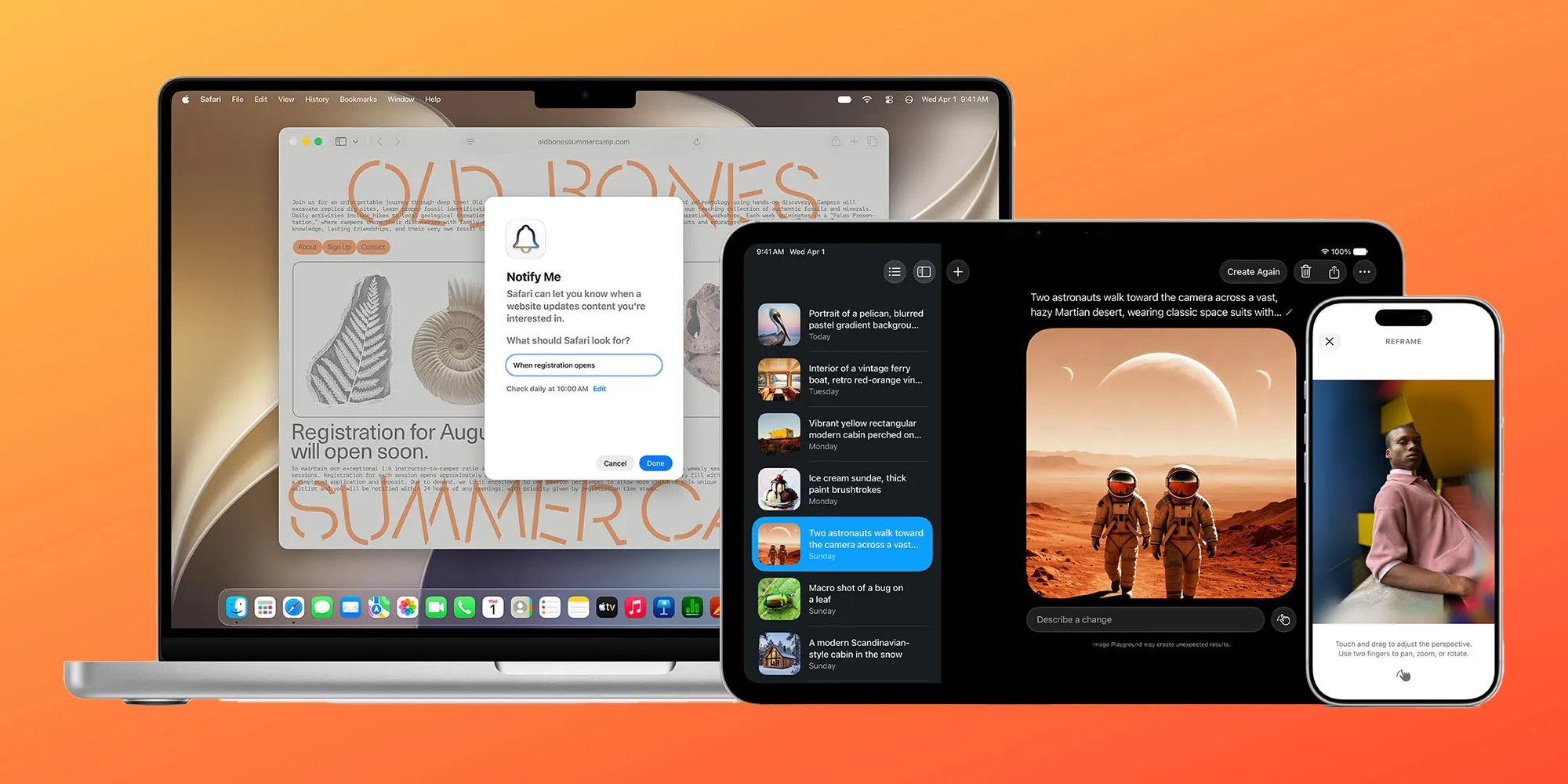
What is available right now, beyond Siri, includes the AI photo editing tools — a set of features that will get their own proper examination as more people get hands-on time. Early impressions suggest Apple has put real work into making these feel native rather than bolted-on, which is more than can be said for some of the AI integrations from competitors that have shipped faster but felt rougher in practice.
The Broader Implications for Apple’s Software Reputation
Apple’s software quality has been a recurring conversation in tech circles for the past several years. The perception — sometimes fair, sometimes overstated — is that the company’s once-legendary attention to fit and finish has slipped under the pressure of annual release cycles. iOS 27 beta stability being this high in a first developer build is a small but concrete data point that pushes back against that narrative.
It suggests Apple may be quietly rethinking its relationship with its own release cadence. If the company is sitting on software for longer before it goes external — letting it bake properly rather than racing to WWDC — that’s a meaningful shift in philosophy, even if it won’t be announced on a keynote slide. The features that matter most to users aren’t the ones that ship first. They’re the ones that still work six months later.
Whether iOS 27’s unusually clean early build translates into a genuinely stable consumer release this autumn remains to be seen. The broader story of iOS 27 beta stability — what it reveals about Apple’s internal processes and the lessons learned from the Siri stumble — is arguably as interesting as any individual feature. But the signal is encouraging. And if the lesson Apple takes from its Siri stumble is that it’s better to ship later and ship right, the technology industry — and everyone carrying an iPhone — will be better off for it.
Frequently Asked Questions
What does iOS 27 beta stability tell us about Apple’s development timeline?
Unusually high iOS 27 beta stability in the very first developer release suggests Apple has been running this software internally for much longer than it typically would before opening access to outside developers — pointing to an extended internal testing period.
Is it safe to install the iOS 27 developer beta on your main iPhone?
No. Installing any first developer beta on a daily-driver device is still a bad idea in principle. Even if this particular beta is unusually stable, bugs and compatibility issues can appear without warning, and there’s no guarantee every app will work correctly.
When will the new Siri features in iOS 27 be available?
Even users who install the iOS 27 developer beta are being placed on a waitlist for the new Siri. Cloud access is required for most of the headline AI features, meaning local-only installs currently offer limited functionality beyond what’s already available.
Did Apple lie about Siri and Apple Intelligence features at the iPhone 16 launch?
The evidence increasingly suggests Apple was over-optimistic rather than deliberately deceptive. It likely had working builds of the advertised features but pulled them because they were too buggy to release on the planned schedule, misjudging how long the final refinement would take.