


Apple has a long history of hiding small, delightful surprises inside its software — and with the iOS 27 Liquid Glass redesign, it’s keeping that tradition alive. A playful interactive easter egg that first appeared exclusively on iPadOS 26 has now made its way to the iPhone, tucked inside the Preview app and very easy to miss if you’re not paying attention.
- The iOS 27 Liquid Glass easter egg brings an interactive loupe to the Preview app, mirroring last year’s iPad-only feature.
- Apple’s iOS 27 Liquid Glass implementation lets users drag the loupe across the screen, distorting text and content beneath it.
- Apple first introduced Preview to the Mac in 2001, and its iconic magnifying loupe has survived every major redesign since.
- The feature arrived on iPadOS 26 first, making its iPhone debut a year later alongside the full iOS 27 rollout.
Table of Contents
What the iOS 27 Liquid Glass Easter Egg Actually Does
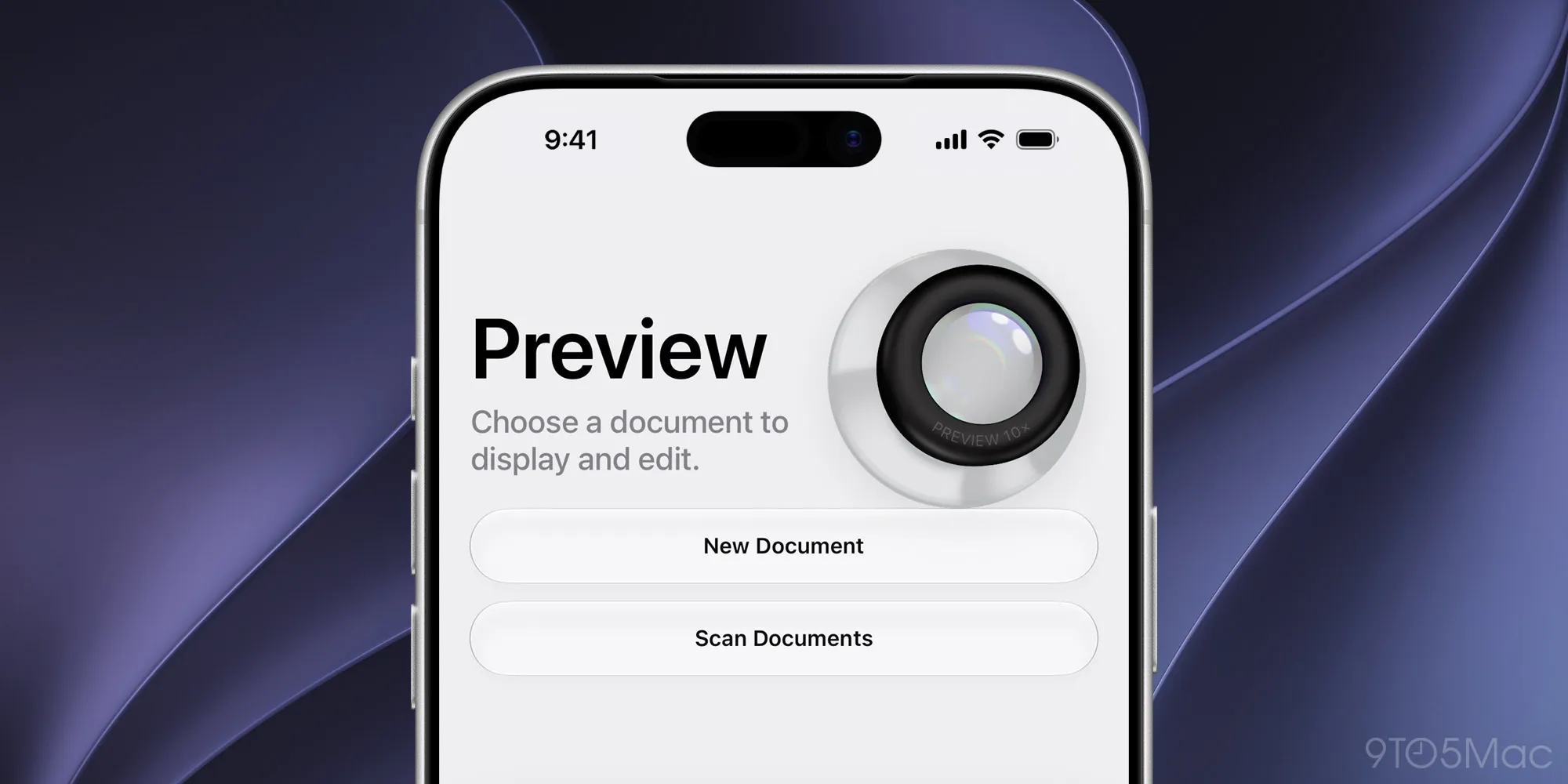
The easter egg centres on a magnifying loupe displayed on Preview’s main screen. On iPadOS 26, Apple quietly made this loupe interactive — users could slide it around the screen and watch the text and content beneath it warp and distort in response, as if a real lens were passing over the page. It was a charming little physics trick that felt right at home inside the broader Liquid Glass visual language Apple introduced last year.
With iOS 27, that same interactive loupe is now available on iPhone. It’s not a new utility feature, it doesn’t unlock anything, and it won’t change how you use the app day-to-day. It’s just Apple being Apple — a small, carefully crafted moment that rewards curious users who actually poke around the interface. In an era where software increasingly feels optimised purely for efficiency metrics, these kinds of touches still matter.
A Loupe With a 25-Year History
To appreciate why Apple chose a loupe as the vessel for this easter egg, it helps to know that the magnifying glass has been part of Preview’s identity since the very beginning. When Apple introduced Preview on the Mac in 2001, its icon showed a pair of photos sitting beneath a magnifying loupe — a literal visual metaphor for what the app did. Over the following two and a half decades, the icon went through several significant redesigns, each reflecting the broader aesthetic direction Apple was taking with macOS at the time.
By the time the iOS 27 Liquid Glass overhaul arrived last year, the photos had been stripped away entirely, leaving the loupe as the sole surviving element of that original 2001 design. Accounts like Basic Apple Guy — who maintains a detailed macOS Icon History gallery — have done excellent work documenting this visual evolution, and it’s genuinely striking to see how much the icon changed while the core motif endured. That kind of continuity is exactly the sort of thing Apple tends to quietly celebrate, and making the loupe interactive feels like a direct acknowledgement of just how old and significant that symbol is.
Why iPadOS Got It First — and What That Gap Tells Us
The fact that the interactive loupe arrived on iPadOS 26 a full year before iOS 27 is worth thinking about. Apple has increasingly used the iPad as a testing ground for interface ideas that eventually land on iPhone — not because the iPad is more important, but because its larger screen gives designers more room to experiment with gestures and visual interactions before they’re refined for the smaller, more constrained iPhone display.
The iOS 27 Liquid Glass implementation of the loupe isn’t dramatically different from what iPad users have had since last year, but adapting it to a phone-sized screen still requires care. A drag interaction that feels expansive on an iPad can feel cramped or awkward on a 6.1-inch display if it isn’t tuned correctly. That Apple took the extra development cycle to get it right on iPhone rather than shipping it in both places simultaneously suggests the team was being deliberate rather than careless about the omission.
Easter Eggs as a Window Into Apple’s Design Culture
Apple easter eggs have always been a curious category. The company is famously secretive and controlled about its public-facing product narrative, which makes moments like this feel genuinely personal. The engineers and designers who ship these features know most users will never find them. There’s no product marketing around a hidden interactive loupe. It exists because someone thought it would be fun, and because Apple’s culture still has room — at least occasionally — for that kind of thing.
The broader iOS 27 Liquid Glass redesign has attracted plenty of attention and, predictably, a fair amount of debate. Translucency and depth effects tend to divide opinion: some users find them visually expressive, others find them distracting or harder to read at a glance. But easter eggs sit completely outside that debate. Nobody is forced to interact with the loupe. It’s there if you want it, invisible if you don’t, and it costs nothing in terms of usability.
What makes the iOS 27 Liquid Glass loupe particularly well-suited to this kind of hidden feature is that it’s mechanically coherent with the design language around it. The iOS 27 Liquid Glass aesthetic is built on the idea of surfaces that respond to light, depth, and movement. A loupe that bends and distorts content as you drag it isn’t a gimmick bolted onto an unrelated interface — it’s a demonstration of exactly what Liquid Glass is supposed to feel like. In that sense, it’s one of the most technically on-brand easter eggs Apple has shipped in years.
As iOS 27 rolls out more widely and users dig deeper into the release, it’ll be interesting to see what else Apple has hidden inside the update. History suggests there are usually a handful of these moments scattered across a major iOS release, waiting for someone to stumble across them. The loupe is a good one — but it’s probably not the only one.

