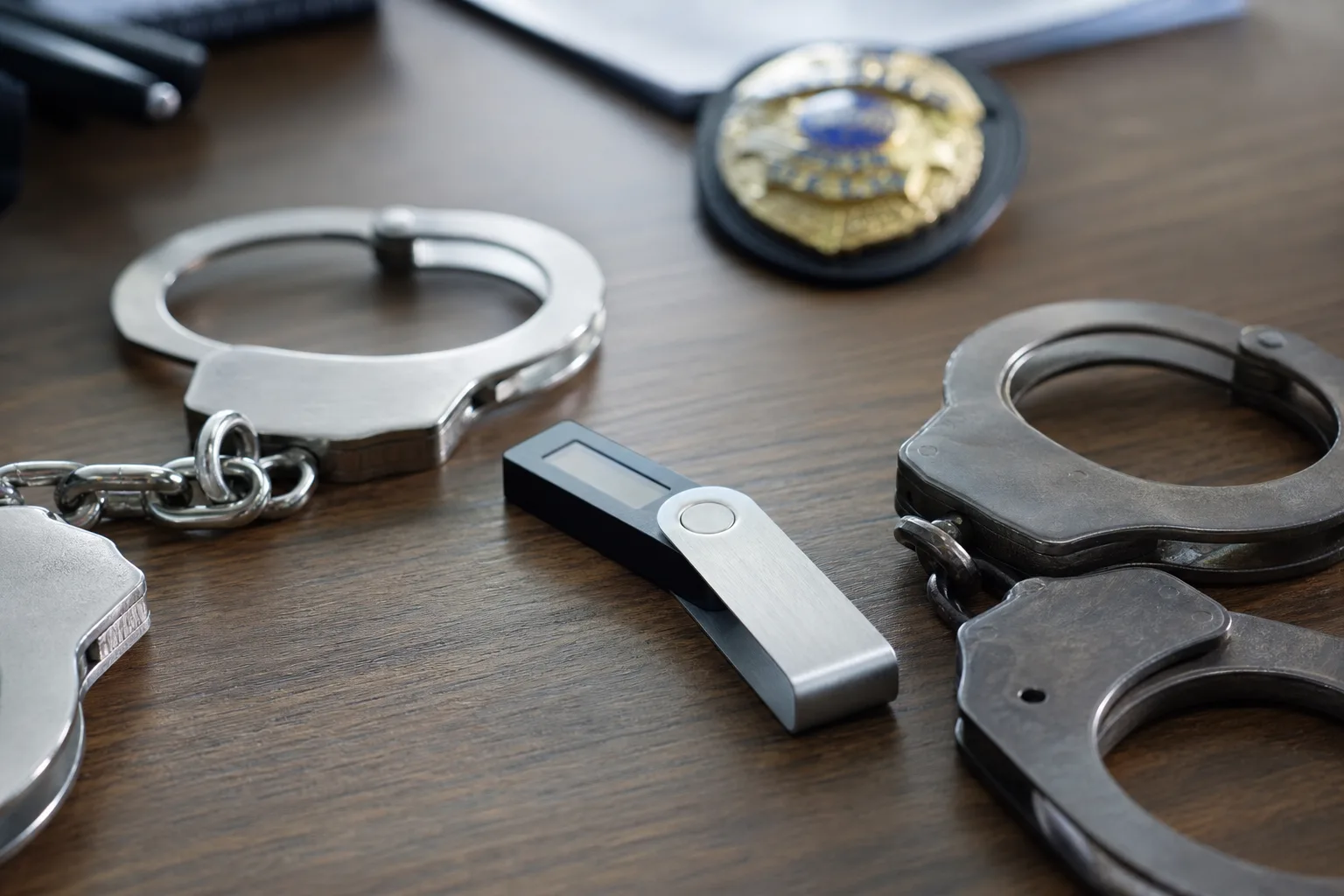
A violent crypto kidnapping that left a Minnesota family terrorised for nine hours has ended in guilty pleas — and it’s a case that illustrates exactly why physical attacks on cryptocurrency holders are becoming one of the most alarming trends in the digital asset space right now.
- The crypto kidnapping saw two Texas brothers force a Minnesota family at gunpoint to transfer $8 million in cryptocurrency.
- Isiah and Raymond Garcia pleaded guilty to robbery charges, facing up to 20 years in federal prison for the crypto kidnapping.
- Physical attacks on crypto holders surged 75% in 2025, with losses in early 2026 already exceeding $101 million globally.
- Authorities worldwide, including France’s interior ministry, are now rolling out specific countermeasures against crypto physical attacks.
Table of Contents
What Happened: A Crypto Kidnapping That Played Out Like a Heist Film
On September 19, 2025, two brothers from Texas — Isiah Angelo Garcia and Raymond Christian Garcia — drove to Minnesota with a plan that had nothing to do with DeFi protocols or phishing emails. Their approach was far more direct: show up armed, find someone who holds serious crypto wealth, and take it by force.
According to prosecutors, the brothers arrived at a family home and held the victim’s wife and son at gunpoint for approximately nine hours. The victim himself was transported roughly three hours away to a family cabin — and it was there, under armed coercion, that he was forced to open his online accounts and hardware wallets and transfer $8 million in cryptocurrency to his captors.
It’s a grim but increasingly familiar playbook. Crypto holdings are, by design, hard to freeze and easy to move once you have access. That makes the asset uniquely attractive to a certain kind of criminal who’s decided that the fastest path to someone’s Bitcoin isn’t a sophisticated exploit — it’s a rifle and a van. Every crypto kidnapping that succeeds on these terms reinforces that logic for the next would-be attacker.

How the Garcia Brothers Were Caught
The operation unravelled when the victim’s son managed to place an emergency call during the ordeal. Washington County sheriff’s deputies responded and subsequently recovered a rifle and a shotgun at the scene — firearms that, combined with surveillance footage and additional physical evidence, directly tied the brothers to the robbery. It’s a reminder that even crypto kidnapping crews, who may think they’re operating in the shadows of an untraceable asset class, still leave very traceable physical footprints.
Both brothers have now entered guilty pleas for Interference with Commerce by Robbery in the US District Court of Minnesota, facing a maximum of 20 years in federal prison each. They’ve also agreed to pay restitution of more than $8 million — though how much of that will actually be recoverable remains to be seen. Sentencing hearings haven’t been scheduled yet.
US Attorney Daniel Rosen didn’t mince words after the pleas were entered: “The guilty pleas entered today reflect our commitment to holding the defendants accountable for the choices they made.” It’s standard prosecutorial language, but in the context of crypto crime — where convictions have historically been harder to land — it carries some weight.
Crypto Kidnapping Is Now a Global Crisis
The Garcia case isn’t an outlier. Crypto kidnapping and physical robbery have escalated into a documented, measurable trend that security researchers and law enforcement agencies are now tracking seriously. In February, blockchain security firm CertiK published findings showing that crypto-related physical assaults and kidnappings had surged 75% in 2025 compared to the year prior. Even more alarming: estimated losses from such attacks in just the first four months of 2026 had already hit $101 million — and we’re still months away from a full-year tally.
That’s not a rounding error. That’s a structural shift in how criminals are approaching crypto theft. As on-chain security has improved and exchanges have tightened their KYC and fraud detection, the weak point has shifted to the human layer. And humans, unlike cold wallets, can be threatened.
The pattern isn’t limited to the United States. In May 2026, US authorities unsealed an indictment against three men accused of stealing at least $6.5 million in what prosecutors described as a “violent robbery spree targeting cryptocurrency owners.” That crew allegedly posed as delivery drivers to gain entry to residences before using violence to extract funds — a different method, same brutal logic. Each incident underscores that crypto kidnapping is no longer a rare aberration but a repeating pattern with identifiable tactics.

Governments Are Starting to Pay Attention
The scale of the problem has pushed it onto the radar of governments well beyond US federal prosecutors. At Paris Blockchain Week in April 2026, Jean-Didier Berger, France’s Minister Delegate to the Interior Minister, said his office had already implemented “preventive measures” against crypto wrench attacks — a term borrowed from the security community, referring to low-tech physical coercion (the wrench being metaphorical, though sometimes literal). France has even launched a dedicated prevention platform that has attracted thousands of sign-ups from crypto holders looking to understand their exposure.
The fact that a national government is now running a consumer awareness campaign about physical crypto theft tells you everything about where this trend is heading. This isn’t niche security-community discourse anymore — it’s public safety policy.
What This Means for Crypto Holders
The Garcia case is a particularly stark example of why operational security for crypto holders extends well beyond hardware wallets and two-factor authentication. If someone knows you hold significant digital assets — whether through social media, public blockchain data, or simply local gossip — you’re potentially a target for a crypto kidnapping that no Ledger firmware update can protect you from.
Security professionals have long advised high-net-worth crypto holders to avoid publicly disclosing their holdings, use multi-signature wallet setups that require more than one person or device to authorise transfers, and consider time-locked transactions that physically can’t be executed under duress. The idea of a “duress wallet” — a decoy account holding a small amount that can be surrendered without exposing the bulk of holdings — has also gained traction in security circles.

But individual precautions only go so far. The broader question is whether the crypto industry, which has spent years building increasingly sophisticated on-chain security, will now need to invest equally heavily in thinking about the physical world. Exchanges, custodians, and wallet providers generally don’t consider in-person coercion their problem. Cases like this suggest that’s a position that’s getting harder to justify — particularly as the asset class grows and the rewards for physical attacks keep climbing.
The guilty pleas from the Garcia brothers are a prosecutorial win, and they should serve as a deterrent signal. But with attack rates up 75% year-over-year and nine-figure losses already logged in 2026, the message from the data is that deterrence alone isn’t working. Every unsolved crypto kidnapping emboldens the next crew. The industry and governments alike are going to have to get considerably more creative about what protecting crypto wealth actually looks like in the physical world.