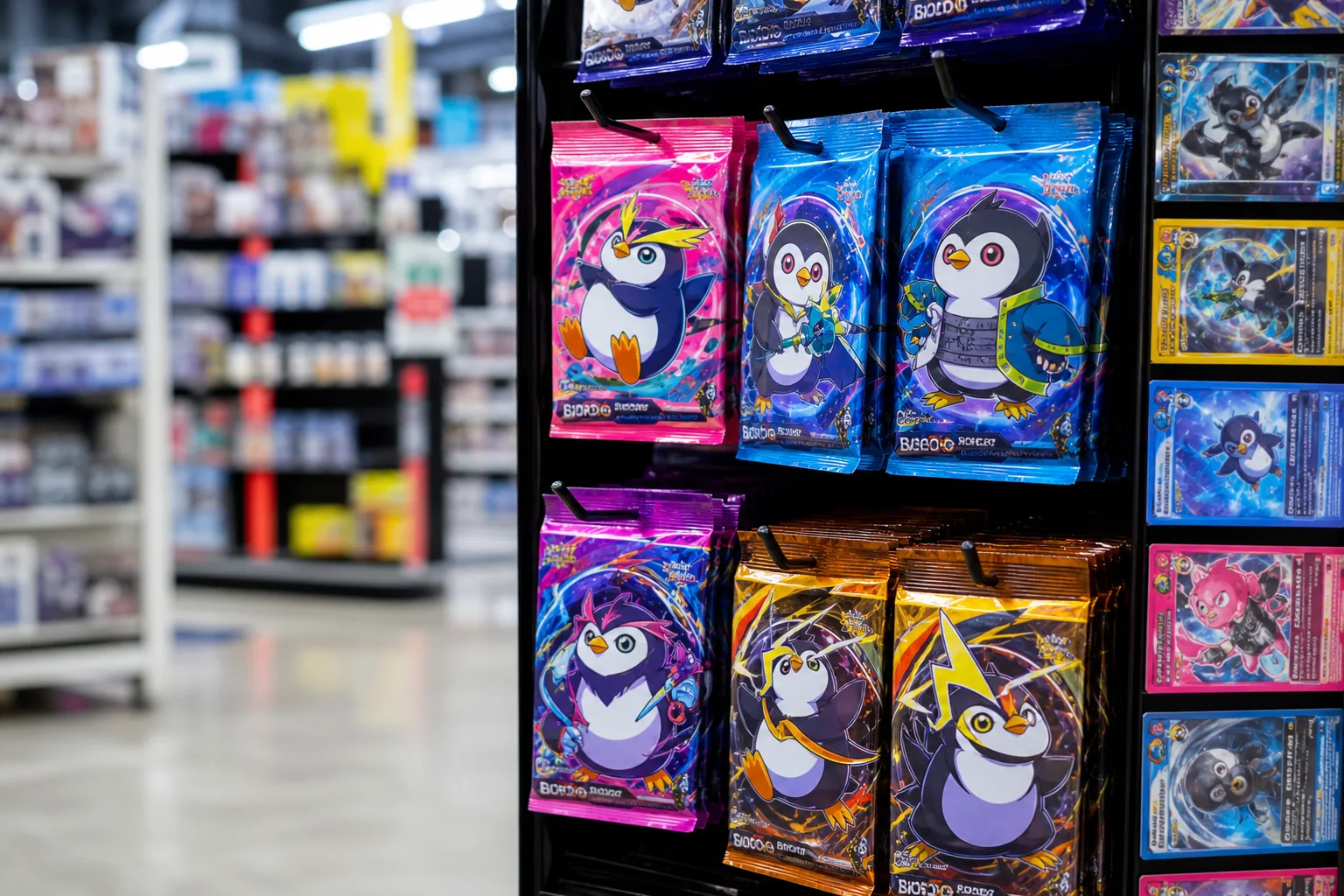
Pudgy Penguins trading cards are going mainstream — and they’re doing it the old-fashioned way: on physical shelves at one of America’s biggest retailers. The NFT-born brand announced a nationwide rollout of its Vibes Series 3 trading card set at Target stores across the US, pushing total cards in circulation past 15 million and signalling that the project’s ambitions extend well beyond anything you’d store in a crypto wallet.
- Pudgy Penguins trading cards are now available at Target stores nationwide, marking the brand’s biggest retail expansion to date.
- The Vibes Series 3 launch brings total Pudgy Penguins trading cards in circulation to 15 million across the US.
- Pudgy Penguins toys crossed 1 million units sold in 2024, showing the brand’s strong crossover appeal beyond crypto.
- The project is shutting down its Pudgy Party mobile game to redirect resources toward a browser-based title called Pudgy World.
Table of Contents
Pudgy Penguins Trading Cards Hit Target Shelves
Vibes Series 3 is the third installment of the trading card game developed by Pudgy Penguins in partnership with Orange Cap Games, and it’s the biggest one yet. The new set adds fresh gameplay mechanics, original artwork, and — in a notable cross-brand move — character appearances from the Moonbirds NFT collection. That last detail is worth paying attention to: it suggests Pudgy Penguins trading cards aren’t just chasing mainstream consumers, the brand is also trying to weave together threads from the broader NFT ecosystem into a product that can sit comfortably next to Pokémon and Magic: The Gathering cards on a big-box retailer’s shelf.
The Target partnership represents a meaningful distribution leap. Getting physical product into a national chain with over 1,900 US locations isn’t just a marketing stunt — it’s a signal to the industry that the Pudgy Penguins brand has negotiated the credibility gap that trips up most NFT projects the moment they try to step outside crypto Twitter.
From Ethereum to Walmart — The Brand-Building Playbook
This Target launch doesn’t come out of nowhere. Pudgy Penguins has spent the better part of three years methodically building a consumer brand around what started as a collection of 8,888 cartoon penguins minted on Ethereum. The strategy has been unusually deliberate for a space known more for hype cycles than long-term planning.
The first major physical milestone came in 2023, when Pudgy Penguins plush toys entered more than 2,000 Walmart locations — a deal that raised eyebrows across the NFT industry precisely because it actually happened. By May 2024, CEO Luca Netz reported that over 1 million toys had sold in the preceding 12 months. That’s not a vanity metric. Shifting a million physical units through mainstream retail is something most consumer startups would be proud of, NFT pedigree or not.
What makes the model particularly interesting is how it loops back to NFT holders. Pudgy Penguins runs a licensing structure that allocates 5% of net revenue from physical products to the holders of whichever individual penguin is featured. It’s a rare attempt to make NFT ownership feel financially tangible beyond floor-price speculation — and it’s the kind of structural detail that tends to get glossed over in coverage focused on the retail headlines. The same ethos carries over to Pudgy Penguins trading cards, where the collectible format gives holders yet another touchpoint with the brand.

Gaming Bets: What’s Working and What Isn’t
The brand’s gaming push has been more turbulent. In 2025, Pudgy Penguins launched Pengu Clash, a skill-based game on The Open Network (TON), positioning it as a way to bring the penguin IP to audiences who might never buy an NFT. Netz framed gaming explicitly as a funnel — a vehicle for IP exposure rather than a crypto-native product.
Then came Pudgy Party, a mobile game released in August 2025. Downloads crossed the 1 million mark, which sounds impressive, but the project just announced it’s pulling the plug on further development. Instead, it’s pivoting resources to Pudgy World, a browser-based game. That’s a notable strategic retreat. Mobile gaming is a brutally competitive market, and a million downloads doesn’t necessarily translate to the sustained engagement that justifies ongoing development costs. Browser-based gaming, by contrast, lowers the friction of entry — no app store, no download — which might suit an audience the brand is still trying to recruit.
Whether Pudgy World can hold attention in a way Pudgy Party apparently couldn’t remains an open question. But the willingness to cut losses and redirect is a more mature move than most crypto projects manage.

Where Pudgy Penguins Sits in the NFT Market
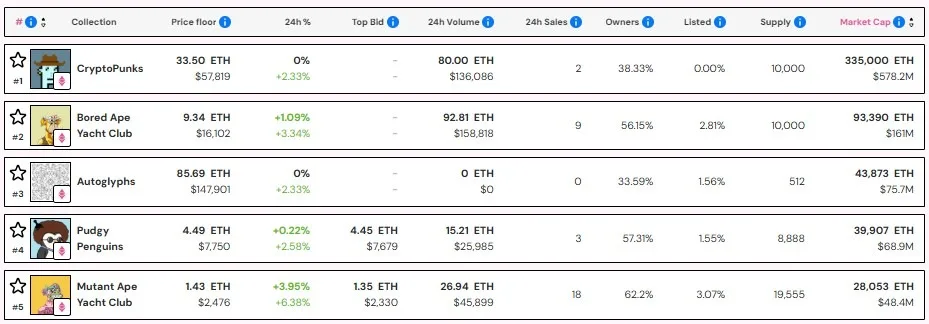
According to data from NFT Price Floor, Pudgy Penguins is currently the fourth-largest NFT collection by market capitalization. That puts it in rare company — trailing only a handful of collections that have similarly defined the cultural peaks of the NFT era. But market cap rankings tell you about collector sentiment, not brand durability. What Pudgy Penguins is building is something harder to price: a consumer entertainment franchise that can outlive the crypto market cycle it was born in.
That’s the real bet here. NFT projects have tried physical retail before and mostly failed — either because the product quality wasn’t there, the retail relationships fell apart, or the crypto narrative spooked mainstream buyers. Pudgy Penguins trading cards at Target represent a brand that has, at least so far, avoided all three of those traps. The penguins don’t lean into crypto identity at the point of sale. They’re positioned as toys and collectibles first, with the blockchain layer optional background information for buyers who want to dig deeper.
The Bigger Picture for NFT-Born Brands
The Pudgy Penguins trading cards story is also a case study for the rest of the NFT space — and the lesson isn’t subtle. Projects that treated NFTs as the product are largely gone. Projects that treated NFTs as the origin story of a broader brand are the ones still standing. It’s the difference between selling digital certificates of authenticity and building something that a kid might actually want for their birthday. Pudgy Penguins trading cards are a clear expression of that philosophy: a collectible product accessible to anyone, no wallet required.

Luca Netz and his team have consistently chosen distribution over exclusivity, which runs counter to the scarcity logic that drives most NFT projects. Millions of Pudgy Penguins trading cards in Target doesn’t make the original NFTs rarer — but it does make the brand more familiar to people who’ve never heard of Ethereum. That familiarity is what funds the next phase. If Pudgy World catches on, if the trading card game develops a real competitive community, if licensing deals keep expanding — the penguin IP could start to look less like a crypto artifact and more like a legitimate entertainment property. Whether that journey ends with a Netflix deal or a quiet wind-down is anyone’s guess, but the Target shelves are a stronger foundation than most NFT projects have ever built.