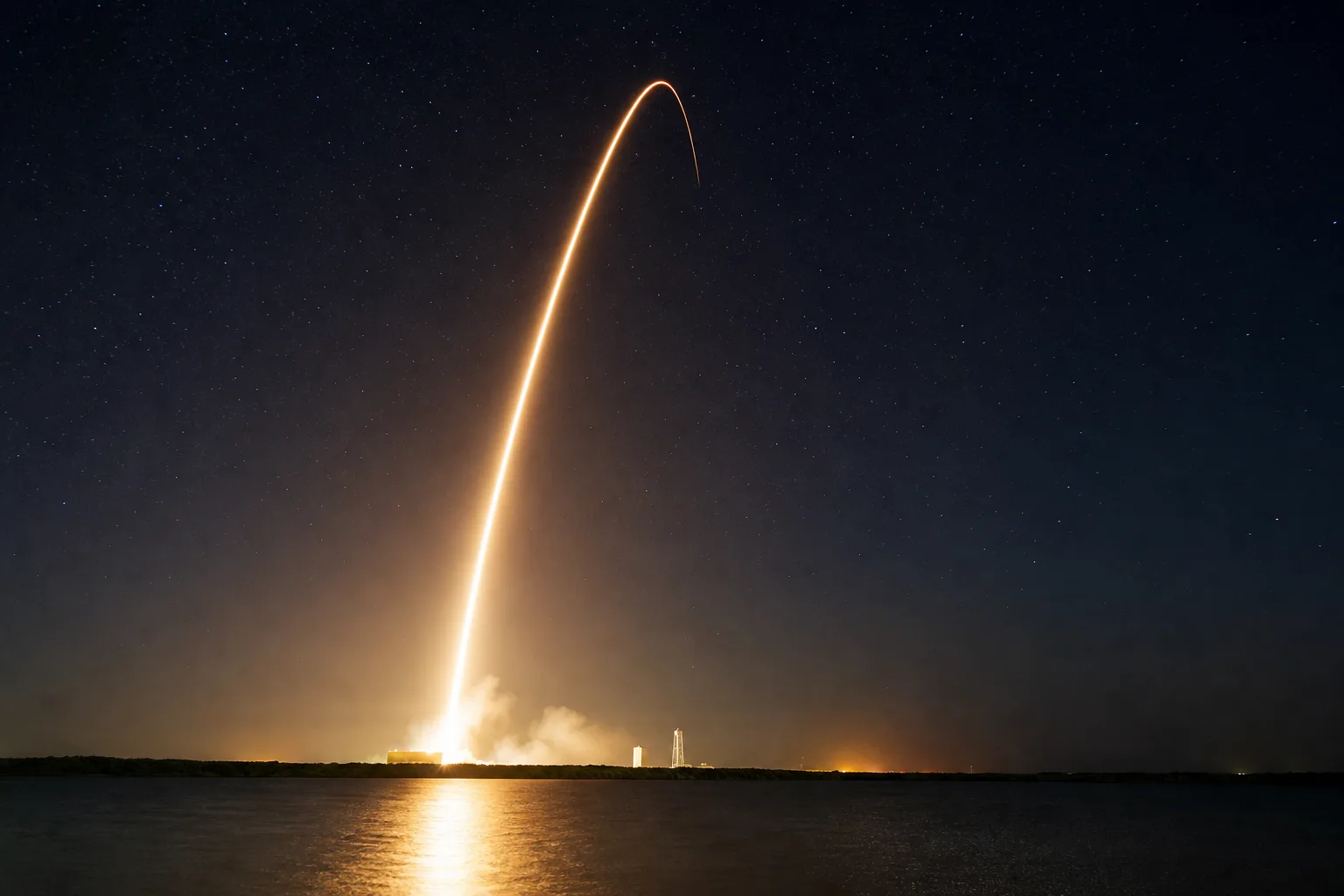
SpaceX executed another Starlink satellite launch on Sunday, June 21, lifting 24 new spacecraft into low Earth orbit from California and pushing its active constellation past a notable milestone. It was routine in execution — and that’s precisely the point.
- SpaceX’s latest Starlink satellite launch added 24 satellites, bringing the active constellation to more than 10,600 in orbit.
- The Starlink satellite launch marked Booster 1063’s 33rd flight, just two short of the current Falcon 9 reuse record of 35.
- Sunday’s mission was SpaceX’s 72nd Falcon 9 flight of 2025, out of a total program history of 655 launches.
- The Starlink network now covers worldwide internet access, in-flight Wi-Fi, and direct-to-cell service for select carriers.
Table of Contents
The Launch: By the Numbers
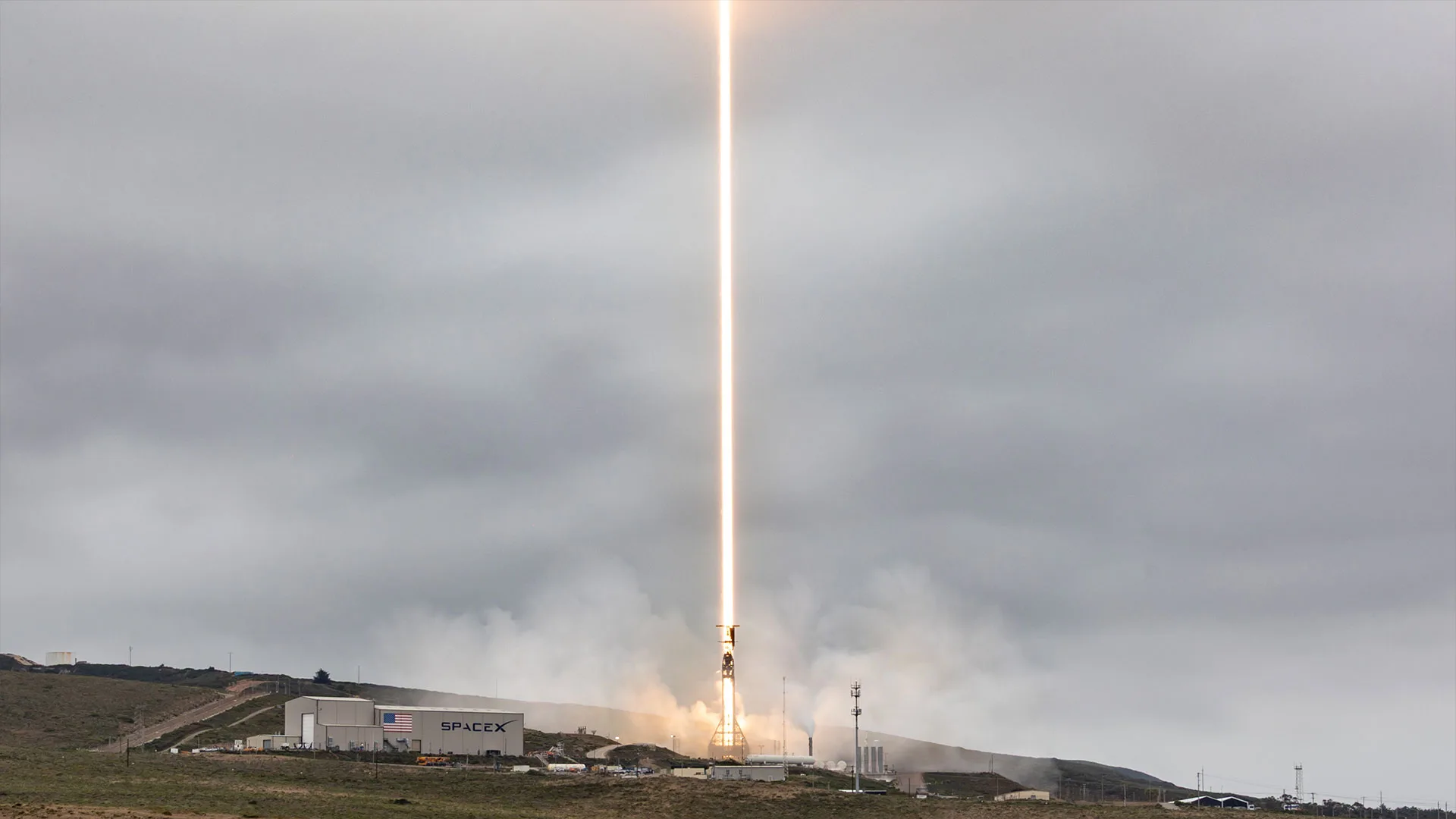
A Falcon 9 rocket carrying the batch designated Group 17-28 lifted off at 12:39 p.m. EDT from Space Launch Complex 4 East at Vandenberg Space Force Base. Deployment was confirmed roughly an hour after liftoff, a timeline that has become almost clockwork for SpaceX’s Starlink operations. The company confirmed all 24 satellites separated successfully and began raising their orbits toward the operational Starlink shell.
This Starlink satellite launch brings the total number of active Starlink satellites to more than 10,600, according to independent space-activity tracker Jonathan McDowell, whose orbital database is widely used as a reference point by journalists and researchers. That number doesn’t capture every satellite SpaceX has launched — many have deorbited or failed — but it reflects the scale of what is, without any real competition, the largest satellite constellation humanity has ever operated.
Booster 1063 Closes In on a Record
The first stage, Booster 1063, stuck the landing on the autonomous drone ship ‘Of Course I Still Love You,’ stationed in the Pacific Ocean — its 33rd successful recovery. That figure deserves a moment of appreciation. When SpaceX first demonstrated booster reuse back in 2017, critics questioned whether refurbishment costs would eat into any financial gains. Eight years later, a single booster is approaching 35 flights, which is the current program record.
Booster 1063 is now just two flights short of that mark. Whether SpaceX will deliberately aim it at a record-tying mission or simply route it wherever it’s needed operationally is unclear, but the company has never seemed particularly interested in milestone management for its own sake. The record will fall when it falls. What matters internally is the economics: every Starlink satellite launch that reuses a proven booster is cheaper than one that doesn’t, and that cost discipline is what lets SpaceX sustain a pace of 72 Falcon 9 missions in a single year.
The Bigger Picture: 10,600 Satellites and Counting
Crossing 10,600 active satellites isn’t a threshold SpaceX ever publicly targeted, but it reinforces a trajectory that’s hard to ignore. The company has received FCC authorization for tens of thousands of Starlink satellites, and it’s been pursuing additional approvals internationally. Each Starlink satellite launch adds incremental capacity, reduces latency by thickening the orbital shell, and expands geographic coverage — particularly at higher latitudes where terrestrial infrastructure is sparse.
The service itself has expanded well beyond its original residential broadband pitch. Starlink now underpins in-flight Wi-Fi on multiple airlines, powers maritime connectivity for vessels that previously had no good options, and is rolling out direct-to-cell capabilities with select carrier partners — a feature that would let standard smartphones connect to satellites without any hardware modification. That’s a fundamentally different value proposition than what was on offer in 2020 when the beta launched. The product has grown up considerably.

A Starlink Satellite Launch Every Few Days
Sunday’s mission was SpaceX’s 72nd Falcon 9 flight of 2025, out of a cumulative program total of 655 launches. To put that cadence in context: SpaceX is averaging roughly one Falcon 9 launch every two to three days across its entire manifest, which includes commercial payloads, NASA missions, national security satellites, and, most frequently, Starlink batches. No other launch provider on the planet comes close to that operational tempo.
The sheer volume of Starlink satellite launches does generate friction. Astronomers have been vocal — and increasingly organised — in pushing back against the brightness of satellites in low Earth orbit, which can trail across long-exposure images and interfere with ground-based observations. SpaceX has made efforts to reduce satellite reflectivity with visor shades and darkened coatings, but with a constellation now exceeding 10,600 active craft, the problem doesn’t shrink with each additional Starlink satellite launch. It compounds. That tension isn’t going away, and it’s worth watching how regulators in the US and internationally respond as constellations from competitors like Amazon’s Project Kuiper begin adding their own satellites.
What Comes Next for Starlink
SpaceX is also working on a second-generation Starlink architecture — larger, more capable satellites designed to be launched aboard Starship rather than Falcon 9. The company has already received partial FCC approval for the Gen 2 constellation, though the bulk of those approvals remain contingent on demonstrating Starship’s operational reliability. Until Starship reaches a mature launch cadence, Falcon 9 will continue carrying the load, and Starlink satellite launches on the workhorse rocket will keep coming at a pace that would have seemed implausible a decade ago.
With competitors still years behind in constellation size, and SpaceX’s launch infrastructure already operating at industrial scale, the gap between Starlink and everyone else is more likely to widen before it narrows. Each launch is one more data point in an already overwhelming trend.