

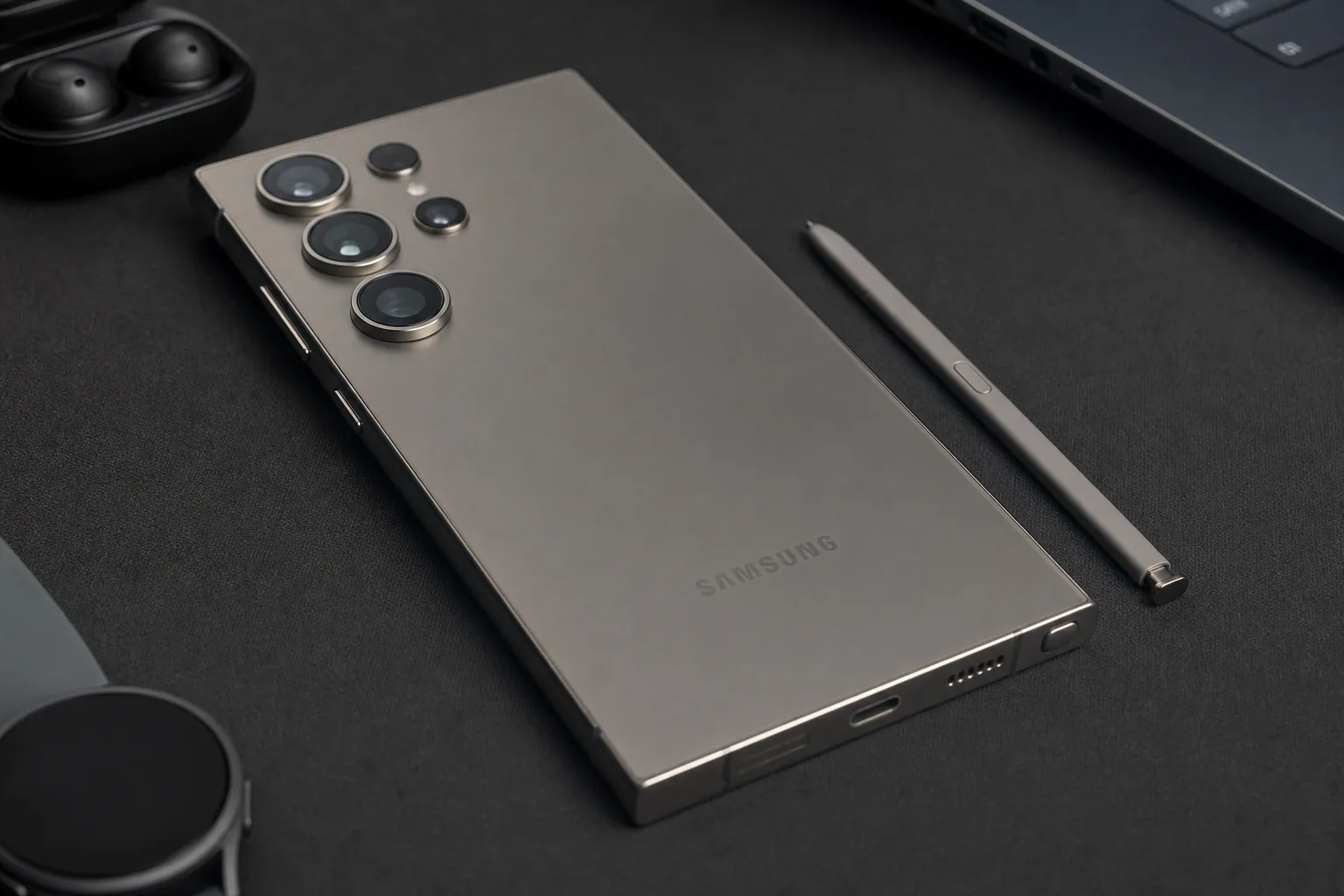
Two years is practically ancient in the smartphone world. Chipmakers, camera engineers, and software teams crank out new generations every twelve months, and the pressure to upgrade is relentless. Yet here we are in mid-2026, and the Samsung Galaxy S24 Ultra is holding its ground with a confidence that borders on stubborn. Pick one up today and it doesn’t feel like a relic — it feels like a phone someone released six months ago.
- The Samsung Galaxy S24 Ultra matches or beats the Pixel 10 Pro XL in CPU benchmarks and battery life tests in 2026.
- Two years on, the Samsung Galaxy S24 Ultra still feels fast and responsive, thanks to the Snapdragon 8 Gen 3 chipset.
- One UI 8.5 based on Android 16 has refreshed the software experience significantly, adding smoother multitasking animations.
- Persistent shutter lag and slow low-light shutter speed remain the S24 Ultra’s most frustrating and unresolved weaknesses.
Table of Contents
A Build Quality That Earns the Samsung Galaxy S24 Ultra Its Reputation
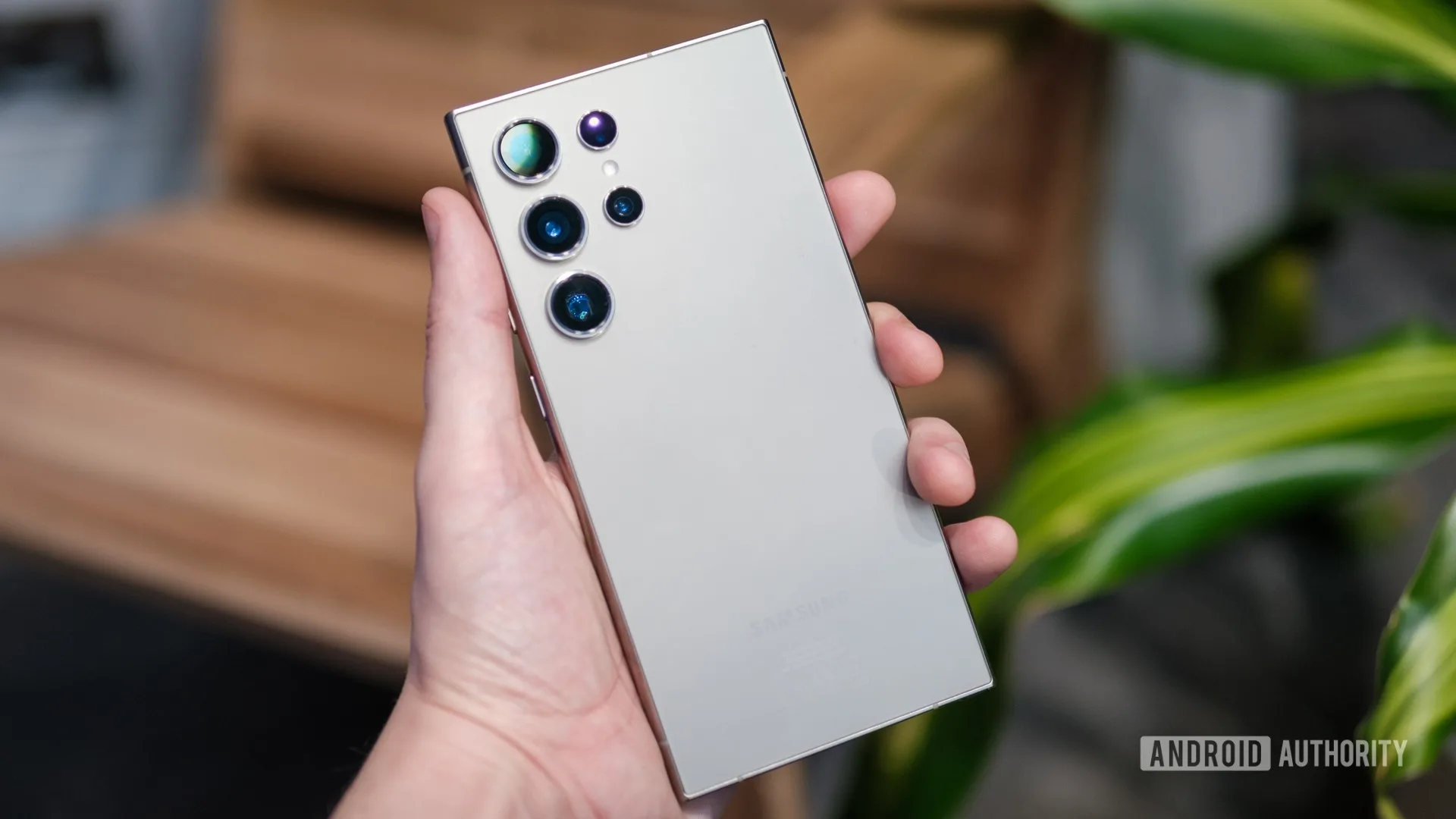
There’s no getting around the fact that the S24 Ultra is a large, heavy, square-cornered slab. Nobody’s going to mistake it for a pocketable device, and day-to-day, all that heft can feel like a commitment. But carry it for a week and you start to understand what Samsung was going for. The Samsung Galaxy S24 Ultra feels serious. It’s the kind of device that radiates substance in a way that thinner, lighter competitors simply can’t replicate.
The Gorilla Armor glass deserves specific credit here. After two-plus years of real-world use — including, apparently, a full tumble down a flight of stairs onto a hard floor — the display on review units has emerged without a scratch or crack. That’s not a marketing talking point; it’s the kind of durability that most phones, including many newer ones, can’t match. The fact that the Samsung Galaxy S24 Ultra still looks pristine under those conditions says something concrete about how Samsung engineered the outer shell.
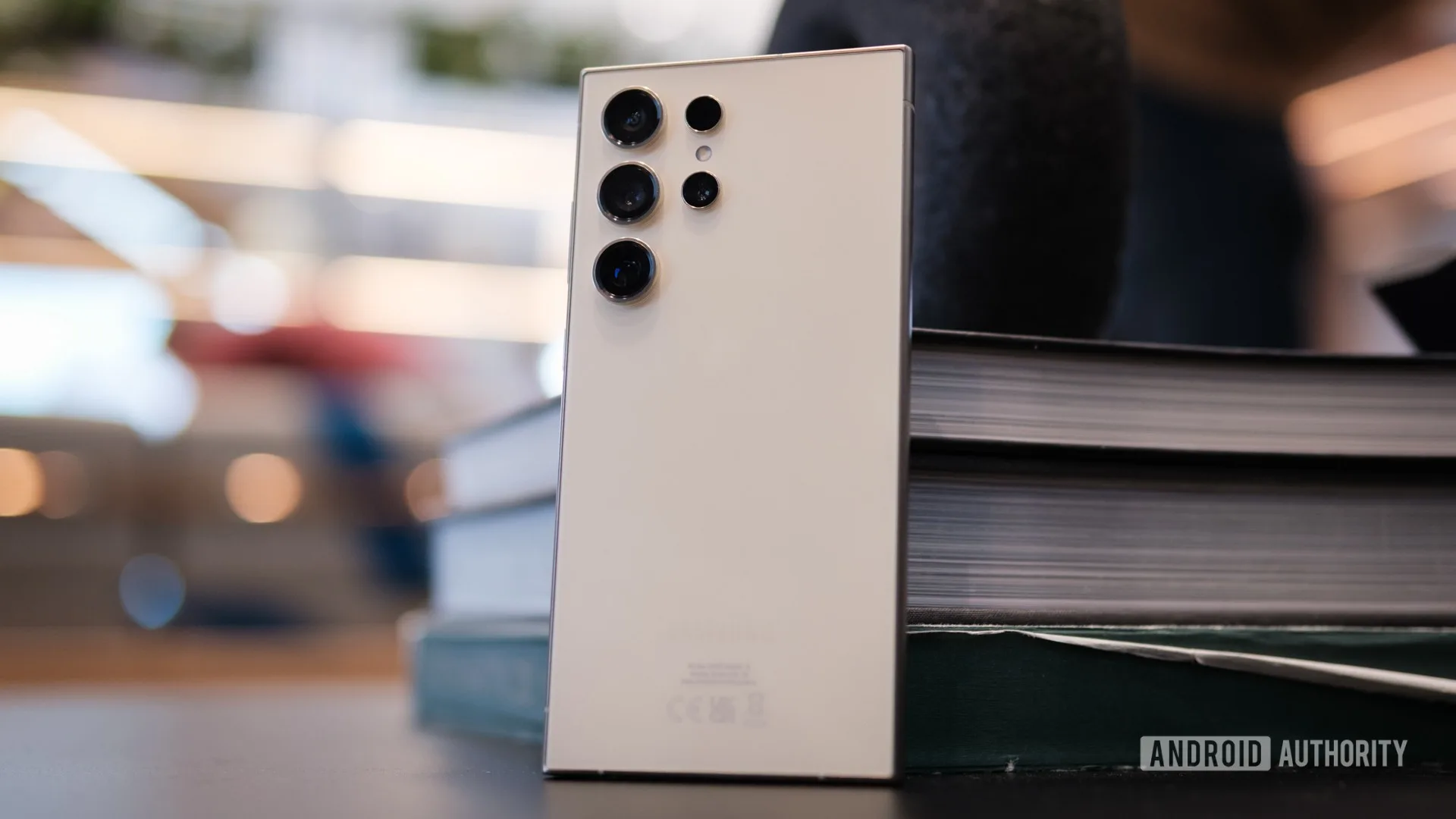
The display itself remains genuinely excellent. At 2,400 nits peak brightness, it’s technically behind the Pixel 10 Pro XL’s 3,300 nits, but in practical outdoor conditions, the gap is largely irrelevant. And context matters here: the Galaxy S26 Ultra has attracted criticism for display inconsistencies since launch, which makes the S24 Ultra’s screen look even more dependable by comparison. It’s a strange position to be in — where a two-year-old phone’s display is arguably the safer choice over its own successor.
Samsung Galaxy S24 Ultra Performance: How Does Snapdragon 8 Gen 3 Hold Up?
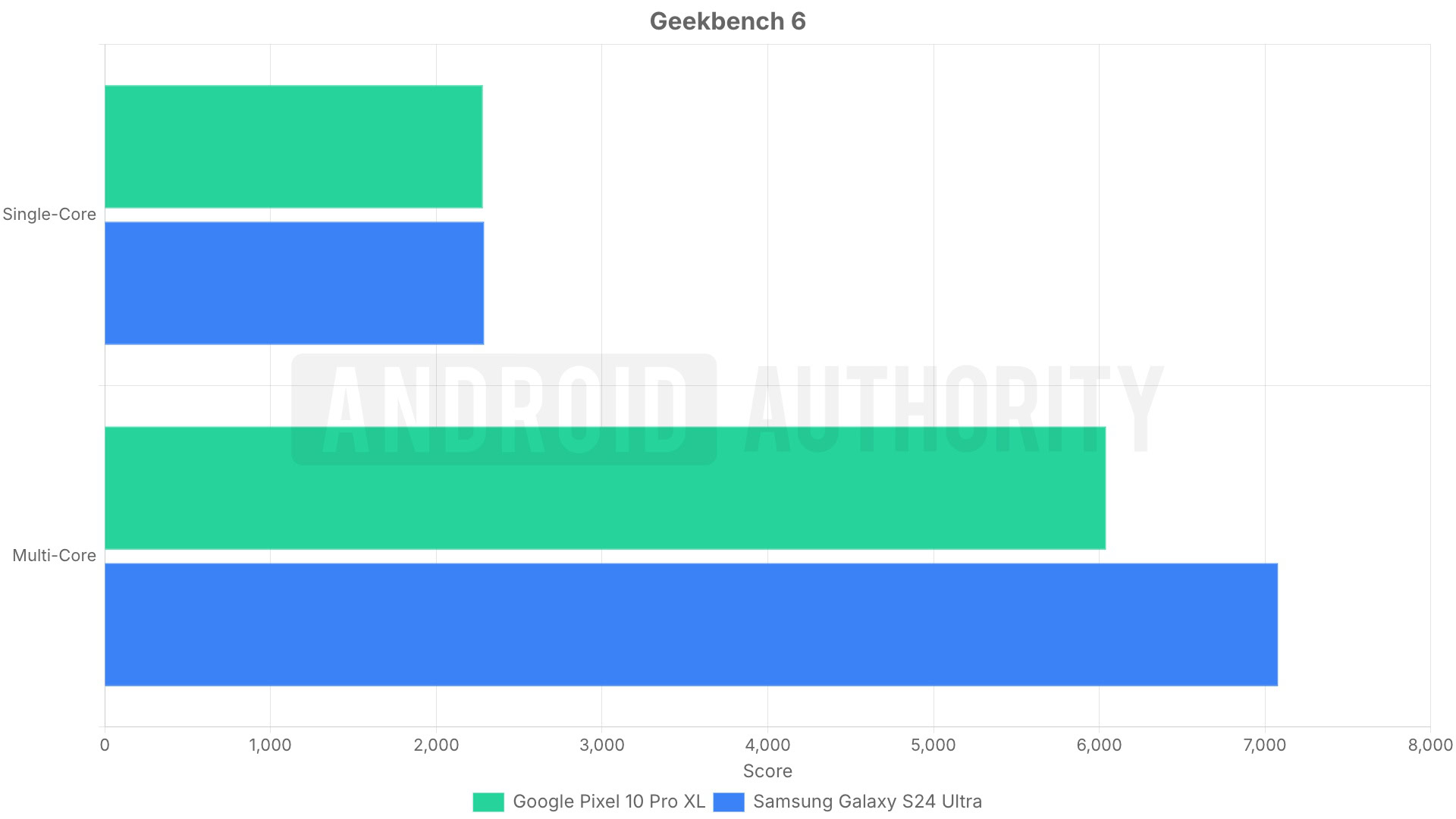
The Snapdragon 8 Gen 3 inside the Samsung Galaxy S24 Ultra is now two chip generations behind Qualcomm’s current lineup, which on paper should translate into a noticeable performance gap. In practice? Not quite. Running the S24 Ultra through Geekbench 6 and PCMark benchmarks alongside the Pixel 10 Pro XL — which runs Google’s Tensor G5 — tells a story that’s more complicated than the spec sheets suggest.
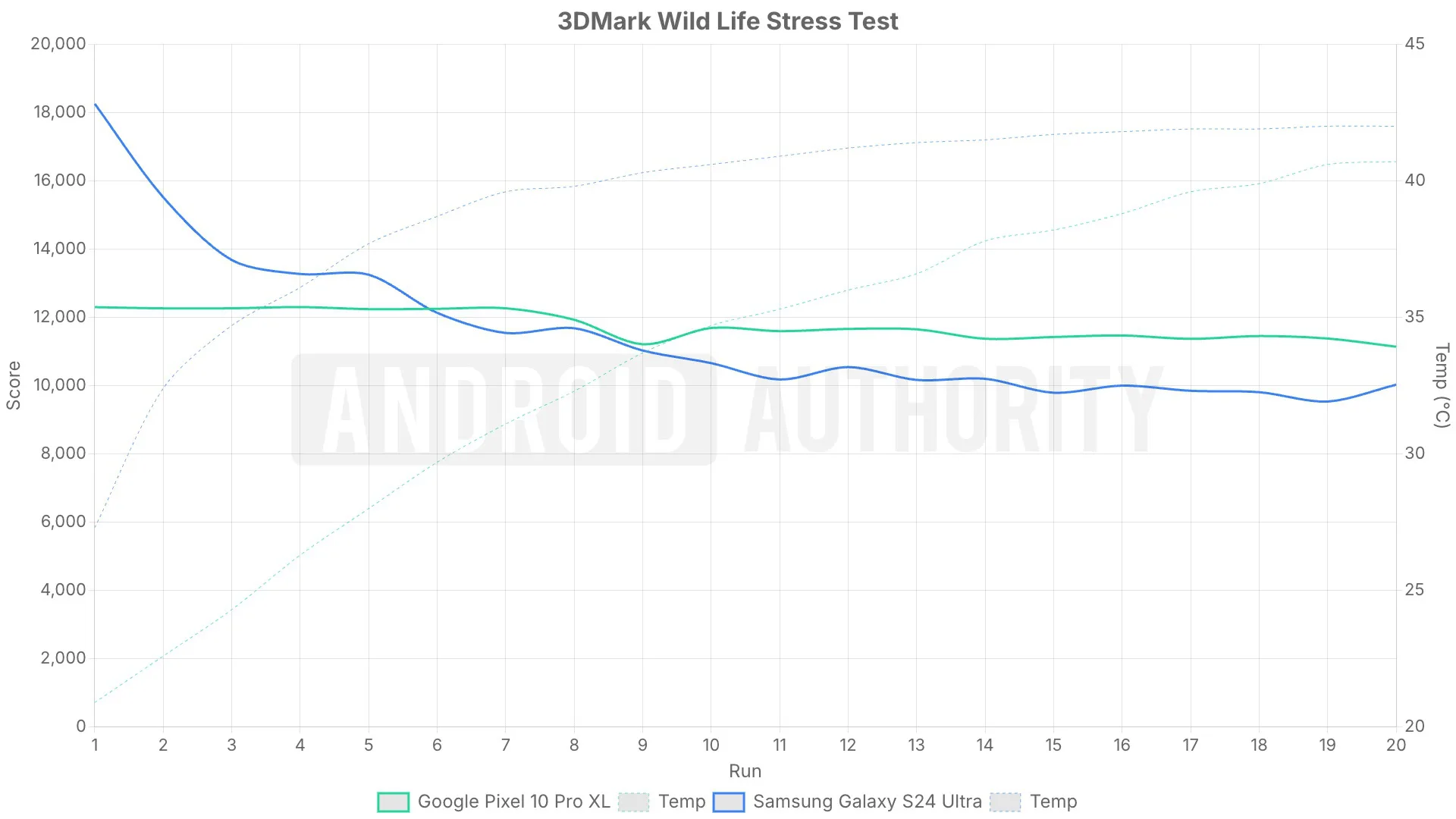
On single-core CPU tasks, the Snapdragon 8 Gen 3 goes essentially toe-to-toe with Tensor G5. On multi-core workloads and productivity-heavy processing, it actually pulls ahead. That’s a remarkable result for a chip that’s supposed to be obsolete. GPU performance follows a similar pattern: the Samsung Galaxy S24 Ultra opens with a higher score in stress tests, dips a little under sustained load, but stays within a tight margin of the Pixel — both in score and thermals.
The real-world translation of those numbers is what matters most, though. Apps open fast. Gestures are instant. Multitasking — especially after the One UI 8.5 update — feels as fluid as anything on a 2026 device. If you handed this phone to someone who’d never seen it before and told them it launched in January 2024, they probably wouldn’t believe you.
Battery Life and Charging Still Competitive in the US Market
The 5,000mAh cell in the Samsung Galaxy S24 Ultra isn’t the biggest battery in the room anymore — silicon-carbon chemistry has allowed rivals like Xiaomi, HONOR, and OnePlus to pack significantly larger capacities into slimmer frames. But for a phone sold in the US market, where those competitors have limited reach, the S24 Ultra’s battery story is still strong.
Benchmark testing shows the S24 Ultra outlasting the Pixel 10 Pro XL on video playback by a notable margin. For video recording, camera use, web browsing, and video calls, the two phones are within margin-of-error territory of each other. When the battery is flat, 45W wired charging fills it back up in around 62 minutes — roughly 15 minutes faster than the Pixel, and it runs slightly cooler during the process. None of those numbers are going to make Xiaomi nervous, but they’re perfectly solid for the segment.
The Camera Problem Samsung Still Hasn’t Fixed
Here’s where things get genuinely frustrating. The Samsung Galaxy S24 Ultra has never been a bad camera phone — in good light, with a cooperative subject, it produces excellent images. But it’s carried two specific problems since launch, and two years of software updates haven’t resolved either of them.
The first is shutter lag. Press the capture button and the photo gets taken roughly half a second later than you’d expect. That half-second is everything when you’re shooting a candid moment, a child mid-laugh, or a pet that’s never still. You miss the shot consistently. The second problem is slow shutter speed in low light. Where phones like the Pixel use computational photography to freeze motion quickly even in dim conditions, Samsung tends to keep the shutter open longer — which means blur, and lots of it, the moment your subject moves even slightly.
Neither issue is subtle, and neither should still be present in a phone this expensive. Samsung has had multiple major software updates to address them. It hasn’t. That’s a legitimate criticism, and it’s worth being direct about it rather than burying it in qualifications.
One UI 8.5 Makes the S24 Ultra Feel Like a New Device
What Samsung has delivered well is long-term software support. The jump from One UI 6.1 — which shipped with the Samsung Galaxy S24 Ultra at launch — to One UI 8.5 on Android 16 is genuinely transformative in terms of feel. Animations are smoother, the system is more responsive, and multitasking on that large display has finally become something worth using rather than tolerating.
The 90:10 split-screen mode is a specific highlight. Instead of cramming two equal-sized app windows onto the screen, the new ratio gives most of the display real estate to one app while keeping the second accessible with a tap. On a phone with a screen this large, that’s the difference between a productivity tool and a gimmick. It took Samsung too long to get here, but it’s the right implementation.
Samsung committed to an extended period of OS and security updates for the S24 series, a policy that reframes the phone’s value proposition entirely. You’re not buying a two-year device — you’re buying something that should remain functional and patched for the better part of a decade. Other Android manufacturers are now reportedly feeling pressure to match that kind of long-term support commitment, and the two companies are now effectively setting a new floor for what long-term support looks like in the Android world. Every other Android manufacturer is going to feel pressure to follow.
The broader implication is one the industry is still wrestling with: if a phone from early 2024 can genuinely compete with devices launched in 2026, what does that mean for upgrade cycles? Consumers are already holding onto phones longer. The Samsung Galaxy S24 Ultra is a case study in why that trend is only going to accelerate — and why the pressure is mounting on Samsung, Google, and everyone else to make a truly compelling reason to upgrade every year.
Frequently Asked Questions
Is the Samsung Galaxy S24 Ultra still worth buying in 2026?
Yes, for most users. The Samsung Galaxy S24 Ultra still competes with flagship phones in benchmarks, battery life, and display quality. Its main weaknesses — shutter lag and slow low-light shutter speeds — remain, but the overall package has aged gracefully.
How does the Snapdragon 8 Gen 3 compare to Google’s Tensor G5 in 2026?
Benchmark tests show the Snapdragon 8 Gen 3 in the S24 Ultra matches the Tensor G5 on single-core CPU performance and edges ahead on multi-core tasks. GPU performance is initially higher on the S24 Ultra, though it dips slightly under sustained stress testing.
Does the Samsung Galaxy S24 Ultra get Android 16?
Yes. Samsung has updated the Galaxy S24 Ultra to One UI 8.5 based on Android 16, bringing smoother multitasking, refined animations, and improved split-screen functionality — all of which meaningfully refresh the user experience on the two-year-old hardware.
What are the biggest camera problems on the S24 Ultra in 2026?
The two main issues are shutter lag — the phone captures an image roughly half a second after you press the button — and a slow shutter speed in low light, which causes motion blur on pets, children, and anyone not standing still. Neither issue has been resolved through software updates.

