Six years is a long time in tech. Empires rise, pivot, collapse, and rebrand. So when Google finally drops a new smart speaker in 2025, people are paying attention — not just to the hardware, but to what it signals about where Google thinks the smart home is headed. The Google Home Speaker is that signal, and it costs $100. Whether it’s one worth reading is a more complicated question.
- The Google Home Speaker costs $100 and is Google’s first new smart speaker in six years, powered by Gemini AI.
- The Google Home Speaker processes voice commands noticeably faster than older Nest devices, but Gemini’s smarts still feel half-baked.
- Audio quality is decent for casual listening but can’t compete with similarly priced portable Bluetooth speakers like JBL’s $65 Grip.
- A hardwired, non-removable cable is a frustrating design choice that limits placement options and creates environmental concerns.
Table of Contents
Design That Actually Earns Its Place on Your Shelf
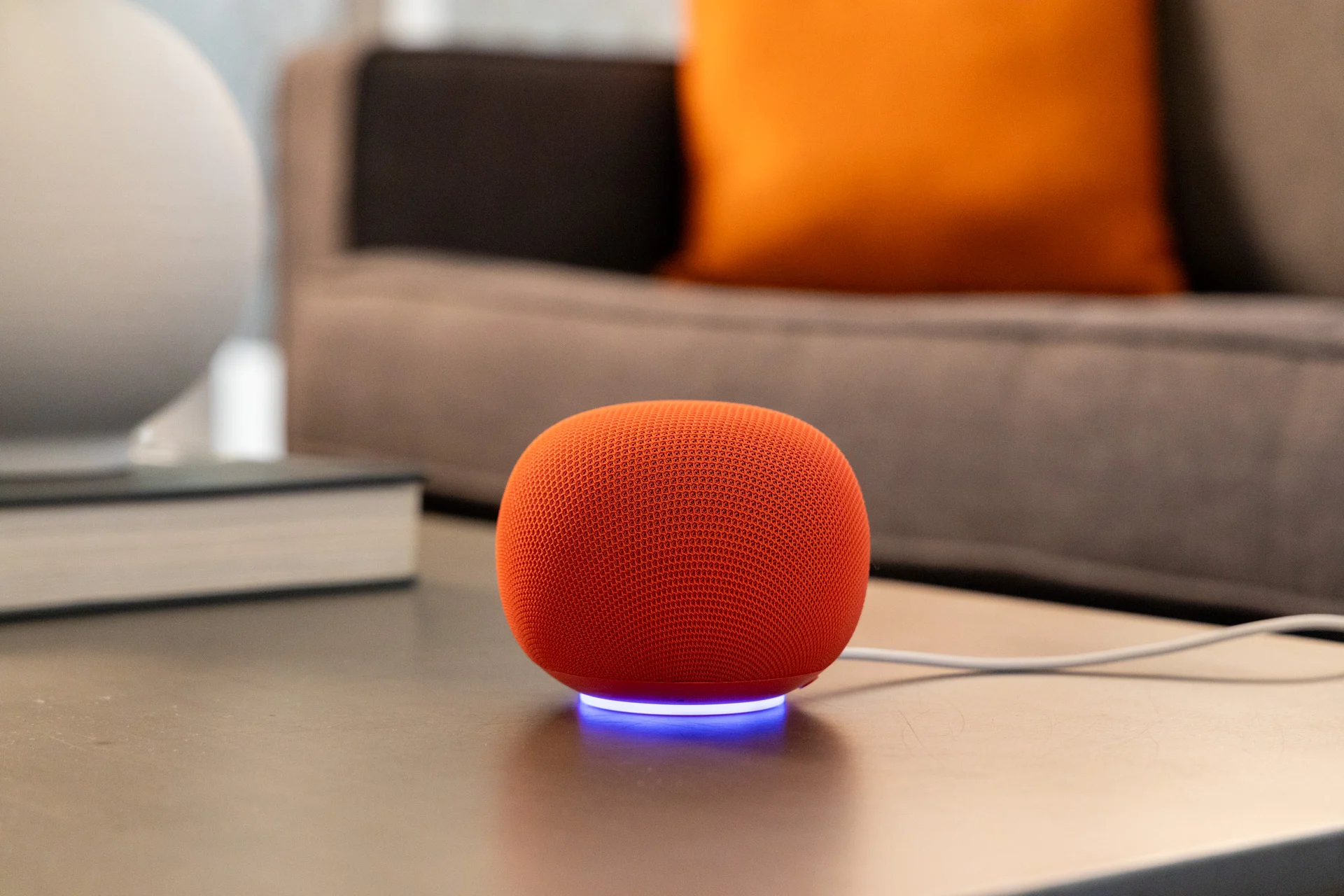
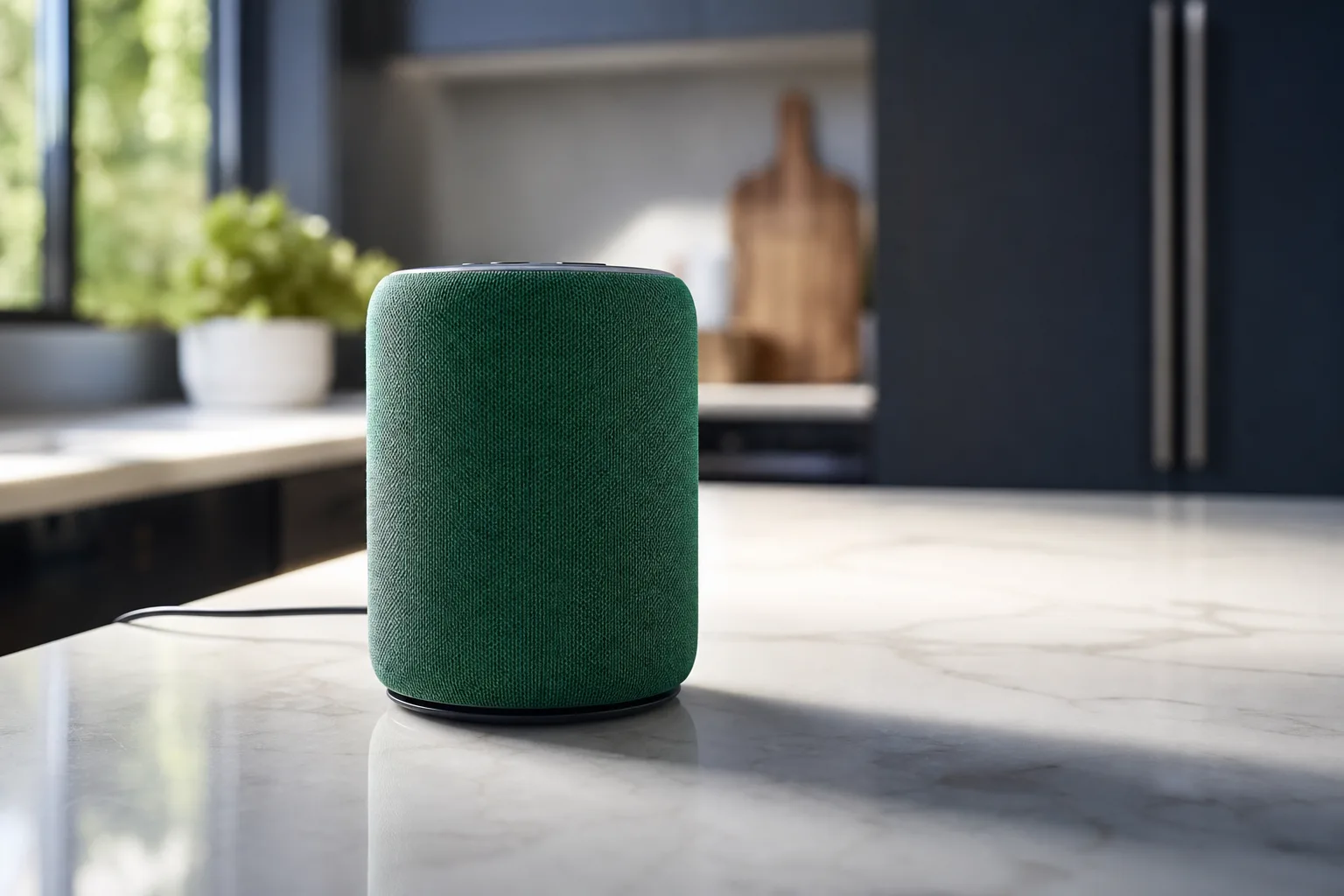
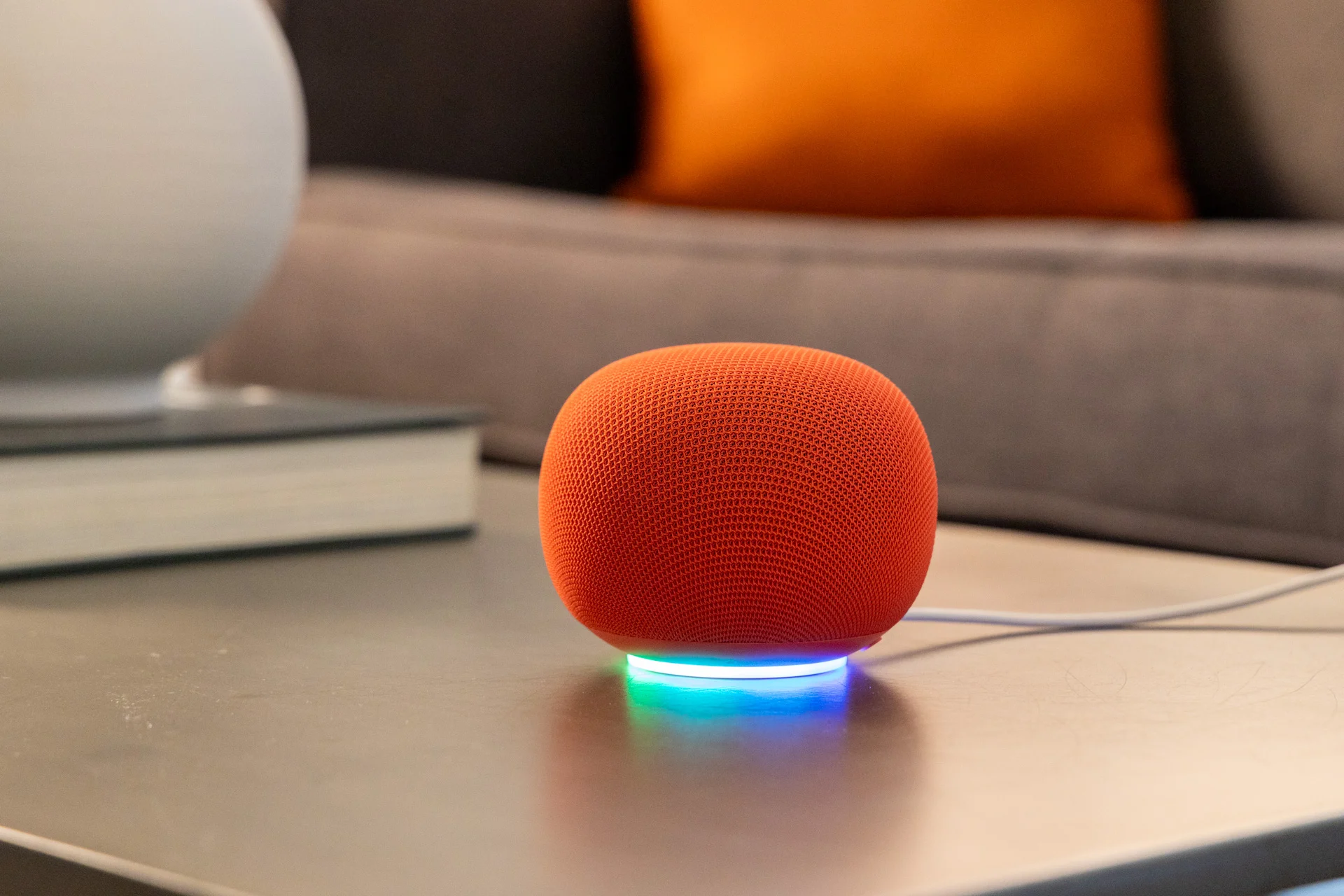
Start with the good news: the Google Home Speaker looks genuinely great. Google’s design team has stepped up here in ways that feel intentional rather than iterative. The new ‘berry’ colorway — essentially a deep red — and the ‘jade’ green option give this thing a personality that previous Google speakers always seemed to lack. For years, smart speakers have been beige cylinders or grey pucks. These are speakers you might actually want displayed.
The new 3D-knit mesh cover adds a tactile dimension, though it’s not universally appealing to the touch — more interesting than comfortable. The more compelling addition is the light ring running along the base. It glows purple during Gemini Live sessions, white for standard voice commands, and shifts to a yellowish hue when you manually mute the mic. It’s a small detail, but it solves a real usability problem: you always know whether the speaker is listening or not. That matters more than it used to, given how much these devices are doing in the background.
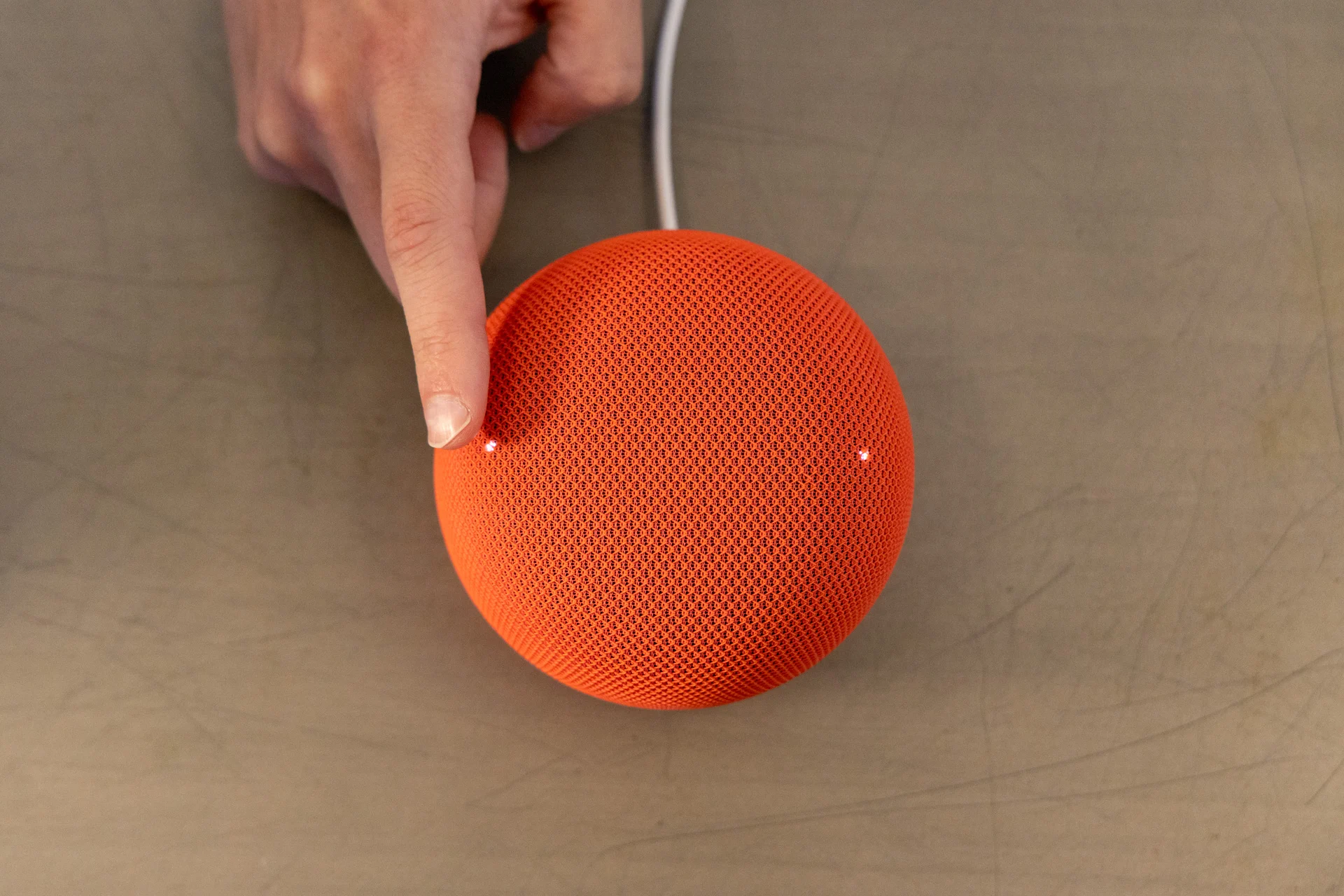
Tap controls on top carry over from previous generations and work reliably for volume and waking Gemini. No complaints there.
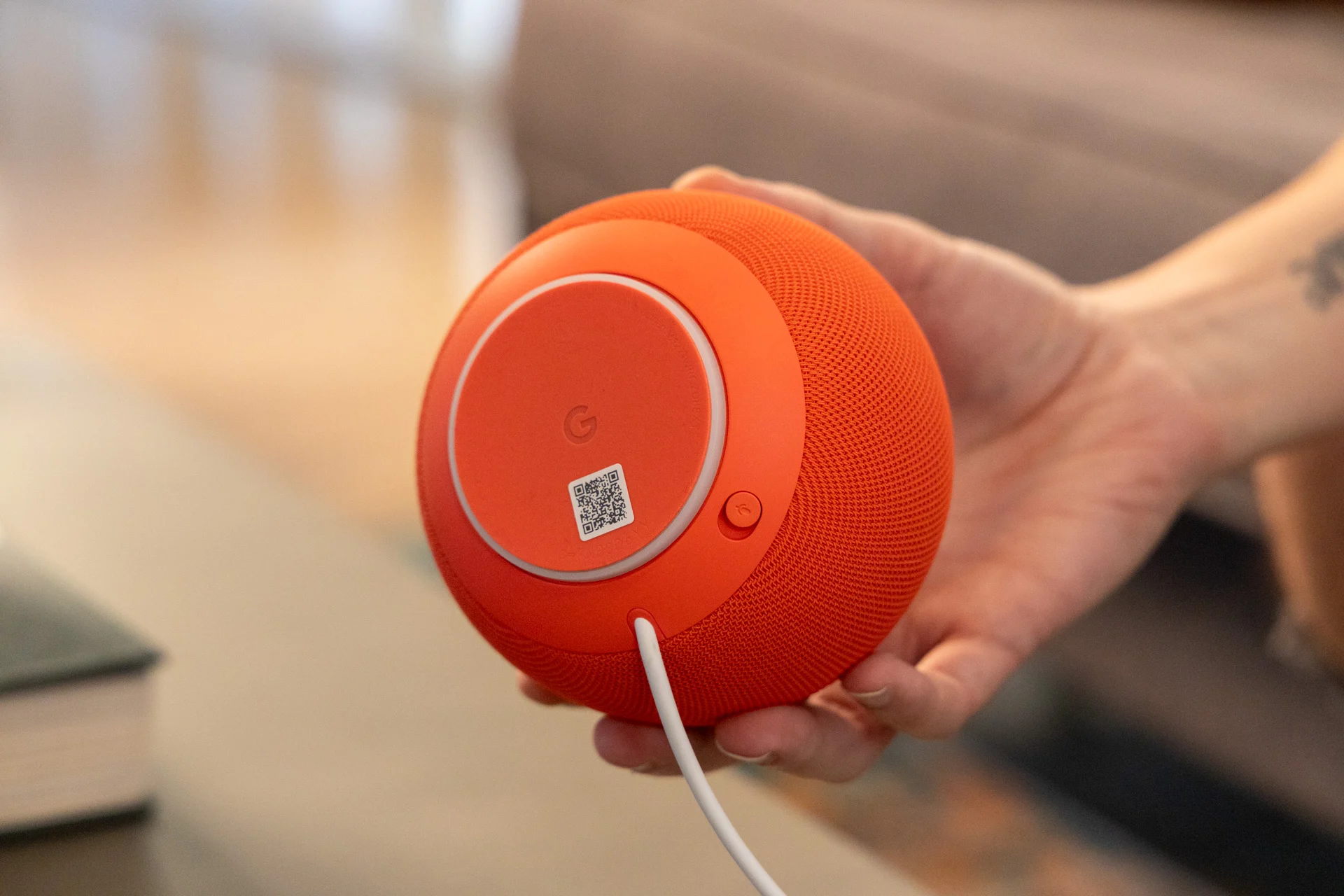
There is one hardware decision that’s hard to forgive, though. Unlike the Nest Audio and earlier Google smart speakers, the cable on the new Google Home Speaker is hardwired — permanently attached, non-removable. If it gets damaged, you’re stuck. If you need more reach, you’re out of luck. Apple’s HomePods have the same setup, which doesn’t make it a good idea so much as a shared bad habit among companies that really should know better. It’s inconvenient for consumers and needlessly wasteful for the planet.
Audio: Functional, Not Impressive
The Google Home Speaker isn’t going to displace your Sonos setup — and Google probably knows that. At $100, competing with the Sonos Play, Bose’s Lifestyle Ultra Speaker, or Amazon’s Echo Studio (all hovering around $300) was never really the goal. What’s more damning is that the audio doesn’t convincingly beat the $65 JBL Grip, a tiny Bluetooth speaker with no smart home pretensions whatsoever.
On mellow material — sparse acoustic guitar, low-key ambient tracks — the Google Home Speaker sounds reasonably pleasant. Push it toward anything with dynamic range or heavy low-end, and things fall apart at higher volumes. Mids and lows mush together, and the overall presentation lacks the separation you’d want for serious listening. It’s a notable step up from the aging Nest Mini, but that bar isn’t exactly high.
Stereo pairing — running two Google Home Speakers together — does open up the soundstage a bit, which helps in a mid-sized room. It won’t transform the audio experience, but if you’re committed to the Google ecosystem and genuinely want the speaker as your primary music source, two of them is the smarter way to go. You can also route a stereo pair through a Google TV Streamer for home theatre audio, though that configuration wasn’t available to test at review time.
The honest summary: this is a voice assistant device that happens to play music, not a music device that happens to have a voice assistant. Buy accordingly.
Google Home Speaker and the Gemini Gamble
The real story here isn’t the hardware — it’s Gemini. Google has rebuilt its smart speaker strategy around Gemini for Home, its AI assistant layer that replaces the long-running Google Assistant. This is the first device purpose-built for that transition, and it’s where Google is placing its biggest bet.
On raw performance, the Google Home Speaker is noticeably quicker than its predecessors. Wake word detection is reliable, command processing is fast, and you’re rarely left waiting for a response the way you were on older Nest hardware. For the basic stuff — timers, smart home controls, music playback — the experience is genuinely snappier.
But speed and intelligence aren’t the same thing. Gemini for Home has quirks that suggest the AI layer is still finding its footing. The most interesting — and unevenly executed — feature is Gemini Live, a dedicated mode that invites extended, free-form conversation rather than single-command interactions. In theory, this is exactly what smart speakers have needed for years: a way to actually talk to your home assistant rather than bark instructions at it. In practice, it’s hit-or-miss in ways that feel like a beta feature wearing a launch-day badge.
This tension — between the raw capability of what Gemini can do in a lab or on a phone, and what it actually does when embedded in a $100 speaker in your kitchen — is the central challenge Google hasn’t solved yet. Voice AI has been ‘almost there’ for the better part of a decade. Amazon’s Alexa spent years disappointing people who expected too much of it. Google Assistant had its moments and its maddening gaps. Gemini for Home is the third attempt at cracking this, and while it’s the best version yet, ‘best yet’ and ‘actually great’ aren’t interchangeable.
The Bigger Picture: Why This Moment Matters
Smart speakers had a genuine cultural moment around 2017 and 2018, when it seemed like every household was acquiring an Echo or a Google Home. That enthusiasm has cooled considerably. Market saturation, privacy concerns, and persistent disappointment with voice assistant reliability combined to make the category feel stagnant. Google’s decision to go six years between new speaker hardware is itself a kind of admission that the formula needed rethinking.
The pivot to Gemini is Google’s answer to that stagnation — an attempt to inject real language model capability into a product category that’s been running on increasingly dated AI foundations. It’s the right idea. The question is timing and execution, and right now both are a work in progress.
At $100, the Google Home Speaker sits in a competitive no-man’s-land: too expensive to be an impulse buy for casual listeners, not capable enough to satisfy audio enthusiasts, and relying on an AI platform that still needs time to mature. For Google’s existing smart home users — people already running Nest cameras, Nest thermostats, and Google TV devices — this makes sense as an upgrade, particularly if they’re still using first or second-generation hardware. For everyone else, it’s worth waiting to see whether a few software updates can close the gap between what Gemini for Home promises and what it delivers on any given Tuesday when you’re trying to dim the lights.
Google has the infrastructure, the AI research, and clearly the design talent to make this work. The Google Home Speaker is the foundation. Whether the building that goes up on it is worth living in depends almost entirely on what the Gemini team ships next.
Frequently Asked Questions
Is the Google Home Speaker worth buying in 2025?
The Google Home Speaker is worth considering if you’re already in the Google ecosystem and want faster Gemini-powered commands. But at $100, it faces stiff competition from more capable audio devices and cheaper Bluetooth speakers. Its AI smarts are still maturing, so early adopters should temper expectations.
Does the Google Home Speaker work with Google TV?
Yes — you can pair a stereo set of Google Home Speakers to a Google TV Streamer to play movie audio and other media through your television. This feature wasn’t fully tested in the review due to hardware availability.
What is Gemini Live on the Google Home Speaker?
Gemini Live is a dedicated conversational mode on the Google Home Speaker that taps the full power of Google’s Gemini AI for extended, back-and-forth dialogue. It’s distinct from the standard voice assistant mode, which uses only a lighter version of Gemini.
How does the Google Home Speaker compare to Amazon Echo Studio?
The Amazon Echo Studio is among the more premium smart speakers priced around $300, and the source notes it delivers richer audio than the $100 Google Home Speaker. The Google Home Speaker competes on price and Gemini AI integration rather than premium audio performance.