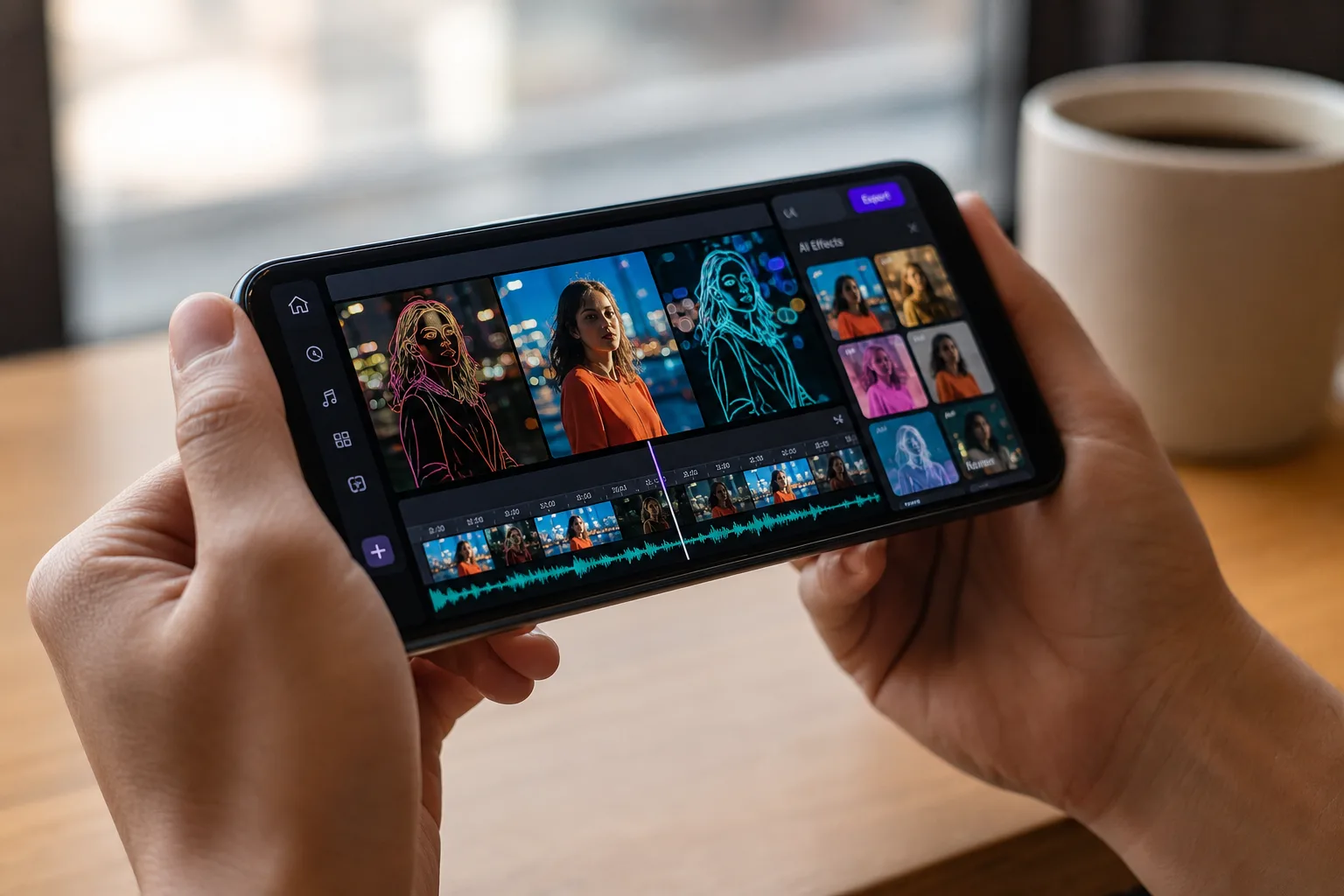
Google Photos Video Remix is officially rolling out, and it’s the natural next step in Google’s push to turn your camera roll into a canvas. Building on the image-focused Remix feature that debuted roughly a year ago, this new tool applies the same AI-powered style transformation logic to video — and it’s powered by Gemini Omni, Google’s most capable multimodal model to date.
- Google Photos Video Remix uses Gemini Omni to transform short clips into entirely new looks and styles.
- Google Photos Video Remix is available now for AI Plus, Pro, and Ultra subscribers in 14 countries.
- The tool is capped at 10-second clips, and generation can take up to two minutes per video.
- Free-tier access isn’t confirmed yet, but on-screen upgrade prompts suggest it could arrive eventually.
Table of Contents
What Google Photos Video Remix Actually Does
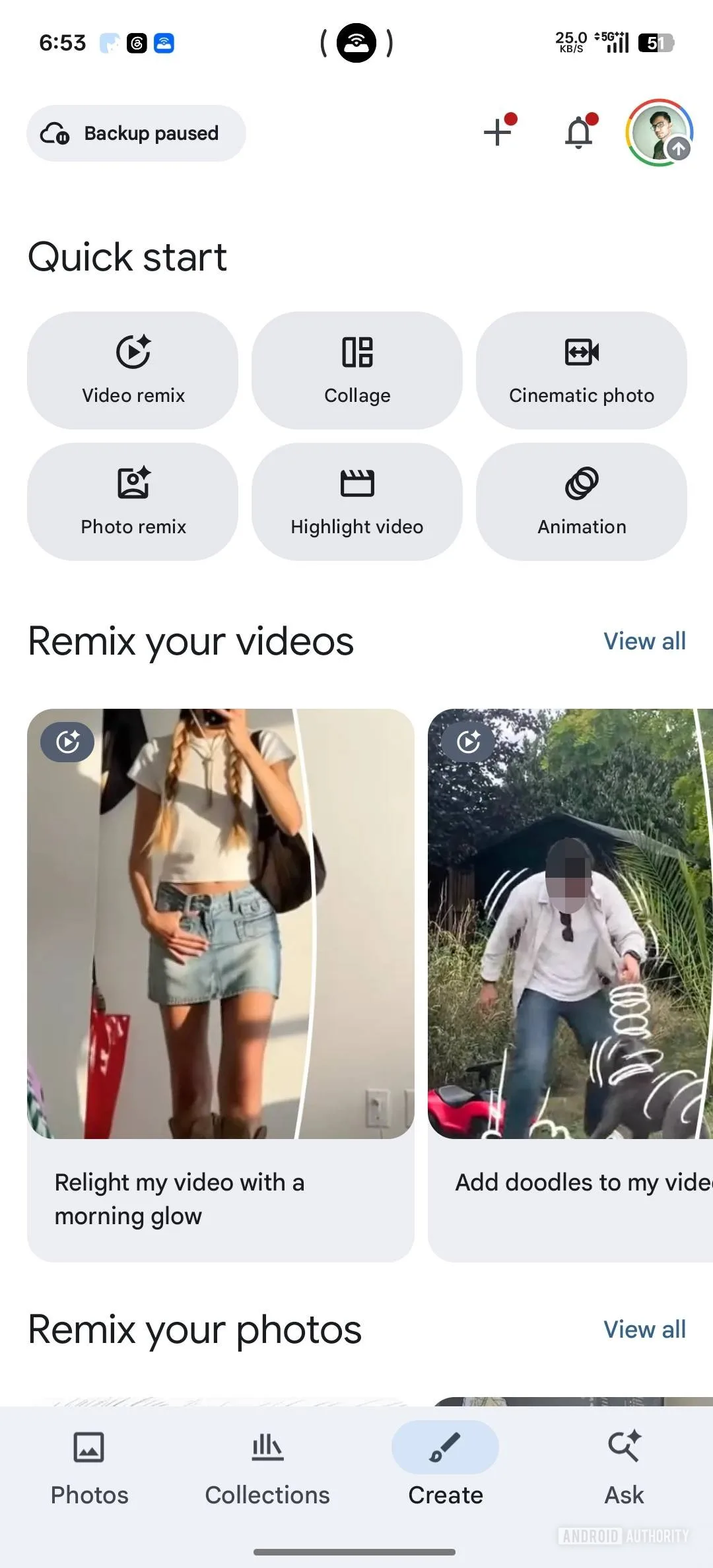
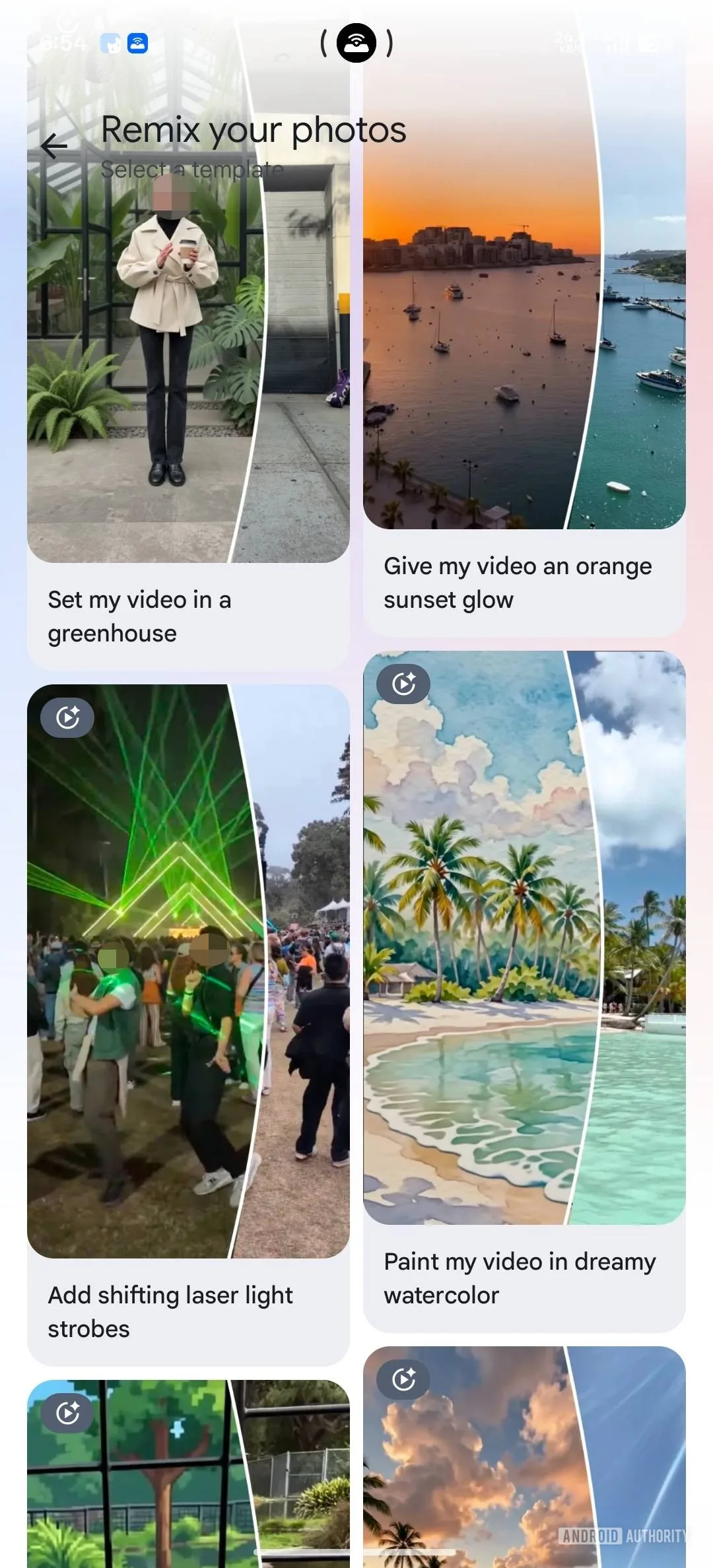
The pitch is straightforward: you hand the tool a short video clip, describe the look or feel you want, and Gemini Omni does the heavy lifting. Want dramatic, storm-lit cinematography? A hand-drawn animation aesthetic? Something that looks like it was shot on expired 35mm film? Google Photos Video Remix can take a crack at all of it. The tool lives inside the Create tab in the Photos app, and Google surfaces a set of style suggestions to help users get started — a smart move given that most people don’t instinctively know how to prompt a generative video model.
What’s interesting here isn’t just the feature itself — it’s how closely it mirrors the company’s existing workflow for still images. The original Remix tool trained users to think about their photos as starting points rather than finished products. Google is clearly trying to replicate that mindset shift for video. Whether it sticks depends entirely on output quality, which we’ll get a better sense of as more users get hands-on time with it.
The Limitations You Should Know About
There are real constraints here, and they matter. First, Google Photos Video Remix is capped at 10-second clips. If you’re working with a longer recording, you’ll need to manually select a 10-second segment — which is a bit clunky, but not surprising given how computationally demanding video generation is compared to image work. Even at 10 seconds, expect to wait. Google says generation can take up to a couple of minutes, which is about the same ballpark as other consumer-grade AI video tools currently on the market.
The 10-second ceiling is worth putting in context. Tools like OpenAI’s Sora can generate or transform clips of significantly longer duration, though they’re mostly aimed at creators and developers rather than casual smartphone users. Google’s constraint here is probably as much about managing server load and user expectations as it is about raw model capability. Rolling this out at scale to millions of Google Photos users is a fundamentally different engineering challenge than serving a power-user cohort.
Who Can Use It Right Now
At launch, Google Photos Video Remix is available to Google AI Plus, Pro, and Ultra subscribers — the paid tiers that have been the testing ground for Google’s more experimental AI features since the company restructured its consumer AI offerings earlier this year. Availability spans the US and 13 other countries, though Google hasn’t published a detailed timeline for broader rollout.
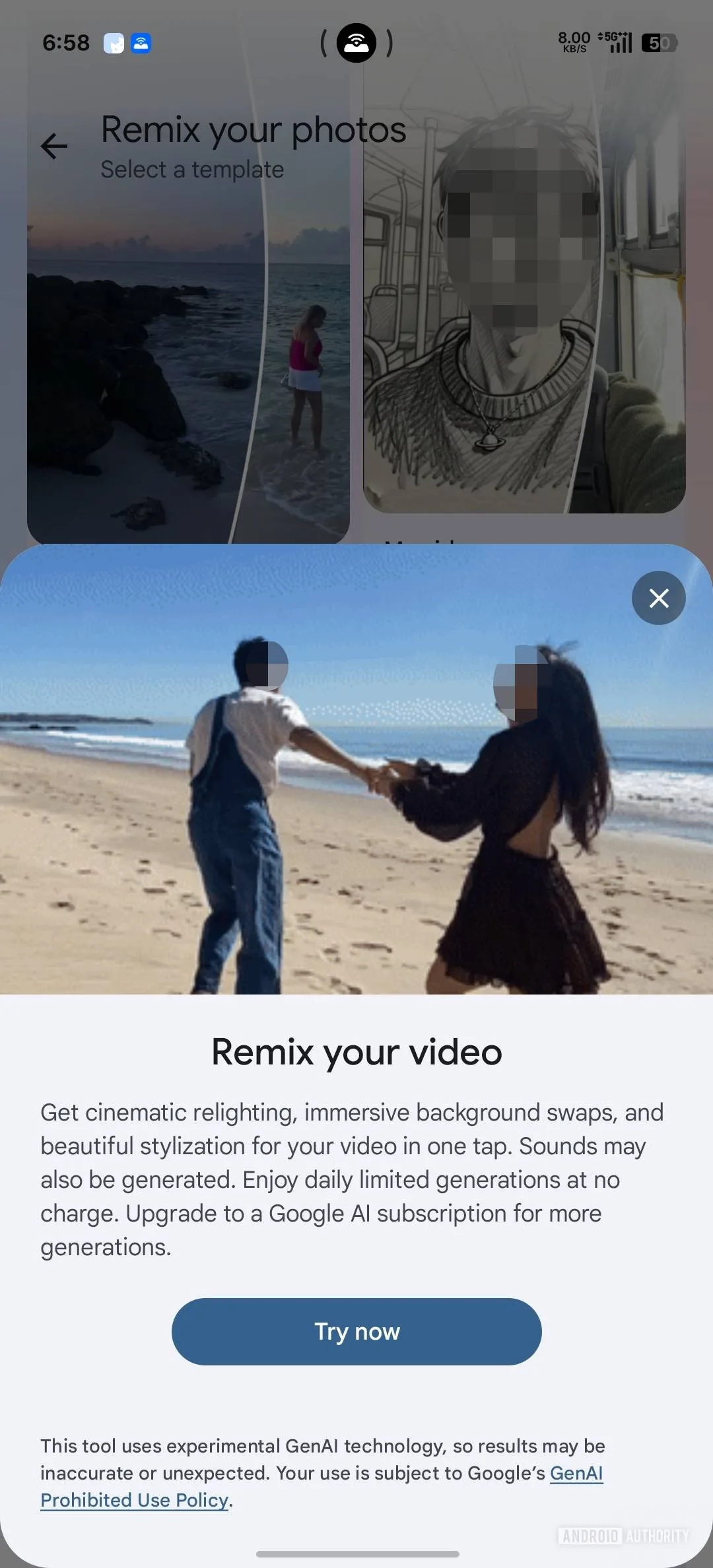
The more interesting question is what happens with free users. The introductory screen in the app apparently includes language about upgrading to Google AI, which reads as a fairly strong hint that some version of Video Remix will eventually trickle down to the free tier. Google has done this before — AI-powered eraser tools, photo unblur, and Magic Editor all started as paid or Pixel-exclusive features before becoming more widely available. It’s a tried-and-tested approach: use paid subscribers as an early feedback loop, smooth out the rough edges, then open the gates.
Why This Matters Beyond a Fun Filter
It’s tempting to dismiss Google Photos Video Remix as a souped-up filter — and for a lot of users, that’s probably how it’ll be used. But zoom out and it’s part of a much larger pattern. Google has been methodically embedding Gemini into every layer of the Photos app, transforming what was once a storage and organisation tool into something closer to an AI-native creative platform.
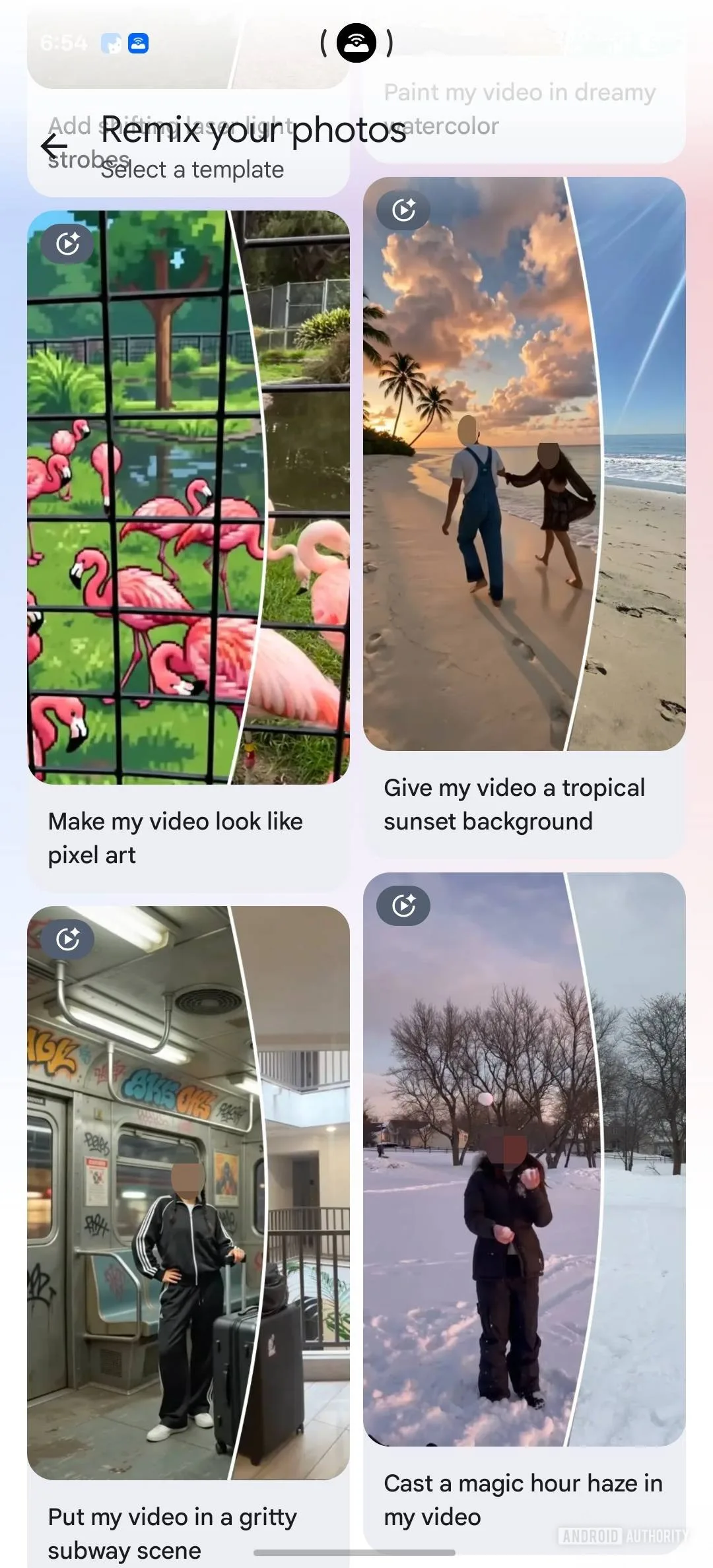
That’s a significant strategic bet. Photos is one of Google’s most-used apps globally, with billions of images and videos stored on its servers. Every AI feature added to it deepens user lock-in, generates more interaction data, and reinforces the value proposition of Google’s paid AI tiers. The creative angle is the hook — but the subscription revenue and data flywheel are the real business story.
It also positions Google more directly against Apple, which has been steadily building out its own on-device AI video and photo tools through the Apple Intelligence suite. The difference is philosophy: Apple processes as much as possible locally to protect privacy, while Google leans on cloud-side Gemini models for heavier lifting. Both approaches have trade-offs, and the battle for where people choose to store, edit, and remix their memories is only getting more competitive.
Google Photos Video Remix is a small feature on paper. But it’s another data point in a clear trajectory — one where the camera roll becomes less of an archive and more of a starting point for whatever you want it to be.