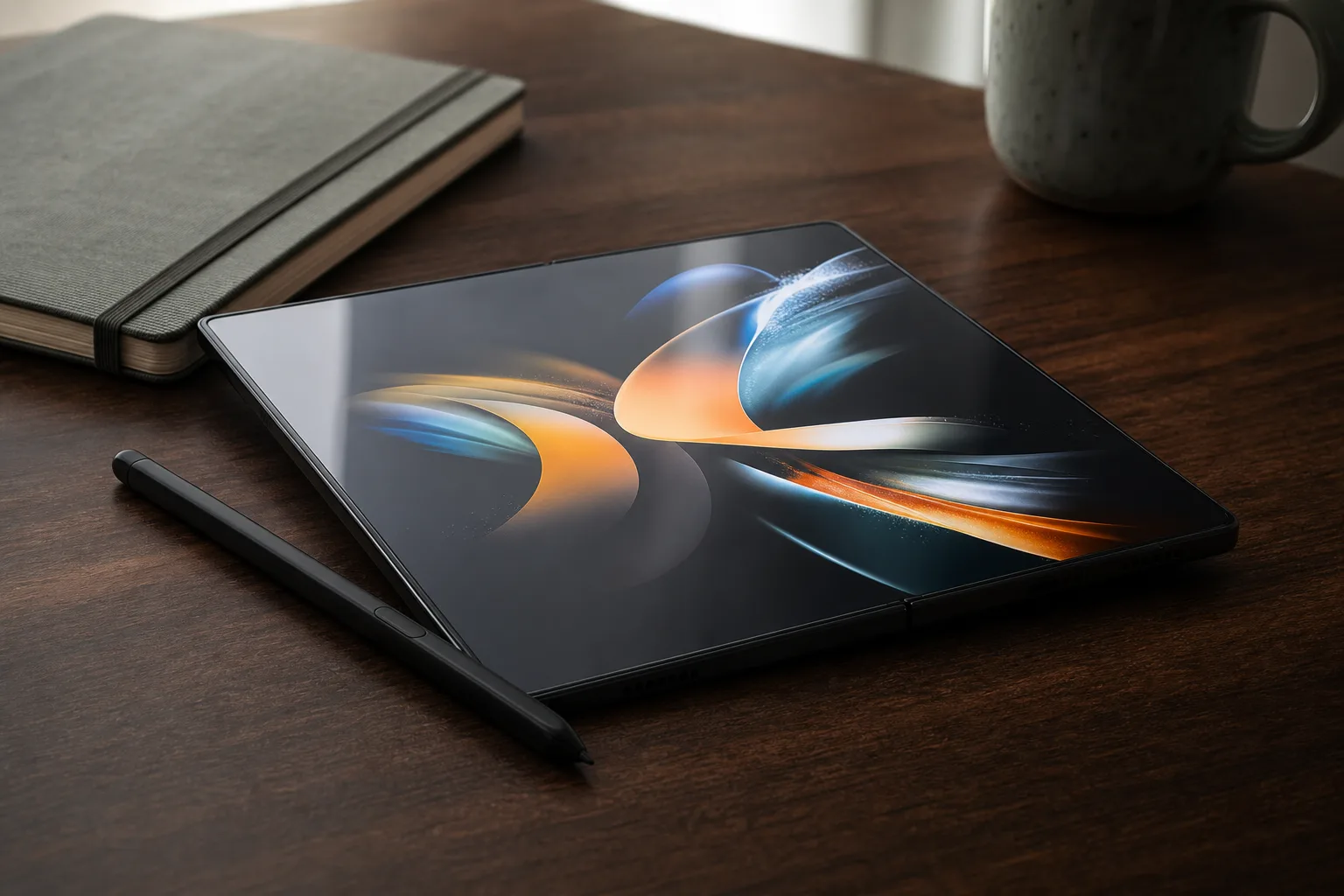
- The Galaxy Z Fold 8 again lacks S Pen support, weakening a feature advantage Samsung spent more than a decade building.
- Motorola’s stylus-equipped Razr Fold makes the Galaxy Z Fold 8 compromise far more visible in the increasingly competitive US foldable market.
- USI-based pen technology suggests Samsung has alternatives to its thicker Wacom digitizer approach and its familiar magnetic-case headaches.
- Samsung still has strong pen software, but preserving a thinner chassis cannot remain its entire strategy for premium foldables.
Table of Contents
Galaxy Z Fold 8 leaves a familiar tool behind
A big folding phone without a pen feels a little like buying a pickup truck with no bed. Yes, it can still do plenty. But you start wondering why the company removed the thing that made the larger form factor especially useful. That is the problem with the Galaxy Z Fold 8: Samsung has again chosen a thinner body over S Pen support, and this time there is a credible rival waiting to make that choice look shortsighted.
Last year, Samsung could argue that its redesigned Fold had to shed weight and bulk. Fair enough. Foldables have spent years being too thick, too heavy, or both, and the Fold 7’s slimmer direction was broadly welcome. But the Galaxy Z Fold 8 arrives in a different market. Motorola now has a book-style Razr Fold with Smart Pen support, and it has exposed a hole in Samsung’s premium-phone story.
Samsung still sells the Fold as the phone for people who want to work, read, multitask and create on a larger canvas. Those are precisely the people who are likely to annotate a PDF, mark up a presentation, jot notes during a call, or sketch out an idea before it escapes. A foldable is already a niche purchase. Removing one of the niche’s most logical tools is a strange way to broaden its appeal.
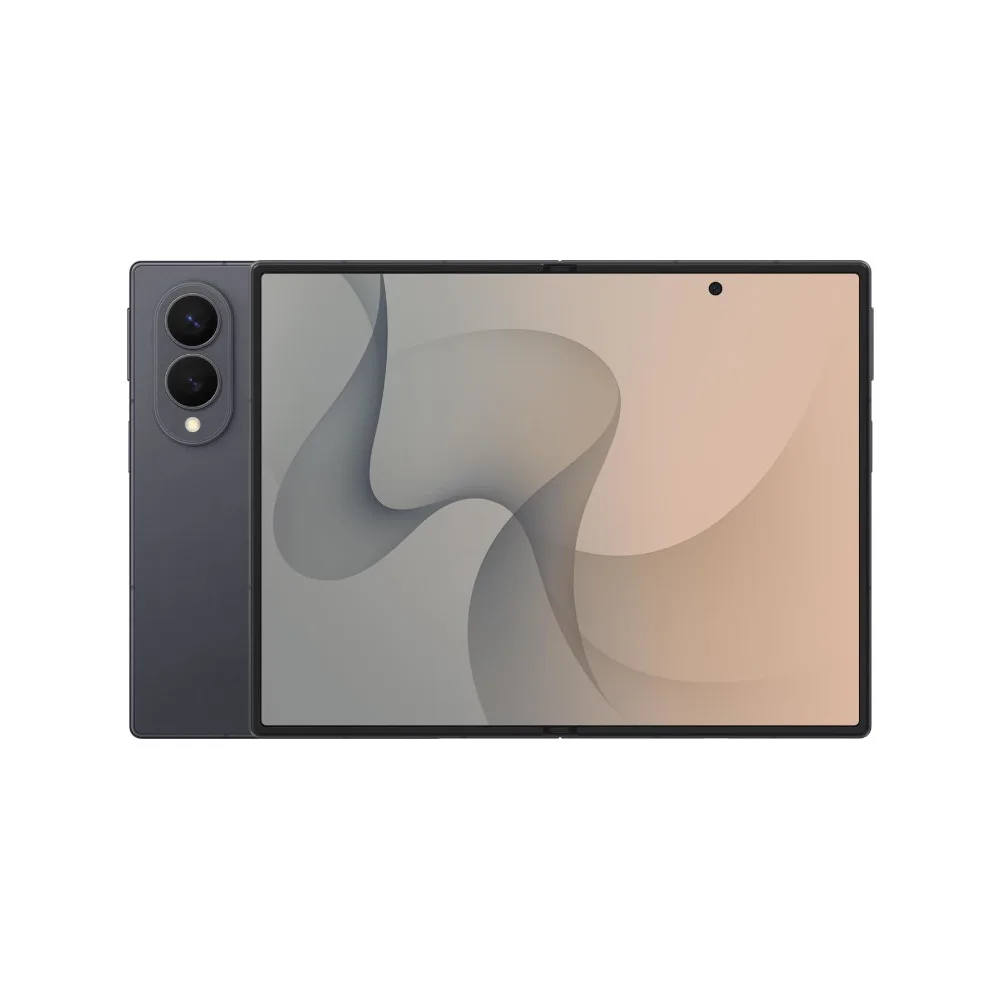
My read is that Samsung is treating the S Pen as an expendable legacy feature rather than a differentiator. That may work for a year. It gets much harder to justify when a competitor puts a pen in customers’ hands and demonstrates that slim hardware and stylus input do not have to be mutually exclusive.
Motorola has changed the Galaxy Z Fold 8 comparison
For years, Samsung was the default answer for US shoppers who wanted a large folding phone. Google offered an alternative, OnePlus built some genuinely excellent hardware outside the US, and Chinese brands repeatedly pushed the physical design forward abroad. Yet Samsung’s carrier reach, software polish and brand recognition kept it comfortably ahead at home.
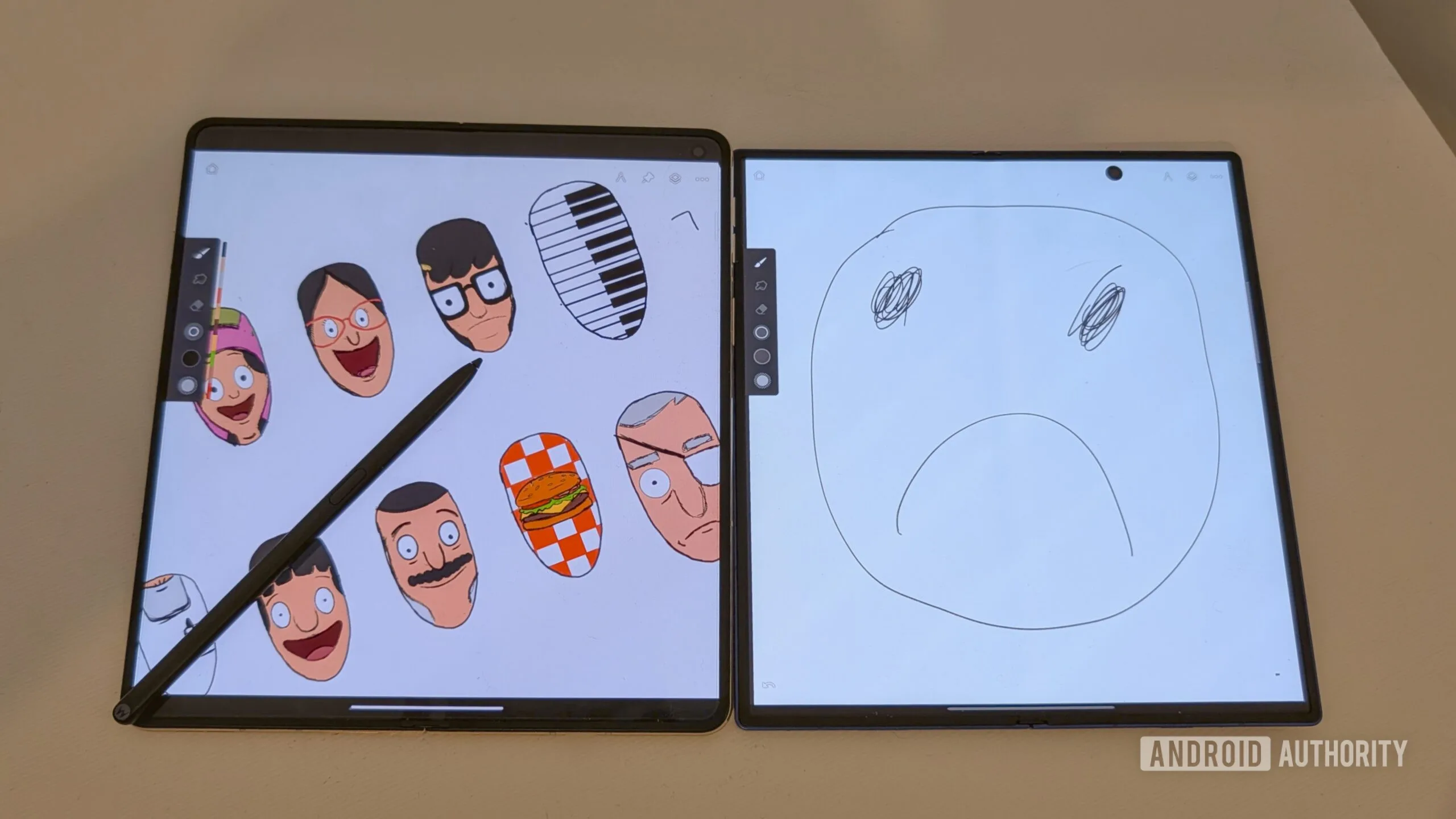
Motorola’s Razr Fold complicates that equation. It is not perfect, because no first-generation entry into a demanding product class is perfect, but its Smart Pen attacks Samsung where Samsung has historically been strongest. The pen offers hovering and cursor behavior, handwriting, drawing and support in familiar Android creative apps. For someone choosing between two expensive devices that both unfold into small tablets, that can be decisive—especially for a Galaxy Z Fold 8 buyer weighing productivity features.
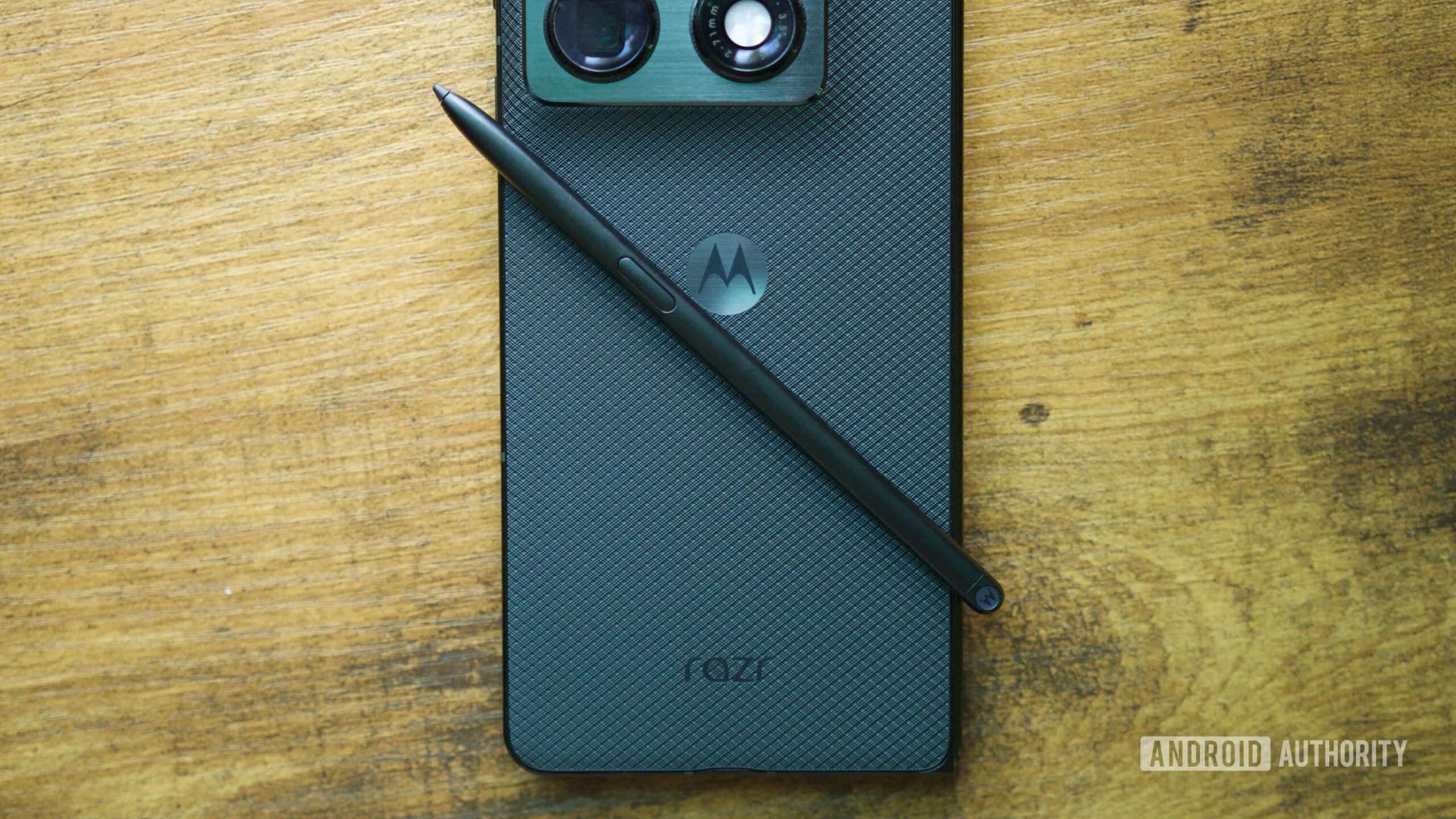
The feature checklist misses the bigger problem. Samsung spent roughly 15 years teaching people that the S Pen belongs on its most ambitious large-screen products, from Galaxy Note devices through tablets and Ultra phones. The company created habits around that input method: quick notes, screen capture markup, remote controls, PENUP and the delightfully nerdy customization options in Pentastic. Now, at the moment a Fold’s expansive inner display cries out for handwriting, Samsung is stepping away.
Motorola does not yet have Samsung’s deep pen-software bench. It cannot simply recreate the years of Galaxy-specific work overnight. But hardware parity is often enough to shift a buyer’s attention. Remember when Samsung’s own big-screen phones made stylus use feel normal rather than obscure? Motorola is borrowing that old playbook while Samsung seems oddly reluctant to defend it.
Thinness is no longer a complete answer
The engineering trade-off comes down to one important distinction. Samsung’s traditional S Pen relies on electromagnetic resonance, or EMR. A dedicated digitizer layer in the display generates a field that detects the passive pen, which is why basic S Pen writing can work without charging the pen itself. It is elegant technology, and for handwriting it remains excellent. It also adds physical complexity beneath an already difficult foldable display.
Motorola takes another route. Its pen uses the Universal Stylus Initiative standard, a family of active-stylus specifications that has also appeared in Chromebooks and other devices. The pen needs its own power, but the compatible display can work through a modified touch-input layer rather than Samsung’s separate EMR setup. The result is simple: Motorola has shown a stylus does not automatically require a thicker foldable.
That does not mean Samsung could swap technologies overnight. Changing pen protocols involves display engineering, latency testing, software integration, accessory design and, perhaps most awkwardly, deciding what happens to the vast installed base of S Pens. Samsung’s current system has real virtues. A passive pen that still writes when its battery is empty is more dependable than one more gadget to charge.
Still, the Galaxy Z Fold 8 makes it clear that preserving the old implementation while omitting the feature is the worst middle ground. If Samsung believes EMR cannot fit its design targets, then it needs a transition plan. USI or another active approach would introduce compromises, but it could also solve a persistent irritation for S Pen users: magnetic cases and Qi2-style accessories can interfere with an EMR digitizer, causing dead areas on the screen.
Samsung’s software lead will not wait forever
It is easy to write off stylus support as a power-user concern. In a sense, it is. Most people will never use a pen on a phone, and a fair number of Fold owners may never have bought Samsung’s optional S Pen. But premium products are not sold on majority behavior alone. They are sold on the promise that, when you need an unusual capability, the expensive device can handle it.
The Galaxy Z Fold 8 remains a formidable piece of hardware. Samsung’s multitasking features, long software-support commitments, app optimization and distribution muscle all count for something. Its Fold software is often less flashy than a launch-day spec sheet, but it is one reason people keep coming back. The company also still understands pen software better than almost anyone in Android.
Yet advantages decay when they are left unused. Apple did not need to make the iPad pencil-compatible, either, until it did and turned digital note-taking and illustration into central parts of the tablet’s identity. Samsung already had its equivalent. Frankly, abandoning it on the Fold risks making the company’s most expensive phone feel like a very polished version of everyone else’s idea.
Samsung has time to correct course. The Galaxy Z Fold 8 does not erase the S Pen’s history, and Motorola’s Smart Pen does not instantly match every S Pen trick. But another generation without a credible stylus answer would turn a design trade-off into a strategic retreat. Samsung needs to decide whether the Fold is meant to be merely thin, or genuinely useful when it is open.
Frequently Asked Questions
Does the Galaxy Z Fold 8 support the S Pen?
No. Samsung removed S Pen support from the Fold series with the Fold 7 and has not brought it back for the Z Fold 8 lineup.
Why did Samsung remove S Pen support from its Fold phones?
Samsung said it removed S Pen support to make its foldables thinner. Traditional S Pen technology uses an additional Wacom digitizer layer in the display, which adds thickness.
How does Motorola’s Razr Fold stylus work?
Motorola’s Smart Pen uses the Universal Stylus Initiative standard rather than Samsung’s Wacom digitizer system. It connects wirelessly with the phone, requires power, and can provide stylus support without making the phone thicker.