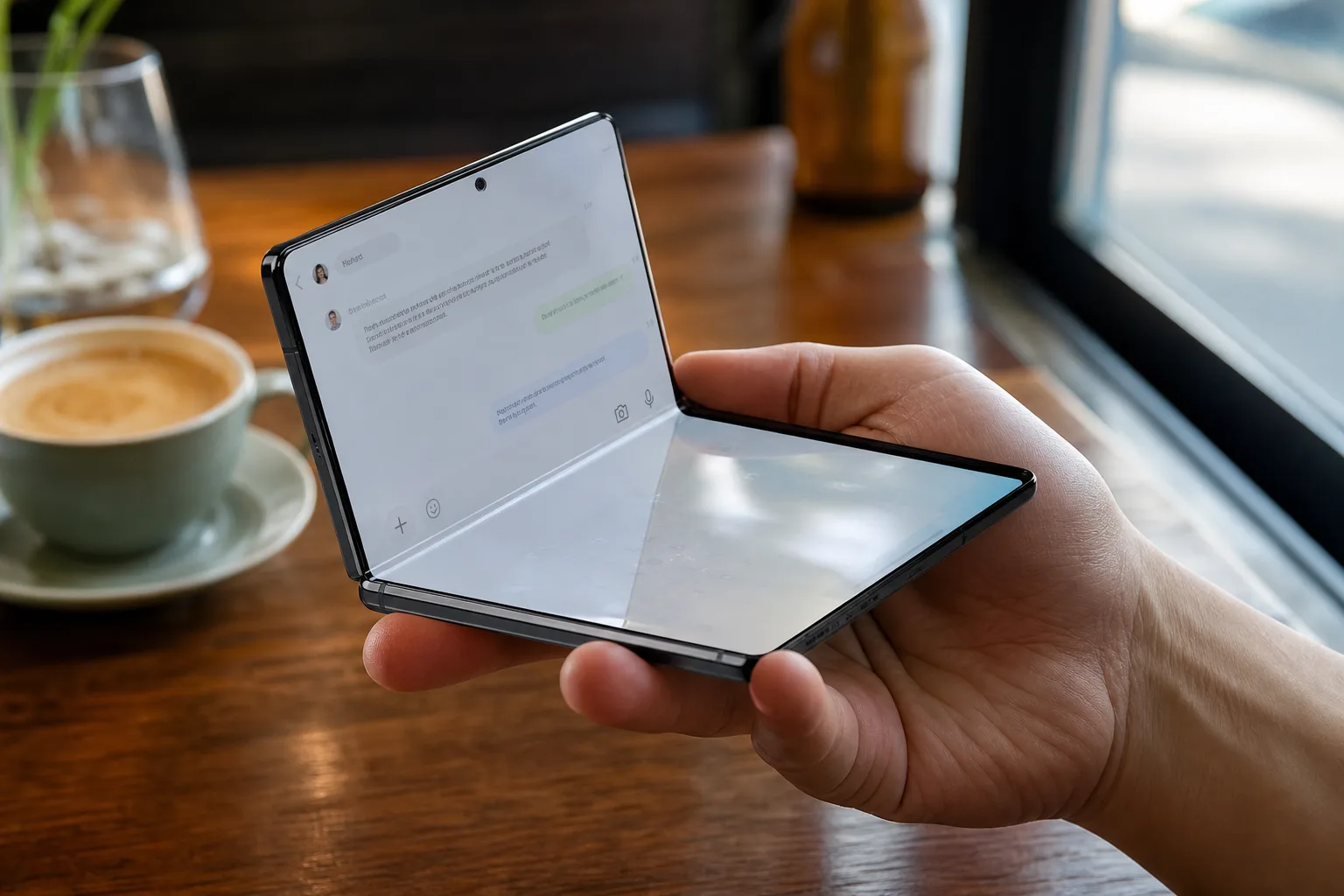
- The Galaxy Z Fold 8 reportedly combines a comfortable cover display with a compact folded shape that challenges flagship flip phones.
- At $1,800, the Galaxy Z Fold 8 costs far more, but it may offer a more complete daily experience than $1,200 flip models.
- Premium flip phones still win on pocketability and personality, yet their small outer screens often force users to open them constantly.
- If wide foldables gain traction, Samsung and Motorola may need to rethink what a premium flip phone is actually for.
Table of Contents
The Galaxy Z Fold 8 attacks the flip phone’s biggest weakness
The Galaxy Z Fold 8, as described in recent hands-on reporting, may be the first Samsung foldable that makes premium flip phones feel less like a distinct category and more like an expensive compromise. That sounds harsh. Flip phones are fun, tactile, and genuinely convenient in a tight pocket. But once they climb past $1,200, fun has to share the bill with usefulness.
The pitch is simple enough: make a book-style foldable that is short and wide when shut, rather than tall and narrow. The result reportedly resembles older devices such as the Oppo Find N2 and Google’s original Pixel Fold more than Samsung’s familiar tall-and-slim Fold line. Open it up and you get a compact tablet. Leave it closed and, crucially, you still have a screen that seems comfortable enough for normal phone work.
That last part is where the argument against flagship flips gets serious. The source describes a 10:16 cover display on the Galaxy Z Fold 8, a shape that leaves room to read a conversation and type a reply without the cramped, cut-down feeling common on flip-phone outer panels. With Motorola and Samsung flips, the cover screen is often useful for triage: check the notification, control music, answer quickly, then open the phone to do the actual thing. That’s clever product design, but it’s also a limitation dressed up as a feature.
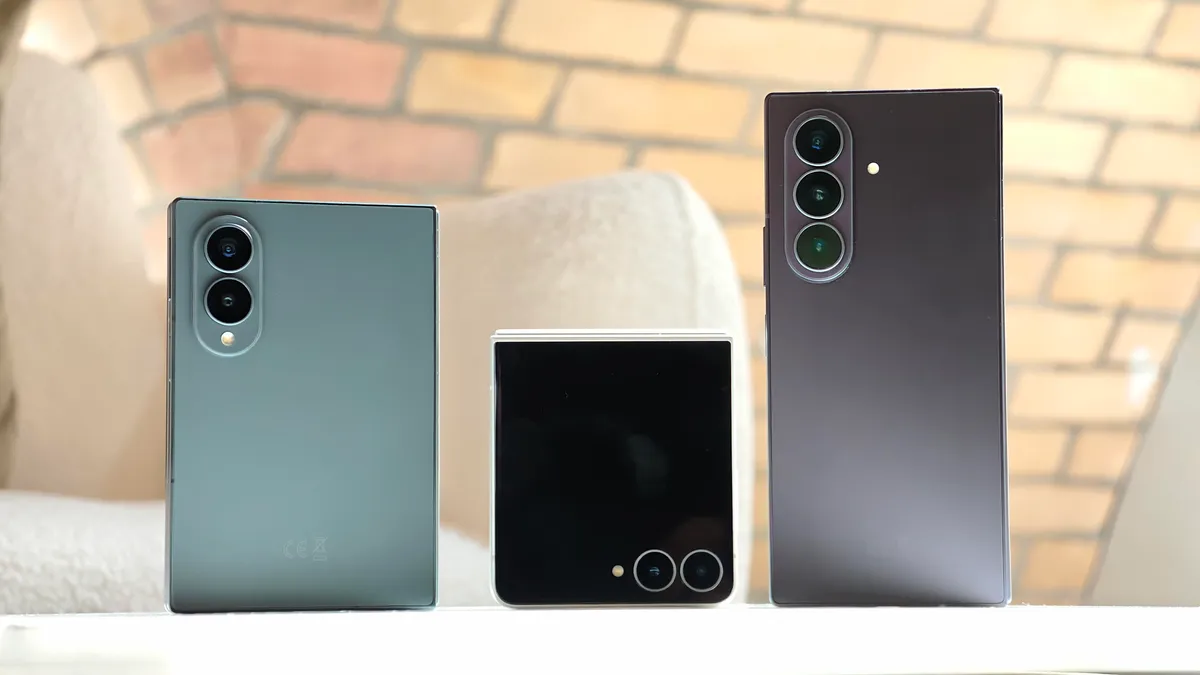
Samsung’s own Galaxy Z foldable lineup has historically split the difference more cleanly: the Flip sells the compact trick, while the Fold sells the mini-tablet. A wider Fold changes that equation. It asks why a buyer should accept a small, compromised exterior display simply to get a smaller square in their pocket.
A cover screen you can actually live on
The telling detail from the reported week of use is not the inner panel at all. The reviewer says the Galaxy Z Fold 8 was opened mainly for video and video calls, while messaging, reading, browsing Reddit, and scrolling X happened on the outer screen. That is exactly how a foldable should work for most people: not as a device that demands a ritual every time you answer an email, but as a phone that has another gear when you need it.
Flip phones tend to invert that relationship. Their main internal screen is excellent, usually bright and large enough to feel like a flagship slab phone. Yet many tasks still require that little flip-open motion. You may enjoy that motion for a few months. Then you’re standing in a grocery queue, trying to pull up a loyalty barcode one-handed, and it becomes one more tiny piece of friction. Modern smartphones have trained us to expect instant access.
The Galaxy Z Fold 8 also appears to benefit from its approximately 4:3 internal panel. That ratio is naturally suited to articles, web pages, documents, maps, and side-by-side apps. Vertical video will leave black space at either side, according to the report, though social app controls can occupy some of that dead room. Frankly, I’d take those bars over the oddly cropped, overly tall experience that some conventional Fold screens create with ordinary video.
The price gap is real, but so is the value problem
The obvious objection is price: the reported $1,800 starting price for the Galaxy Z Fold 8 is a long way from the $1,200 Galaxy Z Flip 8, never mind discounted flip models. It is not a direct substitute for everyone. A $600 gap is a lot of money, and a Flip will still win for someone who values the smallest possible device above all else.
But the comparison gets uncomfortable when Motorola’s Razr Ultra is said to sit at $1,500. At that point, buyers are no longer choosing a cute alternative to a normal flagship; they are paying laptop-adjacent money for hardware with cameras that typically trail conventional premium phones and an exterior interface that remains constrained by its physical dimensions.
Memory-component pressures may be contributing to higher handset prices, but they don’t change the buyer’s math. A flagship flip phone needs to answer a blunt question: what does it do better than a normal $1,000 phone, apart from folding smaller? For some people, that answer will be enough. No shame in wanting a phone that takes up less space. Yet it’s becoming a thinner proposition as book-style devices become lighter and less awkward.
Flip phones still have a job, just not at any price
I don’t think the Galaxy Z Fold 8 means the flip phone is finished. That would be the usual tech-media overreaction, right up there with declaring tablets dead every other year. Flip phones have a clear emotional appeal, and their compact folded footprint remains genuinely useful in small pockets, bags, and formal clothes. They are also less intimidating than a device that unfolds into a tablet.
What may be ending is the idea that every flip deserves a flagship price. Samsung and Motorola can preserve the category by treating it as a stylish, capable compact phone at a more defensible price, or by making outer-screen software so good that opening the phone becomes optional rather than mandatory. The latter is much harder than it sounds because there is only so much work you can comfortably do on a narrow panel.
My read is that the Galaxy Z Fold 8 points toward a more useful foldable future: a normal phone when closed, a larger canvas when open, and fewer compromises demanded in either state. If Apple’s widely rumored foldable eventually follows the same wide-format logic, the industry’s next fight may not be Fold versus Flip. It may be whether the premium flip can justify surviving at all.
Frequently Asked Questions
What makes the Galaxy Z Fold 8 different from a normal book-style foldable?
The Galaxy Z Fold 8 has a wider, shorter shape than typical book-style foldables. Its outer display is designed to be more comfortable for messaging and reading, while the internal screen has a roughly 4:3 tablet-like layout.
Why are flagship flip phones harder to justify at $1,200 or more?
Flip phones offer compact folded dimensions, but their external displays can constrain typing, browsing, and app use. At flagship prices, buyers may reasonably expect top-tier cameras and a screen that works well without opening the device, areas where larger foldables and standard phones can have an advantage.
Is the Galaxy Z Fold 8 a better choice than a Galaxy Z Flip 8?
That depends on budget and priorities. The Galaxy Z Flip 8 is less expensive, while the Fold 8 is aimed at people who want a usable outer screen plus a larger display for video, reading, and calls.