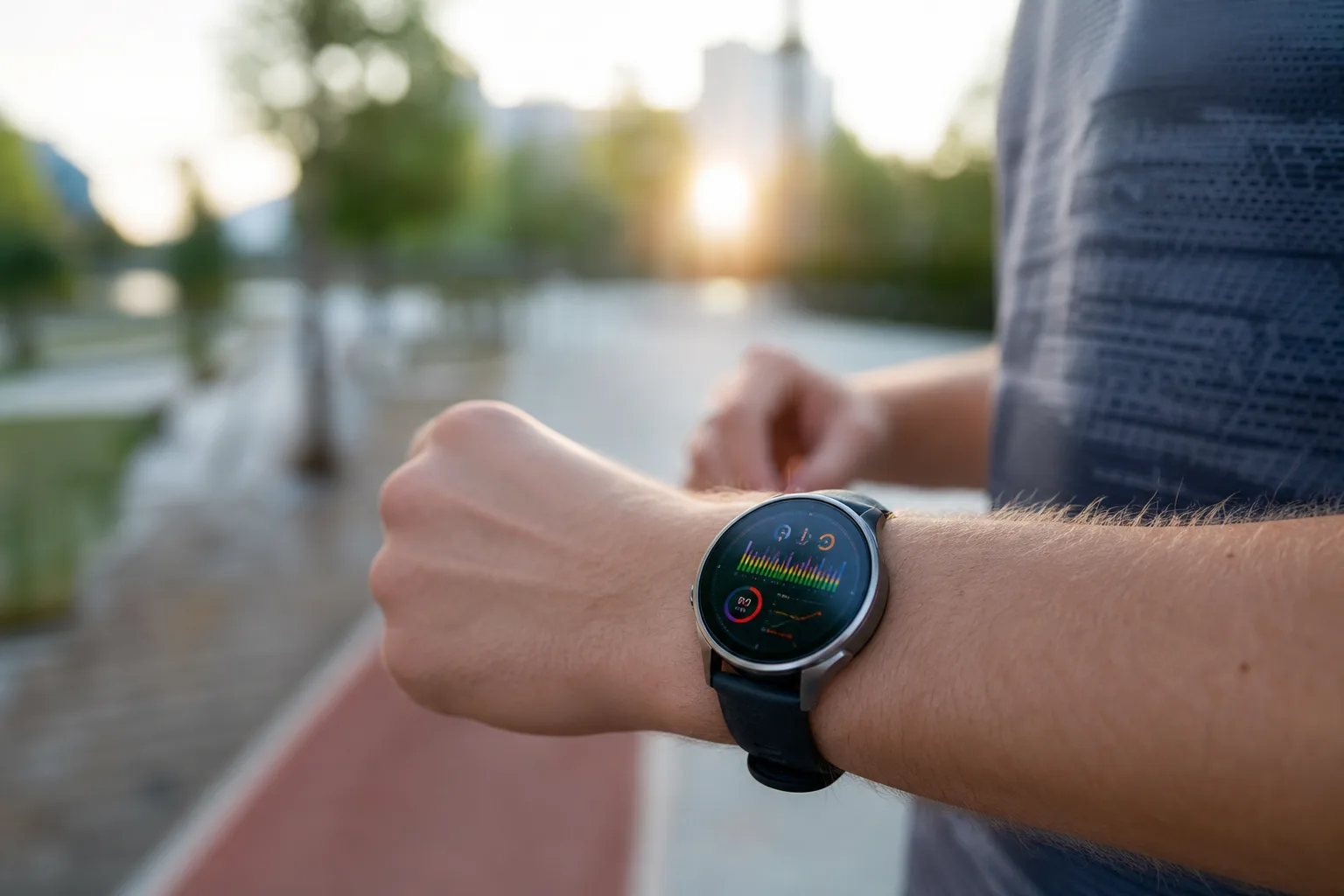
- The Galaxy Watch 9 reportedly tracks heart rate closely when compared with a Polar H10 chest strap during demanding indoor cardio sessions.
- Galaxy Watch 9 battery life reaches roughly a day and a half, though its 80-minute recharge remains behind Google’s faster approach.
- Samsung’s new health scores offer useful context, but the watch presents more measurements than many casual users can realistically interpret.
- The watch may become a useful input device for Samsung’s rumored smart-glasses plans, assuming that ecosystem actually arrives.
Table of Contents
Galaxy Watch 9 health tracking is the real story
The Galaxy Watch 9 appears to have a familiar problem: it can measure an awful lot, but it still has to persuade people that all those measurements deserve their attention. Samsung’s latest wearable adds a new processor, longer endurance for the smaller 40mm model, and a stack of fitness and wellness readings. None alone makes a compelling upgrade. Put together, though, they point toward where Samsung thinks the wrist computer is heading.
That direction is less about notifications and app tiles, and more about the watch quietly assembling a record of how you move, sleep, train, and recover. The practical question is whether it does so with enough clarity to help someone decide what to do next. Frankly, that matters more than whether Samsung can add one more score to the Samsung Health dashboard.
The reported testing has one especially encouraging result. During a StairMaster workout, the watch’s optical heart-rate sensor came within three beats per minute of a Polar H10 chest strap for average heart rate, and within one beat per minute for maximum heart rate. The Polar H10 remains a serious benchmark among runners and cyclists because it reads the electrical activity of the heart directly. Wrist sensors have historically struggled when sweat, motion, tattoos, loose bands, or weightlifting get involved.
For the Galaxy Watch 9 to land that close in a hard cardio session is meaningful. It does not turn a smartwatch into medical equipment, and it does not mean every workout will produce the same tidy result. But it suggests Samsung’s sensor processing is becoming dependable enough for ordinary training decisions: should you ease off today, did that interval session really push you, and are you improving over several weeks?
Calorie estimates were also reasonably close, at 7.9 calories per minute from the watch versus 8.3 from the Polar setup. Treat calorie numbers as directional, not gospel. Everyone’s metabolism is different, and wearables are famously fond of false precision. Still, a consistent estimate can be useful for spotting trends.
More scores do not automatically mean better advice
The Galaxy Watch 9 ships with Wear OS 7 and Samsung’s One UI 9 Watch interface, bringing metrics such as Heart Health Score, Fitness Index, and Daily Cardio Load. These labels are broadly sensible. Daily Cardio Load is designed to frame near-term activity, while Heart Health Score attempts a longer view of how habits accumulate.
Samsung also adds hydration prompts based on exertion. For a marathon trainee running in heat, a vibration at the right moment could be genuinely useful. For someone strolling to get coffee, it may be another digital nudge that gets dismissed alongside Slack alerts and calendar reminders. The usefulness depends almost entirely on context.
My read is that Samsung has the ingredients for a very good coaching system but has not fully solved the presentation problem. A fitness watch should work like a decent trainer: tell you what matters today, explain why, and avoid turning every Tuesday into a lab report. Samsung Health can sometimes feel more like an instrument panel in a small aircraft. Impressive, yes. Immediately intuitive, not always.
Apple has often taken the more conservative path, translating health measurements into simpler prompts and trend alerts. Garmin, meanwhile, is unapologetically dense but speaks directly to athletes who enjoy living in training-load charts. Samsung is positioned awkwardly between those camps. The Galaxy Watch 9 offers serious data, yet it is still aimed at people who may simply want to know whether they should take a longer walk after dinner.
Google’s own Health Connect framework is also part of the larger Android picture, allowing compatible health apps to share data with user permission. Samsung has embraced that ecosystem while keeping Samsung Health central to its experience. Readers who want to understand the underlying sharing controls can consult Google’s Health Connect documentation. That plumbing matters because no one wants their health history trapped in one vendor’s app forever.
Battery life is comfortable; charging is not
Battery anxiety has been the smartwatch category’s chronic disease. The Galaxy Watch 9 reportedly manages roughly 36 hours and 30 minutes in real-world use, falling from 98% to 2% with the always-on display active. Samsung’s own estimate is around 30 hours under that setting, so this is a result that should comfortably cover a day, a night of sleep tracking, and the next morning’s commute.
That extra endurance makes the Galaxy Watch 9 easier to live with. A watch that demands a daily charge often loses sleep data because it is sitting on a puck at exactly the wrong time. A day-and-a-half is not Garmin territory, but it gives users room to build a charging habit around a shower or desk time rather than bedtime.
The downside is refill speed. From empty, the watch reportedly needs about 80 minutes to reach full capacity. The Pixel Watch 4 has been cited at around 45 minutes. Samsung’s endurance is respectable; its charging experience is merely fine. If you forgot to charge before a workout, the difference between 15 minutes and 30 minutes on the dock can decide whether you leave with meaningful battery or a nagging warning.
Samsung may be building a bridge to glasses
The most interesting aspect of the Galaxy Watch 9 may be what it implies about Samsung’s next devices. Qualcomm has been pushing its Snapdragon Wear platform as part of a wider collection of personal AI devices rather than an accessory permanently tethered to a phone. Samsung has separately signaled interest in intelligent eyewear, a category Meta has made newly credible with its Ray-Ban smart glasses.
There is a logical role for a watch in that setup. Glasses can see and hear; a watch can provide discreet taps, health context, and gesture input. A wrist twist or finger movement is less conspicuous than shouting a command into the air while standing in a supermarket aisle. Seen that way, the Galaxy Watch 9 could serve as a gesture control point for Samsung’s prospective voice- and gesture-driven eyewear.
That is still a future-facing bet, not a reason to buy today. Smart-glasses plans have a habit of slipping, changing shape, or vanishing entirely. Remember Google Glass? The hardware arrived before the social contract did.
A good watch that needs more editorial judgment
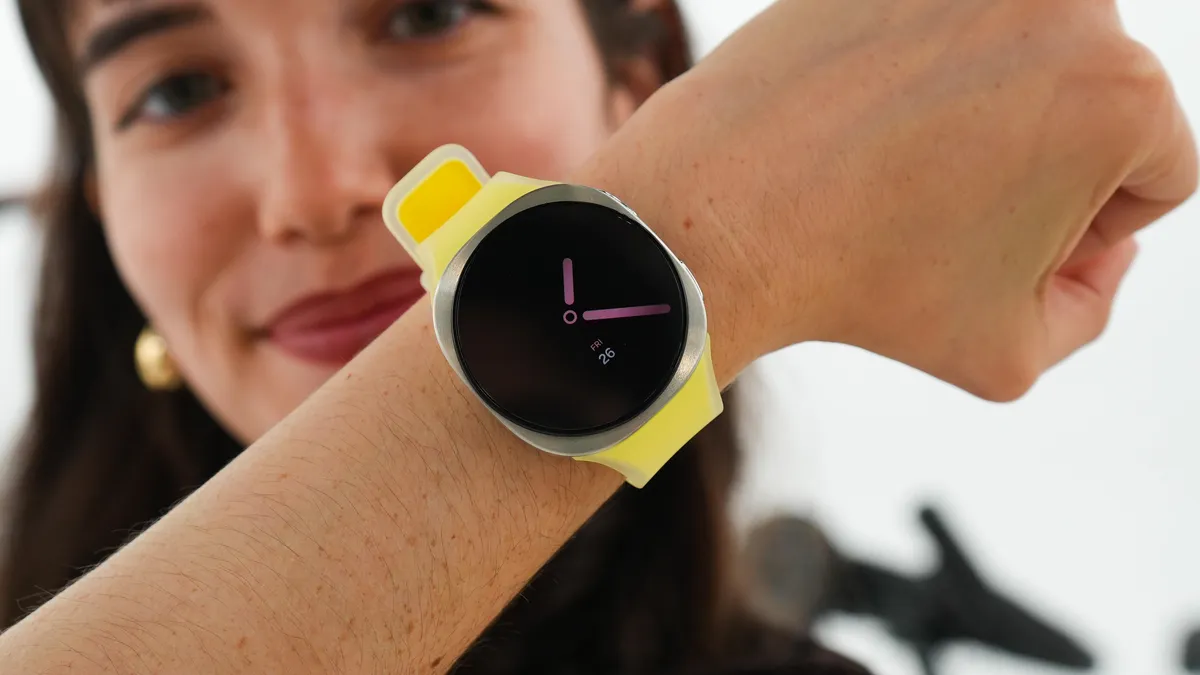
The Galaxy Watch 9 looks like an easy recommendation for a first-time Samsung smartwatch buyer, particularly someone who values workout tracking and wants enough battery to sleep in the thing. The bright 3,000-nit AMOLED display should also be a real asset outdoors and mid-workout, when squinting at a dim screen is the last thing anyone needs.
There is one mundane caveat that should not be dismissed: fit. Reported use on smaller wrists found the silicone strap sticky and heavy, with adjustment holes that made the fit either too tight or too loose. The fixed strap loops could also shift and let the loose end escape. These are boring flaws, but wearables are personal objects. If a watch irritates your skin or flaps around during a run, its clever health model becomes irrelevant fast.
Samsung has built a capable sensor platform. Now it needs the confidence to edit itself. The winning smartwatch will not be the one that collects the most body data; it will be the one that knows when a single, timely sentence is more useful than another score.
Frequently Asked Questions
How accurate is the Galaxy Watch 9 heart-rate monitor?
In reported Stairmaster testing against a Polar H10 chest strap, the Galaxy Watch 9 was within three beats per minute on average and within one beat per minute at peak heart rate. The results showed strong agreement with the chest strap.
How long does the Galaxy Watch 9 battery last?
Samsung rates the watch for around 30 hours with its always-on display enabled. Reported testing ran from a 98% charge to 2% over roughly 36 hours and 30 minutes.
Does the Galaxy Watch 9 charge quickly?
Not especially. A full charge from empty reportedly takes about one hour and 20 minutes, compared with around 45 minutes for the Pixel Watch 4 in reported testing.