- Snapdragon Pixel phones would likely gain benchmark speed and modem efficiency, but Google would face a much higher component bill.
- The central appeal of Snapdragon Pixel phones fades when Qualcomm’s premium pricing meets Google’s smaller purchasing scale than Apple and Samsung.
- Tensor gives Google direct control over AI features and phone software, even when competing chips win conventional performance tests.
- Google needs Tensor’s next manufacturing generation to fix heat and connectivity complaints without turning Pixels into another expensive flagship.
Table of Contents
The case for Snapdragon Pixel phones is obvious — at first
Snapdragon Pixel phones sound like the easy fix for every complaint that has followed Google’s Tensor era: warm handsets, uneven cellular reception, middling benchmark scores, and battery life that can feel less dependable than a flagship ought to be. Put Qualcomm’s fastest silicon in a Pixel, people say, and let Google’s excellent cameras and clean Android software do the rest.
I get the instinct. A Pixel 10 Pro should not look sheepish next to a Galaxy S26 Ultra in a graphics test, and Pixel owners have had legitimate reason to grumble about heat and modem behavior since the Tensor-powered Pixel 6 arrived in 2021. Google has improved matters over successive generations, but the company has never fully shaken the perception that Tensor is the compromise you accept to get Pixel software.
Yet replacing Tensor with Qualcomm hardware would solve one set of problems by creating another: price. And price is not some footnote here. It is the entire reason Google can still make a plausible case against Samsung and Apple when its hardware specification sheet is less intimidating.
The fantasy of Snapdragon Pixel phones is really a fantasy about getting everything at once: Galaxy-class performance, iPhone-like endurance, Google camera processing, and Pixel pricing. Phone economics rarely work that way. Somebody pays for the expensive part eventually, and it is usually the person at the checkout screen.
Snapdragon Pixel phones would make Google’s bill of materials uglier
Qualcomm has been extraordinarily successful at selling premium smartphone silicon because it has built a package manufacturers need, not merely a fast processor. Its top Snapdragon platforms bring high-end CPU and GPU performance, a mature modem stack, image processing, wireless connectivity, and a support ecosystem that phone makers know well. The catch is familiar to anyone who has watched Android flagships climb in price: Qualcomm charges accordingly.
That cost pressure has appeared repeatedly across the company’s flagship generations. The Snapdragon 865 era became a particular headache for Android brands, with several manufacturers either raising prices or moving standard models to cheaper chips. Reports around newer Snapdragon 8 Elite variants have pointed in the same direction, while Qualcomm has said it expects higher costs across its chip portfolio.
Google has far less room to absorb that pressure than Samsung or Apple. Samsung ships smartphones in volumes Google can only envy, and Apple’s iPhone business buys components on a scale that gives it enormous bargaining power. If all three companies requested the same premium part, Google would likely get the least favorable deal. That is simply how bulk buying works — the warehouse club gets a better price than the person buying one roll of paper towels.
That purchasing imbalance is the uncomfortable part of the Snapdragon Pixel phones argument. Better hardware is appealing, but Google would be buying it without the volume discounts that soften the blow for its biggest rivals.
Google’s own pricing history tells the story. The Snapdragon-equipped Pixel 3 and Pixel 4 families started at $799, while their larger siblings reached $899. Those were awkward prices for phones that often looked under-equipped beside Samsung’s flagships. Then Google released the $699 Pixel 5 with a midrange Snapdragon chip, a practical admission that the full flagship silicon budget did not fit the product strategy.
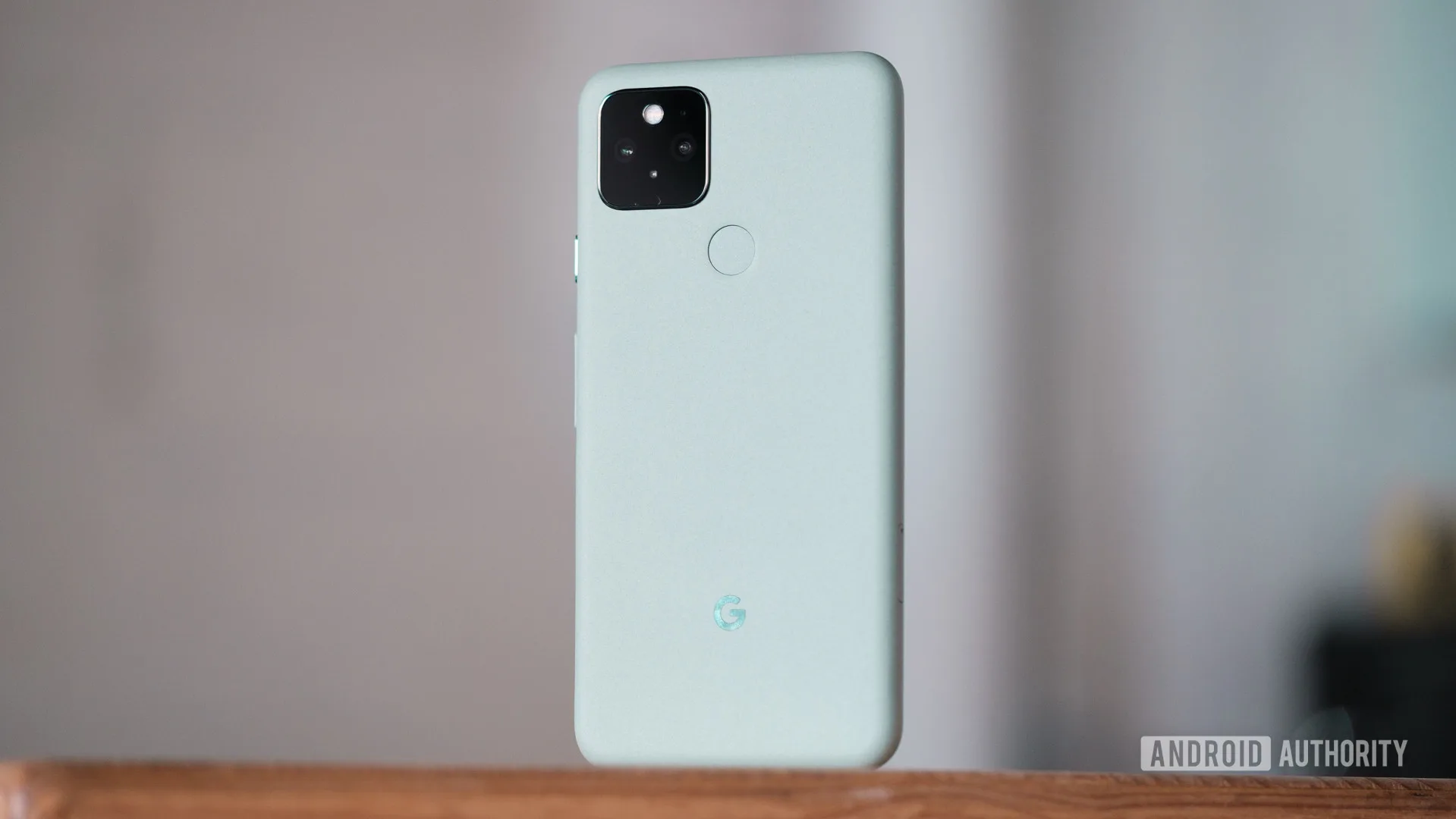
Tensor changed the equation. The Pixel 6 and Pixel 7 launched at $599, putting sharp pressure on phones such as Samsung’s $799 Galaxy S21 and Galaxy S22. Their Pro versions also came in below comparable Samsung models. Google has since moved Pixel prices upward, and the gap is no longer as dramatic, but it still benefits from owning more of the silicon decision than it did in the Qualcomm days.
There have even been reports that Google once targeted roughly $65 for a future Tensor chip, vastly below estimates often associated with the most expensive flagship mobile processors. That exact figure may not survive TSMC’s costly move toward 2nm manufacturing, but the direction matters. Google did not build Tensor to win a Geekbench chart. It built Tensor partly because a Pixel cannot compete as a lower-volume, higher-cost Galaxy clone.
Benchmarks matter, but they are not the whole phone
None of this is a defense of Tensor’s weaker moments. Raw performance affects real life when you play demanding games, edit 4K video, use desktop-style Android features, or keep a phone for five years. Better efficiency also reduces heat, and heat is the tax collector of mobile computing: it arrives eventually and takes performance, battery life, and comfort with it.
On that front, Snapdragon Pixel phones would almost certainly look better. Qualcomm’s latest chips have a substantial advantage in sustained graphics workloads, and its modem technology has generally been viewed as more mature than the Samsung-derived modem systems Google used in earlier Tensor generations. A more efficient radio alone could be meaningful for someone who spends their day bouncing between weak 5G coverage and office Wi-Fi.
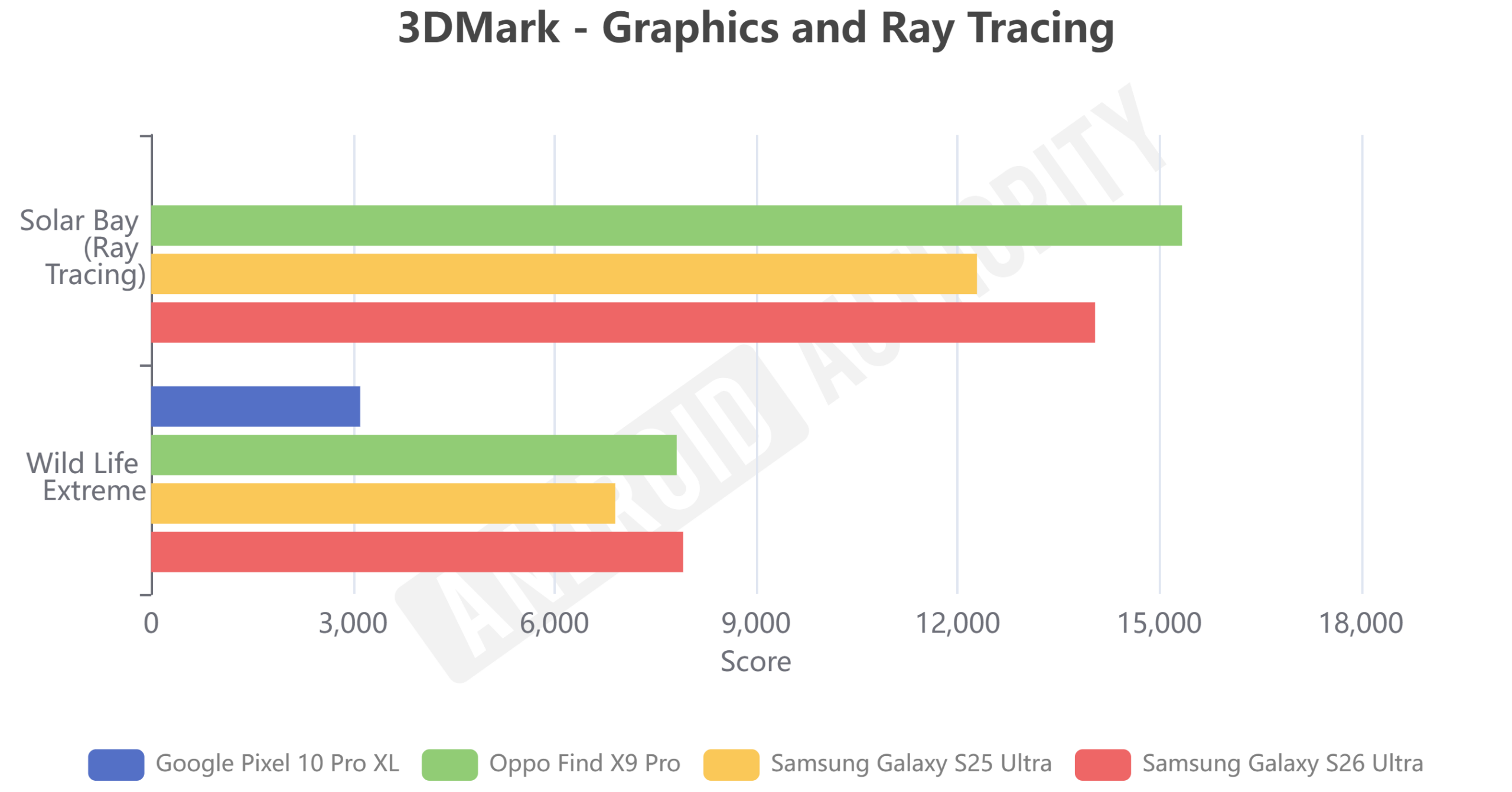
For power users, Snapdragon Pixel phones would be easiest to justify in exactly those sustained workloads, where faster graphics and lower heat are not abstract benchmark advantages.
But benchmark charts are not a consumer verdict. Google’s Pixel software remains fast enough for ordinary use, and its photography remains among the industry’s most consistent because Google treats computational imaging as a system-wide problem rather than a spec-sheet contest. A phone does not become easier to use because its GPU performance is higher if the camera opens slowly, the battery drains on a train, or the software gets cluttered with duplicate apps.
Frankly, the more useful question is not whether Google should pursue Snapdragon performance. Of course it should pursue it. The question is whether Google can reach much of that performance and efficiency through a better Tensor manufacturing process, modem design, and thermal engineering without handing Qualcomm a large slice of every Pixel sale.
Tensor still gives Google an AI advantage it should not casually surrender
Google’s AI argument for Tensor has sometimes been oversold. Qualcomm and MediaTek have made rapid progress in neural processing, and both support on-device models that enable modern Android AI features. The idea that a Pixel’s AI tricks would simply vanish without Tensor does not hold up. Silicon vendors are not asleep at the wheel.
Still, Tensor is valuable because Google can tailor its chip around its own models and software priorities. The company has spent years building consumer-facing features around speech recognition, translation, call assistance, photo editing, summaries, and contextual organization. Pixel Recorder’s speaker labels and the Pixel Screenshots app are more telling examples of Google’s direction than another synthetic AI score.
Choosing Snapdragon Pixel phones would not erase those features, but it could make Google more dependent on a general-purpose platform built to serve dozens of competing Android brands.
Google has also discussed model techniques such as Matformer, which places smaller models within larger ones to choose a suitable balance of response time and power use. That sort of hardware-software coordination is hard to replicate when a chip vendor has to satisfy dozens of phone makers with one general-purpose design. For Google, that integration is the point.
The company’s Tensor G5 announcement highlights on-device AI and imaging, which is revealing. Google knows it will not beat every rival on peak horsepower. It is betting that features people actually encounter — a useful call transcript, an edit that runs locally, a camera that gets skin tones right — create more loyalty than a chart few buyers will ever see.
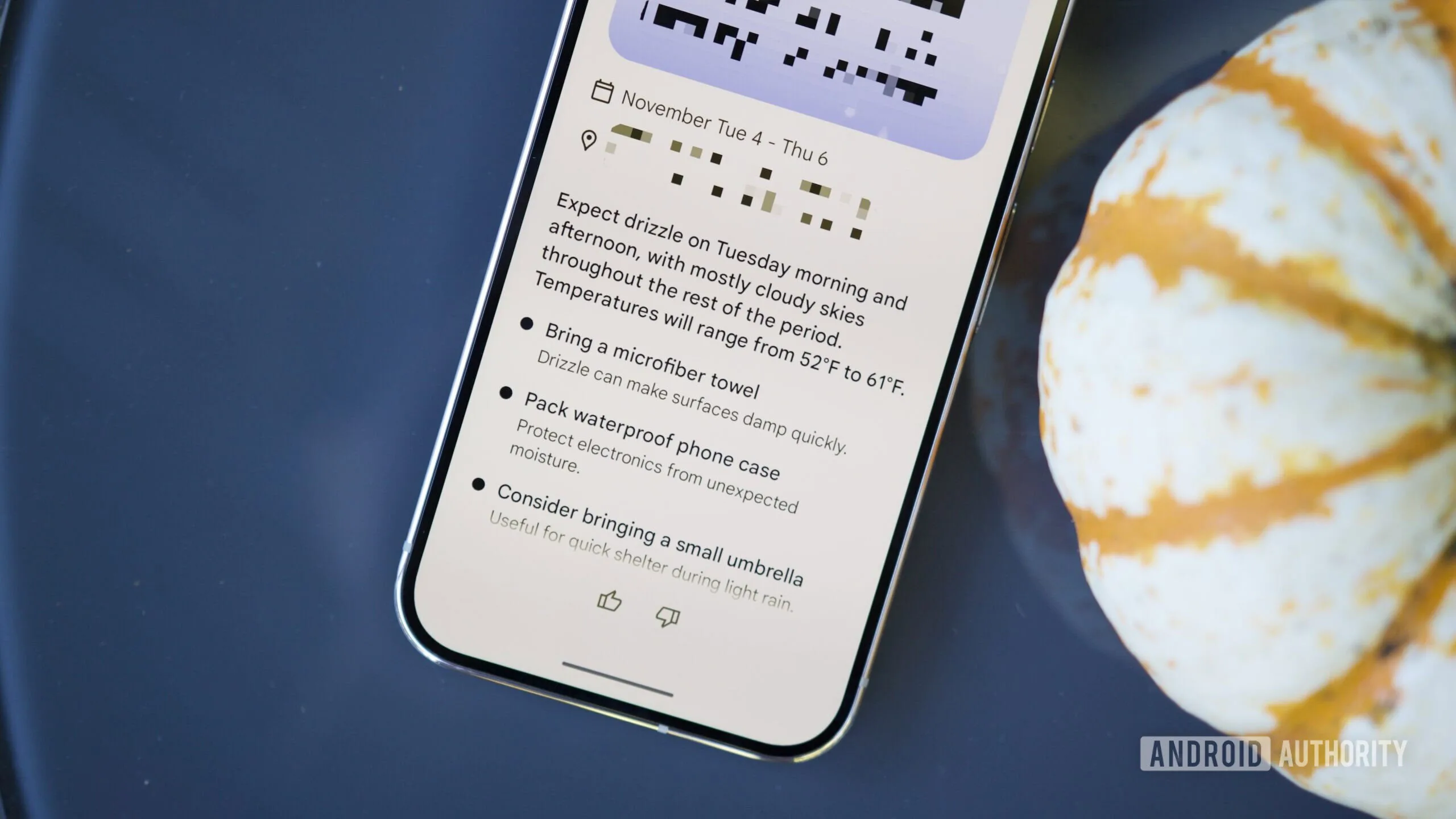
Qualcomm does have a legitimate edge in some media capabilities. High-end Snapdragon phones have supported features such as 8K capture, 4K at 120 frames per second, sophisticated video editing tools, and advanced audio options earlier than Pixels. Google’s Video Boost has shown that cloud-assisted processing can produce excellent results, but a flagship Pixel should not need a trip to the cloud to match every capability available locally on competing hardware.
The real test is whether Tensor can stop being an excuse
My read is that Snapdragon Pixel phones would be a retreat, not a rescue. They would produce an immediately stronger handset in several measurable ways, particularly for power users, but they could also deprive Google of the flexibility that made the modern Pixel viable. The company would be back in the old trap: selling a premium-priced Android phone with less scale than Samsung and fewer ecosystem lock-ins than Apple.
Google should not cling to Tensor out of pride. If a custom chip keeps delivering connectivity trouble, excessive heat, and uninspiring endurance, users will not reward the strategic logic. They will buy the phone that works better. Remember when Google killed Stadia? Owning the technology does not obligate customers to wait patiently for the business case.
But the answer is not necessarily a Qualcomm U-turn. It is a Tensor generation that proves Google can execute on the parts users feel every day: a cooler modem, predictable battery life, sustained performance, and cameras that retain Pixel’s character while closing the video gap. If Google gets that right, Snapdragon Pixel phones will remain an entertaining message-board wish rather than a product the company actually needs to build.
Frequently Asked Questions
Would Snapdragon Pixel phones have better battery life?
They could. The source says Snapdragon-powered Pixels would likely see battery-life gains, although these gains would come at a higher cost.
Why did Google stop using Qualcomm chips in Pixel phones?
Google moved to Tensor with the Pixel 6 to gain more control over on-device AI silicon and associated components. Its custom-chip approach also helps it avoid relying on expensive flagship Snapdragon processors.
Are Tensor chips slower than Snapdragon processors?
In benchmarks, Tensor-powered Pixel phones have consistently lagged behind rival devices using Snapdragon silicon in peak performance. However, the source says Tensor phones still offer good everyday performance.
Would a Snapdragon Pixel cost more?
It probably would, unless Google absorbed the added cost. Qualcomm’s latest flagship processors are widely regarded as expensive, while Google buys far fewer phones’ worth of components than Apple or Samsung. Those companies can negotiate at scales Google cannot easily match.