

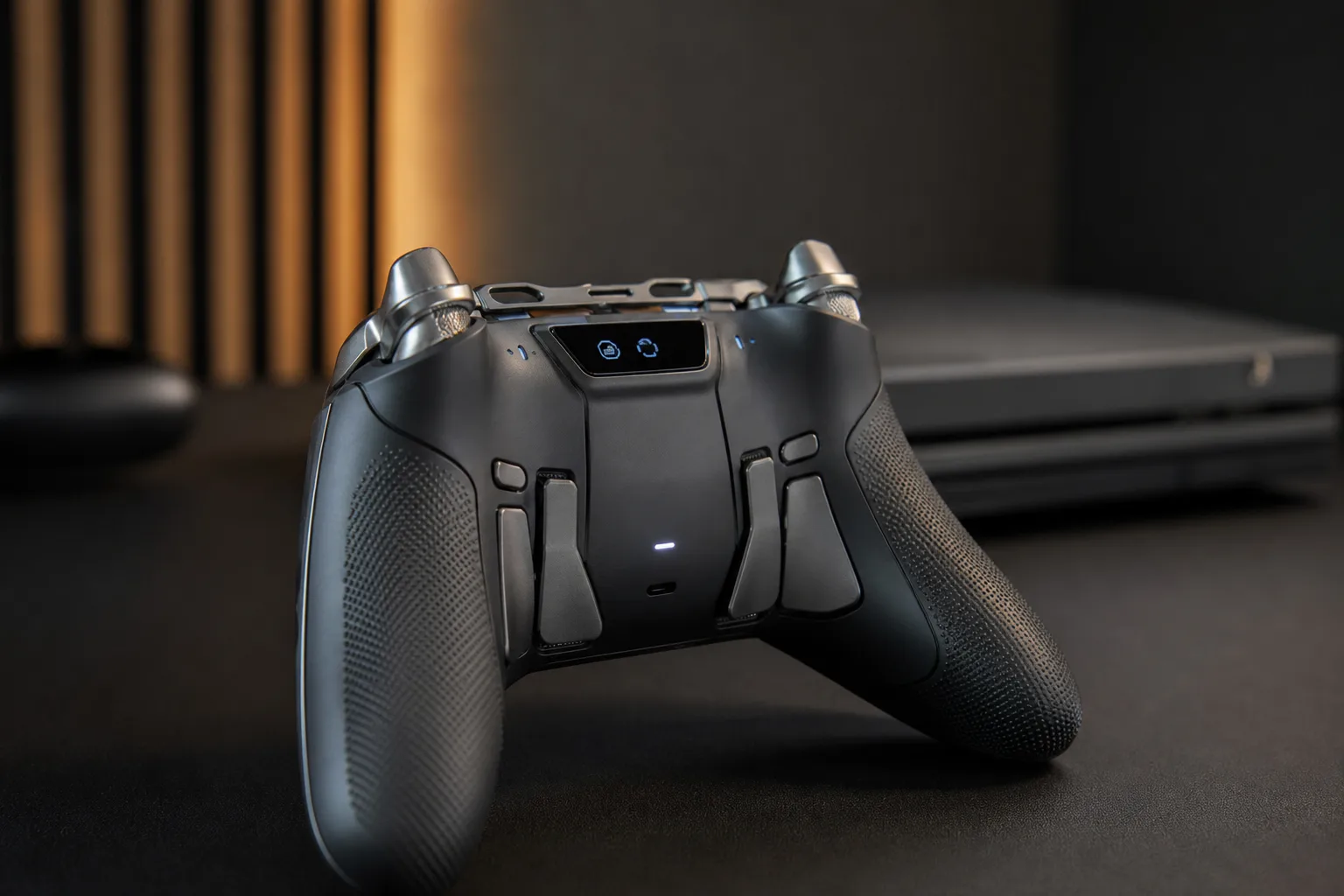
Microsoft has spent years selling its Elite controller line as the premium option for players who care about every millisecond and every remappable input. The apparent Xbox Elite 3 prototype now making the rounds suggests the company wants to turn that controller into something more connected, too: a pad with its own small screen, dedicated cloud controls, and what looks like a less hostile approach to repairs.
That is a lot of ambition for an Xbox Elite 3 controller. It may also be exactly what Microsoft needs if it wants Xbox hardware to feel relevant in a world where the company increasingly says Xbox can be a console, a PC, a phone, or a cloud stream.
- The Xbox Elite 3 prototype reportedly includes a small display for switching between console and cloud gaming connections.
- Photos of the Xbox Elite 3 also show rear paddles, scroll wheels, trigger locks and a removable battery.
- Accessible Torx screws and a repair QR code suggest Microsoft may be taking repairability more seriously this time.
- The controller remains unannounced, and its apparent inability to pair means prototype photos cannot confirm final features.
Table of Contents
Xbox Elite 3 prototype photos fill in the missing pieces
The latest images were posted by a Reddit user who claims to have bought the unreleased controller through OfferUp for $200. The device carries prominent ‘NOT FOR SALE’ markings, placeholder regulatory IDs, and other details that make it look like development hardware rather than a retail counterfeit. Still, this is a leak, not a Microsoft announcement. Treat every feature as provisional until the company puts a finished product on a shelf.
What gives the photos more weight is that they broadly match material that surfaced through Brazilian regulator Anatel earlier this year. That earlier paperwork pointed to two scroll wheels along the controller’s lower edge, a new pairing control, and a wireless mode apparently designed to connect more directly with Xbox Cloud Gaming infrastructure.
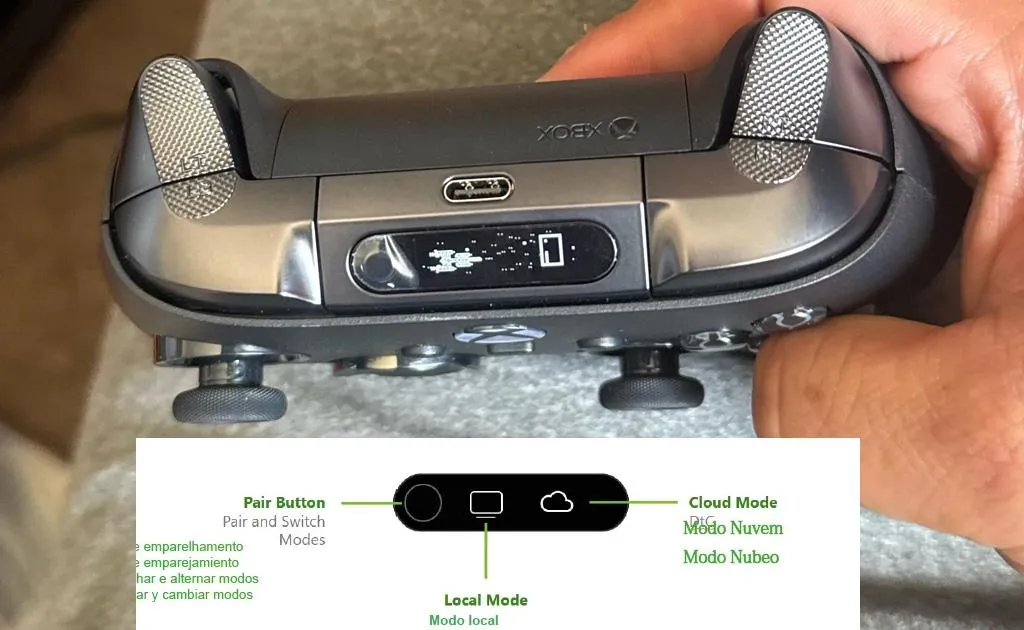
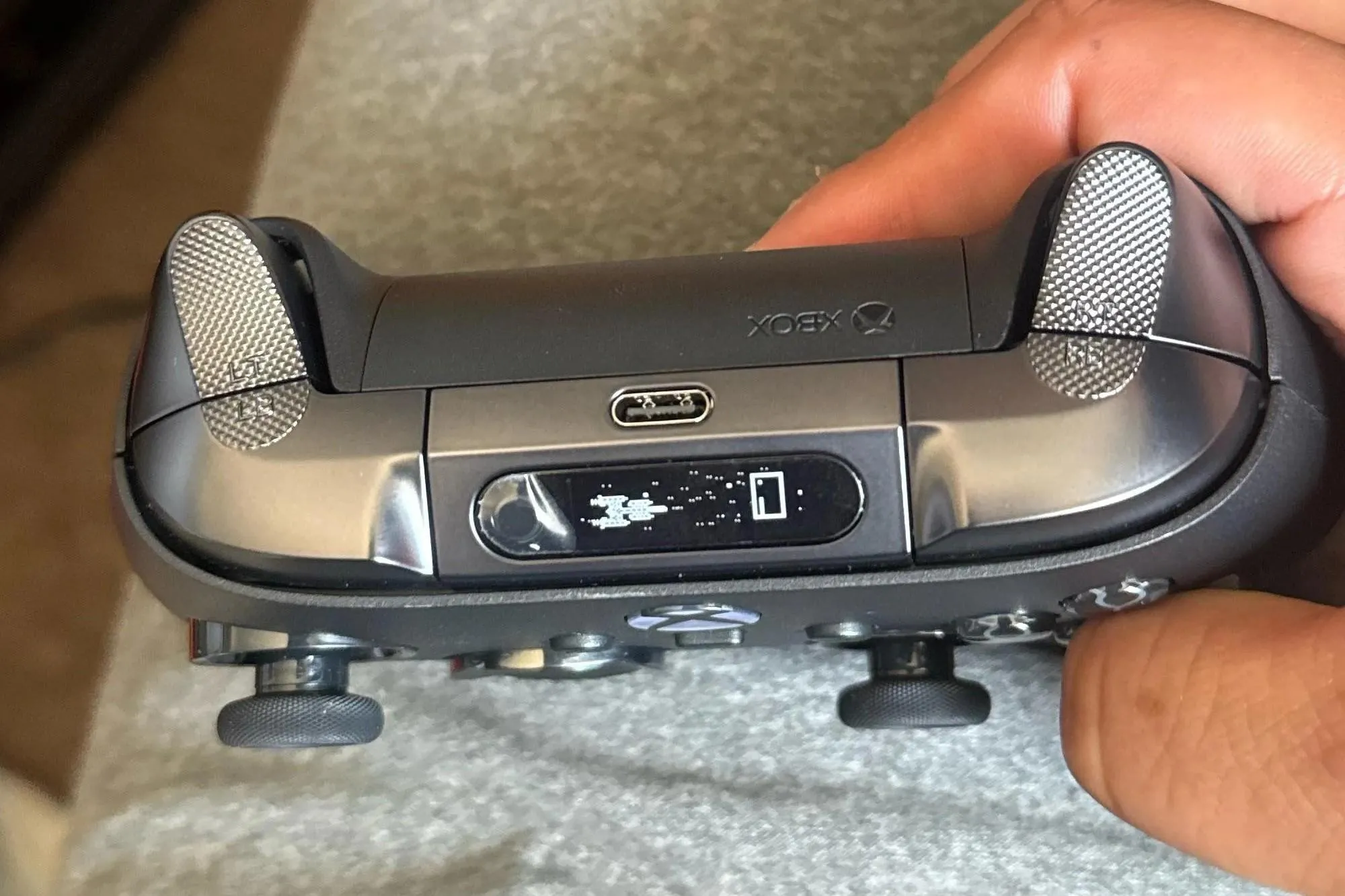
The newly photographed unit adds the clearest look yet at a small built-in display positioned near the center of the controller. One screen appears to show icons for an Xbox console and cloud gaming, while another displays a Microsoft web address that seems to lead to a restricted cloud resource. That is the sort of odd, unglamorous evidence that often makes a hardware leak more believable than a glossy render.
The Xbox Elite 3 screen looks modest rather than flashy. Think less Steam Deck and more the tiny status display on an expensive camera accessory. Its probable job is practical: showing connection status, telling users which device is active, and helping them move between a local console and cloud session without digging through settings.
A screen makes sense if Xbox wants players to move around
The Elite controller line has built a loyal following despite recurring complaints about stick drift, unreliable buttons, and battery issues. It remains one of the better-feeling console controllers when it works, particularly for competitive shooters and racing games. But its basic model is still rooted in the Xbox One era: pair it to a device, adjust settings in an app, and play.
Microsoft’s broader strategy has changed. Xbox Cloud Gaming is now a central part of the company’s pitch, while Xbox titles are appearing on rival platforms and Windows handhelds are becoming legitimate gaming machines. A controller that can actively manage where a session runs is more than a novelty in that context. It gives Microsoft’s platform strategy something you can actually hold.
The alleged Xbox Elite 3 pairing button is especially interesting. Regulatory material suggested it could switch between a console and cloud servers, potentially reducing some of the fuss involved in changing devices. If that works as advertised, it could be genuinely useful for someone who starts a game on a Series X in the living room and finishes it through a streaming device elsewhere. That’s a very specific convenience, but controllers are all about shaving off small annoyances.
There is a catch. Direct cloud connectivity sounds promising, but it cannot repeal the laws of home Wi-Fi, ISP routing, or mobile data coverage. Streaming quality still depends heavily on the network between a player and Microsoft’s servers. A new controller may reduce setup friction; it will not make a mediocre connection feel like local hardware.
The physical changes are familiar, with one welcome exception
Beyond the display, the prototype appears to retain the things buyers expect from an Elite pad: four rear paddles, interchangeable directional-pad hardware, adjustable trigger travel, and a carrying case. The trigger locks reportedly become distinctly clicky in their shortest setting, which could appeal to players who prefer a mouse-like actuation for rapid firing.
The two wheels on the underside are the stranger addition. Microsoft has not explained their intended role, and the photos do not settle it. They could offer quick profile changes, volume controls, or on-the-fly sensitivity adjustments. My read is that Microsoft needs to be careful here. Elite buyers enjoy customization, but a controller can become a cockpit full of switches surprisingly quickly. Sony’s DualSense Edge took a more conservative route, and there is a reason for that.
The most encouraging detail is hidden under the battery cover. Photos show exposed Torx T6 screws and a QR code that appears intended to route owners to repair information. The removable 5.8Wh battery is also labeled as a component rather than sealed away like contraband. If the final Xbox Elite 3 really lets owners access common wear parts, that would be a meaningful response to the frustration around earlier Elite models.
Microsoft already publishes hardware support and replacement information through its official Xbox Support portal, but making repair access an intentional part of the controller’s physical design would be a stronger move. Premium peripherals should not become expensive e-waste because a thumbstick or battery fails. Frankly, that should be the baseline for an Xbox Elite 3 controller likely to cost well above a standard Xbox pad.
Microsoft still has to prove the software, and the price
The Reddit poster says this particular unit does not pair over cable or wirelessly, instead flashing a red light. That is not surprising for unfinished hardware, but it means the leak cannot verify the screen interface, cloud mode, latency claims, or battery behavior. Prototype hardware is often the technology equivalent of a restaurant kitchen during renovation: you can see where the appliances are going, but you cannot order dinner yet.
Reports suggest Microsoft could still introduce the Xbox Elite 3 later this year, perhaps around a major gaming event. The timing would make sense. The Elite Series 2 is old by accessory standards, and Microsoft has a reason to refresh the premium end of its ecosystem while cloud gaming becomes more prominent.
But the final product will be judged on boring fundamentals, not the tiny screen. Does it survive thousands of hours without stick drift? Is the battery replaceable in practice rather than only on a teardown table? Can players switch devices without re-pairing rituals? And how much will Microsoft charge for all this? The Xbox Elite 3 could be the rare controller upgrade that makes Xbox’s sprawling platform strategy feel tangible. Or it could be a very expensive remote with another menu to manage. The answers will matter more than the screen.

