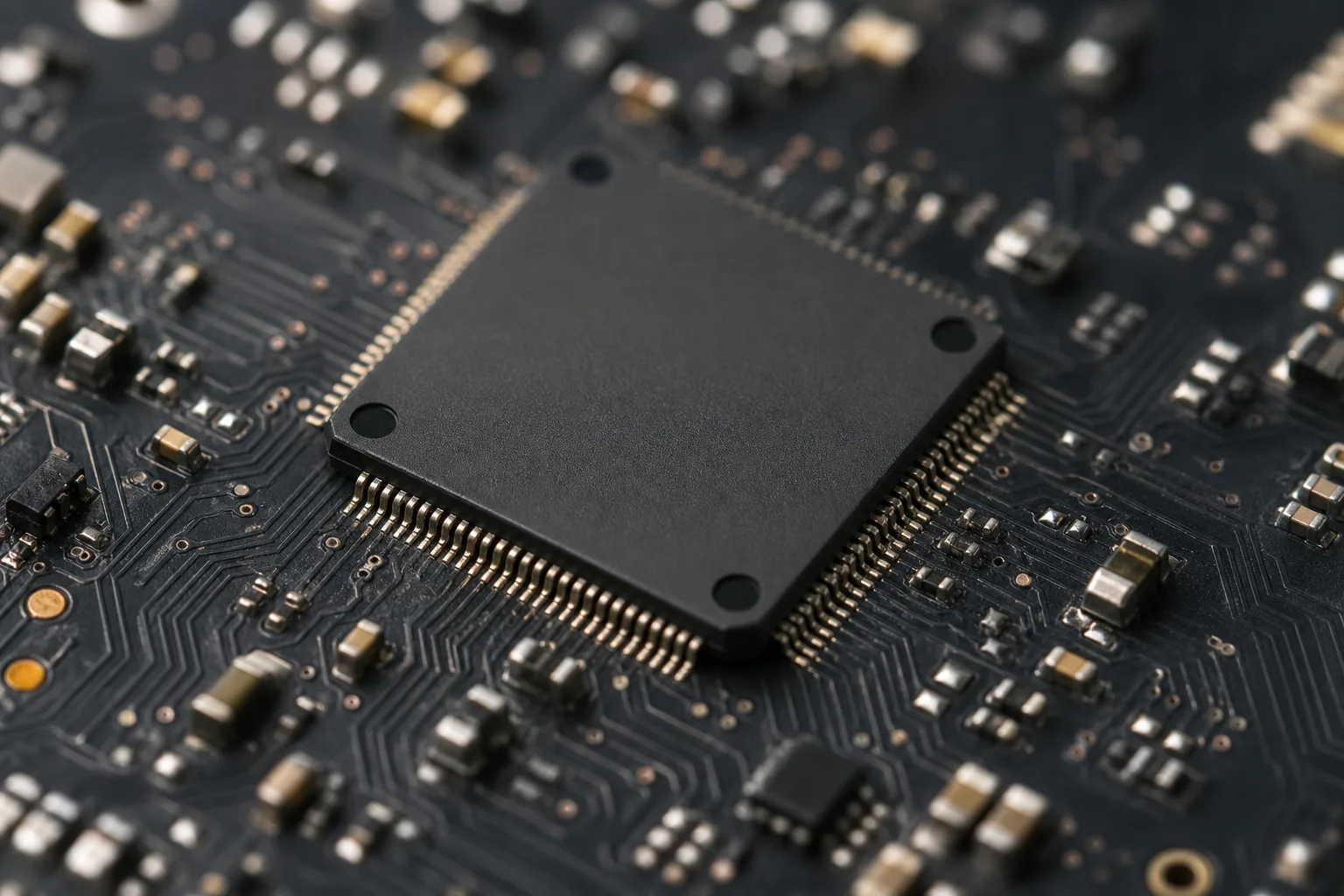
To understand how transistors work, forget the smartphone in your hand for a minute. Think instead about a faucet: a small twist of the handle controls a much larger flow of water. A transistor does something remarkably similar with electricity, and that modest trick is why we have pocket computers, streaming video, electric vehicles, cloud data centers, and yes, the hungry AI systems now remaking the industry.
Calling the transistor one of the defining inventions of the 20th century may sound like engineering-class hyperbole. It isn’t. Without it, digital technology would have remained a noisy, expensive, room-filling specialty. The transistor turned electronic control from an industrial curiosity into a foundation of modern technology.
- A useful starting point for understanding how transistors work: a small electrical signal can control a much larger current.
- Once you see how transistors work, it becomes clear how computers shrank from room-sized machines into the phones, cars, and servers people rely on daily.
- Relays and vacuum tubes established the switching and amplification principles that semiconductor devices made dramatically smaller and cheaper.
- Modern chipmaking packs billions of microscopic switches onto silicon, creating enormous performance gains alongside serious energy and manufacturing challenges.
Table of Contents
The transistor began with an old communication problem
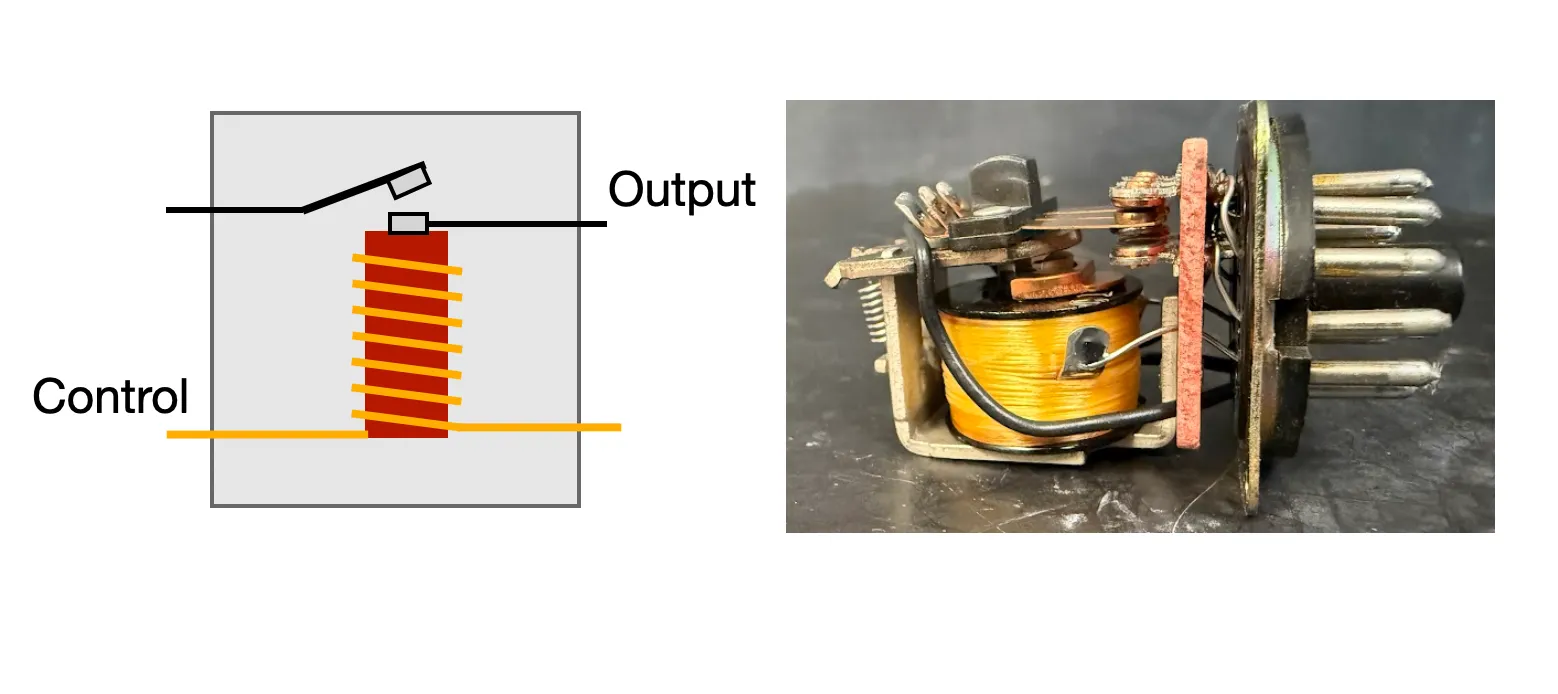
Long before silicon, telegraph networks had a practical headache: electrical signals weaken as wires stretch across distance. The answer was the relay, an electromechanical switch developed in the 1830s. Send a modest current through a coil, create a magnetic field, pull a metal contact into place, and use a separate battery-powered circuit to repeat the message farther down the line.
That is the essential concept: one electrical circuit controls another. It also provides an early, mechanical preview of how transistors work. Relays remain useful where a low-power control must safely manage a higher-power load: car starters, industrial equipment, and plenty of household appliances still use them. You can often hear one doing its job as a distinct click.
But a relay has moving parts, and moving parts are a lousy foundation for high-speed computation. The contacts wear down. They bounce. They cannot switch as quickly as vacuum tubes. For a telegraph, fine. For a processor running a modern operating system, not remotely fine.
Vacuum tubes made electronic logic practical, briefly
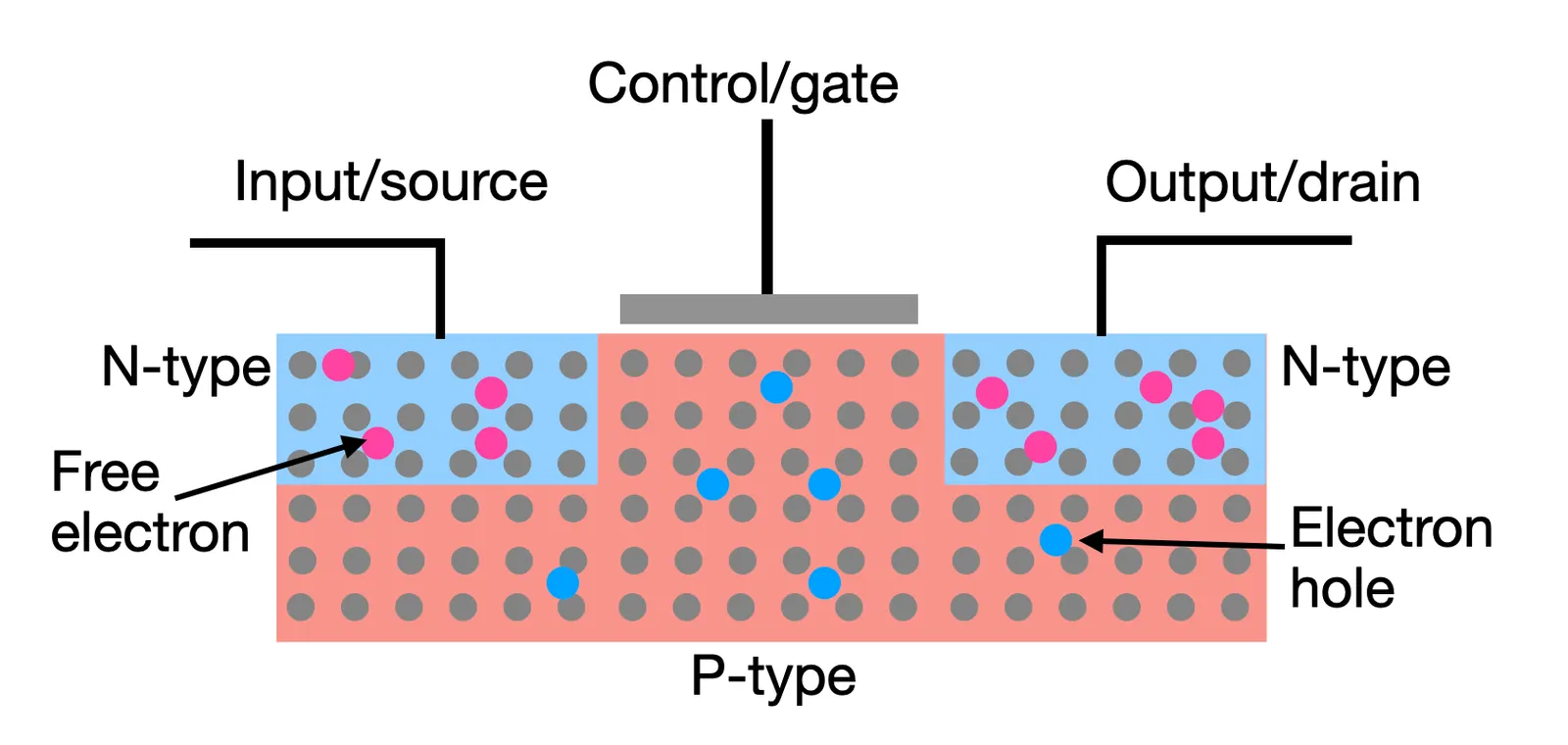
The next step came with vacuum tubes. A heated filament inside an evacuated glass tube releases electrons, which can travel toward a positively charged plate. Insert a control grid between them and a small voltage on that grid can restrict or encourage the electron flow. That means the tube can amplify a weak radio signal or switch an output on and off without a mechanical contact.
The easiest way to see how transistors work is to compare them with tubes: both let a control signal govern a separate current. Crucially, that output can be used as a copy of the input pattern at greater strength. That is amplification. It made radio receivers useful, helped launch long-distance telephone systems, and became the building block for early electronic computers.
Machines such as ENIAC showed what electronic switching could do, but they also advertised vacuum tubes’ downsides with the subtlety of a furnace. Tubes were bulky, fragile, power-hungry, and hot. They failed often enough that maintaining early computers was a full-time chore. Imagine building a laptop from thousands of hot light bulbs, then expecting it to fit in a backpack. That was the problem.
Researchers changed the trajectory with a working transistor. Its importance has only grown with every new generation of chips.
How transistors work inside silicon
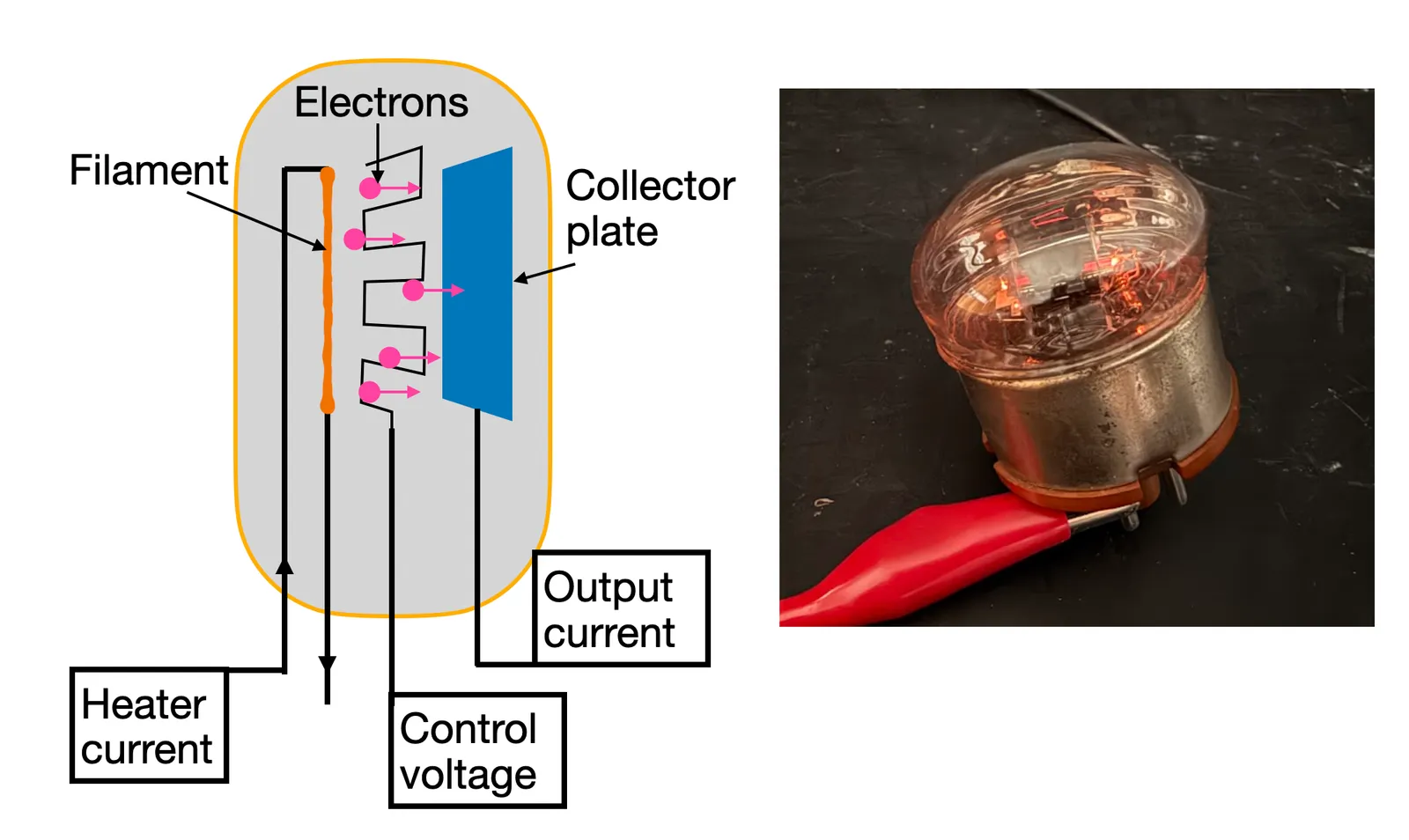
A transistor is made from semiconductor material, most commonly silicon. Silicon sits in a useful middle ground: it does not conduct electricity as freely as copper, but it is not an absolute blocker either. Engineers can alter its electrical behavior by introducing carefully selected impurities, a process called doping. The result is regions rich in mobile electrons and regions that behave as though they contain positive charge carriers called holes.
In the most familiar modern design, the MOSFET, there are three main terminals: source, drain, and gate. The source and drain are the route a current may take. The gate is the control handle. Applying voltage to it creates an electric field that either permits a channel for current to form or prevents that channel from forming. This is the physical basis of how transistors work in most modern digital chips.
At its simplest, how transistors work comes down to this: a gate voltage decides whether current can pass between the other terminals. In a digital chip, engineers treat those states as binary values, zero and one. Arrange transistors into logic gates and they can perform operations such as AND, OR, and NOT. Combine vast numbers of those gates, plus memory and timing circuits, and you have the machinery behind a CPU.
The clever bit is that transistors can also operate between fully off and fully on. In that analog region, a small variation at the gate can produce a larger variation in output current. That is why the same broad family of device appears in audio equipment, radio hardware, camera sensors, power supplies, wireless networks, and the circuitry that charges an EV battery.
From one switch to billions of them
How transistors work is straightforward in principle, so why is chipmaking among the hardest manufacturing jobs on Earth? Scale. A contemporary processor contains vast numbers of transistor structures, patterned in layers with near-absurd precision. Each must behave predictably, and the finished chip must survive real heat, real voltage fluctuations, and years of use.
Integrated circuits were the breakthrough that made this scale economical. Understanding how transistors work helps explain why fabricating whole circuits on a wafer beat wiring individual components together by hand. That opened the door to the familiar march of miniaturization: mainframes yielded to minicomputers, desktops, laptops, smartphones, and now clusters of accelerator chips packed into data centers.
Modern cars offer a useful reality check on the phrase “computer on wheels.” They contain microcontrollers for engine management, safety systems, displays, sensors, battery controls, and infotainment. Every one of those systems rests on transistors. The same is true of a Wi-Fi router, a smartwatch, a washing machine, and a credit-card terminal. They are mundane objects powered by an astonishingly refined form of electrical traffic control.
The transistor era has a power problem of its own
For decades, shrinking transistors generally delivered a beautiful bargain: more performance at lower energy per operation. That bargain has become harder to maintain. Tiny features are vulnerable to leakage currents, heat, manufacturing variation, and the awkward physics that arrive when engineers push toward atomic dimensions. The industry has responded with three-dimensional transistor designs, chiplets, specialized accelerators, and more elaborate packaging.
My read is that the next chapter will be less about simply cramming in more switches and more about using them with discipline. AI has made that painfully clear. Training and serving large models demands sprawling fleets of GPUs and accelerators, where memory movement and power delivery can matter as much as raw transistor count. A faster chip that needs a small power plant attached to it is not a free win.
Still, how transistors work remains the central lesson beneath all of this complexity. Computing begins when a tiny control signal reliably governs a larger electrical action. The materials and geometries have changed beyond recognition since early devices, but the core bargain has held. The real question now is whether the industry can keep extending it without making electricity, heat, and manufacturing costs the new bottleneck.
Frequently Asked Questions
How transistors work in a computer?
A computer uses transistors primarily as tiny switches. Billions of those switches turn electrical pathways on and off in coordinated patterns, representing binary values and forming logic gates, memory cells, processors, graphics hardware, and communications circuits.
Why did transistors replace vacuum tubes?
Transistors were smaller, used far less electricity, generated less heat, and proved more durable than vacuum tubes. Those advantages made electronics portable and reliable enough for consumer products, then cheap enough to place huge numbers of components on one silicon chip.
What is the difference between a transistor and a relay?
A relay uses an electromagnet and physical contacts to switch a circuit, so it is comparatively slow and mechanical. A transistor controls current electronically inside a semiconductor, with no moving contact, allowing it to switch vastly faster and operate at microscopic scale.
How many transistors are in a modern chip?
The count varies wildly by design, but leading processors and graphics chips contain tens of billions of transistors. That density is possible because manufacturers build features measured in nanometers, although the real dimensions and manufacturing processes are more complicated than a single label suggests.