

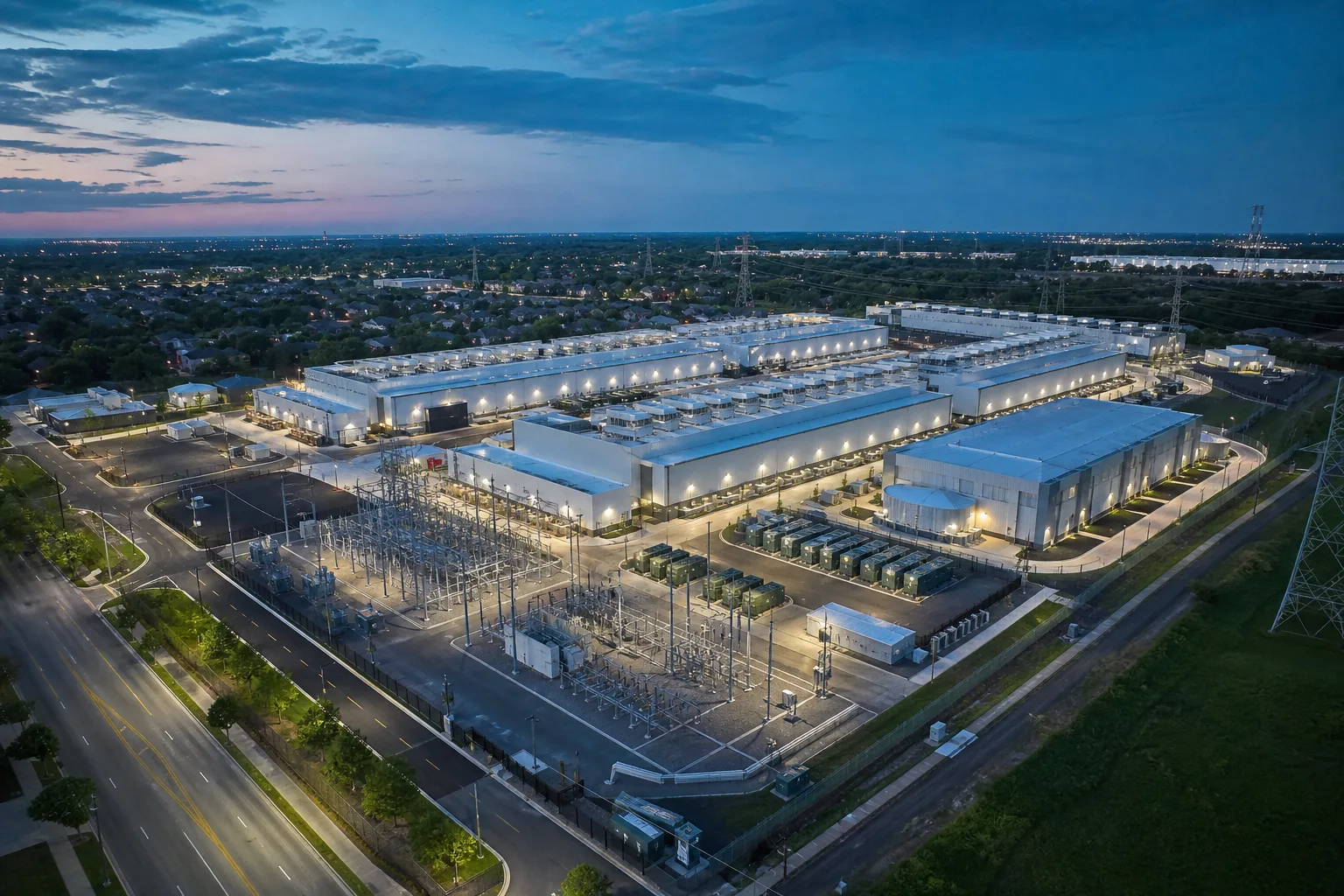
America’s pro-data center campaign has a messaging problem. Not a technical one, exactly. The servers work, the money is real, and AI companies plainly need enormous computing capacity. But try explaining that to the homeowner who hears a generator humming all night, or the town council staring at a projected spike in power demand.
Washington got a particularly vivid look at that tension this week at Data After Dark, a party at PubKey, the crypto-friendly bar that has become a familiar gathering spot for the city’s tech-libertarian set. The event’s premise was intentionally provocative: data centers are good, their critics are irrational, and American technological ambition needs defending.
That’s a neat story for a cocktail party. It is also a wildly incomplete account of why opposition to AI data centers has spread from rural counties to suburban communities and state legislatures. People are not objecting because they have suddenly become anti-computer. They are asking who pays for the infrastructure, who gets the upside, and why the largest facilities often arrive with decisions already half-made.
- The pro-data center campaign is finding a public voice through young conservative commentators, think tanks and AI industry allies.
- A Washington party celebrating AI infrastructure exposed the organized networks behind the pro-data center campaign.
- Local opposition centers on electricity demand, water use, noise, land costs and weak community control over development decisions.
- Data center builders face a political problem that faster permitting and polished messaging alone cannot solve.
Table of Contents
The pro-data center campaign has powerful friends
Data After Dark was hosted by Jonas Du, a young writer whose work has appeared in outlets including National Review, The Free Press and Pirate Wires. The party’s invitation called on “techno-optimists” to celebrate AI infrastructure and dismissed what it described as bipartisan hostility toward data centers. A server-rack version of the libertarian “come and take it” flag supplied the visual language. Subtle, it was not.
The listed presenters were Young Voices, Pirate Wires and The Compute Optimist, a recently launched Substack run by Ed Tarnowski, a technology policy and advocacy director at the R Street Institute. That lineup matters because it reveals how the pro-data center campaign is taking shape: not as a spontaneous groundswell of local residents, but through a familiar Washington ecosystem of media entrepreneurs, think tanks, venture interests and policy advocates.
Young Voices describes itself as a nonprofit talent agency for writers and commentators between 18 and 35 who identify with classical liberal ideas. Its model is straightforward: identify young voices, secure fellowships and media placements, and move them into public debate quickly. Du and Tarnowski are both associated with the organization.
Its institutional connections are part of the picture, too. Young Voices has partnered with and received support from organizations including the Koch Institute and the Atlas Network, according to public descriptions cited around the event. Its leadership and board also connect to The Fund for American Studies, AI-focused investment, fintech and the Cicero Institute, the policy group founded by Trump ally Joe Lonsdale.
None of that proves every person at the party was handed a script by a billionaire in a dark room. That would be cartoonishly simple. It does show that the pro-data center campaign has access to the sort of institutional scaffolding that local opponents usually lack: fellowships, media channels, donors, policy shops and people who understand how to turn an industry preference into an ideological cause.
The result looks less like grassroots activism than a polished imitation of it. Think of it as a startup accelerator for a political message.
Why data centers became a local political flashpoint
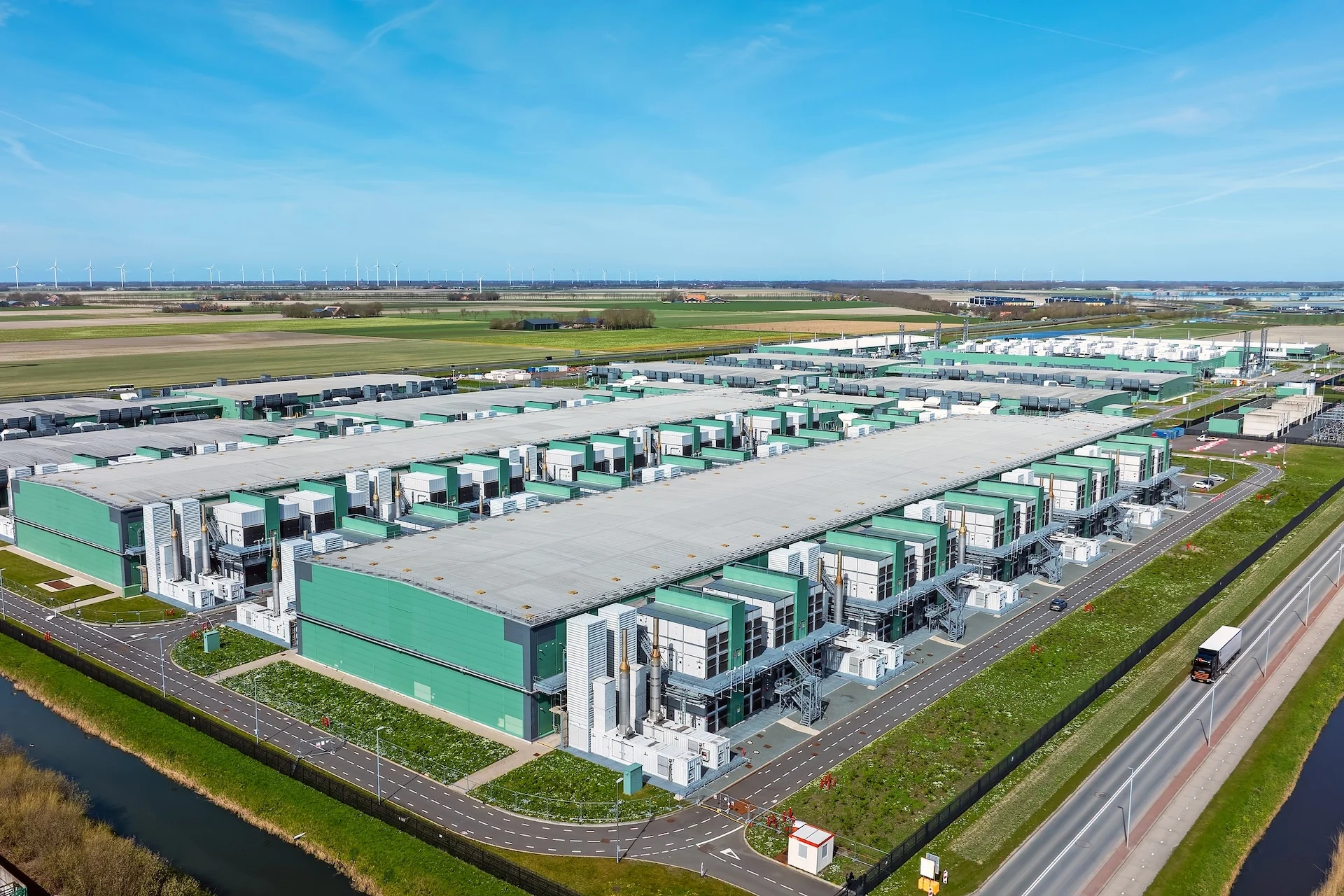
The AI boom has turned data centers into the physical bottleneck of the software industry. Microsoft, Google, Amazon, Meta and a swelling roster of cloud providers and AI startups all need more capacity. Nvidia can sell a staggering number of GPUs, but those chips do nothing useful until someone builds the substations, transmission lines, cooling systems and warehouse-scale buildings around them.
That is why the pro-data center campaign insists these facilities should be treated as essential infrastructure. On one level, it is right. The United States cannot lead in advanced computing while pretending computation has no physical footprint. A chatbot response may feel weightless; the machinery behind it most definitely is not.
Still, calling a facility essential does not settle the argument over where it belongs or what a host community should receive. Loudoun County, Virginia, often marketed as the world’s data center capital, has become a useful case study. The region gained investment and technical infrastructure, but its concentration of facilities has also fed disputes over land use, transmission buildout and the growing visual and environmental burden of warehouse development.
Power is the hardest issue to wave away. Data center electricity consumption could rise sharply as AI workloads expand. Utilities then face expensive choices: add generation, expand transmission, manage demand, or some combination of all three. Those costs do not remain inside the server campus fence. They move through utility planning and, eventually, onto customer bills.
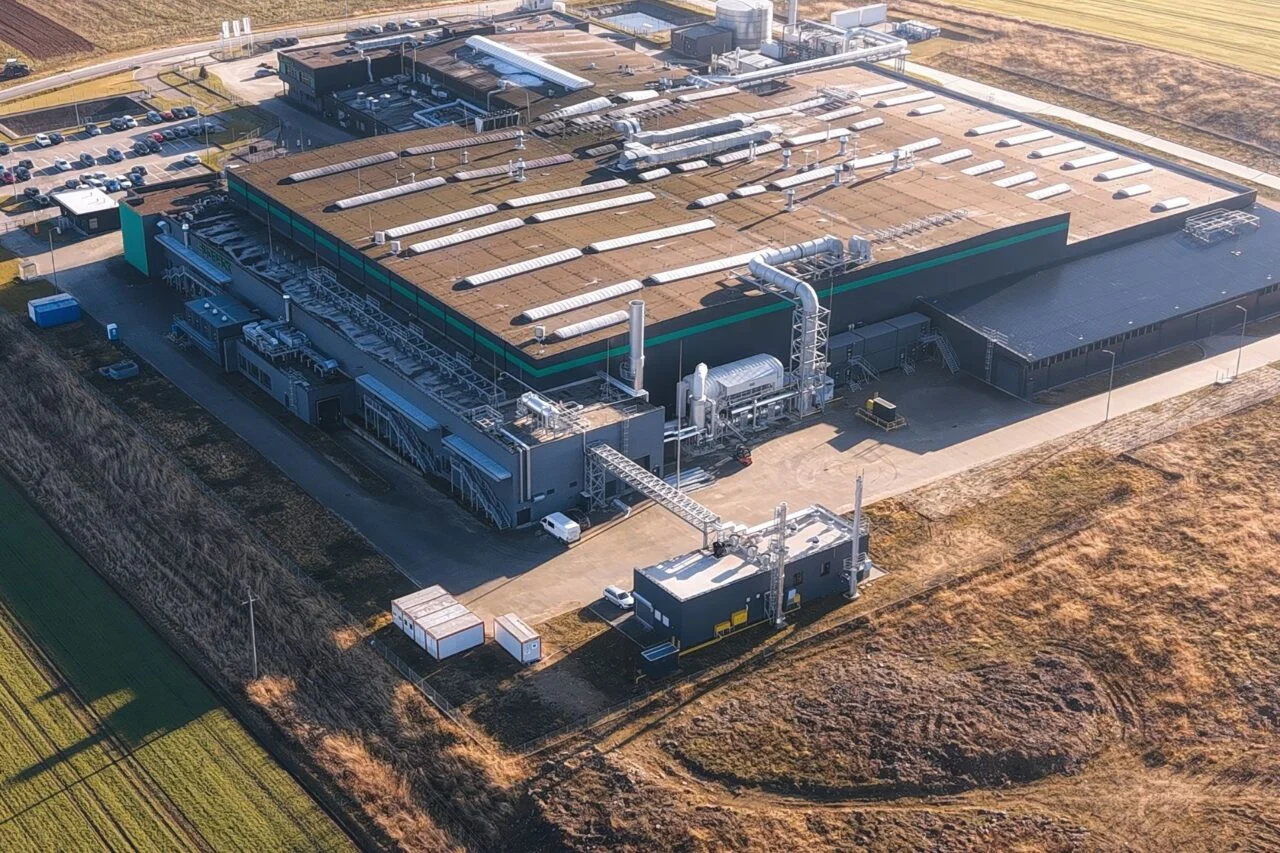
Water use can be just as contentious in drought-prone regions. So can diesel backup generators, construction traffic, reduced open space and the surprisingly limited permanent employment produced by highly automated facilities. A giant project may involve thousands of workers while being built, then operate with a much smaller long-term workforce. That is not an argument against construction. It is an argument for honesty about the trade-offs.
Innovation rhetoric won’t fix a consent problem
The most revealing part of the pro-data center campaign may be its tendency to treat skepticism as ignorance. Before the event, Du told Axios that online critics were not “intellectually serious.” That line plays well among people who see every permitting fight as another symptom of national decline. It plays less well at a county meeting where residents have spent weeks reading utility filings and zoning maps.
Frankly, the data center industry has earned some of this distrust. Developers often arrive promising tax revenue and future-proof infrastructure while offering limited clarity on power arrangements, water consumption or the public cost of upgrades. In some places, nondisclosure agreements and opaque incentive negotiations make the entire process feel like a private deal presented to the public after the fact.
The pro-data center campaign is trying to replace that suspicion with a patriotism-and-progress narrative. Build the compute. Beat China. Power the next industrial era. These are not frivolous arguments; geopolitical competition around chips and AI is real. But national ambition cannot become a permission slip for bypassing local consent.
Remember when the tech industry treated opposition to ride-hailing rules as proof that cities did not understand innovation? That posture aged badly. So did the assumption that every skeptic of crypto was merely behind the times. Data centers risk repeating the same mistake, only with electric grids and water systems involved. Those are considerably harder to reset after a bad rollout.
What a credible pro-data center campaign would require
A smarter pro-data center campaign would stop pretending every project deserves an automatic yes. It would push for public reporting on electricity demand, water use, backup generation and local tax arrangements before approvals are finalized. It would support enforceable commitments for clean power procurement rather than vague sustainability language. And it would accept that some areas simply do not have the grid capacity, water resources or community appetite for another mega-campus.
There is a real case for building more compute in America. AI workloads are growing, and outsourcing the physical layer of the industry is not a serious long-term strategy. But developers and their political allies cannot demand the benefits of being treated like public infrastructure while rejecting the transparency expected of public infrastructure.
That contradiction hung over the party at PubKey. Its attendees may be right that AI needs more data centers. The public may be right that the current buildout model is too opaque, too extractive and too dismissive of people who have to live next to it. My read is that the side which learns to address that second point honestly will win the argument. Chants of “USA” are not a grid plan.
Frequently Asked Questions
What is the pro-data center campaign?
The pro-data center campaign describes the growing network of technology advocates, policy groups, investors and commentators arguing that communities should welcome AI data centers as essential infrastructure. Its supporters frame the facilities as necessary for U.S. competitiveness, while critics focus on local environmental and economic costs.
Why are communities opposing AI data centers?
Residents and local officials have raised concerns about data centers consuming large amounts of electricity and water, generating persistent equipment noise, and receiving tax incentives with limited job creation. The specific effects vary by project, but the backlash has become politically significant across several U.S. regions.
Who organized the Data After Dark event?
The event was publicly associated with journalist Jonas Du and listed Young Voices, Pirate Wires and The Compute Optimist as presenters. Young Voices is a nonprofit that places young writers and commentators in media outlets, while Pirate Wires is affiliated with Founders Fund executive Mike Solana.

