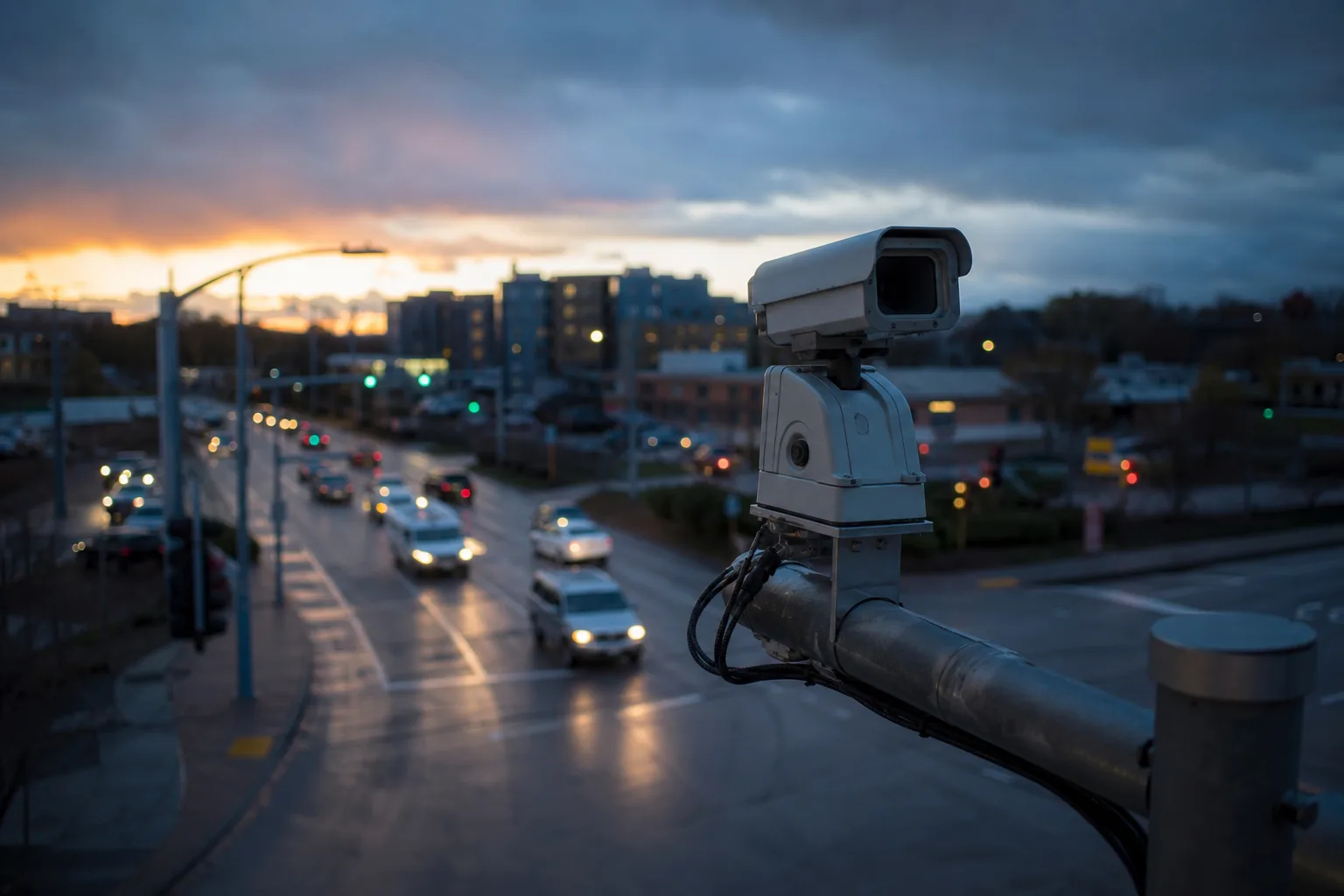
- A federal judge found Flock Safety cameras were searched without a warrant, violating an Oklahoma driver’s Fourth Amendment rights.
- The Flock Safety cameras ruling suppresses evidence in one case but does not yet bind courts outside that federal proceeding.
- Judge Sara Hill compared continuous vehicle-location collection to indiscriminate mass surveillance, not ordinary police observation.
- Political pressure on automated plate-reader networks is growing as local governments cancel contracts and Congress considers federal restrictions.
Table of Contents
Flock Safety cameras just hit a constitutional wall
Police have long been able to spot a car on a road. What they have not traditionally been able to do is quietly pull up a searchable record of where that car has traveled for weeks or months, whenever they feel like it. A federal judge in Oklahoma has now drawn a sharp line around that distinction, finding that a deputy’s use of Flock Safety cameras violated a woman’s Fourth Amendment rights.
The ruling came from U.S. District Judge Sara Hill in a criminal case tied to a Tulsa County sheriff’s deputy. According to the court’s account, the deputy searched Flock’s database for a California-plated vehicle without first obtaining a warrant. Hill found no apparent justification for the lookup beyond the vehicle’s out-of-state plate. That search later fed into a traffic stop and vehicle search that allegedly turned up 91 pounds of methamphetamine.
Hill ordered the resulting evidence suppressed under the familiar legal doctrine known as the ‘fruit of the poisonous tree.’ If the initial search was unconstitutional, evidence derived from it can’t be used to rescue the case. For prosecutors, that is a brutal practical result. For the rest of us, the broader language is the part that deserves close attention.
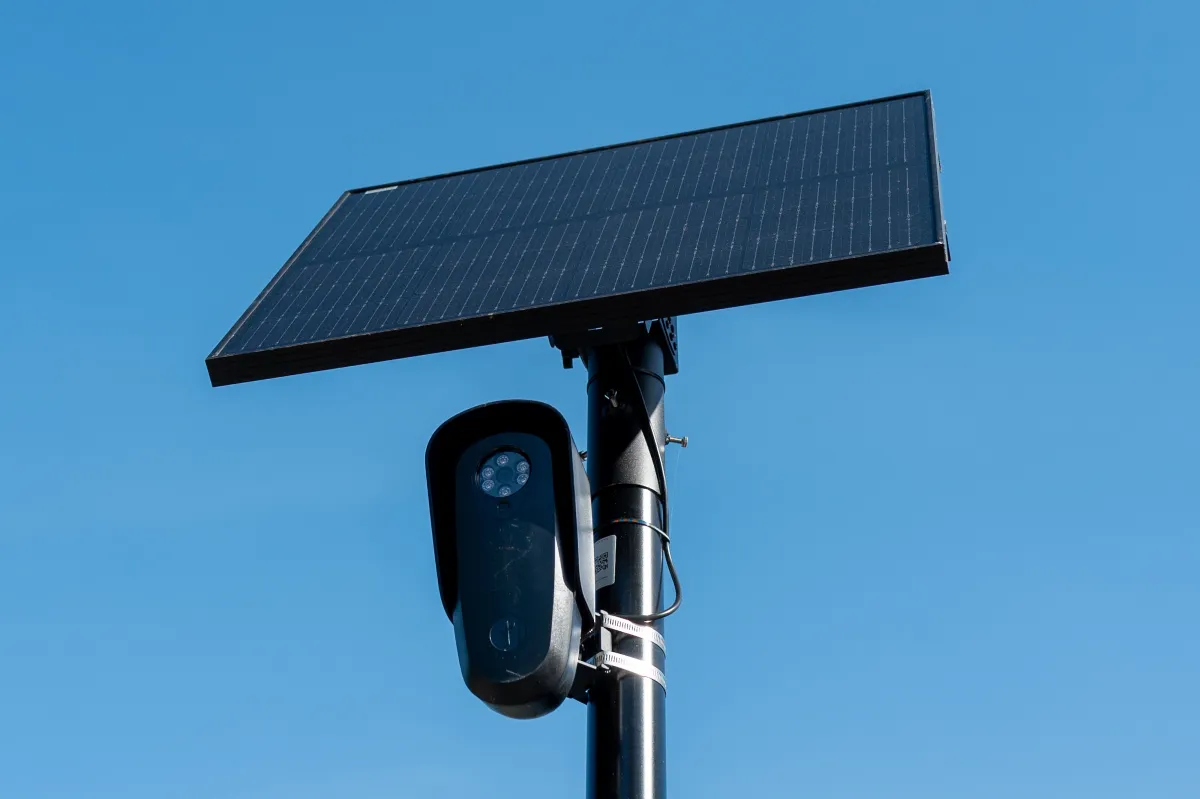
Judge Hill described the system in unusually direct terms: ‘This is a type of indiscriminate mass surveillance.’ That phrasing gets to the actual anxiety around automated license-plate readers. The worry is not that an officer saw your car once outside a store. It is that a private-company network can log the movements of virtually every passing vehicle, then make that history available to police on demand.
Why Flock Safety cameras are different from a patrol car
Flock’s product sits in the gap between old-fashioned police work and the data-heavy monitoring that smartphones normalized. Its cameras photograph license plates and vehicle characteristics, then allow participating agencies to search for records across a network. In a narrow missing-person or stolen-car investigation, that can sound perfectly sensible. A detective has a plate, a time window, and a defined emergency.
But Flock Safety cameras are built for scale, and scale changes the constitutional equation. A patrol officer cannot follow thousands of drivers at once. A networked database can. It does not get tired, forget details, or need a suspicion before collecting data. It simply records what passes in front of its lenses and preserves a searchable trail.
Hill’s reasoning echoes the U.S. Supreme Court’s decision in Carpenter v. United States, concerning government access to cell-phone location data. Carpenter recognized that extensive location records can reveal an intimate portrait of a person’s life: where they sleep, work, worship, seek medical care, or spend time with friends.
License-plate data is not identical to phone data. A plate identifies a vehicle, not necessarily its driver, and cameras only capture a car when it passes a reader. Those differences will matter in future cases. Still, my read is that the practical similarity is hard to dodge when Flock Safety cameras can reconstruct repeated travel patterns across an expanding regional network. The data may be a little patchier than cellphone records, but it can be plenty revealing.
A ruling with real force, but limited reach
Before anyone declares the Flock business model illegal, here is the reality: this is not a Supreme Court ruling, and it does not automatically control courts elsewhere. It is a federal district court decision in a specific case. Other judges can disagree, and prosecutors may appeal. Flock Safety cameras remain widely used by police departments, homeowners associations, retailers, and local governments.
Even so, district court rulings are where legal shifts often start. They give defense attorneys a fresh argument, force police agencies to revisit their policies, and put vendors on notice that ‘the car was on a public street’ may no longer be a complete answer. The key question is whether officers are conducting a targeted investigation or rummaging through a location archive first and inventing the rationale later.
That latter possibility looks especially ugly in the Oklahoma case. Hill said the deputy had no visible reason to query the vehicle beyond its California plate. Out-of-state plates can be useful investigative clues in limited circumstances, but treating geography as a license for retrospective surveillance is a slippery standard. Plenty of people drive across state lines because they are visiting family, moving house, or simply taking a road trip.
The political backlash is no longer hypothetical
The court fight lands while Flock is already absorbing a broader backlash. Governments in places including Florida and Texas have reconsidered or ended use of the company’s technology, amid concerns over data access, cross-jurisdictional sharing, and alleged misuse. The company has also faced scrutiny after reports that law-enforcement personnel used its tools to stalk women.
Flock CEO Garretty Langley has argued for a compromise between privacy and public safety and has apologized to women targeted by officer misuse. That is a necessary admission, but it does not answer the harder design question: what safeguards prevent abuse when the system’s value comes from making location data easy to search?
Washington is starting to take a position, too. Sen. Bernie Sanders introduced the Block Flock Act, a proposal that would bar federal agencies from using automated license-plate readers such as Flock’s. Passage is far from assured, particularly in a Congress that usually finds law-enforcement technology easier to fund than to constrain. Still, Flock Safety cameras have become a rare issue drawing criticism from both civil-liberties advocates and conservatives wary of government tracking.
The warrant question will define the next phase
Flock will reasonably argue that its systems help recover stolen cars, locate missing people, and investigate violent crime. Those are real benefits, and pretending otherwise would be unserious. But the constitutional test cannot be whether a tool has worthy uses. A house key has worthy uses; that does not let the government copy every key in the neighborhood for later use.
The sensible path is not necessarily banning Flock Safety cameras outright. It is drawing enforceable boundaries: narrow retention periods, auditable searches, strict access controls, and warrants when police seek a person’s accumulated travel history. Without those limits, ‘public’ movement becomes a permanent file available to anyone with the right login.
Judge Hill’s decision may not settle the law, but it exposes the central contradiction in the license-plate-reader industry. These systems are sold as cameras. Their real power is that they function as a location database. Courts are finally beginning to treat them that way, and Flock’s next challenge is whether it can operate once that distinction carries legal consequences.