


- Yandex data center strikes disrupted major Russian digital services, from ride-hailing to websites, after damage at a facility in Vladimir.
- Ukraine says Yandex data center strikes reduced pro-Russian bot activity, but available network data cannot prove that claim on its own.
- Cloudflare recorded a sharp fall in automated Yandex-origin traffic, much of which may have been routine search crawling rather than influence operations.
- The episode shows how cloud infrastructure has become another contested layer in a war already shaped by drones, software and propaganda.
Table of Contents
Russia’s digital infrastructure is now part of the battlefield
Yandex data center strikes are becoming a useful case study in the messy overlap between physical warfare and online influence. Ukraine says its attacks on Russian infrastructure knocked enough systems offline to make coordinated pro-Kremlin bot activity noticeably quieter. That is a plausible outcome. It is not, however, the same thing as proof that a troll army vanished overnight.
President Volodymyr Zelenskyy made the claim during an appearance at the Warsaw Security Forum, arguing that social platforms felt less hostile after Ukrainian attacks reached Yandex facilities. “There was less hate, less division and fewer provocations because there were fewer bots,” he said, according to Euronews.
The remark landed because it fits a broader truth of this war: servers, apps, satellite links and data feeds are no longer safely tucked behind the front line. Russia and Ukraine have spent years contesting the digital layer of the conflict through hacking, propaganda, surveillance and communications disruption. Now the machinery running ordinary internet services is increasingly exposed as well.

Zelenskyy has made drone development a centerpiece of Ukraine’s wartime strategy, and the image of Ukrainian weapons around him captures the point: cheap, long-range systems can now threaten assets once considered far beyond a conventional battlefield. A data center is not a tank depot, but taking one offline can still ripple through a country’s economy and information environment.
What the Yandex data center strikes reportedly disrupted
Yandex is often described as Russia’s answer to Google, though that shorthand undersells its reach. The company operates search, maps, cloud services, streaming products, advertising technology and Yandex Go, a ride-hailing and delivery platform used well beyond Russia. When its infrastructure stumbles, the effect can resemble a regional outage at a company somewhere between Google, Uber and DoorDash.
Yandex said on Telegram that a drone attack had damaged infrastructure at its Vladimir data center, east of Moscow. “Operations at the data centre have been completely suspended,” the company said, adding that remaining resources were unstable and its platform was down. Reports described knock-on failures affecting websites, banking-adjacent services, apps and video offerings. Yandex Go disruptions reportedly extended into Armenia, Belarus, Kazakhstan, Kyrgyzstan and Uzbekistan.
That wide blast radius matters. The immediate consequence of Yandex data center strikes is not necessarily a cinematic cyber blackout; it is often more mundane and more consequential: a driver cannot receive jobs, a merchant cannot load a tool, a user cannot access an account, and a business loses a piece of its operating stack. Digital dependence is easy to ignore until the plumbing stops working.
Russia has worked hard to make its domestic internet more self-reliant, particularly since Western sanctions and technology restrictions intensified. Yet a domestic alternative is still vulnerable when its physical facilities sit within drone range. Building local platforms solves one kind of geopolitical exposure. It does not solve geography.
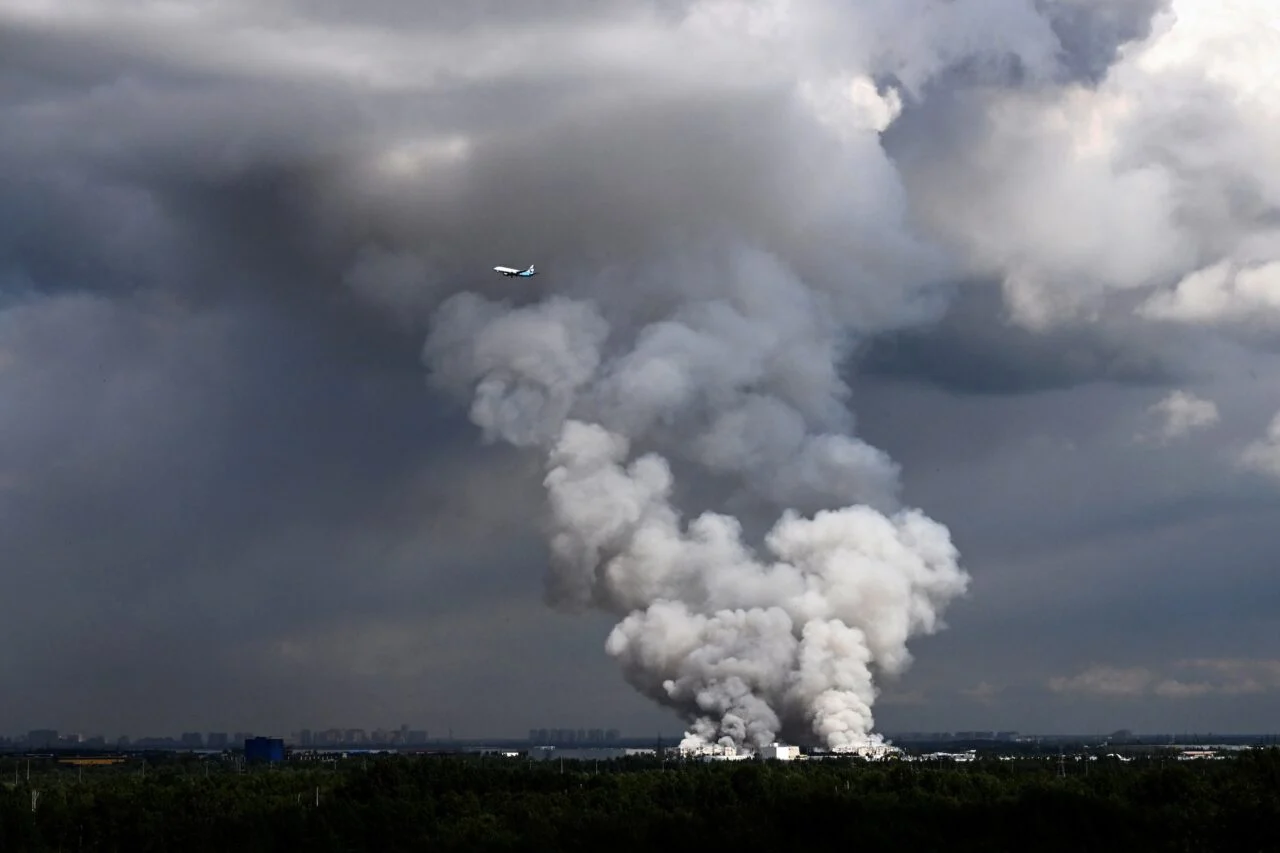
Russia’s commercial internet is also tied to a sprawling retail and logistics economy, where outages can spread far beyond the original target. The Yandex data center strikes are a reminder that modern infrastructure rarely exists in neat, isolated boxes: payments, delivery, identity systems and cloud hosting tend to lean on one another.
Yandex data center strikes and the bot claim
The most attention-grabbing part of Zelenskyy’s argument is the idea that the attacks silenced Russian influence operations. He told the Warsaw forum that people across social networks noticed the difference, then suggested the timing revealed where at least some of those accounts were operating from.
My read is that the claim deserves to be taken seriously as an operational observation, but treated cautiously as a technical conclusion. A coordinated influence campaign needs people, account farms, scheduling tools, proxies, content pipelines and hosting. Disrupt enough shared infrastructure and posting volume can fall. That much is straightforward.
But the public evidence offered so far is thin. Cloudflare data cited by Euronews showed automated traffic from Yandex down by 94% on one day compared with the latter half of September. That sounds enormous. The catch is that automated traffic covers a lot more than propaganda: search crawlers, website monitoring, indexing systems and other machine-to-machine housekeeping all qualify.
Technical observers cited by Radio Free Europe/Radio Liberty pointed out that much of the drop appeared linked to Yandex’s own search crawler. If a search crawler loses connectivity, web dashboards will register a dramatic decline in bot-like requests. That does not tell us whether a Russian political operation went dark, whether Reddit arguments became more organic, or whether influence accounts simply shifted to another provider.
That is the key limitation when evaluating Yandex data center strikes. Network telemetry can show that traffic changed. It cannot, by itself, identify the motive, operator or content behind every missing request. Anyone claiming a clean one-to-one link between a facility outage and calmer political discussion is getting ahead of the available evidence.
Troll farms do not need a giant server hall
There is another common confusion here. Russian troll operations are often imagined as hulking server farms packed with blinking lights, but many are better understood as digital production shops. The Internet Research Agency, the St. Petersburg outfit that became infamous for its online interference campaigns, worked from office space rather than a Yandex data center.
Influence work can be remarkably low-tech. It may involve salaried posters, contractors clipping video, recycled memes, language models, cheap automation and accounts routed through infrastructure in other countries. A serious operator would not put every account, proxy and workflow in one obvious Russian hosting location. That would be like storing every spare key, password and backup drive in the same kitchen drawer.
Still, Yandex data center strikes could make such work slower and more expensive. Outages can interrupt domestic communication, payment tools, cloud storage, advertising systems and the ordinary services that support coordinated campaigns. The effect may be temporary, partial and difficult to measure from outside Russia. Temporary friction can still have strategic value during a fast-moving information cycle.
The harder question is what comes next
Ukraine has demonstrated that Russian infrastructure far from the front can be reached, while Yandex’s outages show how much regional activity rests on a relatively concentrated technology stack. Neither fact is particularly comforting. Civilian-facing platforms are now tangled up with state capacity, wartime messaging and economic resilience.
There is a risk, too, in turning every dip in hostile online activity into evidence of a destroyed bot network. Social media users already blame bots for every unpopular reply — sometimes accurately, often not. Researchers need account-level analysis, platform cooperation and sustained traffic data before declaring victory over any coordinated operation.
The defensible conclusion is narrower: Yandex data center strikes appear to have disrupted real Russian services and may have constrained some online activity. Whether they materially weakened Moscow’s influence machine will depend on what happened after the outage, where those campaigns were actually hosted, and how quickly their operators found another route around the damage. In this war, they usually do.
Cloudflare’s Radar platform can reveal changes in internet traffic, but it cannot settle the human question at the center of this story: who stopped posting, and why?